Introduction
Organizations today operate in a highly competitive business environment where attracting, managing, and retaining talented employees has become more challenging than ever. Human Resources (HR) departments play a critical role in helping businesses build productive teams, maintain employee satisfaction, and achieve long-term organizational goals.
Modern companies are increasingly adopting smart HR solutions to streamline operations, improve workforce management, and create positive employee experiences. These solutions combine technology, strategic planning, and data-driven decision-making to help organizations maximize their human capital.
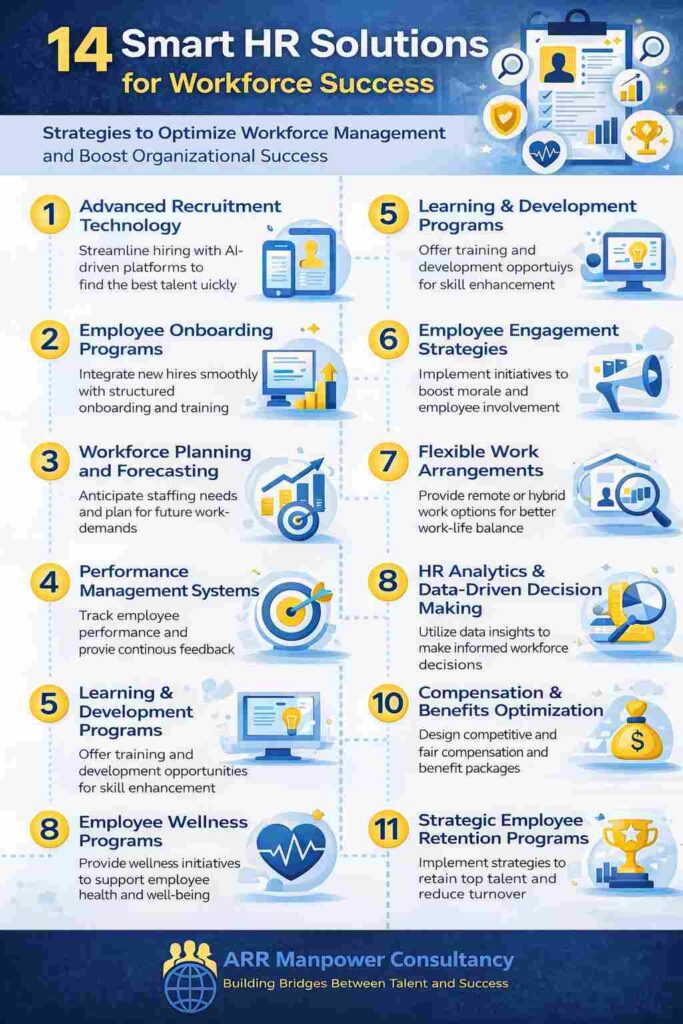
This article explores 14 smart HR solutions that can contribute significantly to workforce success and help businesses stay ahead in an evolving workplace landscape.
https://arrmanpowerconsultancy.com
1. Advanced Recruitment Technology
Finding the right talent is one of the most important responsibilities of HR professionals. Traditional hiring methods often consume significant time and resources.
Advanced recruitment technology simplifies the hiring process by automating candidate sourcing, resume screening, interview scheduling, and applicant tracking. These tools help recruiters identify qualified candidates faster while reducing administrative workloads.
Organizations that leverage modern recruitment platforms can improve hiring accuracy, shorten time-to-fill positions, and enhance the candidate experience from application to onboarding.
2. Employee Onboarding Programs
A structured onboarding process helps new employees integrate smoothly into the organization. Effective onboarding ensures that team members understand company culture, policies, responsibilities, and performance expectations from day one.
Successful onboarding programs often include:
- Welcome sessions
- Training schedules
- Mentorship opportunities
- Goal-setting meetings
- Progress evaluations
When employees feel supported during their initial months, they tend to become productive faster and remain engaged for longer periods.
3. Workforce Planning and Forecasting
Strategic workforce planning enables organizations to anticipate future staffing requirements and prepare accordingly.
By analyzing business objectives, market conditions, and employee trends, HR teams can identify potential skill gaps and develop proactive hiring strategies.
Workforce forecasting helps organizations:
- Reduce talent shortages
- Improve resource allocation
- Control labor costs
- Support organizational growth
- Maintain operational efficiency
Companies that plan ahead are better positioned to respond to changing business demands.
4. Employee Performance Management Systems
Performance management has evolved beyond annual reviews. Modern systems provide continuous feedback, goal tracking, and real-time performance insights.
These platforms encourage regular communication between managers and employees, helping individuals understand expectations and improve performance consistently.
Key benefits include:
- Clear performance objectives
- Increased accountability
- Better employee engagement
- Improved productivity
- Stronger alignment with business goals
A well-designed performance management system supports both individual and organizational success.
5. Learning and Development Programs
Continuous learning is essential in today’s rapidly changing business environment. Employees need opportunities to acquire new skills and stay updated with industry developments.
Organizations can implement learning initiatives such as:
- Online courses
- Leadership training
- Skill development workshops
- Certification programs
- Cross-functional learning opportunities
Investing in employee development not only improves performance but also increases retention and job satisfaction.
6. Employee Engagement Strategies
Engaged employees are more likely to contribute positively to organizational outcomes. Employee engagement involves creating an environment where individuals feel valued, motivated, and connected to their work.
Effective engagement strategies may include:
- Recognition programs
- Regular feedback sessions
- Employee surveys
- Career development opportunities
- Transparent communication
Organizations that prioritize engagement often experience higher productivity and lower turnover rates.
7. Flexible Work Arrangements
Workplace flexibility has become increasingly important for employees across industries. Flexible work arrangements can include remote work, hybrid schedules, compressed workweeks, and flexible hours.
These arrangements offer several advantages:
- Improved work-life balance
- Enhanced employee satisfaction
- Reduced commuting stress
- Greater productivity
- Expanded talent pools
Companies that embrace flexibility often find it easier to attract and retain top talent.
8. HR Analytics and Data-Driven Decision Making
Data has transformed the way HR departments operate. HR analytics enables organizations to gather valuable insights into workforce trends, employee behavior, and operational performance.
Common applications include:
- Turnover analysis
- Recruitment effectiveness
- Employee engagement measurement
- Productivity tracking
- Workforce demographics assessment
By leveraging data effectively, HR leaders can make informed decisions that support organizational objectives and improve workforce outcomes.
9. Compensation and Benefits Optimization
Competitive compensation and benefits packages are essential for attracting and retaining skilled professionals.
Modern HR strategies focus on designing compensation structures that align with employee expectations and business objectives.
Important elements may include:
- Competitive salaries
- Health insurance
- Retirement plans
- Wellness programs
- Performance incentives
- Paid leave benefits
Organizations that regularly evaluate and optimize their compensation offerings can strengthen employee loyalty and satisfaction.
10. Diversity, Equity, and Inclusion Initiatives
A diverse and inclusive workplace encourages innovation, collaboration, and stronger business performance.
HR teams play a vital role in creating policies and practices that promote fairness and equal opportunities for all employees.
Successful initiatives often involve:
- Inclusive recruitment practices
- Bias awareness training
- Equal advancement opportunities
- Employee resource groups
- Inclusive leadership development
Organizations that foster inclusivity benefit from broader perspectives and enhanced workplace culture.
11. Employee Wellness Programs
Employee well-being directly impacts productivity, engagement, and retention. Comprehensive wellness programs address physical, mental, and emotional health.
Examples include:
- Mental health resources
- Fitness initiatives
- Stress management workshops
- Employee assistance programs
- Health screenings
When organizations invest in employee wellness, they often experience reduced absenteeism and improved workforce performance.
12. Automation of Administrative Tasks
Administrative responsibilities can consume a substantial amount of HR professionals’ time. Automating routine tasks allows HR teams to focus on strategic initiatives.
Common areas for automation include:
- Payroll processing
- Attendance tracking
- Leave management
- Benefits administration
- Document management
Automation improves efficiency, reduces errors, and enhances employee experiences through faster service delivery.
13. Succession Planning
Succession planning ensures business continuity by preparing future leaders to assume critical roles within the organization.
This process involves identifying high-potential employees, developing leadership capabilities, and creating clear career progression pathways.
Benefits of succession planning include:
- Reduced leadership gaps
- Stronger organizational stability
- Increased employee motivation
- Better talent retention
- Improved long-term planning
Organizations that invest in leadership development are better prepared for future challenges and opportunities.
14. Strategic Employee Retention Programs
Retaining skilled employees is often more cost-effective than replacing them. High turnover can lead to increased recruitment expenses, productivity losses, and reduced morale.
Effective retention programs focus on understanding employee needs and addressing factors that influence job satisfaction.
Key retention strategies include:
- Career advancement opportunities
- Recognition and rewards
- Competitive compensation
- Supportive leadership
- Professional development
- Positive workplace culture
Organizations that prioritize retention can build a more stable and experienced workforce.
Building a Future-Ready Workforce
Workforce success requires more than simply hiring talented individuals. Organizations must create systems, processes, and cultures that support employee growth and organizational performance.
The most successful businesses view HR as a strategic function rather than an administrative department. By implementing innovative workforce practices, companies can improve productivity, strengthen employee relationships, and achieve sustainable growth.
Technology continues to reshape workplace expectations, making it essential for HR teams to stay adaptable and proactive. From recruitment automation to workforce analytics, modern tools provide valuable opportunities to optimize talent management.
At the same time, human-centered approaches remain equally important. Employees seek meaningful work, career development, flexibility, recognition, and supportive leadership. Organizations that balance technological innovation with employee-focused practices often achieve the strongest outcomes.
Conclusion
The modern workplace demands agile and forward-thinking approaches to people management. These 14 smart HR solutions provide practical strategies for improving workforce effectiveness, enhancing employee experiences, and supporting organizational success.
From recruitment technology and onboarding programs to analytics, wellness initiatives, and retention strategies, each solution contributes to building a stronger and more resilient workforce. Businesses that invest in these areas are better positioned to navigate change, attract top talent, and maintain a competitive advantage.
As workforce expectations continue to evolve, organizations that embrace strategic HR practices will be well-equipped to drive long-term growth and create thriving workplace environments.
In addition, organizations that consistently invest in modern workforce practices are more likely to create an environment where employees feel empowered, valued, and motivated to perform at their highest potential. The workplace is no longer defined solely by operational efficiency; it is increasingly shaped by employee experience, adaptability, and continuous improvement. Businesses that recognize this shift can develop stronger relationships with their workforce while fostering a culture of innovation and accountability.
Implementing effective HR strategies also helps organizations respond more confidently to changing market demands, technological advancements, and evolving employee expectations.
Whether it is through personalized learning opportunities, advanced workforce analytics, flexible work arrangements, or leadership development programs, every initiative contributes to building a more agile and capable team. These efforts not only improve day-to-day operations but also strengthen long-term organizational resilience.
Furthermore, successful workforce management requires ongoing evaluation and refinement. HR leaders should regularly assess the effectiveness of their programs, gather employee feedback, and identify opportunities for improvement. A proactive approach enables organizations to address challenges before they become significant obstacles and ensures that workforce strategies remain aligned with business objectives.
Ultimately, sustainable success depends on an organization’s ability to attract talented individuals, support their professional growth, and create a workplace where they can thrive.
By embracing smart HR solutions and maintaining a people-first mindset, businesses can enhance employee satisfaction, improve operational performance, and build a strong foundation for future growth. As the business landscape continues to evolve, organizations that prioritize strategic workforce management will be better positioned to achieve lasting success, maintain a competitive edge, and cultivate a workforce prepared for the opportunities and challenges of tomorrow.