Introduction
Organizations today operate in an environment defined by rapid technological advancements, evolving customer expectations, and unpredictable market conditions. To remain competitive, businesses must be able to adapt quickly to changing workforce demands. Traditional hiring approaches often struggle to provide the agility needed to respond to seasonal fluctuations, project-based requirements, or sudden growth opportunities.
This is where workforce flexibility becomes a critical business strategy. By adopting the right staffing models, companies can optimize talent acquisition, control labor costs, improve productivity, and maintain operational continuity. Flexible workforce structures allow organizations to access specialized skills, scale teams efficiently, and respond to market changes without compromising performance.
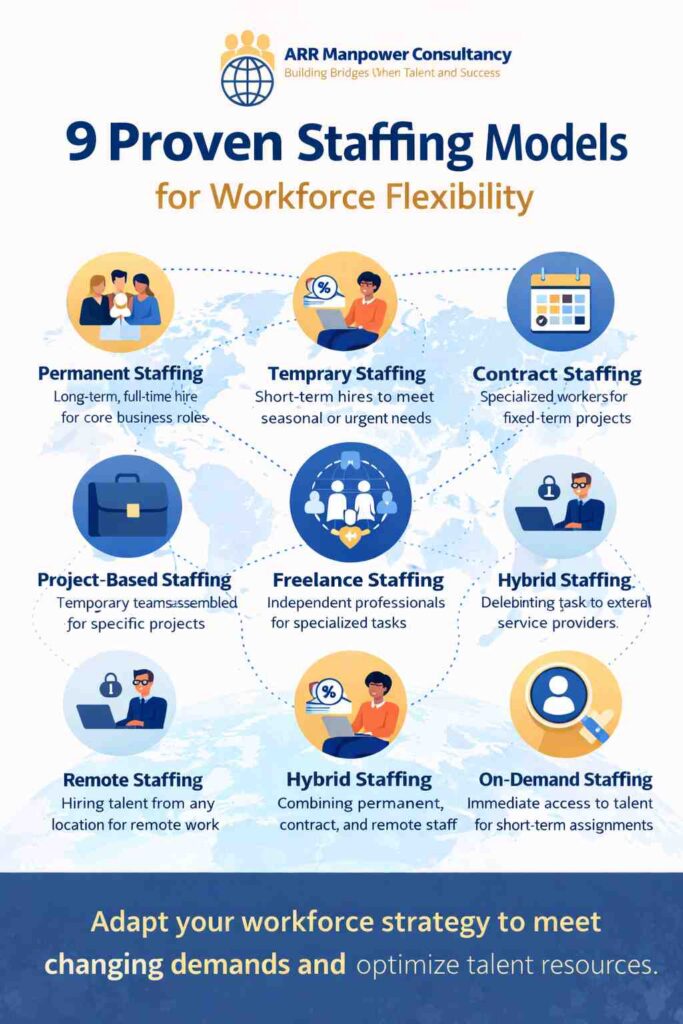
This article explores nine proven staffing models that help organizations build a resilient and adaptable workforce while supporting long-term business objectives.
https://arrmanpowerconsultancy.com
Understanding Workforce Flexibility
Workforce flexibility refers to an organization’s ability to adjust its talent resources according to changing business needs. It involves aligning workforce capacity, skills, and deployment methods with operational requirements.
Flexible workforce strategies offer several benefits, including:
- Improved operational agility
- Better cost management
- Access to specialized expertise
- Enhanced employee satisfaction
- Reduced hiring risks
- Faster response to market opportunities
Selecting the right staffing model depends on factors such as industry requirements, project timelines, budget constraints, and organizational goals.
1. Permanent Staffing Model
The permanent staffing model remains one of the most widely used workforce structures. In this approach, organizations hire employees on a full-time basis to fill long-term roles essential to business operations.
Key Features
- Full-time employment contracts
- Employee benefits and career development opportunities
- Strong organizational integration
- Long-term commitment from both employer and employee
Advantages
Permanent employees often develop deep institutional knowledge and contribute to company culture. They provide stability and continuity, making them ideal for critical business functions.
Best Use Cases
- Leadership positions
- Core operational roles
- Strategic business functions
- Long-term projects
Potential Challenges
Permanent hiring involves significant recruitment costs, onboarding investments, and ongoing compensation commitments. Workforce adjustments may also become more difficult during economic downturns.
2. Temporary Staffing Model
Temporary staffing involves hiring workers for a specific period to address short-term business needs. These employees may be sourced through staffing agencies or direct recruitment channels.
Key Features
- Fixed-term assignments
- Flexible workforce scaling
- Reduced long-term commitments
- Rapid deployment
Advantages
Organizations can quickly address workload spikes without increasing permanent headcount. Temporary workers provide valuable support during busy seasons, employee absences, or special projects.
Best Use Cases
- Seasonal demand periods
- Holiday staffing
- Short-term projects
- Temporary workforce shortages
Potential Challenges
Temporary workers may require additional training and may not possess the same level of organizational familiarity as permanent employees.
3. Contract Staffing Model
Contract staffing allows organizations to hire professionals for a defined period or specific project. Contract workers often possess specialized skills and expertise.
Key Features
- Project-based engagement
- Defined contract duration
- Specialized talent access
- Flexible workforce management
Advantages
Businesses can bring in experienced professionals without committing to permanent employment. This model helps organizations address skill gaps quickly and efficiently.
Best Use Cases
- IT implementations
- Software development projects
- Engineering assignments
- Business transformation initiatives
Potential Challenges
Knowledge transfer and long-term retention can become concerns once contract engagements conclude.
4. Project-Based Staffing Model
Project-based staffing focuses on assembling teams specifically designed to achieve predefined project goals. Team members may include internal employees, contractors, consultants, or freelancers.
Key Features
- Goal-oriented workforce structure
- Temporary team formation
- Specialized resource allocation
- Flexible project management
Advantages
Organizations gain access to the exact skills required for project success while maintaining resource efficiency.
Best Use Cases
- Product launches
- Digital transformation projects
- Market expansion initiatives
- Research and development activities
Potential Challenges
Coordinating multiple workforce categories may require strong project management capabilities.
5. Freelance Staffing Model
The freelance model has gained significant popularity as organizations increasingly seek specialized expertise on demand. Freelancers operate independently and typically work on specific tasks or deliverables.
Key Features
- Independent professional engagement
- Task-based assignments
- Remote work opportunities
- Flexible scheduling
Advantages
Freelancers provide access to highly specialized skills without long-term employment commitments. Organizations can engage experts for short-duration projects while controlling labor costs.
Best Use Cases
- Content creation
- Graphic design
- Digital marketing
- Web development
- Consulting assignments
Potential Challenges
Managing multiple freelancers may require additional oversight to ensure consistency and quality.
6. Remote Staffing Model
Remote staffing enables organizations to hire talent regardless of geographic location. Employees work from home or remote locations while remaining connected through digital collaboration tools.
Key Features
- Location-independent workforce
- Virtual collaboration
- Expanded talent pool
- Reduced facility costs
Advantages
Organizations can access skilled professionals from diverse regions while reducing overhead expenses. Remote work arrangements often improve employee satisfaction and retention.
Best Use Cases
- Customer support
- Software development
- Marketing operations
- Administrative services
Potential Challenges
Maintaining team cohesion and communication may require deliberate management strategies and technology investments.
7. Hybrid Staffing Model
The hybrid staffing model combines multiple workforce categories, including permanent employees, contractors, freelancers, and remote workers.
Key Features
- Mixed workforce structure
- Enhanced flexibility
- Strategic talent allocation
- Balanced resource management
Advantages
Organizations benefit from both workforce stability and operational agility. Critical functions remain supported by permanent employees while specialized needs are addressed through flexible resources.
Best Use Cases
- Growing organizations
- Technology companies
- Professional services firms
- Enterprises undergoing transformation
Potential Challenges
Managing diverse workforce groups requires clear communication, compliance oversight, and effective coordination.
8. Outsourced Staffing Model
Outsourcing involves delegating specific business functions or processes to external service providers. These providers manage recruitment, workforce administration, and operational execution.
Key Features
- Third-party workforce management
- Specialized service delivery
- Reduced internal administrative burden
- Scalable resource access
Advantages
Organizations can focus on core competencies while leveraging external expertise. Outsourcing often improves efficiency and reduces operational costs.
Best Use Cases
- Customer service operations
- Payroll administration
- IT support services
- Recruitment processes
Potential Challenges
Maintaining quality control and ensuring alignment with organizational objectives require careful vendor management.
9. On-Demand Staffing Model
On-demand staffing provides immediate access to talent as business needs arise. This model leverages digital platforms and workforce marketplaces to connect organizations with qualified professionals.
Key Features
- Rapid workforce deployment
- Flexible engagement periods
- Technology-driven talent access
- Demand-based resource allocation
Advantages
Organizations can respond quickly to changing business conditions without maintaining excess workforce capacity.
Best Use Cases
- Event staffing
- Gig-based assignments
- Short-notice projects
- Peak demand periods
Potential Challenges
Workforce availability and consistency may vary depending on market conditions and talent supply.
Factors to Consider When Choosing a Staffing Model
Selecting the appropriate staffing approach requires careful evaluation of organizational needs and workforce objectives.
Business Goals
Companies should align workforce strategies with long-term business plans, growth projections, and operational priorities.
Budget Constraints
Different staffing models involve varying cost structures. Organizations must evaluate recruitment expenses, compensation requirements, and administrative costs.
Skill Requirements
Specialized projects may require access to niche expertise that is difficult to maintain through permanent hiring alone.
Workforce Scalability
Businesses experiencing fluctuating demand should prioritize models that support rapid expansion and contraction.
Compliance Considerations
Employment laws, tax regulations, and contractual obligations vary across workforce categories. Organizations must ensure compliance when implementing flexible workforce strategies.
Technology Infrastructure
Digital collaboration tools, workforce management platforms, and communication systems play a crucial role in supporting flexible workforce arrangements.
Building a Workforce Flexibility Strategy
Successful workforce flexibility requires more than simply choosing a staffing model. Organizations should develop a comprehensive strategy that integrates workforce planning, talent acquisition, and performance management.
Assess Current Workforce Needs
Evaluate existing workforce capabilities, skill gaps, and future talent requirements.
Define Workforce Objectives
Establish clear goals related to productivity, scalability, cost management, and business growth.
Create a Talent Pipeline
Develop relationships with recruitment partners, staffing agencies, freelance networks, and talent communities.
Invest in Workforce Technology
Leverage workforce management systems, collaboration tools, and analytics platforms to improve visibility and decision-making.
Monitor Performance
Track key metrics such as productivity, employee engagement, hiring efficiency, and workforce utilization.
Adapt Continuously
Workforce requirements evolve over time. Organizations should regularly review staffing strategies and make adjustments based on changing business conditions.
Future Trends in Workforce Flexibility
Several trends are shaping the future of workforce management:
Increased Adoption of Hybrid Work
Organizations continue to embrace flexible work arrangements that combine in-office and remote work.
Growth of the Gig Economy
More professionals are choosing independent work opportunities, expanding the availability of freelance talent.
Skills-Based Hiring
Employers increasingly prioritize skills and competencies over traditional educational qualifications.
AI-Powered Workforce Planning
Artificial intelligence helps organizations forecast workforce needs, identify talent gaps, and optimize staffing decisions.
Global Talent Access
Remote work technologies enable organizations to recruit professionals from around the world.
These trends reinforce the importance of adopting adaptable workforce strategies that support business resilience and competitiveness.
Conclusion
Workforce flexibility has become a strategic necessity in today’s dynamic business environment. Organizations that embrace adaptable staffing approaches are better positioned to manage change, control costs, access specialized expertise, and achieve sustainable growth.
The nine staffing models discussed in this article—permanent, temporary, contract, project-based, freelance, remote, hybrid, outsourced, and on-demand—each offer unique advantages depending on organizational goals and operational requirements.
Rather than relying on a single approach, many successful companies combine multiple workforce structures to create a balanced and resilient talent strategy. By carefully evaluating business needs, workforce demands, and growth objectives, organizations can implement staffing solutions that support long-term success while maintaining the agility required to thrive in an increasingly competitive marketplace.