Introduction
Rapidly expanding industries face unique challenges that can significantly impact their growth trajectory. While increasing customer demand, technological advancements, and market opportunities create exciting possibilities, organizations often struggle to maintain a skilled and productive workforce capable of supporting continuous expansion. Labor shortages, skills gaps, employee retention concerns, and changing workplace expectations make talent management more complex than ever.
To remain competitive, organizations must adopt effective workforce strategies that align with their operational goals and future growth plans. Businesses in sectors such as healthcare, technology, manufacturing, logistics, renewable energy, and e-commerce require innovative approaches to attract, develop, and retain talent.
This article explores seven powerful workforce solutions that help fast-growing industries build resilient teams, improve productivity, and sustain long-term success.
https://arrmanpowerconsultancy.com
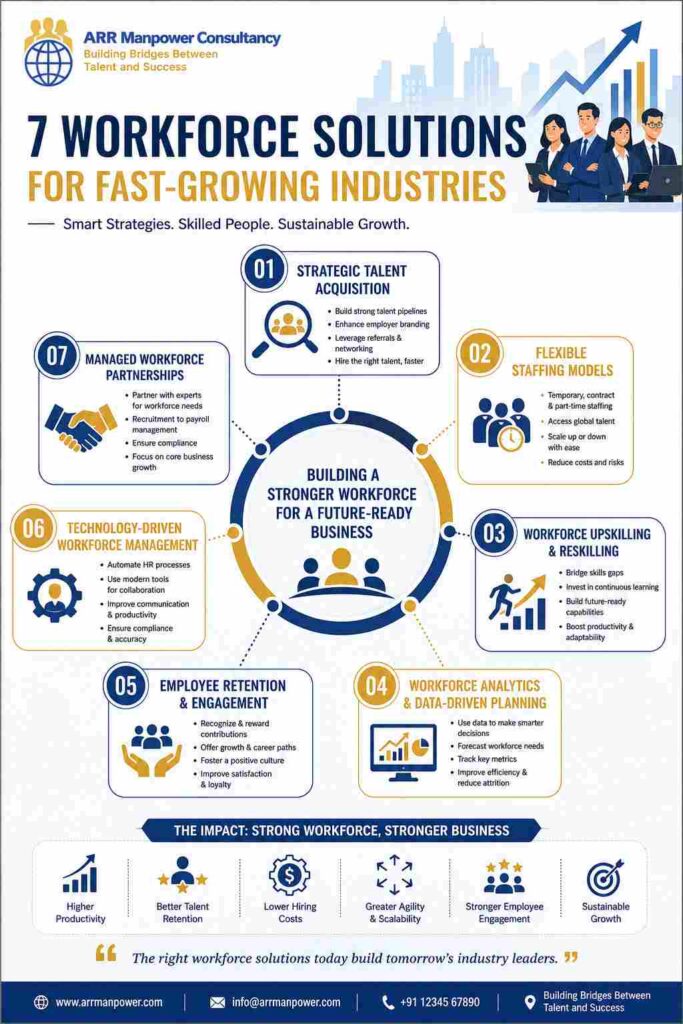
1. Strategic Talent Acquisition Programs
One of the biggest obstacles faced by expanding organizations is finding qualified candidates quickly. Traditional hiring methods often fail to meet the demands of rapidly scaling businesses.
Strategic talent acquisition focuses on proactive recruitment rather than reactive hiring. Instead of waiting for vacancies to occur, organizations continuously build relationships with potential candidates and maintain talent pipelines.
Key Components of Strategic Talent Acquisition
- Employer branding initiatives
- Campus recruitment partnerships
- Industry networking programs
- Referral-based hiring systems
- Candidate relationship management
By developing a strong recruitment strategy, companies can reduce hiring delays and ensure access to skilled professionals when growth opportunities arise.
Benefits
- Faster hiring cycles
- Improved candidate quality
- Lower recruitment costs
- Stronger employer reputation
- Better workforce planning
Organizations that invest in long-term recruitment strategies are often better prepared to handle sudden increases in workforce demand.
2. Flexible Staffing Models
Fast-growing industries frequently experience fluctuations in workload. Seasonal peaks, project-based demands, and unexpected market opportunities can create staffing challenges.
Flexible staffing models provide organizations with the agility needed to respond quickly to changing business conditions.
Types of Flexible Staffing
Temporary Staffing
Temporary employees help businesses manage short-term workload increases without committing to permanent hires.
Contract Professionals
Specialized contractors provide expertise for specific projects, particularly in technology, engineering, and consulting sectors.
Part-Time Workforce
Part-time employees offer flexibility while helping organizations control labor costs.
Remote Talent Pools
Remote professionals allow businesses to access skilled workers regardless of geographic location.
Benefits
- Increased operational flexibility
- Reduced labor expenses
- Faster response to market demands
- Access to specialized expertise
- Improved workforce scalability
Flexible staffing enables organizations to maintain productivity while adapting to evolving business requirements.
3. Workforce Upskilling and Reskilling Programs
Technology is transforming nearly every industry. As automation, artificial intelligence, and digital tools become more common, many employees need new skills to remain effective.
Upskilling focuses on enhancing current capabilities, while reskilling prepares employees for entirely new roles.
Why Training Matters
Industries experiencing rapid growth often face talent shortages because the demand for specialized skills exceeds supply. Developing existing employees can be more efficient than recruiting new talent.
Effective Training Strategies
- Online learning platforms
- Internal mentorship programs
- Leadership development initiatives
- Technical certification courses
- Cross-functional training opportunities
Benefits
- Higher employee engagement
- Improved retention rates
- Reduced recruitment costs
- Greater organizational agility
- Enhanced productivity
Companies that prioritize continuous learning create a culture of adaptability that supports long-term growth.
4. Workforce Analytics and Data-Driven Planning
Data-driven decision-making has become essential for organizations seeking sustainable growth. Workforce analytics helps leaders understand employee trends, productivity patterns, and future staffing requirements.
Rather than relying on assumptions, businesses can use workforce data to make informed decisions.
Key Metrics to Monitor
- Employee turnover rates
- Time-to-hire statistics
- Training effectiveness
- Productivity measurements
- Absenteeism trends
- Employee engagement scores
Predictive Workforce Planning
Advanced analytics can forecast future workforce needs based on business growth projections, enabling organizations to prepare for upcoming challenges.
Benefits
- Better staffing forecasts
- Improved resource allocation
- Enhanced retention strategies
- Reduced labor shortages
- Stronger operational efficiency
Organizations that leverage workforce analytics gain valuable insights that support smarter business decisions.
5. Employee Retention and Engagement Initiatives
Attracting talent is only part of the challenge. Retaining skilled employees is equally important, especially in competitive industries where experienced professionals are highly sought after.
Employee turnover can result in significant financial losses, reduced productivity, and disruptions to business operations.
Factors Influencing Retention
- Career growth opportunities
- Competitive compensation
- Positive workplace culture
- Recognition programs
- Work-life balance
- Leadership effectiveness
Strategies for Improving Engagement
Career Development Pathways
Employees are more likely to stay when they see opportunities for advancement.
Recognition Programs
Acknowledging employee contributions fosters motivation and loyalty.
Regular Feedback Systems
Open communication strengthens trust between employees and management.
Wellness Programs
Supporting employee well-being contributes to higher satisfaction and performance.
Benefits
- Lower turnover rates
- Increased productivity
- Stronger organizational culture
- Higher employee morale
- Improved customer service
Retention initiatives help organizations preserve valuable knowledge and maintain workforce stability.
6. Technology-Driven Workforce Management
Digital transformation has revolutionized workforce management. Modern technologies enable organizations to streamline HR processes, improve communication, and enhance productivity.
Technology-driven solutions support both employers and employees by simplifying workforce administration.
Common Workforce Management Technologies
Human Resource Information Systems (HRIS)
Centralized platforms help manage employee records, payroll, benefits, and performance data.
Applicant Tracking Systems (ATS)
Recruitment software accelerates hiring processes and improves candidate management.
Scheduling Software
Automated scheduling tools optimize workforce allocation and reduce administrative burdens.
Collaboration Platforms
Digital communication tools facilitate teamwork, especially in hybrid and remote work environments.
Benefits
- Increased operational efficiency
- Reduced administrative workload
- Better workforce visibility
- Enhanced employee experience
- Improved compliance management
Organizations that embrace workforce technology can scale more effectively while maintaining high levels of productivity.
7. Managed Workforce Partnerships
Many fast-growing companies lack the internal resources needed to manage large-scale workforce operations. Managed workforce partnerships provide external expertise that supports recruitment, onboarding, compliance, and workforce planning.
These partnerships allow organizations to focus on core business activities while workforce specialists handle talent-related responsibilities.
Services Typically Included
- Recruitment process outsourcing
- Workforce planning support
- Compliance management
- Employee onboarding
- Payroll administration
- Performance management assistance
Advantages of Managed Workforce Services
Access to Industry Expertise
Workforce specialists understand labor market trends and recruitment best practices.
Faster Scaling Capabilities
Organizations can expand operations without building large internal HR teams.
Reduced Administrative Burden
External providers manage time-consuming workforce functions.
Improved Compliance
Employment regulations can be complex and constantly changing. Managed services help reduce legal risks.
Benefits
- Greater operational efficiency
- Enhanced talent acquisition
- Reduced compliance risks
- Improved scalability
- Cost-effective workforce management
Managed workforce partnerships are particularly valuable for organizations experiencing rapid expansion or entering new markets.
Best Practices for Implementing Workforce Strategies
While each workforce solution offers distinct advantages, successful implementation requires a comprehensive approach.
Align Workforce Goals with Business Objectives
Workforce planning should support organizational growth strategies and long-term goals.
Invest in Leadership Development
Strong leadership is critical for managing expanding teams and maintaining employee engagement.
Foster a Culture of Continuous Learning
Encouraging ongoing development helps organizations remain adaptable in changing markets.
Leverage Technology Effectively
Digital tools should enhance workforce processes rather than complicate them.
Monitor Performance Metrics
Regular evaluation ensures workforce strategies continue delivering measurable results.
Prioritize Employee Experience
Organizations that focus on employee satisfaction often achieve better retention and productivity outcomes.
Challenges Fast-Growing Industries Must Address
Despite the benefits of workforce optimization, several challenges remain.
Skills Shortages
Many industries struggle to find qualified professionals with specialized expertise.
Increasing Competition for Talent
High-demand sectors often compete aggressively for skilled workers.
Rapid Technological Change
Emerging technologies require continuous workforce adaptation.
Employee Burnout
Growth periods can place additional pressure on employees, increasing the risk of burnout.
Regulatory Compliance
Expanding organizations must navigate complex employment regulations across different regions.
Addressing these challenges proactively helps organizations maintain sustainable growth and workforce stability.
The Future of Workforce Management
The future workplace will continue evolving as technology, employee expectations, and market conditions change.
Several trends are expected to shape workforce management in the coming years:
- Increased use of artificial intelligence in recruitment
- Greater emphasis on skills-based hiring
- Expansion of remote and hybrid work models
- Personalized employee development programs
- Enhanced workforce analytics capabilities
- Growing focus on diversity and inclusion
Organizations that embrace these trends will be better positioned to attract top talent and remain competitive in fast-changing markets.
Conclusion
Fast-growing industries require more than traditional hiring practices to support sustainable expansion. Strategic talent acquisition, flexible staffing models, employee development programs, workforce analytics, retention initiatives, technology-driven management systems, and managed workforce partnerships all play critical roles in building a strong and adaptable workforce.
By implementing these workforce solutions, organizations can overcome labor challenges, improve productivity, enhance employee satisfaction, and create a foundation for long-term success. As industries continue to evolve, businesses that invest in effective workforce strategies will be better equipped to navigate change and capitalize on future growth opportunities.
In addition, organizations that take a proactive approach to workforce planning are better equipped to respond to economic shifts, changing customer expectations, and emerging industry trends. Building a future-ready workforce requires ongoing investment in people, processes, and technology.
Companies that prioritize employee growth, embrace flexible work models, and use data-driven insights can create a more resilient and agile organization.
As competition for skilled talent continues to intensify, businesses that adopt innovative workforce strategies will not only fill critical roles faster but also strengthen their employer brand, foster long-term employee loyalty, and achieve sustained business growth in an increasingly dynamic marketplace.
https://www.ilo.org/about-ilo/ilo-reform
https://www.linkedin.com/pulse/beyond-resumes-how-smart-employers-identify-right-consultancy-kb49c