Introduction
Annual Recurring Revenue, commonly known as ARR, has become one of the most important performance indicators for modern HR consultancy firms. As the human resources industry evolves with technology, remote work trends, and workforce transformation, consultancies are shifting from one-time projects to recurring service models. Sustainable revenue no longer depends solely on acquiring new clients. Instead, long-term client retention, value-added services, and scalable systems play a larger role in financial stability.
For HR consultancy businesses, increasing predictable revenue requires a balanced strategy. Firms must focus on client relationships, digital transformation, employee expertise, and data-driven decision-making. Whether the consultancy specializes in recruitment, compliance, payroll management, leadership development, or talent acquisition, the ability to create ongoing value determines long-term profitability.
This article explores ten powerful strategies that can help HR consultancy firms improve revenue consistency, strengthen client loyalty, and achieve sustainable business expansion.
https://arrmanpowerconsultancy.com/
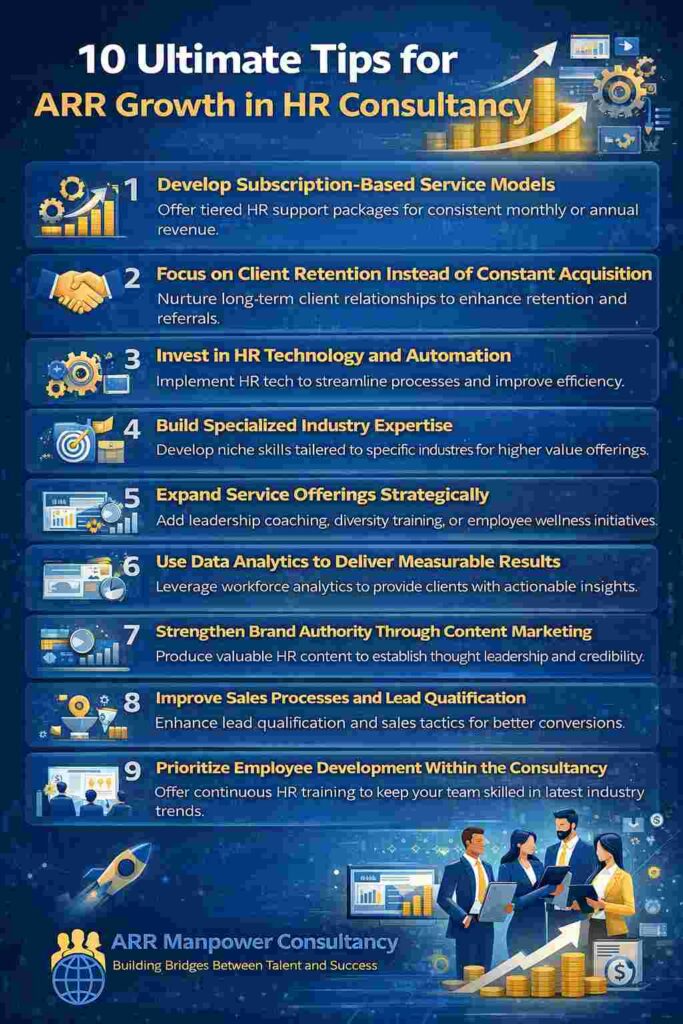
1. Develop Subscription-Based Service Models
One of the most effective ways to improve recurring revenue is by transitioning from project-based services to subscription packages. Many HR consultancies still rely heavily on one-time recruitment or training assignments. While these projects can generate immediate income, they often create inconsistent cash flow.
Subscription models provide predictable monthly or annual revenue streams. Businesses can offer ongoing HR support packages that include:
- Employee onboarding assistance
- Payroll advisory
- Compliance monitoring
- Recruitment support
- Performance management systems
- HR analytics reporting
Clients prefer subscription services because they receive continuous support without negotiating separate contracts for every requirement. At the same time, consultancies benefit from financial stability and stronger client relationships.
Tiered pricing structures can also attract businesses of different sizes. Small companies may choose basic HR support plans, while enterprise clients may require premium workforce solutions.
2. Focus on Client Retention Instead of Constant Acquisition
Acquiring new clients is important, but retaining existing customers is far more cost-effective. Many HR consultancy firms spend significant resources on marketing and lead generation while neglecting long-term client engagement.
Strong retention strategies improve trust and increase opportunities for upselling. A satisfied client is more likely to continue using services for several years. Long-term partnerships create stable revenue patterns and reduce dependency on aggressive sales campaigns.
To improve retention:
- Conduct regular performance reviews with clients
- Offer personalized HR recommendations
- Maintain transparent communication
- Respond quickly to workforce challenges
- Provide proactive compliance updates
Building long-term relationships also increases referrals. In the HR industry, referrals often carry more credibility than paid advertising because businesses trust recommendations from professional networks.
3. Invest in HR Technology and Automation
Technology plays a major role in modern consultancy operations. Manual administrative tasks consume valuable time that could otherwise be spent on strategic advisory services.
Automation tools can streamline:
- Candidate screening
- Payroll processing
- Employee engagement surveys
- Attendance tracking
- Compliance reporting
- Data management
By adopting HR technology platforms, consultancies can improve efficiency and serve more clients without significantly increasing operational costs.
Clients also expect modern solutions. Businesses increasingly prefer consultants who can integrate digital systems into workforce management. Offering technology-enabled services enhances credibility and positions the consultancy as an innovative partner.
Cloud-based HR systems additionally allow consultants to manage remote clients efficiently, expanding opportunities beyond local markets.
4. Build Specialized Industry Expertise
General HR services may attract a broad audience, but specialization often leads to stronger profitability. Companies prefer consultants who understand industry-specific workforce challenges.
For example, healthcare organizations face different compliance requirements compared to manufacturing or technology firms. By developing niche expertise, HR consultancies can charge premium fees and differentiate themselves from competitors.
Popular specialization areas include:
- Healthcare staffing
- IT recruitment
- Manufacturing workforce management
- Retail HR operations
- Startup talent acquisition
- Executive leadership hiring
Specialized consultancies are often viewed as strategic advisors rather than generic service providers. This positioning strengthens long-term client relationships and creates recurring engagement opportunities.
Industry-focused expertise also improves marketing effectiveness because messaging becomes more targeted and relevant.
5. Expand Service Offerings Strategically
Many HR consultancies limit themselves to recruitment or compliance support. However, businesses increasingly seek integrated workforce solutions from a single provider.
Expanding services strategically can increase revenue per client while strengthening retention. Instead of constantly searching for new customers, consultancies can generate additional income from existing accounts.
Additional services may include:
- Leadership coaching
- Diversity and inclusion programs
- Employee wellness initiatives
- Workforce planning
- HR audits
- Learning and development workshops
Cross-selling becomes easier when trust already exists. Clients are more willing to purchase additional services from consultants who understand their organizational culture and workforce structure.
However, expansion should align with expertise. Offering too many unrelated services can dilute quality and damage reputation.
6. Use Data Analytics to Deliver Measurable Results
Modern businesses expect measurable outcomes from consultancy partnerships. Data-driven HR consulting helps clients understand workforce performance and make informed decisions.
Analytics can provide insights into:
- Employee turnover trends
- Hiring efficiency
- Productivity levels
- Training effectiveness
- Diversity metrics
- Workforce costs
When consultants present clear performance indicators, clients perceive greater value in ongoing partnerships. Decision-makers are more likely to renew contracts when they can see measurable improvements.
HR analytics also strengthen strategic conversations. Instead of offering generic recommendations, consultants can provide evidence-based solutions tailored to client needs.
Data reporting dashboards and regular performance summaries enhance transparency and improve client confidence.
7. Strengthen Brand Authority Through Content Marketing
Thought leadership plays a significant role in attracting and retaining clients. HR consultancy firms that consistently share valuable insights build credibility within their industry.
Content marketing can include:
- Blog articles
- Whitepapers
- LinkedIn posts
- HR trend reports
- Webinars
- Podcasts
- Case studies
Educational content demonstrates expertise and helps potential clients understand complex workforce challenges.
Search engine optimization also increases visibility online. Businesses searching for HR solutions are more likely to discover firms that publish informative content regularly.
Instead of focusing solely on promotional messaging, consultancies should prioritize practical guidance that addresses real workplace concerns. Valuable content builds trust before a sales conversation even begins.
Consistent brand authority can significantly influence purchasing decisions in competitive markets.
8. Improve Sales Processes and Lead Qualification
Many HR consultancies lose opportunities because their sales processes are inconsistent or poorly structured. A strong sales framework improves conversion rates and supports predictable revenue growth.
Effective sales strategies include:
- Defining ideal client profiles
- Qualifying leads carefully
- Understanding client pain points
- Creating customized proposals
- Following up consistently
- Demonstrating measurable value
Not every prospect is the right fit. Pursuing low-quality leads consumes time and resources without generating meaningful returns.
Consultancies should focus on clients who align with their expertise and long-term business goals. Higher-quality partnerships often result in longer contracts and better retention rates.
Customer relationship management systems can also improve sales efficiency by organizing communication, tracking opportunities, and monitoring client interactions.
9. Prioritize Employee Development Within the Consultancy
The success of an HR consultancy depends heavily on the expertise of its team. Consultants must stay informed about changing labor laws, workplace trends, leadership strategies, and recruitment technologies.
Continuous employee development strengthens service quality and improves client satisfaction.
Training initiatives may include:
- HR certification programs
- Leadership workshops
- Technology training
- Communication skill development
- Industry-specific education
A knowledgeable consulting team can provide more strategic recommendations and adapt quickly to market changes.
Employee engagement within the consultancy itself is equally important. Motivated consultants deliver better client experiences and contribute to stronger business performance.
Organizations that invest in internal talent development often build stronger reputations and achieve higher client retention.
10. Create Long-Term Strategic Partnerships
Short-term contracts may generate immediate revenue, but long-term strategic partnerships provide stability and sustained growth.
Instead of positioning services as temporary support, HR consultancies should become trusted business advisors. This requires understanding the client’s organizational goals, culture, and workforce challenges deeply.
Strategic partnerships involve:
- Regular planning sessions
- Long-term workforce forecasting
- Ongoing performance evaluations
- Leadership collaboration
- Change management support
When consultancies contribute directly to organizational success, clients view them as essential partners rather than optional vendors.
This relationship-based approach often leads to multi-year contracts, expanded service opportunities, and stronger referral networks.
Long-term partnerships also improve forecasting accuracy, helping consultancies plan staffing, budgeting, and growth strategies more effectively.
Common Challenges in Revenue Expansion
Although growth opportunities are significant, HR consultancy firms often face several obstacles during expansion efforts.
Market Competition
The HR consulting industry is highly competitive. New firms enter the market regularly, making differentiation essential.
Changing Workforce Expectations
Remote work, hybrid models, and evolving employee expectations require continuous adaptation.
Technology Adoption Costs
Implementing advanced HR systems may require substantial investment initially.
Talent Retention
Consultancies must compete for experienced HR professionals while maintaining internal engagement.
Economic Uncertainty
Economic downturns can reduce hiring activity and delay consulting investments.
Understanding these challenges allows firms to prepare proactive strategies instead of reacting defensively.
Future Trends in HR Consultancy Growth
The future of HR consultancy will likely be shaped by technological innovation, workforce transformation, and data intelligence.
Several emerging trends include:
- AI-powered recruitment systems
- Remote workforce management
- Employee wellness programs
- Diversity and inclusion consulting
- Skills-based hiring strategies
- Predictive workforce analytics
Businesses increasingly seek consultants who combine human expertise with digital capabilities.
Sustainability and organizational culture will also become more important in workforce planning. Companies want HR partners who can support employee engagement while aligning with long-term business goals.
Consultancies that adapt early to these trends are more likely to achieve sustainable recurring revenue growth.
Conclusion
Growing recurring revenue in HR consultancy requires more than aggressive sales tactics. Sustainable success depends on delivering ongoing value, building trusted relationships, and adapting to changing workforce dynamics.
Subscription services, client retention, specialized expertise, automation, analytics, and strategic partnerships all contribute to stronger financial performance. At the same time, internal employee development and brand authority help consultancies remain competitive in an evolving market.
Modern businesses no longer seek transactional HR support alone. They want long-term partners capable of guiding workforce transformation, improving employee experiences, and supporting organizational growth.
By implementing these ten strategies thoughtfully, HR consultancy firms can create stable revenue streams, improve operational efficiency, and position themselves for long-term success in an increasingly competitive industry.