Introduction
Annual Recurring Revenue, often called ARR, is one of the most important metrics for subscription-based businesses. It reflects the predictable income a company expects to receive every year from active customers. Whether you run a SaaS platform, membership website, consulting subscription, or digital product company, increasing recurring revenue can improve cash flow, attract investors, and create long-term stability.
Many businesses believe they need massive marketing budgets or complicated pricing systems to increase revenue. In reality, small strategic adjustments can create meaningful improvements in customer retention, average contract value, and overall business growth. Companies that focus on customer experience, pricing efficiency, and account expansion often see fast results without rebuilding their entire business model.
The good news is that you do not need years to improve revenue performance. With the right strategies, companies can create immediate gains while also strengthening long-term customer relationships. Below are five practical and effective methods that can help increase recurring income quickly while keeping customers satisfied.
https://arrmanpowerconsultancy.com/
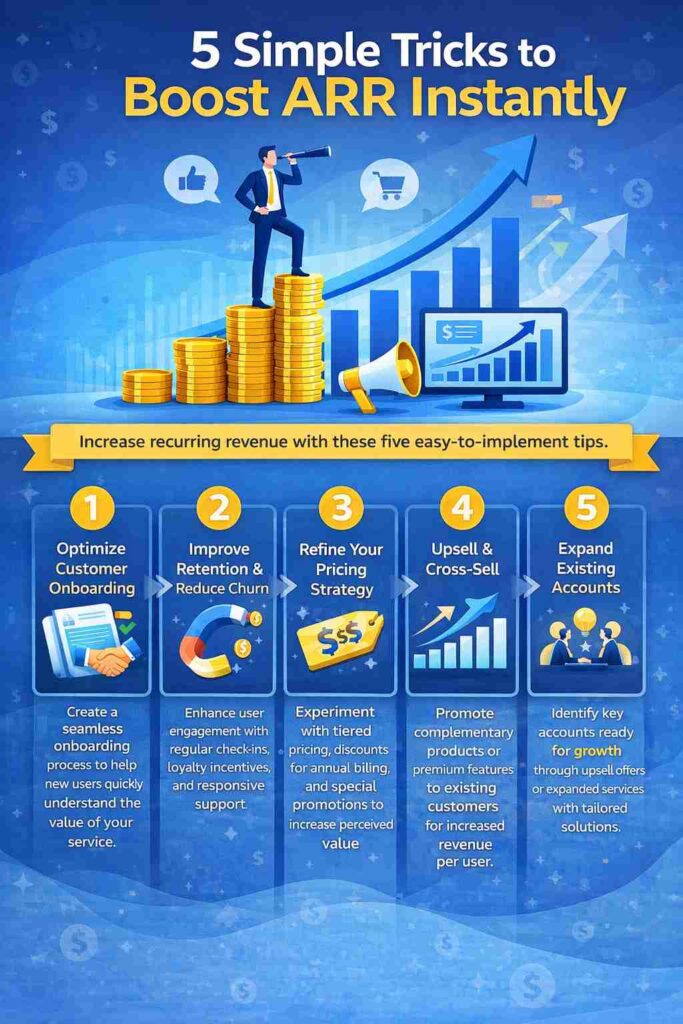
1. Improve Customer Onboarding
One of the fastest ways to increase recurring revenue is by improving the onboarding process. Many businesses lose customers during the first few weeks because users fail to understand the product’s value. If customers struggle to set up the platform or cannot achieve early success, they are more likely to cancel their subscriptions.
A smooth onboarding experience reduces confusion and builds confidence. The goal is to help customers experience a “quick win” as soon as possible. When users see measurable value early, they become more engaged and are more likely to continue using the service.
Businesses can strengthen onboarding by creating step-by-step tutorials, interactive walkthroughs, welcome emails, and short video guides. Personalized onboarding sessions can also help enterprise clients understand advanced features. Even simple improvements, such as clearer instructions or faster support responses, can significantly improve retention.
Automation tools can make onboarding more efficient. For example, automated email sequences can guide users through setup stages, while in-app notifications can encourage feature adoption. Tracking user behavior also helps identify where customers face difficulties.
Another effective strategy is assigning customer success representatives to high-value accounts. These professionals can provide direct support, answer questions, and help clients maximize the value of the service. Businesses that invest in customer success often experience lower churn rates and stronger customer loyalty.
A better onboarding experience creates happier customers, fewer cancellations, and higher lifetime value. Since retention directly impacts recurring revenue, optimizing the first customer experience can generate noticeable improvements quickly.
2. Introduce Strategic Upselling
Upselling is one of the most reliable methods for increasing revenue without constantly acquiring new customers. Existing customers already trust the business, making them more likely to purchase additional services or premium features.
Many companies miss upselling opportunities because they either promote upgrades too aggressively or fail to present them at the right time. Effective upselling focuses on helping customers solve bigger problems rather than simply increasing sales.
Start by identifying which features deliver the highest value. Customers who frequently use advanced functions may benefit from premium plans, expanded usage limits, additional integrations, or enhanced analytics. Instead of sending generic upgrade messages, tailor recommendations based on customer behavior.
Timing also matters. The best moment to suggest an upgrade is when customers are actively engaged and experiencing success. For example, if a user reaches the limit of a basic plan, presenting an upgrade option becomes a natural next step.
Bundling services can further increase account value. Businesses can combine multiple products, training sessions, or support packages into higher-tier plans. Customers often appreciate bundled solutions because they simplify purchasing decisions and improve convenience.
Another useful tactic is offering feature previews. Allowing customers to test premium tools for a limited time can increase upgrade conversions. Once users experience the additional benefits, they are more likely to pay for continued access.
Customer success teams and sales representatives should work together when managing enterprise accounts. By understanding customer goals and challenges, they can recommend upgrades that genuinely improve business performance.
Upselling works best when it feels consultative instead of pushy. Businesses that position upgrades as valuable solutions rather than sales tactics often achieve stronger customer relationships and higher recurring income.
3. Reduce Customer Churn
Reducing churn is one of the most powerful ways to improve revenue stability. Churn occurs when customers cancel subscriptions or stop renewing contracts. Even businesses with strong sales pipelines can struggle if too many customers leave.
Acquiring a new customer usually costs far more than retaining an existing one. This makes retention one of the most cost-effective growth strategies available.
The first step in reducing churn is understanding why customers leave. Exit surveys, support conversations, and usage analytics can reveal common issues. Some customers may feel overwhelmed by the platform, while others may believe the pricing no longer matches the value they receive.
Proactive communication can prevent many cancellations. Instead of waiting for customers to complain, businesses should regularly check in with users. Customer success teams can identify warning signs such as declining product usage, missed logins, or reduced engagement.
Educational content can also improve retention. Webinars, knowledge bases, community forums, and product training sessions help customers use the service more effectively. The more value customers receive, the less likely they are to cancel.
Flexible pricing options may reduce churn as well. Some users cancel because they temporarily need fewer features or have budget limitations. Offering smaller plans, usage-based pricing, or temporary discounts can help retain these customers.
Another effective approach is rewarding long-term customers. Loyalty incentives, exclusive features, or annual subscription discounts can encourage renewals. Customers appreciate businesses that recognize their continued support.
Businesses should also pay attention to customer feedback. Responding quickly to complaints and implementing requested improvements demonstrates commitment to customer satisfaction. Companies that actively listen to users often build stronger trust and loyalty.
Lower churn leads to more predictable revenue and better long-term growth. Even small reductions in cancellations can create a major financial impact over time.
4. Optimize Pricing Structure
Pricing plays a major role in revenue growth, yet many companies rarely review their pricing models. Businesses sometimes undercharge for valuable services because they fear losing customers. However, strategic pricing adjustments can improve revenue significantly without damaging customer relationships.
The key is understanding the value customers receive from the product or service. If the platform helps businesses save time, increase efficiency, or generate income, customers may be willing to pay more than expected.
Start by analyzing competitor pricing and market positioning. Understanding industry standards helps determine whether current pricing aligns with customer expectations. However, pricing decisions should not rely entirely on competitors. Businesses must also evaluate their unique strengths and customer outcomes.
Tiered pricing models often work well because they accommodate different customer needs. Smaller businesses may prefer affordable entry-level plans, while larger organizations may require advanced features and dedicated support.
Usage-based pricing can also increase revenue opportunities. Instead of charging fixed subscription fees, businesses can align pricing with customer activity, storage, users, or transactions. This model allows revenue to grow alongside customer usage.
Annual billing is another effective strategy. Encouraging customers to switch from monthly to yearly subscriptions improves cash flow and reduces churn risk. Many businesses offer discounts for annual commitments, which benefits both the company and the customer.
Testing pricing changes gradually can reduce risk. Instead of making sudden adjustments for all customers, businesses can experiment with new pricing for specific customer segments or new users.
Clear communication is essential when updating pricing. Customers are more accepting of increases when businesses explain the added value, new features, or service improvements that justify the change.
Optimized pricing does not mean charging the highest possible amount. The goal is to create a structure that reflects value, supports customer success, and strengthens long-term profitability.
5. Focus on Customer Expansion
Customer expansion involves growing revenue from existing accounts over time. This strategy can produce faster results than constantly pursuing new leads because current customers already understand the product and trust the business.
Expansion opportunities often include cross-selling complementary products, adding more users, increasing usage limits, or expanding into additional departments within a client organization.
One effective method is identifying power users within customer accounts. These users often become advocates who encourage broader adoption across their teams. Providing them with advanced training and personalized support can strengthen engagement and create internal referrals.
Businesses should also monitor customer growth patterns. If a client’s company is expanding rapidly, they may require additional licenses, integrations, or support services. Proactively presenting solutions before customers ask for them demonstrates strong partnership value.
Quarterly business reviews can help uncover expansion opportunities. During these meetings, businesses can discuss customer goals, performance metrics, and future challenges.
Conclusion
Increasing recurring revenue does not always require complex strategies or major operational changes. In many cases, small improvements in customer onboarding, retention, pricing, upselling, and account expansion can deliver fast and measurable results. Businesses that focus on creating value for existing customers often achieve stronger financial growth while building long-term trust and loyalty.
The key is consistency. Companies that regularly evaluate customer behavior, improve user experience, and adapt to changing needs are better positioned to maintain steady growth in competitive markets. Instead of relying only on new customer acquisition, organizations should maximize the potential of their current customer base through meaningful engagement and personalized support.
By applying these five simple tricks strategically, businesses can strengthen revenue predictability, improve customer satisfaction, and create a more scalable foundation for future success.