Introduction
Every organization strives for growth, profitability, and long-term success. Companies invest heavily in technology, marketing, product development, and customer service to stay competitive. However, one critical factor often goes unnoticed until it begins affecting performance—the workforce.
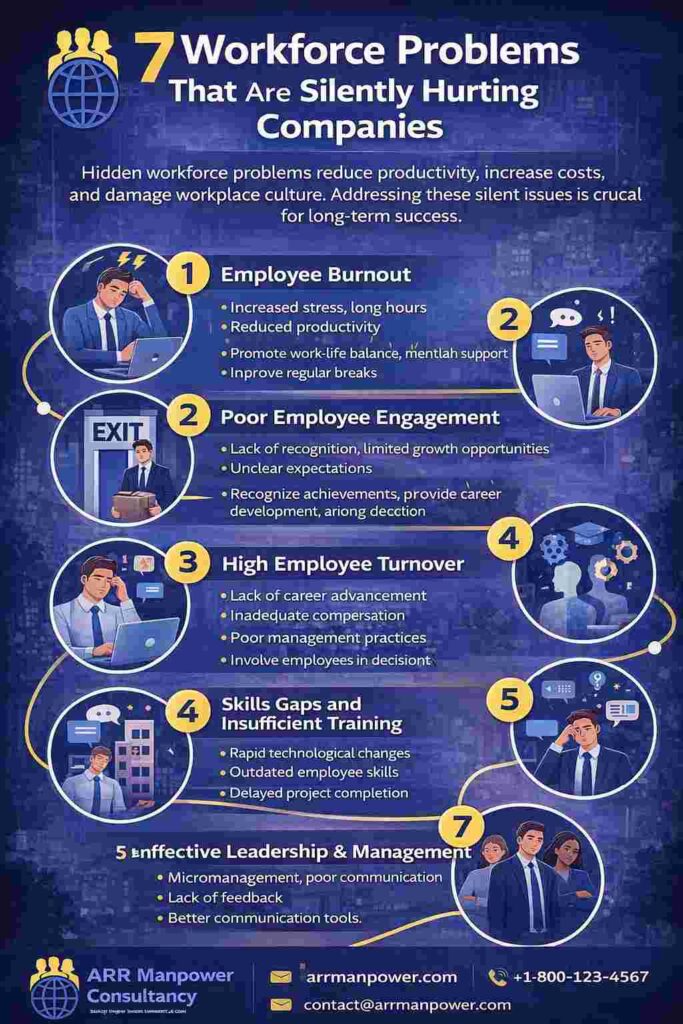
Many business leaders focus on visible challenges such as declining sales or increasing competition while overlooking internal employee-related issues. These hidden workforce problems can quietly reduce productivity, increase costs, damage workplace culture, and hinder business growth. Over time, these challenges become significant barriers to organizational success.
A strong team is the foundation of every successful business. When employees are disengaged, overworked, undertrained, or unsupported, the impact spreads across every department. Understanding and addressing these concerns early can help organizations maintain a productive and motivated workforce.
In this article, we explore seven workforce problems that are silently hurting companies and discuss practical ways to overcome them.
https://arrmanpowerconsultancy.com
1. Employee Burnout and Workplace Stress
One of the most common yet overlooked challenges in modern organizations is employee burnout. Increased workloads, unrealistic expectations, long working hours, and constant pressure to perform can leave employees mentally and physically exhausted.
Burnout does not happen overnight. It develops gradually, making it difficult for managers to identify until productivity starts declining. Employees experiencing burnout often show signs such as:
- Reduced enthusiasm for work
- Frequent absenteeism
- Increased mistakes
- Lower productivity
- Emotional exhaustion
When burnout becomes widespread, it can affect entire teams and create a negative work environment.
How to Address Burnout
Companies can reduce workplace stress by:
- Encouraging work-life balance
- Offering flexible work arrangements
- Setting realistic performance expectations
- Providing mental health support
- Promoting regular breaks and time off
Organizations that prioritize employee well-being often experience higher engagement, improved morale, and better retention rates.
2. Poor Employee Engagement
Many employees show up to work every day but remain emotionally disconnected from their jobs. This lack of engagement is a silent productivity killer.
Disengaged employees are less likely to contribute innovative ideas, collaborate effectively, or go beyond minimum job requirements. They may complete assigned tasks but rarely demonstrate commitment to organizational goals.
Common causes of low engagement include:
- Lack of recognition
- Poor communication
- Limited growth opportunities
- Weak leadership
- Unclear expectations
When engagement levels drop, customer satisfaction, productivity, and profitability often decline as well.
How to Improve Engagement
Organizations can strengthen engagement by:
- Recognizing employee achievements
- Encouraging open communication
- Providing career development opportunities
- Creating meaningful work experiences
- Involving employees in decision-making processes
Engaged employees feel valued and connected to the company’s mission, leading to stronger overall performance.
3. High Employee Turnover
Employee turnover can significantly impact business operations. While some turnover is inevitable, excessive departures often indicate deeper organizational issues.
Replacing employees is expensive. Recruitment, onboarding, training, and lost productivity all contribute to substantial costs. Additionally, frequent turnover disrupts team dynamics and affects customer relationships.
Reasons employees leave organizations may include:
- Lack of career advancement
- Inadequate compensation
- Poor management practices
- Unhealthy workplace culture
- Limited recognition
When talented employees consistently leave, organizations lose valuable knowledge and experience.
Strategies to Reduce Turnover
Businesses can improve retention by:
- Offering competitive compensation packages
- Creating clear career pathways
- Strengthening leadership practices
- Providing continuous feedback
- Building a positive workplace culture
Retaining experienced employees contributes to stability, productivity, and long-term success.
4. Skills Gaps and Insufficient Training
Rapid technological advancements are transforming industries at an unprecedented pace. Unfortunately, many organizations fail to keep employee skills aligned with changing business demands.
A skills gap occurs when employees lack the knowledge or capabilities needed to perform current or future job responsibilities effectively.
Consequences of skill shortages include:
- Reduced productivity
- Lower service quality
- Increased errors
- Delayed project completion
- Limited innovation
Organizations that neglect employee development often struggle to remain competitive.
Closing the Skills Gap
Companies can address this issue through:
- Regular skills assessments
- Professional development programs
- Online learning opportunities
- Mentorship initiatives
- Cross-functional training
Investing in employee learning not only improves performance but also demonstrates a commitment to career growth.
5. Ineffective Leadership and Management
Strong leadership is essential for organizational success. However, ineffective managers can create significant challenges that impact employee satisfaction and performance.
Employees often leave managers rather than companies. Poor leadership can result in confusion, frustration, and declining morale.
Common leadership issues include:
- Lack of communication
- Micromanagement
- Inconsistent decision-making
- Failure to provide feedback
- Limited empathy
When employees lose confidence in leadership, trust begins to erode throughout the organization.
Developing Better Leaders
Organizations should focus on:
- Leadership training programs
- Coaching and mentoring
- Communication skill development
- Emotional intelligence training
- Accountability measures
Effective leaders inspire employees, foster collaboration, and drive organizational success.
6. Poor Communication Across Teams
Communication breakdowns can create costly misunderstandings and operational inefficiencies. Even highly skilled employees struggle when information is unclear or inconsistent.
Poor communication often leads to:
- Missed deadlines
- Conflicting priorities
- Duplicate work
- Employee frustration
- Reduced productivity
As organizations grow, communication challenges become increasingly complex. Remote and hybrid work environments can further amplify these issues.
Improving Workplace Communication
Businesses can strengthen communication by:
- Establishing clear communication channels
- Encouraging transparency
- Holding regular team meetings
- Using collaboration tools effectively
- Providing communication training
When employees understand expectations and organizational goals, they can work more efficiently and collaboratively.
7. Lack of Diversity, Equity, and Inclusion
A diverse and inclusive workplace is more than a social responsibility—it is a business advantage. Organizations that fail to create inclusive environments may miss opportunities for innovation, creativity, and improved decision-making.
Employees who feel excluded or undervalued are less likely to contribute their best work. A lack of diversity can also limit perspectives and hinder problem-solving capabilities.
Challenges may include:
- Unconscious bias
- Unequal opportunities
- Limited representation
- Lack of inclusive leadership
- Workplace discrimination
These issues can negatively impact employee morale and organizational reputation.
Building an Inclusive Workplace
Companies can promote inclusion by:
- Implementing fair hiring practices
- Providing diversity training
- Encouraging diverse perspectives
- Establishing employee resource groups
- Creating equitable advancement opportunities
Inclusive organizations often attract top talent and foster stronger employee engagement.
The Hidden Financial Impact of Workforce Problems
Many organizations underestimate the financial consequences of workforce-related challenges. While some issues may appear minor initially, their cumulative impact can be substantial.
Hidden costs often include:
- Increased recruitment expenses
- Lost productivity
- Overtime costs
- Reduced customer satisfaction
- Lower employee morale
- Decreased innovation
For example, disengaged employees may contribute less effectively, leading to slower project completion and reduced business performance. Similarly, high turnover can require repeated hiring and training investments.
Organizations that proactively address workforce challenges often achieve stronger financial results and greater operational efficiency.
Why Workforce Health Matters More Than Ever
The modern workplace continues to evolve rapidly. Technological advancements, changing employee expectations, remote work trends, and competitive labor markets have transformed how businesses operate.
Today’s employees seek more than just compensation. They value:
- Meaningful work
- Career growth opportunities
- Flexibility
- Supportive leadership
- Positive workplace culture
Organizations that fail to adapt may struggle to attract and retain talented professionals.
Workforce health is no longer simply an HR concern—it is a strategic business priority. Companies that invest in their people are better positioned to navigate change, drive innovation, and maintain a competitive advantage.
Creating a Workforce Strategy for Long-Term Success
Addressing workforce challenges requires a proactive and strategic approach. Rather than reacting to problems after they become severe, organizations should continuously monitor employee experiences and identify improvement opportunities.
An effective workforce strategy should include:
Employee Listening Programs
Regular surveys, feedback sessions, and one-on-one discussions help leaders understand employee concerns before they escalate.
Continuous Learning
Ongoing development programs ensure employees remain equipped to meet evolving business demands.
Strong Leadership Development
Investing in leadership capabilities helps create supportive and high-performing work environments.
Recognition and Rewards
Acknowledging employee contributions boosts morale and strengthens engagement.
Flexible Work Policies
Providing flexibility can improve employee satisfaction and reduce burnout.
Data-Driven Decision Making
Using workforce analytics helps organizations identify trends, measure performance, and make informed decisions.
A comprehensive workforce strategy creates a foundation for sustainable growth and long-term organizational success.
Conclusion
Addressing workforce challenges early can prevent long-term operational setbacks and protect business growth. Companies that invest in employee engagement, effective hiring strategies, skills development, and workplace communication are better positioned to remain competitive. A proactive workforce management approach helps build resilience, improve productivity, and support sustainable success.
Many organizations focus on external challenges while overlooking internal workforce issues that quietly undermine performance. Employee burnout, low engagement, high turnover, skills gaps, ineffective leadership, poor communication, and lack of inclusion can significantly affect productivity, profitability, and workplace culture.
The good news is that these challenges are preventable. By investing in employee well-being, professional development, leadership effectiveness, and inclusive workplace practices, organizations can create an environment where employees thrive.
A healthy workforce is one of the most valuable assets any company possesses. Businesses that prioritize their people are better equipped to innovate, adapt, and achieve lasting success in an increasingly competitive marketplace.
Identifying and addressing workforce problems early not only improves employee experiences but also strengthens the organization’s ability to grow and succeed for years to come.