Introduction
Finding the right job has become increasingly challenging in today’s professional landscape. With more qualified candidates applying for the same positions, employers have the luxury of choosing from a large talent pool. As a result, job seekers must go beyond simply submitting applications and waiting for responses. To secure interviews and land desirable opportunities, professionals need a strategic approach that highlights their unique strengths and value.
Standing out in a competitive job market requires more than academic qualifications or years of experience. Employers are looking for candidates who demonstrate adaptability, problem-solving abilities, industry knowledge, and a commitment to continuous growth. Whether you are a recent graduate, a mid-career professional, or someone looking to switch industries, implementing the right strategies can significantly improve your chances of success.
This guide explores eight practical and proven ways to distinguish yourself from other candidates and build a strong professional presence that attracts employers.
https://arrmanpowerconsultancy.com
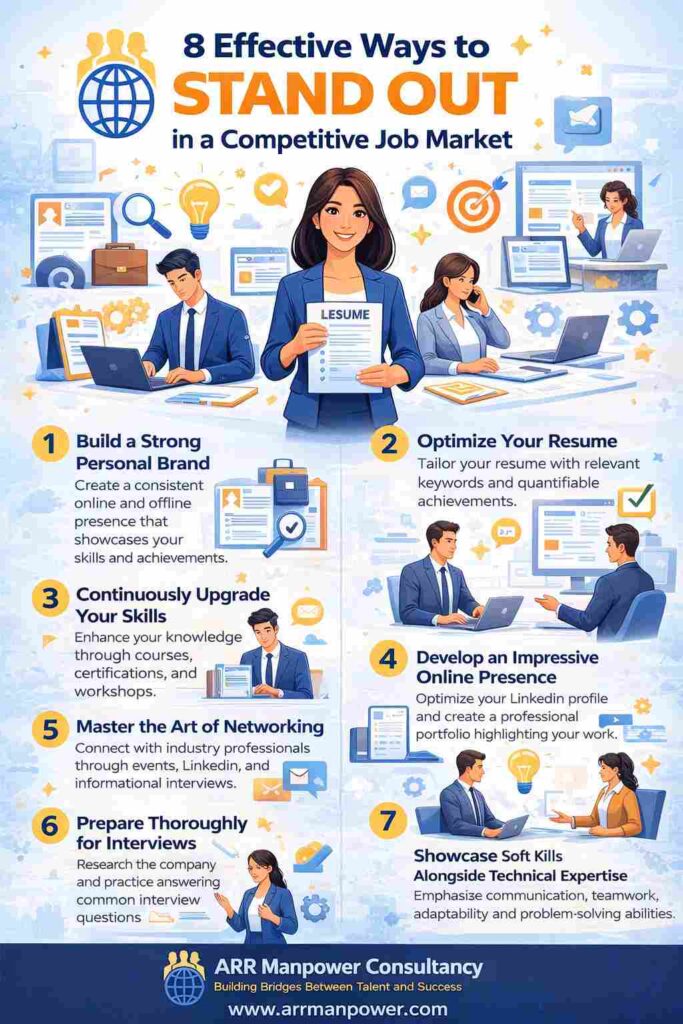
1. Build a Strong Personal Brand
Your personal brand represents how employers, recruiters, and industry professionals perceive you. It reflects your expertise, values, achievements, and professional identity.
A strong personal brand helps you create a memorable impression and establishes credibility within your field. Employers often research candidates online before making hiring decisions, making it essential to maintain a professional image across all platforms.
How to Build Your Personal Brand
- Define your professional strengths and unique value proposition.
- Create a consistent message across your resume, LinkedIn profile, and portfolio.
- Share industry insights and professional achievements online.
- Participate in discussions related to your field.
- Highlight certifications, projects, and accomplishments.
When your personal brand clearly communicates your expertise, employers are more likely to recognize your potential and consider you for opportunities.
2. Optimize Your Resume for Modern Hiring Processes
Your resume is often the first point of contact between you and a potential employer. In many organizations, Applicant Tracking Systems (ATS) scan resumes before a human recruiter reviews them.
A well-optimized resume improves your chances of passing these automated screenings and reaching hiring managers.
Resume Optimization Tips
- Customize your resume for each position.
- Include relevant keywords from the job description.
- Use clear section headings and professional formatting.
- Quantify achievements with measurable results.
- Focus on accomplishments rather than responsibilities.
For example, instead of stating:
“Managed social media accounts.”
Write:
“Increased social media engagement by 45% within six months through targeted content strategies.”
Specific achievements demonstrate value and help differentiate you from other applicants.
3. Continuously Upgrade Your Skills
The professional world evolves rapidly, and employers seek candidates who can adapt to changing industry demands. Continuous learning demonstrates initiative and a commitment to professional growth.
Candidates who regularly acquire new skills often have a significant advantage in a competitive job market because they remain relevant and prepared for emerging opportunities.
Ways to Enhance Your Skills
- Enroll in online courses.
- Earn industry-recognized certifications.
- Attend workshops and seminars.
- Participate in webinars and training programs.
- Learn new technologies relevant to your field.
For example, professionals in marketing may benefit from learning data analytics, while IT specialists can enhance their value by acquiring cloud computing certifications.
Investing in skill development not only improves employability but also boosts confidence during interviews and networking events.
4. Develop an Impressive Online Presence
Recruiters increasingly use online platforms to identify and evaluate potential candidates. A professional online presence can significantly influence hiring decisions.
Your digital footprint should reinforce your expertise and showcase your accomplishments.
Strengthening Your Online Presence
Optimize Your LinkedIn Profile
Ensure your profile includes:
- A professional photo.
- A compelling headline.
- Detailed work experience.
- Relevant skills and endorsements.
- Recommendations from colleagues or managers.
Share Valuable Content
Posting articles, insights, and industry updates demonstrates thought leadership and engagement within your profession.
Create a Professional Portfolio
A portfolio provides tangible evidence of your abilities. Depending on your field, it may include:
- Writing samples.
- Design projects.
- Marketing campaigns.
- Software applications.
- Research reports.
An active and professional online presence helps recruiters gain confidence in your capabilities.
5. Master the Art of Networking
Many job opportunities are filled through referrals and professional connections before they are publicly advertised. Building a strong network can open doors to opportunities that may otherwise remain inaccessible.
Networking is not simply about collecting contacts; it involves developing genuine professional relationships.
Effective Networking Strategies
- Attend industry conferences and events.
- Join professional associations.
- Participate in online communities.
- Connect with professionals on LinkedIn.
- Follow up regularly with meaningful interactions.
When networking, focus on providing value rather than immediately asking for favors. Share insights, offer assistance, and engage in productive conversations.
Strong professional relationships often lead to mentorship opportunities, referrals, and career advancement.
6. Prepare Thoroughly for Interviews
A strong resume may secure an interview, but your performance during the conversation determines whether you receive an offer.
Interview preparation allows you to present yourself confidently and demonstrate your suitability for the role.
Key Interview Preparation Steps
Research the Company
Understand:
- Company mission and values.
- Products and services.
- Industry position.
- Recent developments.
Practice Common Questions
Prepare responses for questions such as:
- Tell me about yourself.
- Why do you want to work here?
- What are your strengths and weaknesses?
- Describe a challenging situation you handled.
Use the STAR Method
When discussing experiences, structure your answers using:
- Situation
- Task
- Action
- Result
This method helps provide clear and impactful responses.
Prepare Questions
Thoughtful questions demonstrate interest and professionalism. Consider asking about:
- Team structure.
- Growth opportunities.
- Company culture.
- Performance expectations.
Thorough preparation enables you to communicate your value effectively and leave a positive impression.
7. Showcase Soft Skills Alongside Technical Expertise
Technical knowledge is essential, but employers increasingly prioritize soft skills when evaluating candidates.
Many organizations recognize that technical skills can be taught, while strong interpersonal abilities often determine long-term success.
Important Soft Skills Employers Value
Communication
Clear communication improves collaboration and productivity.
Adaptability
Organizations seek employees who can respond effectively to change.
Problem-Solving
The ability to analyze challenges and identify solutions is highly desirable.
Leadership
Leadership qualities are valuable even in non-management roles.
Teamwork
Employers want individuals who contribute positively to team dynamics.
Demonstrating Soft Skills
Instead of simply listing skills, provide examples that illustrate them.
For example:
“Led a cross-functional project team that completed a major client implementation two weeks ahead of schedule.”
Specific examples make your claims more credible and memorable.
8. Take a Strategic Approach to Job Applications
Submitting hundreds of generic applications often produces disappointing results. A targeted strategy is typically more effective.
Quality applications generally outperform quantity when searching for opportunities.
Create a Focused Job Search Plan
Identify Ideal Roles
Determine:
- Preferred industries.
- Desired job titles.
- Required qualifications.
- Long-term career goals.
Customize Every Application
Tailor:
- Resume.
- Cover letter.
- Portfolio materials.
Show employers how your background aligns with their specific needs.
Track Applications
Maintain a spreadsheet that includes:
- Company name.
- Position title.
- Application date.
- Follow-up status.
- Interview outcomes.
Organization helps ensure timely follow-up and better management of opportunities.
Follow Up Professionally
A courteous follow-up email can reinforce your interest and keep your application top of mind.
Strategic job searching increases efficiency and improves overall results.
Additional Tips for Long-Term Career Success
Beyond the eight primary strategies discussed above, several additional practices can strengthen your professional position over time.
Seek Feedback Regularly
Constructive feedback helps identify areas for improvement and accelerates professional growth.
Build Industry Knowledge
Stay informed about trends, innovations, and challenges affecting your field.
Volunteer for Challenging Projects
Taking initiative demonstrates ambition, leadership, and commitment.
Maintain Professional Relationships
Even after securing employment, continue nurturing your network.
Set Career Goals
Establish short-term and long-term objectives to guide your professional development.
Consistent effort in these areas contributes to sustained career advancement and increased employability.
Common Mistakes to Avoid
Many candidates unintentionally reduce their chances of success by making avoidable errors.
Applying Without Customization
Generic applications often fail to capture employer attention.
Ignoring Online Reputation
Unprofessional online content can negatively influence hiring decisions.
Neglecting Networking
Relying solely on job boards limits potential opportunities.
Failing to Prepare for Interviews
Insufficient preparation can undermine otherwise strong qualifications.
Overlooking Continuous Learning
Skill stagnation may reduce competitiveness over time.
Avoiding these mistakes helps create a stronger and more appealing professional profile.
Conclusion
Success in a competitive job market requires more than meeting basic qualifications. Employers seek individuals who demonstrate expertise, adaptability, professionalism, and a commitment to growth. By building a strong personal brand, optimizing your resume, upgrading your skills, strengthening your online presence, expanding your network, preparing thoroughly for interviews, showcasing soft skills, and applying strategically, you can significantly improve your chances of standing out.
Career advancement is rarely the result of luck alone. It is often the outcome of consistent effort, strategic planning, and continuous improvement. By implementing these eight effective strategies, you position yourself as a valuable candidate capable of meeting the evolving needs of modern employers.
The job search journey may be challenging, but with the right approach, you can differentiate yourself from the competition and move closer to achieving your professional goals.