Introduction
Organizations today operate in a rapidly evolving business environment characterized by technological advancements, shifting market demands, demographic changes, and increasing competition. To remain competitive and sustainable, businesses must ensure they have the right people with the right skills in the right positions at the right time. This is where workforce planning becomes a critical business function.
Workforce planning is a strategic process that helps organizations anticipate future talent needs, identify workforce gaps, and develop solutions to maintain operational efficiency and long-term growth. Rather than reacting to staffing shortages or skills gaps when they occur, successful companies proactively prepare for future workforce challenges.
Implementing effective workforce planning strategies allows organizations to improve productivity, reduce recruitment costs, strengthen employee retention, and align talent management initiatives with business objectives. In this article, we explore twelve proven workforce planning strategies that can help organizations build a resilient workforce and achieve long-term success.
https://arrmanpowerconsultancy.com
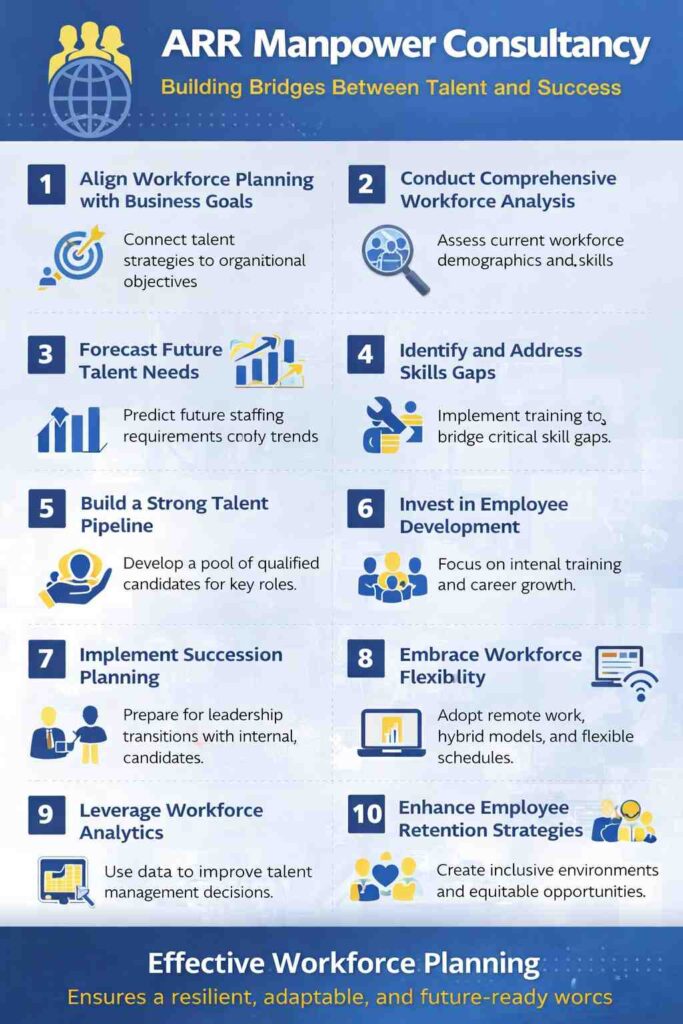
1. Align Workforce Planning with Business Goals
One of the most important aspects of workforce planning is ensuring that talent strategies support overall business objectives. Workforce decisions should never occur in isolation. Instead, they must reflect the organization’s vision, growth plans, and operational priorities.
Business leaders and HR teams should collaborate regularly to understand future organizational goals. Whether the company plans to expand into new markets, launch new products, or adopt emerging technologies, workforce requirements should be identified early.
By aligning workforce planning with strategic goals, organizations can ensure that staffing levels, skill development initiatives, and recruitment efforts contribute directly to business success.
2. Conduct Comprehensive Workforce Analysis
Understanding the current workforce is essential before planning for the future. Organizations should conduct detailed assessments of their existing workforce to evaluate employee demographics, skills, performance levels, experience, and productivity.
A workforce analysis provides valuable insights into:
- Current talent strengths
- Critical skill gaps
- High-performing employees
- Retirement risks
- Workforce diversity trends
These insights help organizations make informed decisions regarding hiring, training, succession planning, and resource allocation. Regular workforce analysis creates a solid foundation for long-term planning initiatives.
3. Forecast Future Talent Needs
Accurate forecasting is a fundamental component of successful workforce planning. Organizations must predict future staffing requirements based on business growth projections, industry trends, economic conditions, and technological developments.
Forecasting helps answer important questions such as:
- How many employees will be needed in the future?
- What skills will become increasingly important?
- Which departments are likely to experience growth?
- Where may talent shortages occur?
Using workforce data and predictive analytics can significantly improve forecasting accuracy and help organizations prepare for future workforce demands before they become urgent challenges.
4. Identify and Address Skills Gaps
As industries evolve, employee skills must evolve as well. Organizations that fail to address emerging skill requirements risk falling behind competitors.
A skills gap analysis compares current employee capabilities with future business needs. Once gaps are identified, organizations can implement targeted development programs to bridge them.
Common approaches include:
- Professional training programs
- Technical certifications
- Leadership development initiatives
- Online learning platforms
- Cross-functional projects
Investing in skill development not only improves organizational performance but also enhances employee engagement and retention by supporting career growth opportunities.
5. Build a Strong Talent Pipeline
Successful organizations understand the importance of maintaining a continuous flow of qualified candidates. Building a talent pipeline reduces the risk of critical vacancies and shortens hiring timelines.
Talent pipelines can be developed through:
- University partnerships
- Internship programs
- Employee referral initiatives
- Professional networking events
- Industry associations
- Recruitment marketing campaigns
Maintaining relationships with potential candidates allows organizations to quickly fill positions when opportunities arise. A proactive approach to talent acquisition strengthens long-term workforce stability.
6. Invest in Employee Development
Employee development is a powerful workforce planning strategy that supports both organizational growth and employee satisfaction. Rather than relying solely on external hiring, organizations should focus on developing internal talent.
Development initiatives may include:
- Mentorship programs
- Leadership training
- Technical skill enhancement
- Career development planning
- Coaching and feedback programs
Employees who receive growth opportunities are often more motivated, productive, and loyal. Developing internal talent also reduces recruitment costs and creates a stronger succession pipeline.
7. Implement Succession Planning
Unexpected leadership departures can disrupt operations and create uncertainty within an organization. Succession planning ensures that critical roles can be filled quickly by qualified internal candidates.
An effective succession planning process involves:
- Identifying key positions
- Assessing high-potential employees
- Creating development plans
- Providing leadership experiences
- Monitoring readiness levels
Succession planning reduces organizational risk while preserving institutional knowledge. It also demonstrates a commitment to employee growth and leadership development.
8. Embrace Workforce Flexibility
Modern work environments require flexibility to adapt to changing business conditions. Organizations that incorporate flexible workforce models are often better positioned to respond to market fluctuations and unexpected challenges.
Examples of workforce flexibility include:
- Remote work arrangements
- Hybrid work models
- Flexible scheduling
- Contract workers
- Project-based teams
Flexible workforce strategies allow organizations to access specialized skills while maintaining operational agility. Employees also benefit from improved work-life balance, contributing to higher job satisfaction and retention.
9. Leverage Workforce Analytics
Data-driven decision-making has become essential in modern workforce planning. Workforce analytics enables organizations to gather meaningful insights from employee data and make informed strategic decisions.
Key workforce metrics may include:
- Employee turnover rates
- Retention levels
- Productivity measurements
- Recruitment effectiveness
- Training outcomes
- Employee engagement scores
By analyzing workforce data, organizations can identify trends, anticipate challenges, and optimize talent management strategies. Workforce analytics supports continuous improvement and long-term workforce effectiveness.
10. Enhance Employee Retention Strategies
Attracting talent is important, but retaining skilled employees is equally critical. High turnover rates can increase costs, reduce productivity, and negatively impact organizational culture.
Organizations can improve retention by focusing on:
- Competitive compensation
- Career advancement opportunities
- Recognition programs
- Positive workplace culture
- Employee well-being initiatives
- Effective leadership practices
Regular employee feedback surveys can help organizations understand workforce concerns and implement targeted improvements. Strong retention strategies contribute to workforce stability and organizational success.
11. Promote Diversity and Inclusion
Diversity and inclusion are essential components of effective workforce planning. A diverse workforce brings varied perspectives, experiences, and ideas that can drive innovation and improve business outcomes.
Organizations should create inclusive environments where employees feel valued and respected regardless of background. Diversity initiatives may include:
- Inclusive recruitment practices
- Bias awareness training
- Employee resource groups
- Equitable promotion opportunities
- Inclusive leadership development
Research consistently shows that diverse organizations often achieve stronger financial performance, better problem-solving capabilities, and increased employee engagement.
12. Continuously Review and Update Workforce Plans
Workforce planning should not be viewed as a one-time activity. Business environments change rapidly, and workforce strategies must evolve accordingly.
Organizations should establish regular review processes to assess workforce plans and adjust them when necessary. Reviews should consider:
- Business performance
- Industry trends
- Labor market conditions
- Technological developments
- Workforce demographics
Continuous monitoring ensures that workforce plans remain aligned with organizational objectives and external market realities.
Organizations that regularly update their workforce planning strategies are better prepared to navigate uncertainty and capitalize on new opportunities.
Common Challenges in Workforce Planning
While workforce planning offers significant benefits, organizations often encounter challenges during implementation. Some common obstacles include:
Limited Data Availability
Without accurate workforce data, organizations may struggle to forecast future needs and identify talent gaps effectively.
Rapid Technological Change
Emerging technologies can quickly alter workforce requirements, making long-term planning more complex.
Talent Shortages
Many industries face increasing competition for skilled professionals, particularly in specialized fields.
Resistance to Change
Employees and managers may resist workforce initiatives if they do not fully understand their purpose or benefits.
Addressing these challenges requires strong leadership support, effective communication, and a commitment to continuous improvement.
Benefits of Effective Workforce Planning
Organizations that implement strong workforce planning practices can achieve numerous advantages, including:
- Improved productivity
- Better talent management
- Reduced recruitment costs
- Enhanced employee retention
- Stronger succession readiness
- Increased organizational agility
- Better alignment between talent and business goals
- Improved workforce engagement
These benefits contribute directly to long-term organizational success and sustainability.
Conclusion
Long-term business success depends heavily on an organization’s ability to anticipate and respond to workforce needs. Effective workforce planning provides a structured approach for ensuring that the organization has the necessary talent, skills, and leadership capabilities to achieve strategic objectives.
By aligning talent strategies with business goals, conducting workforce analysis, forecasting future needs, developing employees, strengthening retention efforts, and leveraging workforce analytics, organizations can build a resilient and adaptable workforce prepared for future challenges.
The twelve workforce planning strategies outlined in this article provide a practical framework for organizations seeking sustainable growth and competitive advantage. As workforce dynamics continue to evolve, companies that prioritize proactive planning will be better positioned to attract top talent, improve performance, and achieve lasting success.
Organizations that prioritize workforce planning gain a significant advantage in an increasingly competitive marketplace. By proactively preparing for future workforce requirements, businesses can minimize disruptions, strengthen operational efficiency, and create sustainable growth opportunities. A well-structured workforce planning approach also fosters innovation, supports employee development, and enhances organizational resilience during periods of change. As business landscapes continue to evolve, investing in long-term talent strategies will remain essential for building a future-ready workforce capable of driving consistent success and achieving strategic objectives.
https://economictimes.indiatimes.com/defaultinterstitial.cms