Introduction
A strong workplace reputation is one of the most valuable assets any organization can possess. It influences how employees feel about their jobs, how customers perceive the brand, and how potential candidates evaluate career opportunities. In today’s competitive business environment, organizations that are respected for their culture, ethics, and employee experience are more likely to attract top talent, retain skilled professionals, and achieve sustainable growth.
Building a positive image within and outside the organization does not happen overnight. It requires consistent effort, strategic planning, and a commitment to creating a supportive environment where employees can thrive. Companies that invest in their people and maintain transparent business practices often earn trust and credibility in the marketplace.
This article explores eleven practical strategies organizations can implement to strengthen their standing and create a positive work environment that benefits employees, management, and stakeholders alike.
https://arrmanpowerconsultancy.com
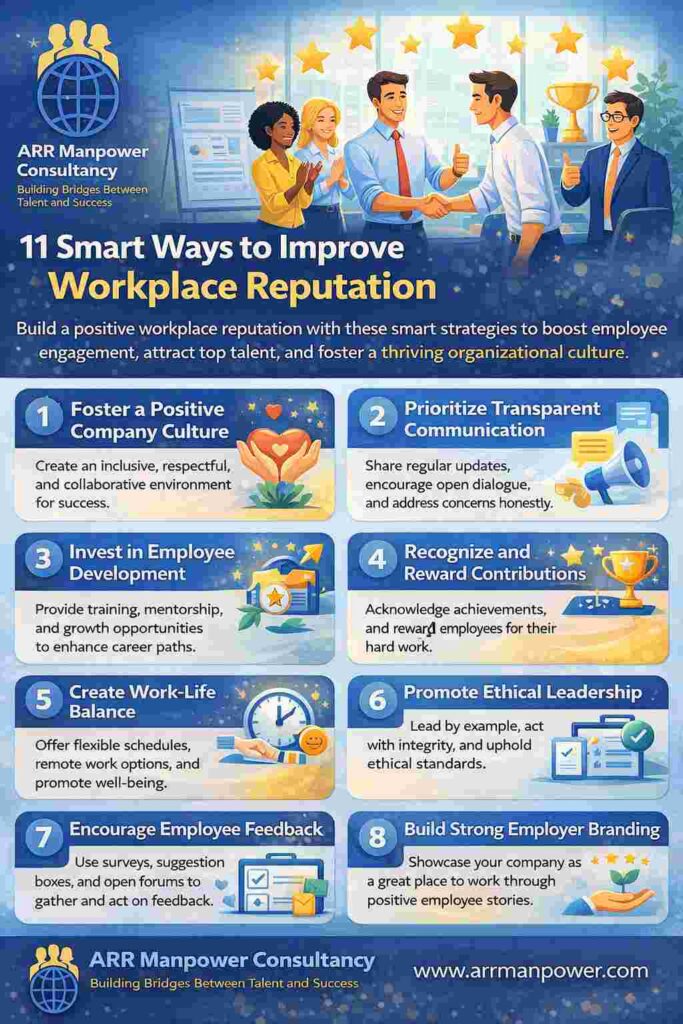
1. Foster a Positive Company Culture
Company culture serves as the foundation of organizational success. It shapes employee behavior, influences decision-making, and determines how individuals interact within the workplace.
A positive culture encourages collaboration, respect, inclusivity, and accountability. Employees who feel valued and supported are more likely to contribute enthusiastically and become ambassadors for the organization.
To strengthen workplace culture:
- Define and communicate company values clearly.
- Encourage teamwork across departments.
- Celebrate diversity and inclusion.
- Promote mutual respect among employees.
When culture aligns with employee expectations, organizations often experience higher engagement levels and stronger loyalty.
2. Prioritize Transparent Communication
Open communication is essential for building trust between leadership and employees. Organizations that communicate honestly and consistently are more likely to gain employee confidence and support.
Transparency helps reduce misunderstandings, minimizes workplace rumors, and creates an environment where employees feel informed and involved.
Effective communication strategies include:
- Regular team meetings and updates.
- Open-door leadership policies.
- Employee feedback channels.
- Clear communication regarding organizational changes.
When employees understand company goals and challenges, they are more likely to remain engaged and supportive of organizational initiatives.
3. Invest in Employee Development
Professional growth opportunities significantly impact employee satisfaction and retention. Workers want to know that their employer is committed to helping them advance their careers.
Organizations can support employee development through:
- Training programs.
- Skill enhancement workshops.
- Mentorship initiatives.
- Leadership development opportunities.
- Industry certifications.
Employees who continuously learn and improve become more productive and innovative. Furthermore, organizations known for supporting career growth often attract ambitious professionals seeking long-term opportunities.
4. Recognize and Reward Contributions
Employee recognition plays a vital role in maintaining morale and motivation. Individuals who feel appreciated are more likely to remain committed to their work and contribute positively to the organization.
Recognition does not always need to be financial. Meaningful appreciation can include:
- Public acknowledgment of achievements.
- Employee-of-the-month programs.
- Personalized thank-you messages.
- Career advancement opportunities.
- Performance-based rewards.
Consistent recognition reinforces positive behaviors and encourages employees to maintain high standards of performance.
5. Create a Healthy Work-Life Balance
Modern employees increasingly value organizations that respect personal well-being. Excessive workloads and constant pressure can lead to burnout, reduced productivity, and higher turnover rates.
Employers can support work-life balance by:
- Offering flexible schedules.
- Encouraging reasonable workloads.
- Supporting remote or hybrid work options.
- Providing mental health resources.
- Respecting personal time outside working hours.
Organizations that prioritize employee well-being often experience improved engagement, stronger morale, and greater long-term retention.
6. Promote Ethical Leadership
Leadership behavior significantly influences how employees perceive an organization. Ethical leaders establish credibility by acting with integrity, fairness, and accountability.
Characteristics of ethical leadership include:
- Honest decision-making.
- Consistent treatment of employees.
- Accountability for actions.
- Respect for organizational values.
- Commitment to fairness.
When leadership demonstrates ethical conduct, employees are more likely to trust management and align with company objectives. Ethical practices also strengthen public confidence in the organization.
7. Encourage Employee Feedback
Employees often have valuable insights into workplace challenges and opportunities for improvement. Organizations that actively seek employee feedback demonstrate a commitment to continuous improvement.
Methods for gathering feedback include:
- Employee surveys.
- One-on-one meetings.
- Suggestion programs.
- Anonymous feedback channels.
- Team discussions.
However, collecting feedback alone is not enough. Organizations must take meaningful action based on employee input whenever possible. When employees see their suggestions leading to positive changes, trust and engagement increase significantly.
8. Build Strong Employer Branding
Employer branding reflects how current employees, job seekers, and the broader market perceive an organization as a place to work.
A strong employer brand can:
- Attract qualified candidates.
- Improve employee retention.
- Enhance organizational credibility.
- Support recruitment efforts.
Organizations can strengthen their employer brand by:
- Sharing employee success stories.
- Highlighting workplace culture.
- Demonstrating commitment to diversity.
- Showcasing community involvement.
- Promoting employee development initiatives.
Positive employee experiences often become powerful testimonials that influence potential candidates and stakeholders.
9. Support Diversity and Inclusion
Diversity and inclusion have become essential components of successful organizations. A workplace that welcomes individuals from different backgrounds fosters creativity, innovation, and broader perspectives.
Organizations can promote inclusivity by:
- Implementing fair hiring practices.
- Providing diversity training.
- Encouraging inclusive leadership.
- Creating equal growth opportunities.
- Addressing workplace bias proactively.
Employees who feel respected and included are more likely to contribute fully and remain committed to organizational success.
A diverse workforce also strengthens organizational adaptability in an increasingly global marketplace.
10. Engage in Corporate Social Responsibility
Corporate social responsibility (CSR) initiatives demonstrate an organization’s commitment to making a positive impact beyond business operations.
Meaningful CSR activities may include:
- Environmental sustainability programs.
- Community service projects.
- Charitable contributions.
- Educational partnerships.
- Employee volunteer opportunities.
Organizations that actively support social causes often build stronger relationships with employees, customers, and communities.
Employees frequently take pride in working for companies that contribute positively to society. This sense of purpose can enhance engagement and strengthen organizational loyalty.
11. Deliver a Consistently Positive Employee Experience
Every interaction employees have with an organization contributes to their overall experience. From recruitment and onboarding to career development and exit processes, consistency matters.
A positive employee experience involves:
- Smooth onboarding processes.
- Supportive management.
- Opportunities for growth.
- Fair compensation.
- Respectful workplace interactions.
- Recognition and appreciation.
Organizations should regularly evaluate employee experiences and identify areas for improvement. Continuous enhancement helps create an environment where employees feel valued and motivated.
When employees consistently have positive experiences, they are more likely to recommend the organization to others, strengthening its standing in the market.
Common Mistakes That Damage Organizational Reputation
While many organizations focus on improvement efforts, certain mistakes can undermine progress and negatively affect perceptions.
Common pitfalls include:
Ignoring Employee Concerns
Failing to address employee issues can lead to frustration, disengagement, and turnover.
Lack of Transparency
Poor communication creates uncertainty and damages trust.
Inconsistent Leadership
Leaders who fail to model company values can weaken organizational credibility.
Limited Growth Opportunities
Employees may seek employment elsewhere if they feel their development is being neglected.
Poor Work-Life Balance
Excessive workloads can contribute to burnout and decreased morale.
Avoiding these mistakes is essential for maintaining long-term success and employee satisfaction.
Measuring Improvement Efforts
Organizations should regularly evaluate their progress using measurable indicators.
Key metrics may include:
- Employee satisfaction scores.
- Retention rates.
- Employee referral rates.
- Candidate application volume.
- Online employer reviews.
- Internal engagement survey results.
Tracking these indicators helps organizations identify strengths, address weaknesses, and make informed decisions regarding future initiatives.
Regular assessment ensures continuous improvement and allows organizations to adapt to changing workforce expectations.
Long-Term Benefits of a Strong Workplace Reputation
Organizations that maintain a positive standing enjoy numerous advantages, including:
Improved Talent Attraction
Qualified professionals are naturally drawn to organizations known for supportive environments and growth opportunities.
Higher Employee Retention
Satisfied employees are more likely to remain with the organization long term.
Increased Productivity
Engaged employees tend to be more motivated and productive.
Stronger Customer Trust
Organizations that treat employees well often gain greater customer confidence.
Enhanced Business Performance
Positive workplace environments contribute to innovation, collaboration, and sustainable growth.
These benefits create a competitive advantage that supports long-term organizational success.
Conclusion
Improving workplace reputation requires ongoing commitment, thoughtful leadership, and a genuine focus on employee well-being. Organizations that prioritize culture, communication, development, recognition, and inclusivity create environments where employees can succeed and contribute meaningfully.
By implementing these eleven smart strategies, businesses can strengthen trust, improve employee satisfaction, and establish themselves as employers of choice. Over time, these efforts contribute to stronger organizational performance, enhanced credibility, and sustainable growth.
A positive workplace reputation is not built through marketing alone. It is earned through consistent actions, ethical leadership, and a commitment to creating an environment where people feel respected, supported, and empowered to perform at their best.
In an era where employees have more choices than ever before, organizations must actively invest in building a workplace that people genuinely want to be part of. A positive reputation influences not only recruitment and retention but also employee engagement, customer loyalty, and overall business resilience. Companies that listen to their workforce, embrace continuous improvement, and uphold strong ethical standards are better positioned to navigate challenges and seize new opportunities.
By consistently focusing on employee experience and organizational values, businesses can create lasting trust and credibility. Ultimately, a strong workplace reputation becomes a powerful driver of growth, innovation, and long-term competitive advantage in an evolving business landscape.