Introduction
Finding the right staffing partner can significantly influence an organization’s growth, productivity, and long-term success. Whether a company is hiring temporary workers, contract professionals, or permanent employees, the recruitment process requires expertise, resources, and market knowledge. A reliable staffing partner helps businesses identify qualified candidates, reduce hiring timelines, and improve workforce quality.
However, not all staffing firms deliver the same level of service. Selecting the wrong partner can result in poor hiring decisions, increased turnover, compliance risks, and wasted resources. Before entering into a partnership, organizations should evaluate staffing providers carefully and ask the right questions.
This article explores ten essential questions every business should ask before choosing a staffing partner. These questions will help decision-makers assess capabilities, expertise, processes, and overall fit to ensure a productive and long-lasting partnership.
https://arrmanpowerconsultancy.com
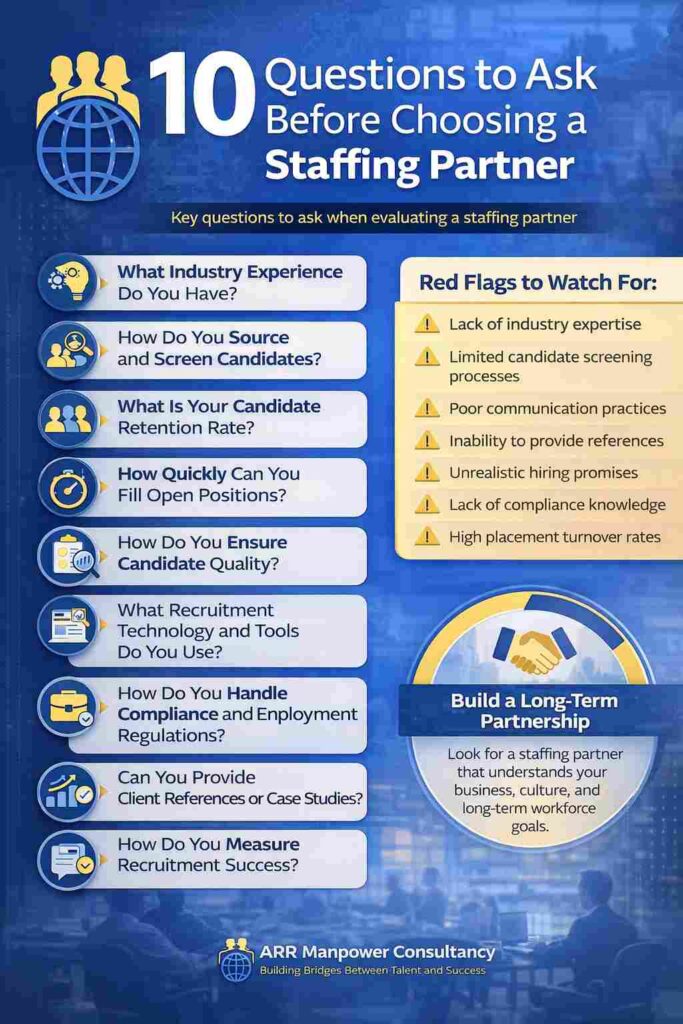
1. What Industry Experience Do You Have?
One of the first questions to ask is whether the staffing partner has experience within your industry. Different industries have unique hiring requirements, skill expectations, compliance standards, and workforce challenges.
A staffing provider with industry-specific expertise understands:
- Current hiring trends
- Required certifications and qualifications
- Market salary expectations
- Industry regulations
- Candidate availability
For example, hiring for healthcare, manufacturing, information technology, finance, or engineering requires specialized knowledge. A staffing partner familiar with your sector can identify suitable talent more efficiently and reduce the learning curve involved in understanding your business needs.
Ask for examples of similar clients they have supported and the results they achieved.
2. How Do You Source and Screen Candidates?
Candidate quality depends heavily on the sourcing and screening process. Understanding how a staffing partner identifies and evaluates applicants can help determine whether they can consistently deliver qualified talent.
Key areas to discuss include:
- Recruitment channels used
- Access to passive candidates
- Resume screening methods
- Skills assessments
- Background verification procedures
- Reference checks
- Interview processes
An effective staffing partner should have a structured approach for evaluating candidates before presenting them to clients. This reduces the likelihood of unsuitable hires and saves valuable time for hiring managers.
Organizations should look for transparency in the recruitment methodology and evidence of quality control throughout the hiring process.
3. What Is Your Candidate Retention Rate?
Hiring success is not only about filling positions quickly. Long-term employee retention is equally important. High turnover rates can lead to increased recruitment costs, operational disruptions, and reduced productivity.
Ask the staffing partner about:
- Average retention rates
- Candidate placement success
- Methods used to ensure cultural fit
- Follow-up procedures after placement
A reputable staffing provider tracks placement outcomes and continuously evaluates candidate performance. Strong retention metrics often indicate that the firm invests time in understanding both client expectations and candidate goals.
The ability to match individuals with the right organizational environment is a strong indicator of staffing effectiveness.
4. How Quickly Can You Fill Open Positions?
Speed is often a critical factor in recruitment. Vacant positions can affect productivity, project deadlines, customer service, and business growth.
When evaluating a staffing partner, ask:
- Average time-to-fill metrics
- Availability of talent pools
- Emergency hiring capabilities
- Recruitment capacity during peak demand
A well-established staffing partner should maintain an active database of qualified professionals and have systems in place to respond quickly to urgent hiring needs.
While speed is important, businesses should also ensure that quality is not sacrificed in the process. The ideal partner balances efficiency with thorough candidate evaluation.
5. How Do You Ensure Candidate Quality?
Quality hiring requires more than reviewing resumes. A dependable staffing partner should have multiple checkpoints to validate candidate suitability.
Questions to explore include:
- How are technical skills assessed?
- Are behavioral interviews conducted?
- How are references verified?
- What quality assurance measures exist?
Many organizations struggle because candidates look impressive on paper but fail to meet expectations after joining. A strong staffing partner minimizes this risk by implementing rigorous assessment procedures.
Understanding their quality standards can provide valuable insight into their commitment to delivering top-tier talent.
6. What Recruitment Technology and Tools Do You Use?
Technology plays a major role in modern hiring. Advanced recruitment platforms help staffing providers identify talent faster, improve communication, and enhance candidate experiences.
Ask about technologies such as:
- Applicant Tracking Systems (ATS)
- Candidate Relationship Management tools
- Artificial intelligence-based sourcing
- Skills assessment platforms
- Video interviewing solutions
A technology-driven staffing partner can improve efficiency while maintaining consistency throughout the recruitment process.
Additionally, modern tools enable better reporting, performance tracking, and hiring analytics, allowing businesses to make data-informed decisions.
7. How Do You Handle Compliance and Employment Regulations?
Employment laws and labor regulations continue to evolve across industries and regions. Failure to comply with legal requirements can expose organizations to significant financial and reputational risks.
Before selecting a staffing partner, ask how they manage:
- Employment documentation
- Labor law compliance
- Worker classification
- Payroll administration
- Workplace regulations
- Background screening requirements
A knowledgeable staffing partner stays updated on changing regulations and helps clients avoid compliance-related issues.
This becomes especially important when hiring temporary staff, contract workers, or employees across multiple geographic locations.
8. Can You Provide Client References or Case Studies?
A staffing provider’s track record offers valuable evidence of its capabilities. Asking for references or case studies allows organizations to validate performance claims and gain insights from existing clients.
Key information to gather includes:
- Client satisfaction levels
- Hiring success rates
- Industry expertise
- Problem-solving abilities
- Communication effectiveness
Speaking directly with current or former clients can reveal strengths and potential concerns that may not be evident during sales presentations.
Case studies can also demonstrate how the staffing partner addressed specific hiring challenges and delivered measurable outcomes.
9. How Do You Measure Recruitment Success?
Effective recruitment should be supported by measurable performance indicators. A professional staffing partner tracks key metrics to evaluate outcomes and continuously improve services.
Important metrics may include:
- Time-to-fill
- Quality-of-hire
- Retention rates
- Candidate satisfaction
- Hiring manager satisfaction
- Interview-to-hire ratio
Ask how these metrics are reported and reviewed.
A data-driven staffing partner provides regular updates and insights that help organizations assess hiring effectiveness and identify opportunities for improvement.
The ability to measure success objectively demonstrates accountability and commitment to delivering results.
10. How Will We Communicate and Collaborate?
Communication is one of the most important factors in a successful staffing relationship. Misalignment between hiring expectations and recruitment efforts can lead to delays, frustration, and poor hiring outcomes.
Discuss the following:
- Primary points of contact
- Reporting frequency
- Progress updates
- Escalation procedures
- Feedback mechanisms
A dedicated staffing partner should establish clear communication channels and maintain ongoing collaboration throughout the hiring process.
Regular updates help ensure alignment on candidate requirements, hiring priorities, and business objectives.
Strong communication fosters trust and creates a foundation for a long-term strategic partnership rather than a simple transactional relationship.
Additional Factors to Consider
Beyond the ten key questions, organizations may also want to evaluate additional aspects of a staffing partner’s service model.
These include:
Scalability
Can the staffing provider support future growth and changing workforce demands?
Geographic Reach
Do they have access to talent in the locations where your organization operates?
Employer Branding Support
Can they effectively represent your company and attract qualified candidates?
Workforce Planning Expertise
Do they offer strategic insights beyond recruitment services?
Diversity Hiring Capabilities
Can they support diversity, equity, and inclusion initiatives within your hiring strategy?
These factors can further strengthen the partnership and contribute to long-term workforce success.
Red Flags to Watch For
While evaluating potential staffing partners, businesses should remain alert to warning signs such as:
- Lack of industry expertise
- Limited candidate screening processes
- Poor communication practices
- Inability to provide references
- Unrealistic hiring promises
- Lack of compliance knowledge
- High placement turnover rates
Identifying these concerns early can prevent costly hiring mistakes and protect organizational resources.
Building a Long-Term Staffing Partnership
The most successful staffing relationships are built on trust, transparency, and shared goals. Rather than focusing solely on immediate hiring needs, organizations should seek a staffing partner capable of supporting long-term workforce strategies.
A strategic staffing partner invests time in understanding:
- Company culture
- Business objectives
- Workforce challenges
- Future growth plans
- Talent acquisition priorities
This deeper understanding enables more accurate candidate matching and improved hiring outcomes over time.
As workforce demands continue to evolve, businesses that establish strong recruitment partnerships gain a competitive advantage in attracting and retaining high-quality talent.
Conclusion
Choosing the right staffing partner is a critical business decision that can influence productivity, employee retention, and overall organizational success. Asking the right questions helps companies evaluate expertise, processes, technology, compliance practices, and communication standards before committing to a partnership.
By examining industry experience, candidate screening methods, retention rates, recruitment technology, compliance knowledge, performance metrics, and collaboration practices, organizations can make informed decisions and minimize hiring risks.
The ideal staffing partner serves as an extension of your organization, helping you access qualified talent, streamline hiring efforts, and achieve long-term workforce goals. Taking the time to ask these ten essential questions will ensure that your business selects a recruitment partner capable of delivering lasting value and measurable results.
By partnering with an experienced recruitment provider, businesses can strengthen workforce planning, improve hiring efficiency, reduce turnover costs, and build resilient teams capable of supporting sustainable growth and success.