Introduction
In today’s rapidly evolving business environment, organizations face constant challenges related to talent acquisition, employee retention, productivity, and changing market demands. Companies that fail to anticipate workforce needs often struggle with skill shortages, increased labor costs, and reduced operational efficiency. This is where workforce planning becomes a critical component of long-term business success.
Workforce planning is the process of analyzing current workforce capabilities, forecasting future staffing requirements, and implementing strategies to ensure the right people are in the right roles at the right time. Effective planning helps businesses remain competitive, adapt to market changes, and achieve organizational goals efficiently.
Whether a company is experiencing growth, restructuring operations, or navigating economic uncertainty, a well-designed workforce strategy can significantly improve performance. This article explores nine powerful approaches that organizations can implement to build a resilient and future-ready workforce.
https://arrmanpowerconsultancy.com
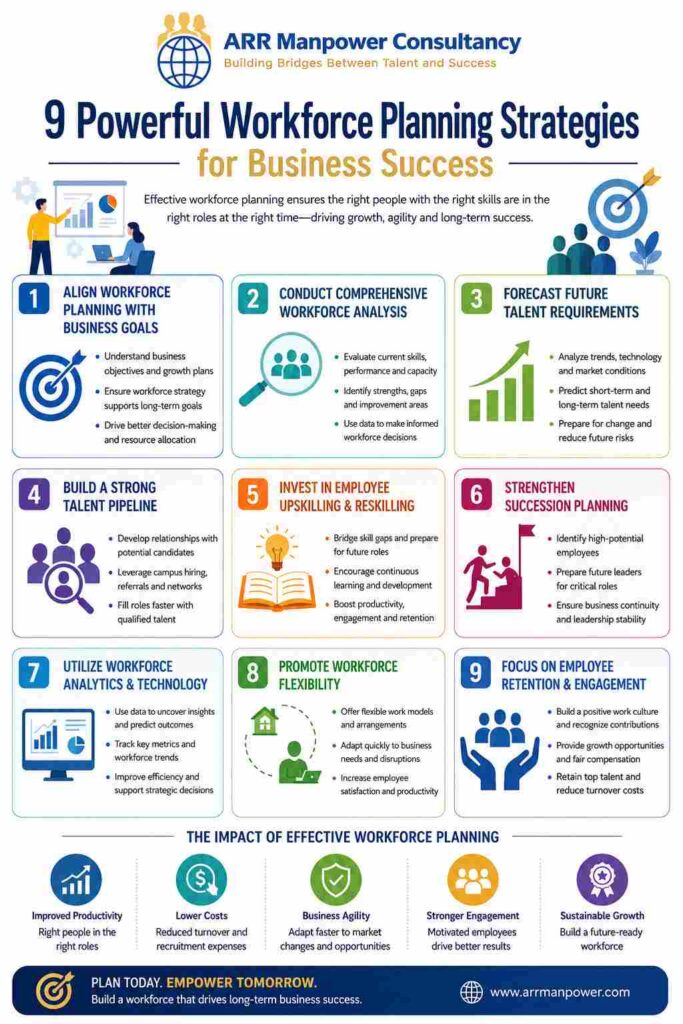
1. Align Workforce Planning with Business Goals
One of the most important steps in workforce planning is ensuring that staffing decisions support broader business objectives. Many organizations make hiring decisions based solely on immediate needs without considering long-term strategic goals.
When workforce initiatives align with organizational objectives, businesses can allocate resources more effectively and improve overall productivity. Leaders should regularly review company goals, expansion plans, and market opportunities to determine future workforce requirements.
Benefits of Strategic Alignment
- Improved resource utilization
- Better talent allocation
- Increased operational efficiency
- Stronger organizational performance
- Enhanced decision-making
Organizations that connect workforce initiatives to business priorities are better positioned to respond to market changes while maintaining sustainable growth.
2. Conduct Comprehensive Workforce Analysis
Before making future staffing decisions, businesses must understand their current workforce. A comprehensive workforce analysis provides valuable insights into employee skills, performance levels, demographics, and potential gaps.
This assessment helps organizations identify strengths and weaknesses within their talent pool and determine whether current capabilities support future business demands.
Key Areas to Analyze
- Employee skill sets
- Workforce demographics
- Performance metrics
- Employee turnover rates
- Department productivity
- Leadership readiness
Data-driven workforce analysis enables organizations to make informed decisions rather than relying on assumptions.
Why It Matters
Understanding existing workforce capabilities helps businesses develop targeted recruitment, training, and succession planning initiatives that support long-term success.
3. Forecast Future Talent Requirements
Accurate forecasting allows organizations to anticipate workforce needs before shortages or surpluses occur. By examining historical data, market trends, business growth projections, and industry developments, companies can estimate future staffing requirements.
Workforce forecasting should consider both short-term and long-term business objectives.
Factors Influencing Workforce Demand
- Business expansion
- Technological advancements
- Industry trends
- Customer demand fluctuations
- Economic conditions
- Regulatory changes
Organizations that forecast talent requirements effectively can reduce hiring delays, minimize disruptions, and maintain business continuity.
Practical Example
A company planning to expand into new markets may need additional sales professionals, customer support representatives, and regional managers. Identifying these needs early allows sufficient time for recruitment and onboarding.
4. Build a Strong Talent Pipeline
Recruiting talent only when vacancies arise can create operational disruptions. Developing a proactive talent pipeline ensures that qualified candidates are available when opportunities emerge.
A talent pipeline consists of potential candidates who may be suitable for future positions within the organization. Maintaining relationships with these individuals helps reduce time-to-hire and recruitment costs.
Ways to Develop a Talent Pipeline
- Partner with universities and colleges
- Participate in industry events
- Create internship programs
- Engage passive candidates
- Build employer branding initiatives
- Maintain candidate databases
Organizations with strong talent pipelines gain a competitive advantage by accessing skilled professionals more quickly than competitors.
Long-Term Benefits
- Faster hiring processes
- Reduced recruitment costs
- Improved candidate quality
- Better workforce stability
5. Invest in Employee Upskilling and Reskilling
Technological advancements continue to reshape industries, creating new skill requirements and making some existing skills obsolete. Organizations that prioritize employee development are better equipped to adapt to changing business demands.
Upskilling focuses on enhancing existing competencies, while reskilling prepares employees for entirely new roles.
Benefits of Employee Development
- Increased productivity
- Higher employee engagement
- Improved retention rates
- Enhanced innovation
- Greater organizational agility
Training programs should align with future business needs and emerging industry trends.
Effective Development Initiatives
- Online learning platforms
- Leadership development programs
- Technical certifications
- Cross-functional training
- Mentorship opportunities
Investing in workforce development not only addresses skill gaps but also demonstrates a commitment to employee growth.
6. Strengthen Succession Planning
Leadership transitions can significantly impact organizational performance. Without a succession plan, businesses may face disruptions when key employees leave or retire.
Succession planning involves identifying high-potential employees and preparing them for future leadership positions. This ensures continuity and reduces the risks associated with unexpected departures.
Key Elements of Succession Planning
- Leadership assessments
- Talent identification
- Development programs
- Mentoring relationships
- Career progression pathways
Organizations should regularly evaluate leadership readiness and provide opportunities for emerging leaders to gain experience.
Advantages of Succession Planning
- Reduced leadership gaps
- Improved business continuity
- Enhanced employee motivation
- Lower recruitment costs
A strong succession strategy creates stability and supports long-term organizational growth.
7. Utilize Workforce Analytics and Technology
Modern workforce management relies heavily on data and technology. Workforce analytics tools provide valuable insights that help organizations make informed staffing decisions.
By leveraging technology, businesses can track performance metrics, identify trends, and forecast future workforce needs more accurately.
Common Workforce Analytics Metrics
- Employee turnover rates
- Recruitment effectiveness
- Training outcomes
- Productivity levels
- Employee engagement scores
- Absenteeism rates
Technology Solutions for Workforce Planning
- Human Resource Information Systems (HRIS)
- Applicant Tracking Systems (ATS)
- Workforce management software
- Employee performance platforms
- Talent analytics tools
Data-driven decision-making reduces uncertainty and enables organizations to optimize workforce performance effectively.
8. Promote Workforce Flexibility
The modern workplace continues to evolve, with employees increasingly seeking flexible work arrangements. Organizations that embrace flexibility can attract and retain top talent while improving employee satisfaction.
Workforce flexibility allows businesses to respond more effectively to changing market conditions and operational demands.
Examples of Flexible Work Models
- Remote work
- Hybrid schedules
- Flexible working hours
- Project-based staffing
- Part-time employment
- Contract workforce solutions
Business Benefits
- Increased employee satisfaction
- Improved retention rates
- Enhanced productivity
- Access to broader talent pools
- Reduced operational costs
Flexible workforce models create a more adaptable organization capable of navigating uncertainty and change.
9. Focus on Employee Retention and Engagement
Recruiting talented employees is important, but retaining them is equally critical. High turnover rates can lead to increased recruitment costs, productivity losses, and reduced morale.
Employee engagement plays a significant role in retention. Engaged employees are more likely to remain committed to organizational goals and contribute positively to workplace culture.
Strategies to Improve Retention
- Competitive compensation packages
- Career development opportunities
- Recognition programs
- Positive workplace culture
- Employee wellness initiatives
- Effective communication
The Impact of Engagement
Organizations with highly engaged employees often experience:
- Lower turnover rates
- Higher productivity
- Better customer satisfaction
- Stronger profitability
- Improved innovation
Retention-focused initiatives help organizations maintain institutional knowledge and build a stable workforce.
Common Challenges in Workforce Planning
While workforce planning offers significant benefits, organizations often encounter challenges during implementation.
Skill Shortages
Rapid technological advancements can create skill gaps that are difficult to fill through traditional recruitment methods.
Data Limitations
Inaccurate or incomplete workforce data can hinder effective planning and decision-making.
Changing Business Conditions
Economic fluctuations, market disruptions, and industry changes can affect workforce requirements unexpectedly.
Resistance to Change
Employees and managers may resist new workforce initiatives, making implementation more challenging.
Organizations can overcome these obstacles by adopting a proactive, data-driven approach and maintaining clear communication throughout the planning process.
Measuring Workforce Planning Success
Evaluating workforce planning efforts is essential for continuous improvement. Organizations should establish key performance indicators (KPIs) to monitor effectiveness.
Important Metrics
- Time-to-fill positions
- Employee turnover rate
- Internal promotion rate
- Employee engagement scores
- Workforce productivity
- Training effectiveness
- Recruitment costs
Regular monitoring allows organizations to identify areas for improvement and refine their workforce strategies accordingly.
The Future of Workforce Planning
As technology continues to transform the workplace, workforce planning will become increasingly important. Artificial intelligence, automation, and data analytics are changing how organizations manage talent and predict workforce needs.
Future-focused organizations will prioritize:
- Continuous learning
- Digital skill development
- Workforce agility
- Diversity and inclusion
- Data-driven decision-making
- Flexible workforce models
Companies that embrace these trends will be better positioned to compete in an increasingly dynamic business environment.
Conclusion
Workforce planning is no longer just an HR function—it is a strategic business necessity. Organizations that proactively assess workforce capabilities, forecast future needs, and invest in employee development gain a significant competitive advantage.
By aligning workforce initiatives with business objectives, conducting comprehensive workforce analysis, forecasting talent requirements, building strong talent pipelines, developing employee skills, strengthening succession planning, leveraging analytics, promoting flexibility, and improving retention efforts, businesses can create a resilient and high-performing workforce.
Implementing these nine powerful strategies enables organizations to adapt to changing market conditions, reduce talent-related risks, and achieve sustainable business success. Companies that prioritize workforce planning today will be better prepared to meet the challenges and opportunities of tomorrow.