Introduction
Employee engagement has become one of the most important factors influencing organizational success. Engaged employees are more productive, committed, innovative, and willing to contribute to business growth. Organizations with a highly engaged workforce often experience lower turnover rates, improved customer satisfaction, and stronger financial performance.
However, maintaining a motivated workforce is not always easy. Companies across industries face several obstacles that affect employee morale, performance, and retention. Understanding these challenges and implementing practical solutions can help organizations create a positive work environment where employees feel valued and empowered.
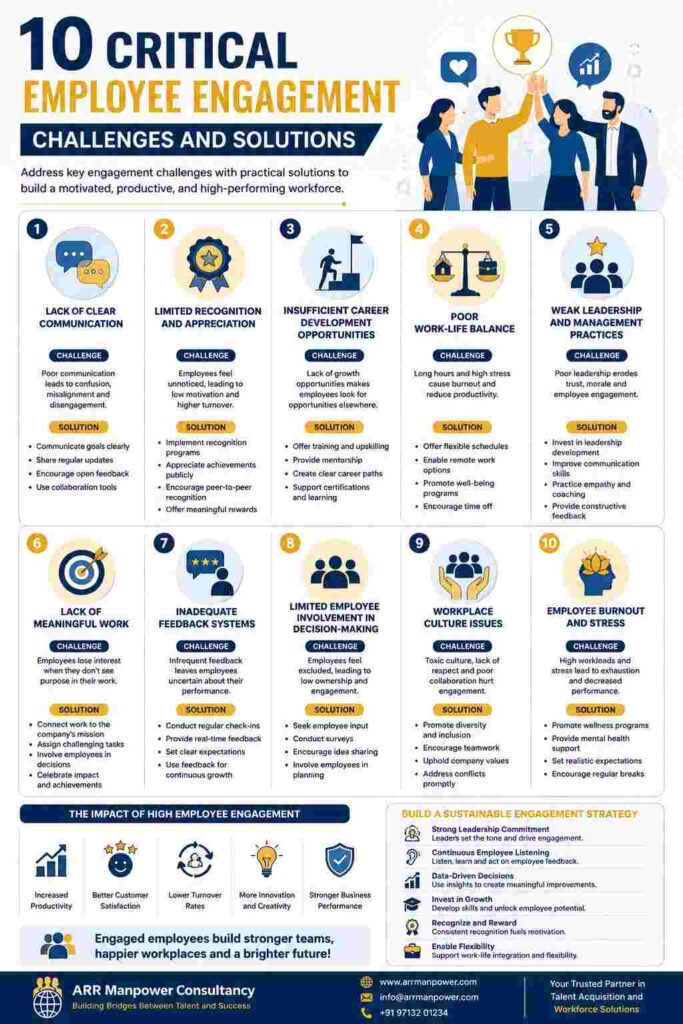
This article explores ten critical employee engagement challenges and provides actionable solutions that organizations can implement to improve workplace satisfaction and performance.
https://arrmanpowerconsultancy.com
1. Lack of Clear Communication
The Challenge
Poor communication is one of the most common reasons employees become disconnected from their work. When team members do not understand company goals, expectations, or organizational changes, confusion and frustration can develop quickly.
Communication gaps may occur between management and employees, across departments, or even among team members working on the same project.
The Solution
Organizations should establish transparent communication channels that encourage regular information sharing. Leadership teams should communicate company objectives clearly and provide updates on important developments.
Practical steps include:
- Conducting regular team meetings
- Sharing organizational updates frequently
- Encouraging open feedback
- Using collaboration tools effectively
- Maintaining transparent leadership communication
When employees understand their role in achieving organizational goals, they are more likely to remain committed and engaged.
2. Limited Recognition and Appreciation
The Challenge
Many employees feel their efforts go unnoticed. When hard work is consistently overlooked, motivation can decline significantly. A lack of recognition often leads to dissatisfaction and eventually increases the likelihood of employee turnover.
Employees want to know that their contributions make a difference.
The Solution
Creating a culture of appreciation can significantly improve engagement levels. Recognition programs do not always require large budgets. Simple acknowledgments can have a meaningful impact.
Effective recognition strategies include:
- Employee appreciation programs
- Public acknowledgment of achievements
- Peer-to-peer recognition initiatives
- Performance-based rewards
- Personalized thank-you messages
Regular recognition reinforces positive behaviors and encourages employees to continue performing at their best.
3. Insufficient Career Development Opportunities
The Challenge
Employees often become disengaged when they see no clear path for professional growth. Ambitious individuals want opportunities to learn new skills, advance their careers, and take on greater responsibilities.
Without development opportunities, employees may begin searching for alternatives elsewhere.
The Solution
Organizations should invest in employee growth by offering structured learning and development programs.
Recommended initiatives include:
- Leadership training
- Professional certification support
- Mentorship programs
- Career path planning
- Skill development workshops
When employees see a future within the organization, they are more likely to remain committed and motivated.
4. Poor Work-Life Balance
The Challenge
Excessive workloads and long working hours can lead to stress, burnout, and decreased job satisfaction. Employees who struggle to balance personal and professional responsibilities often experience reduced productivity and engagement.
Work-life imbalance has become a significant concern in both traditional and remote work environments.
The Solution
Organizations should actively support employee well-being by promoting healthy work habits and flexible working arrangements.
Effective measures include:
- Flexible work schedules
- Remote work options
- Reasonable workload distribution
- Mental health support programs
- Encouraging employees to take leave
A balanced workforce is generally more productive, focused, and committed to organizational success.
5. Weak Leadership and Management Practices
The Challenge
Leadership has a direct impact on employee engagement. Poor management practices can create uncertainty, reduce trust, and negatively affect team morale.
Employees often leave managers rather than organizations. Inconsistent leadership behaviors can significantly damage workplace culture.
The Solution
Organizations should invest in leadership development and management training.
Key focus areas include:
- Emotional intelligence
- Effective communication
- Conflict resolution
- Coaching and mentoring
- Performance management
Strong leaders create environments where employees feel supported, respected, and motivated to contribute.
6. Lack of Meaningful Work
The Challenge
Employees want their work to have purpose. When individuals fail to see how their contributions impact organizational goals or society, they may lose interest in their responsibilities.
Repetitive tasks and disconnected job roles often contribute to disengagement.
The Solution
Organizations should help employees understand the value of their work and its connection to broader business objectives.
Ways to create meaningful work include:
- Communicating organizational mission and vision
- Connecting individual goals to business outcomes
- Encouraging employee involvement in decision-making
- Offering challenging assignments
- Celebrating project successes
Purpose-driven employees are often more committed and enthusiastic about their roles.
7. Inadequate Feedback Systems
The Challenge
Many organizations rely solely on annual performance reviews, which may not provide timely guidance for employees. Without regular feedback, individuals may feel uncertain about their performance and career progression.
Lack of feedback can create confusion and reduce motivation.
The Solution
Continuous feedback systems allow employees to improve performance and stay aligned with expectations.
Organizations can implement:
- Monthly check-ins
- One-on-one meetings
- Real-time feedback tools
- Development discussions
- Goal-tracking systems
Frequent and constructive feedback helps employees grow while strengthening relationships with managers.
8. Limited Employee Involvement in Decision-Making
The Challenge
Employees who feel excluded from important decisions may become disconnected from organizational objectives. A top-down management approach often reduces employee ownership and accountability.
When individuals believe their opinions do not matter, engagement naturally declines.
The Solution
Organizations should encourage participation and collaboration throughout the decision-making process.
Strategies include:
- Employee surveys
- Suggestion programs
- Team brainstorming sessions
- Cross-functional projects
- Employee advisory committees
Involving employees in decisions creates a sense of ownership and strengthens commitment to organizational goals.
9. Workplace Culture Issues
The Challenge
A negative workplace culture can severely impact employee engagement. Toxic behaviors, favoritism, poor collaboration, and lack of respect create environments where employees struggle to thrive.
Culture influences every aspect of the employee experience.
The Solution
Building a positive culture requires consistent effort from leadership and employees alike.
Important initiatives include:
- Promoting diversity and inclusion
- Encouraging teamwork
- Establishing clear organizational values
- Addressing workplace conflicts promptly
- Supporting respectful communication
A healthy workplace culture fosters trust, collaboration, and long-term employee satisfaction.
10. Employee Burnout and Stress
The Challenge
Burnout has become a growing concern across industries. High workloads, constant deadlines, and workplace pressures can lead to emotional exhaustion and decreased productivity.
Burnout not only affects individual performance but also impacts team dynamics and organizational outcomes.
The Solution
Organizations must proactively address stress and support employee well-being.
Recommended approaches include:
- Wellness programs
- Mental health resources
- Employee assistance services
- Realistic performance expectations
- Encouraging regular breaks
Supporting employee well-being contributes to improved engagement, retention, and overall workplace performance.
Building a Sustainable Employee Engagement Strategy
Addressing individual challenges is important, but organizations should also focus on creating a comprehensive engagement strategy. Sustainable engagement requires ongoing commitment rather than one-time initiatives.
A successful strategy typically includes:
Strong Leadership Commitment
Leadership should actively support engagement efforts and demonstrate behaviors that reflect organizational values.
Continuous Employee Listening
Organizations should regularly collect employee feedback through surveys, focus groups, and direct conversations.
Data-Driven Decision Making
Tracking engagement metrics helps organizations identify trends and implement targeted improvements.
Employee Development Programs
Providing learning opportunities demonstrates a commitment to employee growth and long-term success.
Recognition and Reward Systems
Consistent recognition reinforces positive performance and strengthens workplace motivation.
Flexible Work Practices
Modern employees increasingly value flexibility, autonomy, and work-life integration.
Organizations that combine these elements are better positioned to create highly engaged and productive teams.
The Business Impact of Employee Engagement
Improving engagement is not simply a human resources initiative; it is a business strategy with measurable outcomes.
Highly engaged employees often contribute to:
- Increased productivity
- Better customer experiences
- Lower absenteeism
- Reduced turnover
- Improved innovation
- Stronger team collaboration
- Enhanced organizational performance
Companies that prioritize engagement frequently gain a competitive advantage by attracting and retaining top talent.
Conclusion
Employee engagement remains one of the most critical factors influencing organizational success. While businesses face numerous challenges, including poor communication, lack of recognition, limited career development, burnout, and workplace culture issues, these obstacles can be addressed through thoughtful planning and consistent action.
Organizations that invest in transparent communication, leadership development, employee recognition, professional growth opportunities, and well-being initiatives create environments where employees feel valued and motivated. Engagement is not achieved through a single program or policy. It is built through continuous effort, meaningful relationships, and a genuine commitment to employee success.
By understanding and addressing these ten critical challenges, organizations can foster a more engaged workforce, improve retention, enhance productivity, and build a stronger foundation for long-term growth.