Introduction
Hiring the right employees is one of the most important decisions any organization makes. Every new team member influences productivity, workplace culture, customer satisfaction, and long-term business growth. While many companies invest significant resources in recruitment, even experienced hiring managers can make mistakes that lead to costly consequences.
A poor hiring decision doesn’t just affect one department. It can result in reduced efficiency, increased turnover, lower employee morale, and additional recruitment expenses. Understanding common hiring pitfalls can help businesses improve their recruitment process and build stronger teams.
Below are 16 hiring mistakes that organizations should avoid to protect their growth and reputation.
https://arrmanpowerconsultancy.com
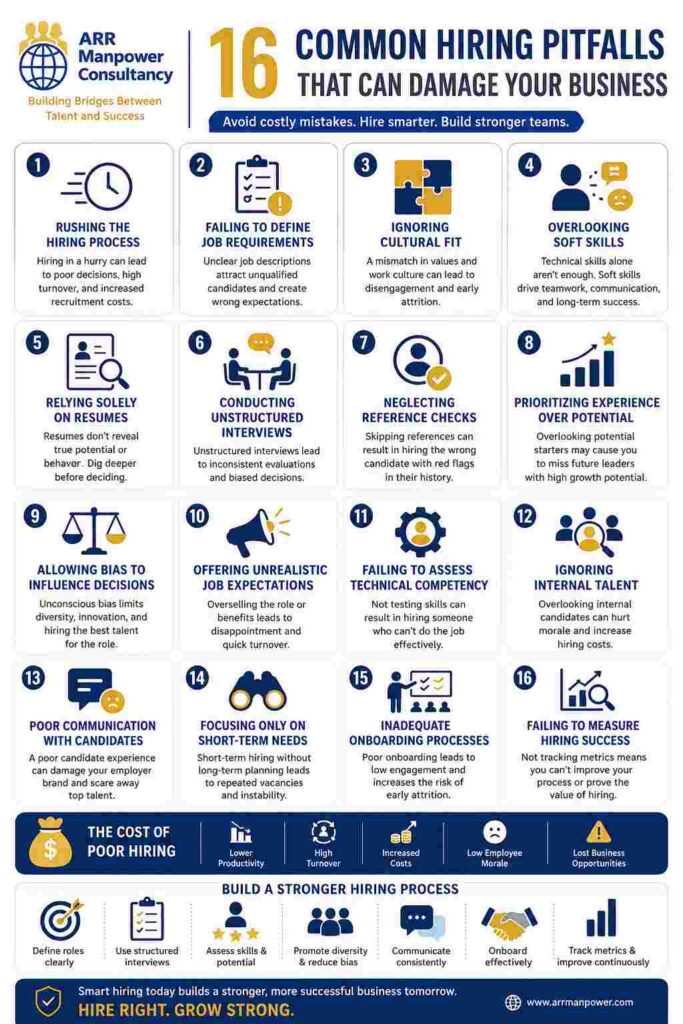
1. Rushing the Hiring Process
One of the most common recruitment mistakes is hiring too quickly. Businesses often feel pressure to fill vacant positions immediately, especially when workloads increase or key employees leave unexpectedly.
However, rushing can lead to overlooking important details about a candidate’s qualifications, experience, and cultural fit. Taking time to properly assess applicants helps reduce the risk of making poor hiring decisions.
A structured recruitment timeline allows hiring managers to evaluate candidates carefully and select individuals who align with organizational goals.
2. Failing to Define Job Requirements Clearly
Many hiring problems begin before the recruitment process even starts. If job roles and responsibilities are not clearly defined, employers may attract unsuitable applicants.
A vague job description can confuse candidates and create unrealistic expectations. As a result, businesses may spend more time screening applications and interviewing individuals who do not possess the required skills.
Clearly outlining responsibilities, qualifications, and performance expectations improves candidate quality and streamlines recruitment efforts.
3. Ignoring Cultural Fit in Hiring Pitfalls
Technical skills are important, but cultural compatibility also plays a significant role in employee success.
A candidate may have excellent qualifications yet struggle to adapt to the organization’s work environment. Misalignment with company values can lead to communication challenges, reduced collaboration, and eventual turnover.
Evaluating how candidates interact with teams and respond to workplace scenarios can help determine whether they will thrive within the organization.
4. Overlooking Soft Skills
Many employers focus heavily on technical abilities while neglecting essential soft skills.
Communication, teamwork, adaptability, problem-solving, and emotional intelligence are often critical for long-term success. Employees who lack these qualities may struggle to collaborate effectively or manage workplace challenges.
Assessing behavioral competencies during interviews provides valuable insights into a candidate’s interpersonal strengths.
5. Relying Solely on Resumes
A resume provides a summary of a candidate’s background, but it does not tell the complete story.
Some applicants excel at presenting credentials on paper but may lack practical experience or workplace readiness. Others may have strong capabilities that are not fully reflected in their resumes.
Combining resume reviews with interviews, skill assessments, and practical evaluations creates a more accurate picture of each candidate’s potential.
6. Conducting Unstructured Interviews
Unstructured interviews often lead to inconsistent evaluations and subjective decisions.
Without standardized questions, hiring managers may focus on irrelevant topics or compare candidates unfairly. Personal biases can also influence outcomes.
Structured interviews ensure that every applicant is assessed using the same criteria, making it easier to identify the most suitable candidate objectively.
7. Neglecting Reference Checks
Reference checks remain an important part of the recruitment process, yet many organizations skip them due to time constraints.
Former supervisors and colleagues can provide valuable insights into a candidate’s work ethic, reliability, and performance history. Ignoring this step increases the risk of hiring individuals who may not meet expectations.
Thorough reference verification helps confirm information and identify potential concerns before extending an offer.
8. Prioritizing Experience Over Potential
While experience is valuable, focusing exclusively on it can cause businesses to miss talented individuals with strong growth potential.
Candidates who demonstrate learning agility, motivation, and adaptability may outperform more experienced professionals over time. Organizations that balance experience with potential often build stronger and more innovative teams.
Assessing a candidate’s willingness to learn and develop can reveal future leaders within the workforce.
9. Allowing Bias to Influence Decisions
Unconscious bias remains a significant challenge in recruitment.
Hiring managers may unknowingly favor candidates who share similar backgrounds, interests, or educational experiences. Such biases can limit workplace diversity and reduce access to talented professionals.
Implementing objective evaluation methods and diverse interview panels helps promote fair hiring practices and better decision-making.
10. Offering Unrealistic Job Expectations
Some employers unintentionally exaggerate career opportunities, responsibilities, or workplace benefits during recruitment.
When employees discover that reality differs from what was promised, dissatisfaction and disengagement often follow. This can increase turnover rates and damage employer reputation.
Transparency throughout the hiring process helps establish trust and encourages long-term employee commitment.
11. Failing to Assess Technical Competency
Assuming that listed qualifications accurately reflect skill levels can be risky.
Technical assessments, practical assignments, and job simulations provide direct evidence of a candidate’s capabilities. Without proper testing, organizations may hire individuals who lack the required expertise.
Role-specific evaluations help ensure that candidates possess the competencies necessary for success.
12. Ignoring Internal Talent
Many organizations immediately search externally when vacancies arise, overlooking qualified internal candidates.
Existing employees already understand company processes, culture, and expectations. Promoting from within can improve retention, boost morale, and reduce onboarding time.
A balanced recruitment strategy considers both internal and external talent pools before making hiring decisions.
13. Poor Communication with Candidates
Candidate experience significantly influences employer branding.
Delayed responses, unclear updates, or lack of communication can create negative impressions. Talented professionals may withdraw from the recruitment process if they feel ignored or undervalued.
Maintaining consistent communication demonstrates professionalism and helps keep candidates engaged throughout the hiring journey.
14. Focusing Only on Short-Term Needs
Some businesses hire solely to solve immediate staffing shortages without considering future organizational goals.
While filling urgent vacancies is important, recruitment decisions should also support long-term growth strategies. Employees who can adapt to evolving business needs provide greater value over time.
Strategic workforce planning helps organizations build sustainable talent pipelines.
15. Inadequate Onboarding Processes
The hiring process does not end when a candidate accepts an offer.
A weak onboarding experience can negatively affect employee engagement and productivity. New hires who receive insufficient training or support may struggle to integrate into the organization.
Effective onboarding programs help employees understand expectations, build relationships, and contribute more quickly to business objectives.
16. Failing to Measure Hiring Success
Many organizations do not evaluate the effectiveness of their recruitment efforts.
Without tracking metrics such as retention rates, employee performance, time-to-fill, and quality-of-hire, businesses may continue repeating ineffective hiring practices.
Regular analysis provides valuable insights that can improve recruitment strategies and support better workforce decisions.
The Cost of Poor Hiring Decisions
Hiring mistakes can be expensive. Beyond recruitment expenses, organizations may face productivity losses, increased training costs, and disruptions to team performance.
Research consistently shows that replacing employees often costs significantly more than retaining them. Additional consequences may include:
- Reduced employee morale
- Lower customer satisfaction
- Increased turnover rates
- Damaged workplace culture
- Lost business opportunities
- Decreased operational efficiency
By identifying and addressing recruitment weaknesses, companies can minimize these risks and improve overall performance.
How to Improve Your Hiring Process
Businesses seeking stronger recruitment outcomes should focus on creating a structured and strategic hiring framework. Key practices include:
Develop Accurate Job Descriptions
Clearly define responsibilities, qualifications, and expectations to attract suitable applicants.
Standardize Interviews
Use consistent questions and evaluation criteria for all candidates.
Implement Skills Assessments
Verify technical and practical competencies through objective testing methods.
Prioritize Candidate Experience
Maintain clear communication and provide timely updates throughout the process.
Reduce Bias
Use diverse hiring panels and standardized assessment tools to support fair decision-making.
Strengthen Onboarding
Provide comprehensive training and support to help new employees succeed.
Track Recruitment Metrics
Monitor hiring performance to identify opportunities for continuous improvement.
Conclusion
Successful hiring requires more than reviewing resumes and conducting interviews. Organizations must adopt thoughtful, structured recruitment practices that balance skills, experience, cultural alignment, and long-term potential.
Avoiding these 16 common hiring pitfalls can significantly improve workforce quality and reduce costly mistakes. By investing in better recruitment strategies, businesses can attract top talent, strengthen employee retention, and create a foundation for sustainable growth.
Every hiring decision shapes the future of an organization. Taking the time to recruit carefully and strategically is one of the most valuable investments any business can make.