Introduction
In today’s competitive business environment, organizations constantly seek strategies that improve productivity, reduce operational costs, and maintain flexibility. One workforce solution that has gained significant popularity across industries is temporary staffing. Businesses of all sizes are recognizing the value of hiring temporary employees to meet changing demands while maintaining operational efficiency.
Whether a company experiences seasonal fluctuations, unexpected employee absences, project-based workload increases, or rapid business growth, temporary staffing provides an effective solution. By accessing qualified professionals for short-term assignments, organizations can optimize resources without the long-term commitments associated with permanent hiring.
This article explores seven proven ways temporary staffing improves business efficiency and why many organizations are integrating flexible workforce solutions into their business strategies.
https://arrmanpowerconsultancy.com
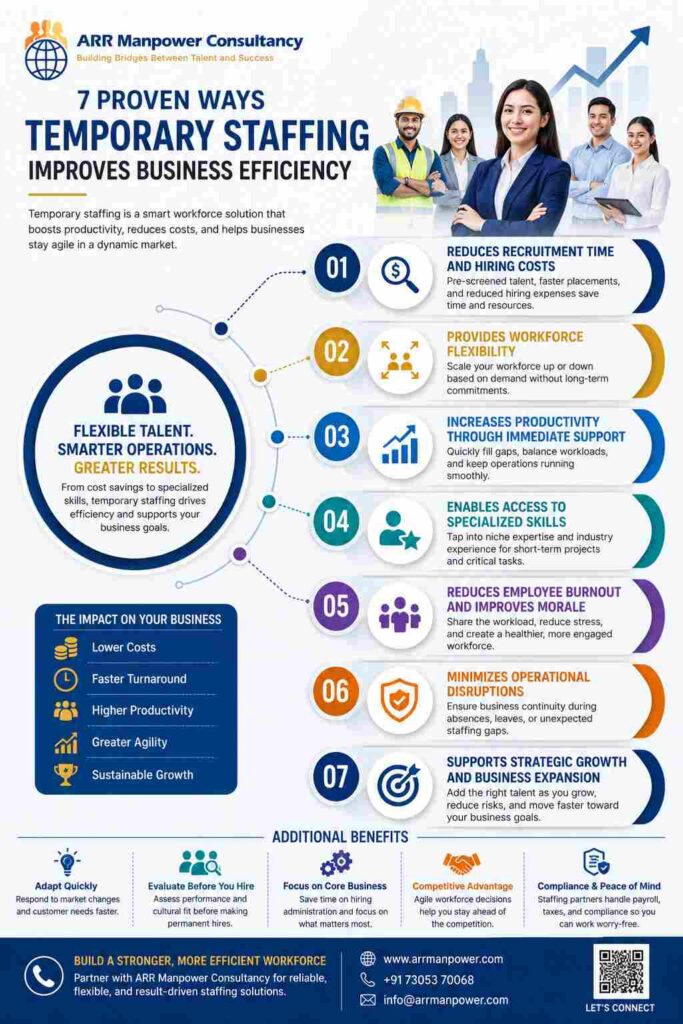
1. Reduces Recruitment Time and Hiring Costs
Traditional recruitment can be a lengthy and expensive process. Organizations often spend considerable resources advertising vacancies, screening applications, conducting interviews, performing background checks, and onboarding new employees. These activities require both time and financial investment.
Temporary staffing significantly reduces these burdens. Staffing agencies maintain extensive databases of pre-screened candidates who are ready to start work immediately. This enables businesses to fill vacancies quickly without navigating the entire recruitment process from scratch.
The cost savings associated with temporary staffing are equally important. Companies can reduce expenditures related to job postings, recruitment software, interview scheduling, and administrative processing. Additionally, staffing providers often handle payroll administration and compliance requirements, further reducing internal workload.
As a result, businesses can allocate resources toward strategic initiatives rather than spending excessive time and money on hiring activities.
2. Provides Workforce Flexibility During Demand Fluctuations
Market demand rarely remains constant throughout the year. Many industries experience seasonal peaks, project surges, and unexpected increases in customer demand. Maintaining a large permanent workforce to accommodate occasional spikes can lead to unnecessary labor costs during slower periods.
Temporary staffing allows businesses to scale their workforce up or down according to operational needs. Companies can bring in additional workers during busy seasons and reduce workforce size when demand decreases.
For example, retail businesses often require additional staff during holiday shopping periods. Manufacturing facilities may need extra workers when fulfilling large orders. Logistics companies frequently experience increased activity during peak shipping seasons.
By adjusting staffing levels as needed, organizations maintain operational efficiency without carrying excess labor costs throughout the year.
3. Increases Productivity Through Immediate Workforce Support
Workforce shortages can negatively impact productivity. When existing employees are forced to handle excessive workloads, deadlines may be missed, customer service quality may decline, and employee morale can suffer.
Temporary staffing helps organizations address these challenges by providing immediate workforce support. Additional personnel can be deployed quickly to assist with operational demands, ensuring that workloads remain manageable and business functions continue smoothly.
Temporary employees can handle routine tasks, administrative responsibilities, production requirements, or specialized project work. This support allows permanent employees to focus on higher-value activities that contribute directly to business growth.
As workloads become more balanced, organizations often experience improved productivity, better task completion rates, and enhanced operational performance.
4. Enables Access to Specialized Skills and Expertise
Many projects require specialized knowledge that may not exist within the current workforce. Hiring permanent employees for short-term needs may not be financially practical, especially when the required expertise is only needed temporarily.
Temporary staffing provides access to professionals with specific skills, certifications, and industry experience. Businesses can engage specialists for defined periods without making long-term employment commitments.
Examples include:
- Information technology professionals for system upgrades.
- Accountants during tax seasons.
- Engineers for infrastructure projects.
- Marketing specialists for campaign launches.
- Human resource professionals for organizational transitions.
Having access to specialized talent enables organizations to complete projects efficiently while maintaining high-quality standards. Businesses gain the expertise they need exactly when they need it.
5. Reduces Employee Burnout and Improves Workforce Morale
Employee burnout is a growing concern across industries. When staff members consistently face excessive workloads, stress levels increase, job satisfaction decreases, and turnover rates may rise.
Temporary staffing helps alleviate these pressures by distributing work more effectively across the workforce. Additional personnel can assist during periods of high demand, reducing the burden placed on existing employees.
When employees feel supported and workloads remain manageable, several positive outcomes emerge:
- Improved job satisfaction.
- Higher employee engagement.
- Reduced absenteeism.
- Better retention rates.
- Enhanced workplace culture.
Organizations that proactively address workload challenges often create healthier work environments where employees can perform at their best.
Supporting workforce well-being is not only beneficial for employees but also contributes directly to long-term business efficiency.
6. Minimizes Operational Disruptions
Unexpected employee absences can create significant challenges for businesses. Illness, vacations, parental leave, resignations, and emergencies can leave critical positions unfilled, disrupting daily operations.
Temporary staffing offers a practical solution for maintaining continuity during these situations. Businesses can quickly secure qualified replacements to ensure essential functions continue without interruption.
Operational continuity is particularly important in industries such as healthcare, manufacturing, logistics, customer service, and hospitality, where staffing shortages can directly impact service quality and customer satisfaction.
By filling gaps quickly, organizations can maintain productivity levels, meet customer expectations, and avoid costly delays.
Furthermore, temporary workers provide valuable support during organizational transitions, mergers, expansions, or restructuring efforts when workforce requirements may fluctuate significantly.
7. Supports Strategic Growth and Business Expansion
Business growth often creates workforce challenges. Expanding into new markets, launching products, increasing production capacity, or opening additional locations typically requires additional personnel.
However, committing to permanent hiring before growth initiatives are fully established can introduce financial risk. Organizations may be uncertain about future demand levels or long-term staffing requirements.
Temporary staffing provides a flexible approach to growth management. Businesses can bring in workers as needed while evaluating operational requirements and market conditions.
This approach offers several advantages:
- Reduced financial risk.
- Faster project implementation.
- Greater workforce agility.
- Improved resource allocation.
- Enhanced decision-making flexibility.
As growth strategies mature, organizations can determine which positions should become permanent and which can remain temporary. This allows for more informed workforce planning and sustainable expansion.
Additional Benefits of Temporary Staffing
Beyond the seven key advantages discussed above, temporary staffing offers several additional benefits that contribute to overall business performance.
Faster Adaptation to Market Changes
Economic conditions, customer preferences, and industry trends can change rapidly. Organizations that maintain flexible workforce models are often better positioned to respond to evolving market conditions.
Temporary staffing allows businesses to adapt quickly without undergoing lengthy hiring or restructuring processes.
Opportunity to Evaluate Potential Employees
Many organizations use temporary assignments as a way to assess potential long-term hires. Managers can evaluate an individual’s skills, work ethic, cultural fit, and performance before making permanent employment decisions.
This approach reduces hiring risks and improves long-term workforce quality.
Improved Focus on Core Business Functions
Administrative tasks associated with recruitment, onboarding, payroll management, and compliance can consume significant internal resources.
Staffing agencies often handle many of these responsibilities, allowing businesses to focus on core operations and strategic priorities.
Enhanced Competitive Advantage
Organizations that can quickly access qualified talent often gain a competitive edge. The ability to respond rapidly to customer demands, project opportunities, and operational challenges enables businesses to maintain strong market positions.
Temporary staffing contributes to this agility by providing immediate access to workforce resources when needed.
Industries That Benefit Most from Temporary Staffing
Although temporary staffing can support nearly any industry, some sectors experience particularly strong benefits.
Manufacturing
Manufacturers often encounter fluctuating production demands. Temporary workers help maintain productivity during peak production periods and large-scale projects.
Healthcare
Healthcare facilities frequently require temporary professionals to cover employee absences, manage patient surges, and maintain staffing ratios.
Information Technology
Technology projects often require specialized expertise for limited durations. Temporary staffing enables organizations to access technical talent without long-term commitments.
Logistics and Supply Chain
Shipping volume fluctuations create changing workforce requirements. Temporary employees help organizations manage peak demand efficiently.
Retail
Seasonal shopping periods often necessitate additional staffing support. Temporary workers assist with customer service, inventory management, and sales operations.
Administrative Services
Organizations frequently require temporary administrative support for special projects, document management, and office operations.
Best Practices for Successful Temporary Staffing
To maximize the benefits of temporary staffing, organizations should follow several best practices.
Clearly Define Job Requirements
Providing detailed job descriptions helps ensure that temporary workers possess the necessary skills and experience.
Partner With Reputable Staffing Agencies
Selecting an experienced staffing provider improves candidate quality and placement success.
Offer Effective Onboarding
Even short-term workers require proper orientation to understand company procedures, expectations, and workplace policies.
Maintain Open Communication
Regular communication with temporary employees and staffing agencies helps address concerns and improve performance.
Evaluate Results
Organizations should monitor productivity, cost savings, and operational outcomes to assess the effectiveness of their staffing strategies.
Conclusion
Temporary staffing has become an essential workforce solution for organizations seeking greater efficiency, flexibility, and operational resilience. By reducing hiring costs, increasing workforce adaptability, improving productivity, providing access to specialized expertise, minimizing employee burnout, preventing operational disruptions, and supporting business growth, temporary staffing delivers measurable value across industries.
As market conditions continue to evolve, businesses must remain agile and responsive. Organizations that strategically leverage temporary staffing gain the ability to meet changing demands while maintaining cost control and operational excellence.
Rather than viewing temporary staffing solely as a short-term solution, many successful companies now consider it a vital component of long-term workforce planning. With the right approach, temporary staffing can help businesses improve efficiency, strengthen performance, and position themselves for sustainable growth in an increasingly competitive marketplace.