Introduction
The manufacturing industry continues to face significant workforce challenges. Rapid technological advancements, changing employee expectations, labor shortages, and increasing production demands have made workforce planning more complex than ever. Companies that fail to adapt their hiring and workforce management practices often experience productivity losses, increased turnover, and operational disruptions.
A strong staffing strategy is no longer just a human resources function; it is a critical business requirement. Organizations that successfully attract, retain, and develop skilled workers gain a competitive advantage in productivity, quality, and profitability.
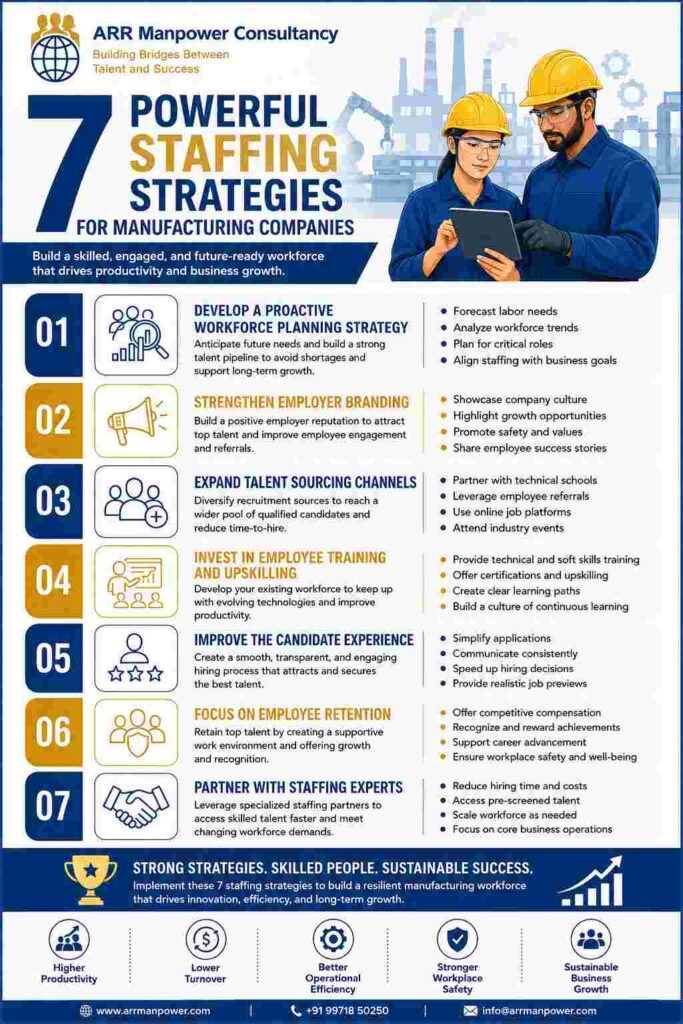
This article explores seven powerful staffing strategies that manufacturing companies can implement to build a resilient workforce, reduce hiring challenges, and improve long-term business performance.
https://arrmanpowerconsultancy.com/
1. Develop a Proactive Workforce Planning Strategy
One of the biggest mistakes manufacturers make is hiring only when vacancies arise. Reactive hiring often leads to rushed decisions, increased recruitment costs, and prolonged vacancies that affect production schedules.
Proactive workforce planning helps organizations anticipate future labor needs based on business growth, retirement trends, seasonal demand, and expansion plans. By forecasting workforce requirements in advance, companies can prepare recruitment pipelines before staffing shortages occur.
Key Benefits of Workforce Planning
- Reduces unexpected labor shortages
- Improves production continuity
- Enhances budgeting accuracy
- Supports long-term business growth
- Reduces emergency recruitment expenses
Best Practices
- Analyze workforce demographics regularly.
- Identify positions that are difficult to fill.
- Monitor retirement and turnover trends.
- Align staffing forecasts with production goals.
- Build succession plans for critical roles.
Manufacturers that plan ahead are better positioned to secure skilled talent before competitors enter the market.
2. Strengthen Employer Branding
Today’s job seekers evaluate employers carefully before applying. Competitive wages alone are no longer enough to attract top manufacturing talent. Candidates want to work for organizations that offer career growth, job stability, workplace safety, and positive company culture.
A strong employer brand helps manufacturing businesses stand out in a competitive labor market.
How Employer Branding Influences Recruitment
When potential employees view a company positively, they are more likely to apply for open positions and remain engaged throughout the hiring process. Strong branding also improves employee referrals and reduces recruitment costs.
Ways to Improve Employer Brand
- Highlight employee success stories.
- Showcase workplace safety initiatives.
- Promote training and development programs.
- Share company achievements on social media.
- Encourage employees to act as brand ambassadors.
Transparency and authenticity are essential. Candidates appreciate organizations that provide realistic insights into workplace expectations and opportunities.
3. Expand Talent Sourcing Channels
Relying on a single recruitment source limits access to qualified candidates. Manufacturing organizations should diversify their talent acquisition efforts to reach a broader audience.
A multi-channel sourcing strategy increases candidate flow and improves hiring outcomes.
Effective Talent Sources
Technical Schools and Vocational Institutions
Partnerships with technical schools create direct access to graduates who possess industry-relevant skills. Internship and apprenticeship programs can further strengthen these relationships.
Employee Referral Programs
Current employees often know qualified individuals who may be suitable for open positions. Referral programs typically generate higher-quality candidates and improve retention rates.
Online Job Platforms
Digital recruitment platforms provide access to active and passive job seekers. Optimized job descriptions can significantly improve candidate engagement.
Industry Events
Trade shows, career fairs, and manufacturing conferences offer valuable opportunities to connect with skilled professionals.
Benefits of Diversified Sourcing
- Larger candidate pools
- Faster hiring cycles
- Better skill matching
- Improved workforce diversity
- Reduced dependency on a single recruitment channel
A broader sourcing strategy allows organizations to remain flexible in changing labor market conditions.
4. Invest in Employee Training and Upskilling
Manufacturing technologies continue to evolve rapidly. Automation, robotics, artificial intelligence, and advanced production systems require workers to develop new skills regularly.
Instead of focusing solely on external recruitment, manufacturers should invest in developing existing employees.
Why Upskilling Matters
Training programs help employees adapt to new technologies while increasing productivity and job satisfaction. Workers who receive development opportunities are often more engaged and committed to their employers.
Areas for Employee Development
- Equipment operation
- Robotics and automation
- Quality control
- Leadership skills
- Safety compliance
- Technical certifications
Creating an Effective Training Program
Successful training initiatives should combine classroom instruction, hands-on learning, mentorship, and continuous assessment.
Companies that prioritize workforce development often experience:
- Higher retention rates
- Increased productivity
- Reduced recruitment costs
- Improved employee morale
- Stronger internal promotion pipelines
Developing internal talent creates a sustainable workforce that can support long-term operational goals.
5. Improve the Candidate Experience with Staffing Strategies
The hiring process plays a major role in attracting and securing skilled workers. Lengthy application procedures, poor communication, and delayed decision-making often cause candidates to accept opportunities elsewhere.
Manufacturing companies should focus on creating a positive candidate experience from the first interaction through onboarding.
Common Recruitment Challenges
- Slow interview scheduling
- Unclear job expectations
- Lack of communication
- Complex application systems
- Delayed hiring decisions
Strategies to Improve Candidate Experience
Simplify Applications
Reduce unnecessary steps and allow candidates to complete applications quickly.
Communicate Frequently
Provide updates throughout the hiring process to maintain engagement.
Speed Up Decision Making
Efficient hiring processes help secure top candidates before competitors do.
Offer Realistic Job Previews
Providing accurate information about responsibilities and work environments helps set expectations.
Results of a Positive Hiring Experience
- Higher offer acceptance rates
- Improved employer reputation
- Better candidate engagement
- Reduced recruitment time
- Increased quality of hires
A positive recruitment experience can significantly strengthen hiring outcomes and long-term workforce stability.
6. Focus on Employee Retention
Recruiting new employees is important, but retaining existing workers often delivers a greater return on investment. High turnover creates substantial costs related to recruitment, onboarding, training, and lost productivity.
Retention strategies should be a priority for every manufacturing organization.
Understanding Why Employees Leave
Common reasons include:
- Limited career advancement
- Inadequate compensation
- Poor management
- Lack of recognition
- Work-life balance concerns
- Unsafe working conditions
Effective Retention Strategies
Competitive Compensation
Regularly review wages and benefits to remain competitive within the industry.
Career Development Opportunities
Employees are more likely to stay when they see clear advancement paths.
Recognition Programs
Acknowledging employee contributions helps improve morale and engagement.
Strong Leadership
Managers play a critical role in employee satisfaction and workplace culture.
Flexible Scheduling
Where operationally feasible, flexibility can improve employee well-being and retention.
Long-Term Impact
Organizations that successfully retain employees benefit from:
- Lower hiring costs
- Greater operational stability
- Improved productivity
- Enhanced workplace culture
- Stronger institutional knowledge
Retention should be viewed as a strategic investment rather than an administrative responsibility.
7. Partner with Specialized Staffing Experts
Many manufacturing organizations struggle to recruit skilled workers quickly enough to meet production demands. Partnering with experienced staffing professionals can help bridge workforce gaps and improve hiring efficiency.
Specialized staffing providers understand industry requirements and maintain access to qualified candidate networks.
Advantages of Staffing Partnerships
Faster Recruitment
Recruitment specialists maintain talent pools that can accelerate hiring timelines.
Industry Expertise
Manufacturing-focused recruiters understand technical roles and skill requirements.
Flexible Workforce Solutions
Companies can scale staffing levels based on production demands and seasonal fluctuations.
Reduced Administrative Burden
External recruitment support allows internal teams to focus on core business activities.
When to Consider Staffing Support
- Rapid business expansion
- Seasonal workforce demands
- Hard-to-fill technical positions
- High-volume recruitment projects
- Urgent staffing requirements
Strategic staffing partnerships provide flexibility and access to specialized expertise that can strengthen workforce planning efforts.
Conclusion
The manufacturing sector faces ongoing workforce challenges that require thoughtful and strategic solutions. Organizations that rely solely on traditional hiring methods may struggle to attract and retain the talent necessary for long-term success.
By implementing proactive workforce planning, strengthening employer branding, expanding sourcing channels, investing in employee development, improving candidate experiences, focusing on retention, and leveraging specialized staffing expertise, manufacturers can build a stronger and more resilient workforce.
The most successful companies recognize that workforce management is an ongoing process rather than a one-time recruitment activity. A comprehensive staffing strategy helps ensure operational continuity, supports productivity goals, and positions organizations for sustainable growth in an increasingly competitive manufacturing environment.
As labor markets continue to evolve, manufacturers that prioritize innovative workforce solutions will be better prepared to meet future challenges while maintaining a skilled, engaged, and high-performing workforce.
In addition, manufacturers that continuously evaluate and refine their workforce strategies are more likely to adapt successfully to changing market conditions and technological advancements. A strong workforce is the foundation of operational excellence, product quality, and customer satisfaction. By fostering a culture of learning, engagement, and innovation, companies can create an environment where employees thrive and contribute to organizational success. Investing in people today helps build a sustainable workforce for tomorrow. Whether addressing labor shortages, improving productivity, or supporting business expansion, these seven staffing strategies provide a practical framework for achieving long-term growth and maintaining a competitive edge in the evolving manufacturing landscape.