Introduction
A strong workforce is the foundation of every successful organization. Regardless of industry or company size, the quality of employees directly influences productivity, customer satisfaction, innovation, and long-term growth. Businesses that invest in developing capable, motivated, and engaged teams are better positioned to adapt to market changes and achieve sustainable success.
Building a reliable team does not happen by chance. It requires strategic planning, effective hiring practices, continuous development, and a workplace culture that encourages collaboration and commitment. Organizations that prioritize workforce development often experience lower turnover, higher employee satisfaction, and improved business performance.
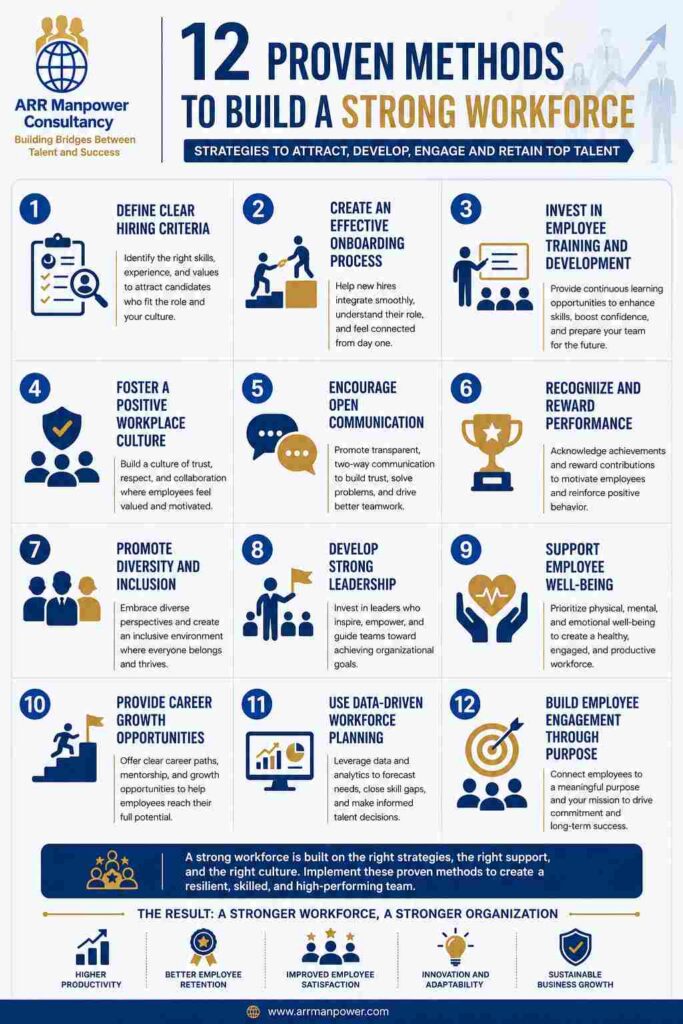
This article explores 12 proven methods that can help organizations create a resilient and high-performing workforce.
https://arrmanpowerconsultancy.com/
1. Define Clear Hiring Criteria
The journey toward a strong workforce begins with hiring the right people. Many organizations struggle with recruitment because they lack clearly defined job requirements and expectations.
Before advertising a position, employers should identify the essential skills, qualifications, experience levels, and personality traits needed for success in the role. A well-structured job description helps attract suitable candidates while reducing the number of unqualified applicants.
Hiring managers should also focus on cultural fit in addition to technical competence. Employees who align with organizational values are more likely to contribute positively and remain committed over the long term.
By establishing clear hiring criteria, businesses can improve recruitment outcomes and build a stronger team from the start.
2. Create an Effective Onboarding Process
Recruitment is only the first step. New employees need proper guidance to become productive members of the organization.
An effective onboarding program introduces employees to company policies, goals, workplace expectations, and team dynamics. It helps individuals understand their responsibilities while providing them with the tools needed to succeed.
Organizations should avoid overwhelming new hires with excessive information during their first few days. Instead, onboarding should be structured over several weeks with ongoing support and mentorship.
Employees who experience a positive onboarding process are more likely to feel engaged, confident, and connected to the organization.
3. Invest in Employee Training and Development
Continuous learning is essential in today’s rapidly changing business environment. Technology, customer expectations, and industry standards evolve constantly, making ongoing development a necessity.
Organizations should provide regular training opportunities that enhance both technical and soft skills. Workshops, online courses, certifications, seminars, and coaching programs can help employees improve their capabilities.
Training initiatives demonstrate that the organization values employee growth. This often leads to increased motivation, stronger performance, and higher retention rates.
A workforce that continuously develops its skills remains adaptable and capable of meeting future challenges.
4. Foster a Positive Workplace Culture
Workplace culture significantly influences employee behavior, engagement, and productivity. A positive environment encourages collaboration, trust, respect, and accountability.
Leaders play a critical role in shaping organizational culture. They should promote open communication, recognize achievements, and address workplace issues promptly.
Employees perform better when they feel respected and valued. A healthy workplace atmosphere reduces conflict and strengthens relationships among team members.
Organizations that cultivate a supportive culture often attract top talent and maintain higher levels of employee satisfaction.
5. Encourage Open Communication
Strong communication is one of the most important factors in workforce development. Employees need clear information about organizational goals, expectations, and changes.
Leaders should create multiple channels for communication, including team meetings, one-on-one discussions, surveys, and digital collaboration platforms. Encouraging employees to share ideas and concerns fosters transparency and trust.
Open communication also helps organizations identify problems before they become major issues. Employees who feel heard are more likely to contribute innovative solutions and remain engaged in their work.
By promoting honest dialogue, businesses can strengthen teamwork and improve overall performance.
6. Recognize and Reward Performance
Employee recognition is a powerful motivator. When individuals feel appreciated for their contributions, they are more likely to remain committed and productive.
Recognition can take many forms, including verbal praise, performance bonuses, awards, promotions, or public acknowledgment. Even simple expressions of appreciation can have a significant impact on morale.
Organizations should ensure that recognition programs are fair, consistent, and aligned with performance objectives. Employees should clearly understand how their efforts contribute to organizational success.
A culture of appreciation encourages employees to maintain high standards and continuously improve their performance.
7. Promote Diversity and Inclusion
A diverse workforce brings a variety of perspectives, experiences, and ideas. This diversity can enhance creativity, innovation, and problem-solving capabilities.
Organizations should implement inclusive hiring practices that provide equal opportunities to candidates from different backgrounds. Diversity initiatives should extend beyond recruitment and include policies that support fairness and respect throughout the employee lifecycle.
Inclusive workplaces allow employees to feel valued regardless of their background, gender, age, ethnicity, or abilities. This sense of belonging contributes to stronger engagement and collaboration.
Companies that embrace diversity often benefit from broader market insights and improved organizational performance.
8. Develop Strong Leadership
Effective leadership is essential for building and maintaining a capable workforce. Leaders influence employee motivation, workplace culture, and organizational direction.
Businesses should invest in leadership development programs that strengthen communication, decision-making, conflict resolution, and coaching skills. Future leaders should be identified early and provided with growth opportunities.
Strong leaders inspire confidence and help employees achieve their full potential. They also create environments where individuals feel supported and empowered.
Organizations with effective leadership teams are better equipped to navigate challenges and achieve long-term objectives.
9. Support Employee Well-Being
Employee well-being has become a major priority for modern organizations. Physical health, mental wellness, and work-life balance all contribute to productivity and job satisfaction.
Employers can support well-being by offering flexible work arrangements, wellness programs, mental health resources, and supportive workplace policies. Encouraging employees to maintain a healthy balance between professional and personal responsibilities can reduce stress and burnout.
Healthy employees are generally more focused, engaged, and resilient. They are also less likely to experience absenteeism and turnover.
Prioritizing well-being demonstrates genuine concern for employees and strengthens organizational loyalty.
10. Provide Career Growth Opportunities
Employees are more likely to remain with organizations that offer clear paths for advancement. Career growth opportunities help individuals see a future within the company and motivate them to perform at their best.
Organizations should establish transparent promotion criteria and provide development plans tailored to employee goals. Mentorship programs, leadership training, and cross-functional projects can further support professional growth.
Managers should regularly discuss career aspirations with employees and identify opportunities for skill enhancement and advancement.
When employees believe they can grow within an organization, they are more likely to remain engaged and committed.
11. Use Data-Driven Workforce Planning
Workforce planning enables organizations to anticipate future talent needs and address potential skill gaps. Data-driven decision-making helps businesses allocate resources more effectively and improve workforce performance.
Human resource teams can analyze metrics such as employee turnover, productivity, engagement, training effectiveness, and recruitment outcomes. These insights support strategic planning and informed decision-making.
Predictive workforce analysis can help organizations prepare for expansion, technological changes, and evolving market demands.
By leveraging data, businesses can build a workforce that remains aligned with long-term objectives.
12. Build Employee Engagement Through Purpose
Employees want more than a paycheck. They want to understand how their work contributes to a larger mission.
Organizations should clearly communicate their vision, values, and objectives. Employees who understand the purpose behind their work are more likely to feel motivated and invested in organizational success.
Leaders can strengthen engagement by connecting individual roles to broader business goals. Celebrating milestones and sharing success stories helps reinforce this connection.
Purpose-driven employees often demonstrate greater commitment, higher productivity, and stronger collaboration.
Conclusion
Building a strong workforce requires consistent effort, strategic planning, and a genuine commitment to employee success. Organizations that focus on effective hiring, structured onboarding, continuous learning, leadership development, employee well-being, and engagement create environments where people can thrive.
The 12 methods discussed in this article provide a practical framework for developing a capable and motivated team. From defining clear hiring criteria to fostering a culture of communication and recognition, each strategy contributes to organizational strength and resilience.
Businesses that invest in their people gain a significant competitive advantage. A skilled, engaged, and adaptable workforce not only improves daily operations but also supports innovation, growth, and long-term success. By implementing these proven methods, organizations can create a foundation that drives sustainable performance and prepares them for future opportunities.
Organizations that consistently prioritize their people are more likely to achieve lasting success in an increasingly competitive market. By implementing these workforce-building strategies, businesses can create a culture of excellence, improve employee retention, enhance operational efficiency, and develop a future-ready team capable of driving innovation and sustainable growth.