Introduction
Hiring the right talent is one of the most important challenges faced by startups and small-to-medium enterprises (SMEs). Unlike large corporations with established employer brands and extensive hiring budgets, growing businesses often compete for talent with limited resources. However, a well-planned recruitment approach can help startups and SMEs attract skilled professionals, build high-performing teams, and support sustainable growth.
Effective recruitment is not just about filling vacancies. It involves identifying the right candidates, creating a positive hiring experience, and ensuring new employees align with the company’s culture and goals. By implementing strategic hiring practices, startups and SMEs can improve workforce quality while reducing recruitment costs and turnover rates.
This article explores 13 practical recruitment strategies that can help growing businesses attract and retain top talent.
https://arrmanpowerconsultancy.com
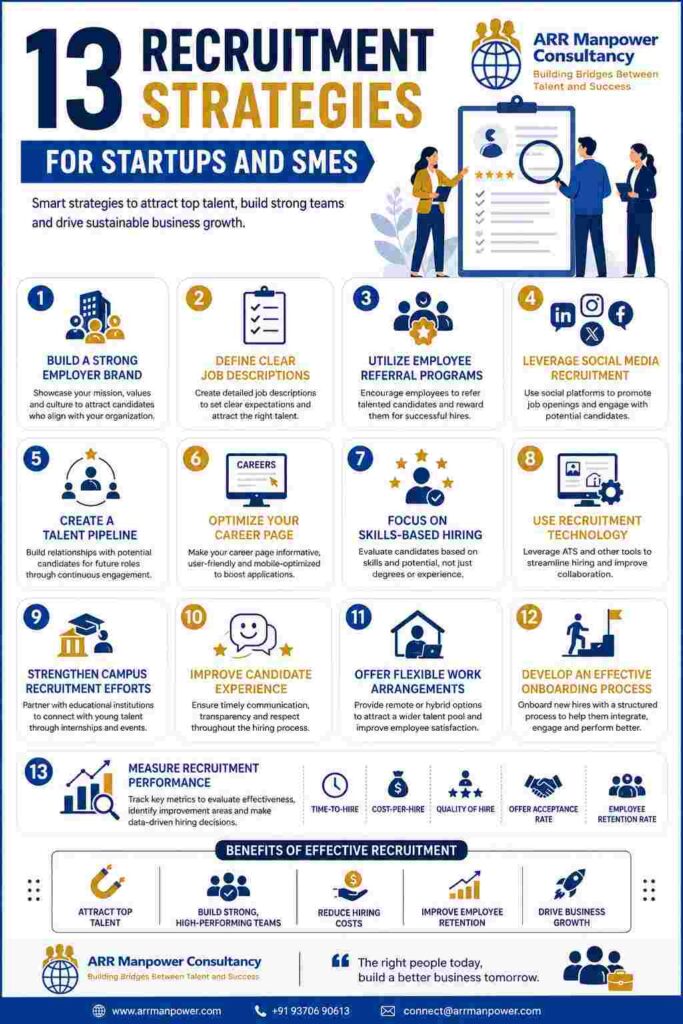
1. Build a Strong Employer Brand
Candidates today evaluate potential employers before applying for jobs. A strong employer brand helps startups and SMEs stand out in a competitive market.
Showcase your company’s mission, values, workplace culture, and employee success stories through your website and social media platforms. Share behind-the-scenes content, team achievements, and growth opportunities available within the organization.
When candidates understand what makes your company unique, they are more likely to apply and engage with your recruitment process.
Benefits:
- Increases candidate trust
- Attracts culture-fit applicants
- Improves application quality
- Enhances employee retention
2. Define Clear Job Descriptions
Many hiring challenges begin with poorly written job descriptions. Ambiguous responsibilities and unrealistic expectations can discourage qualified candidates from applying.
Create detailed job descriptions that clearly outline:
- Role responsibilities
- Required qualifications
- Preferred skills
- Career growth opportunities
- Compensation range (when possible)
A well-structured job description helps candidates understand expectations and enables recruiters to attract suitable applicants more efficiently.
Best Practice:
Focus on essential requirements rather than creating an extensive list of qualifications that may discourage capable candidates.
3. Utilize Employee Referral Programs
Employee referrals remain one of the most effective hiring channels for startups and SMEs.
Current employees often understand the company culture and can recommend individuals who may be a good fit. Referral programs typically produce higher-quality hires and reduce recruitment costs.
Offer incentives such as:
- Monetary rewards
- Gift vouchers
- Additional leave days
- Recognition programs
Referral-based hiring can significantly shorten the recruitment cycle while improving retention rates.
4. Leverage Social Media Recruitment
Social media platforms have become valuable tools for sourcing talent.
Businesses can use platforms such as:
- X (formerly Twitter)
Share job openings, company updates, workplace culture content, and employee testimonials to attract potential candidates.
LinkedIn is particularly useful for professional networking and passive candidate outreach, while Instagram and Facebook can help showcase company culture.
Advantages:
- Wider talent reach
- Lower advertising costs
- Improved employer visibility
- Direct engagement with candidates
5. Create a Talent Pipeline
Successful hiring often begins before positions become available.
A talent pipeline is a database of potential candidates who may be suitable for future opportunities. Maintain relationships with:
- Previous applicants
- Interns
- Freelancers
- Industry contacts
- Event attendees
Regular communication through newsletters, networking events, and professional updates keeps candidates engaged with your organization.
When a vacancy arises, you already have a pool of interested professionals, reducing hiring delays.
6. Optimize Your Career Page
Your career page serves as a digital storefront for potential employees.
An effective careers section should include:
- Company overview
- Open positions
- Employee testimonials
- Benefits information
- Application instructions
Ensure the page is mobile-friendly and easy to navigate. Candidates often decide whether to apply based on their experience with your careers page.
Adding videos and employee stories can further improve engagement and application rates.
7. Focus on Skills-Based Hiring
Traditional hiring often prioritizes degrees and years of experience. However, skills-based hiring allows startups and SMEs to access a broader talent pool.
Evaluate candidates based on:
- Technical competencies
- Problem-solving abilities
- Communication skills
- Adaptability
- Learning potential
Many talented professionals possess the necessary skills without following traditional educational paths.
Skills-based assessments can help identify candidates who may excel in the role despite lacking conventional credentials.
8. Use Recruitment Technology
Technology can significantly improve hiring efficiency.
Applicant Tracking Systems (ATS) help organizations:
- Manage applications
- Track candidate progress
- Schedule interviews
- Store applicant data
- Generate hiring reports
Automation reduces administrative tasks and allows recruiters to focus on candidate engagement.
Modern recruitment software can also improve collaboration between hiring managers and recruitment teams.
Benefits:
- Faster hiring process
- Better organization
- Improved candidate experience
- Data-driven decision making
9. Strengthen Campus Recruitment Efforts
Universities and colleges provide access to emerging talent eager to begin their careers.
Participate in:
- Career fairs
- Campus placement programs
- Internship initiatives
- Industry workshops
- Guest lectures
Building relationships with educational institutions helps startups and SMEs establish a future talent pipeline.
Fresh graduates often bring innovative ideas, enthusiasm, and adaptability that contribute positively to growing organizations.
10. Improve Candidate Experience
A positive candidate experience influences both hiring success and employer reputation.
Candidates appreciate:
- Timely communication
- Transparent processes
- Clear expectations
- Constructive feedback
- Professional interviews
Even unsuccessful applicants can become future candidates, customers, or brand advocates if treated respectfully.
Ways to Enhance Experience:
- Respond promptly to applications
- Keep candidates informed
- Simplify application forms
- Provide interview feedback when possible
A smooth recruitment journey strengthens your employer image and encourages future applications.
11. Offer Flexible Work Arrangements
Workplace flexibility has become a major factor in job selection.
Many professionals seek:
- Remote work options
- Hybrid schedules
- Flexible working hours
- Results-oriented environments
Startups and SMEs can compete effectively with larger employers by offering flexibility rather than relying solely on higher salaries.
Flexible work arrangements also expand the available talent pool beyond geographical limitations.
Advantages:
- Increased employee satisfaction
- Better work-life balance
- Wider recruitment reach
- Improved productivity
12. Develop an Effective Onboarding Process
Recruitment success does not end when a candidate accepts an offer.
A structured onboarding program helps new employees integrate into the organization and become productive more quickly.
Effective onboarding includes:
- Company orientation
- Role-specific training
- Goal setting
- Team introductions
- Regular check-ins
Employees who experience strong onboarding are more likely to remain with the company and perform effectively.
Key Outcomes:
- Faster productivity
- Higher engagement
- Better retention
- Improved employee satisfaction
13. Measure Recruitment Performance
Continuous improvement requires accurate measurement.
Track key recruitment metrics such as:
Time-to-Hire
Measures the number of days required to fill a position.
Cost-per-Hire
Calculates total recruitment expenses for each new employee.
Quality of Hire
Evaluates employee performance and long-term contribution.
Offer Acceptance Rate
Measures the percentage of accepted job offers.
Employee Retention Rate
Indicates how effectively new hires remain within the organization.
Analyzing these metrics helps identify strengths, weaknesses, and opportunities for process improvement.
Common Recruitment Challenges for Startups and SMEs
Despite implementing effective hiring strategies, growing businesses may still encounter challenges.
Limited Budget
Many startups operate with restricted recruitment budgets. Cost-effective channels such as referrals, social media, and networking events can help address this issue.
Employer Brand Awareness
New businesses often struggle with recognition. Consistent branding and content marketing can improve visibility among job seekers.
Competition for Talent
Large corporations may offer higher salaries and extensive benefits. Startups can differentiate themselves through flexibility, career growth opportunities, and meaningful work.
High Turnover
Poor hiring decisions can increase turnover rates. Structured interviews, skills assessments, and cultural fit evaluations help improve hiring accuracy.
Future Trends in Recruitment
Recruitment practices continue to evolve with changing workforce expectations.
Emerging trends include:
Artificial Intelligence in Hiring
AI-powered tools help screen applications, schedule interviews, and identify suitable candidates more efficiently.
Data-Driven Recruitment
Organizations increasingly rely on analytics to improve hiring outcomes and workforce planning.
Remote Hiring
Virtual interviews and remote onboarding have become standard practices across many industries.
Diversity and Inclusion
Companies are prioritizing inclusive hiring practices to build diverse and innovative teams.
Employer Experience Focus
Businesses are investing more effort in creating positive candidate and employee experiences throughout the hiring journey.
Conclusion
Building a successful team is essential for startup and SME growth. While limited resources can create hiring challenges, implementing effective recruitment strategies enables businesses to compete for quality talent and build a strong workforce.
By strengthening employer branding, leveraging referrals, embracing technology, focusing on skills-based hiring, improving candidate experiences, and continuously measuring results, startups and SMEs can create sustainable recruitment processes that support long-term success.
The most effective hiring strategies combine planning, consistency, and adaptability. Organizations that invest in recruitment today are better positioned to attract top talent, improve retention, and achieve future business goals.
Furthermore, recruitment should be viewed as an ongoing business function rather than a one-time activity. As markets evolve and workforce expectations change, startups and SMEs must regularly evaluate and refine their hiring approaches. Developing strong talent networks, nurturing employee engagement, and maintaining a positive workplace culture can significantly improve long-term hiring outcomes.
Businesses that prioritize strategic recruitment are better equipped to respond to growth opportunities, overcome talent shortages, and build resilient teams. Ultimately, a thoughtful and proactive hiring strategy lays the foundation for innovation, productivity, and sustained organizational success in an increasingly competitive business environment.
In addition, investing in employee development and career progression after hiring can further strengthen retention and performance. When employees feel valued and supported, they are more likely to contribute positively, remain committed to organizational goals, and become advocates for the company’s growth and success.