Introduction
The hospitality industry is one of the world’s largest employment sectors, encompassing hotels, resorts, restaurants, event management companies, cruise lines, travel businesses, and entertainment venues. As customer expectations continue to evolve, organizations face increasing pressure to attract, hire, and retain talented professionals who can deliver exceptional guest experiences.
Recruitment within hospitality is both challenging and rewarding. Employers must navigate labor shortages, changing workforce expectations, technological advancements, and seasonal hiring demands. At the same time, new opportunities are emerging through digital transformation, employer branding, workforce diversity, and innovative hiring strategies.
Understanding these challenges and opportunities is essential for organizations seeking to build strong teams and maintain a competitive advantage. This article explores fourteen key factors shaping talent acquisition in the hospitality sector today.
https://arrmanpowerconsultancy.com
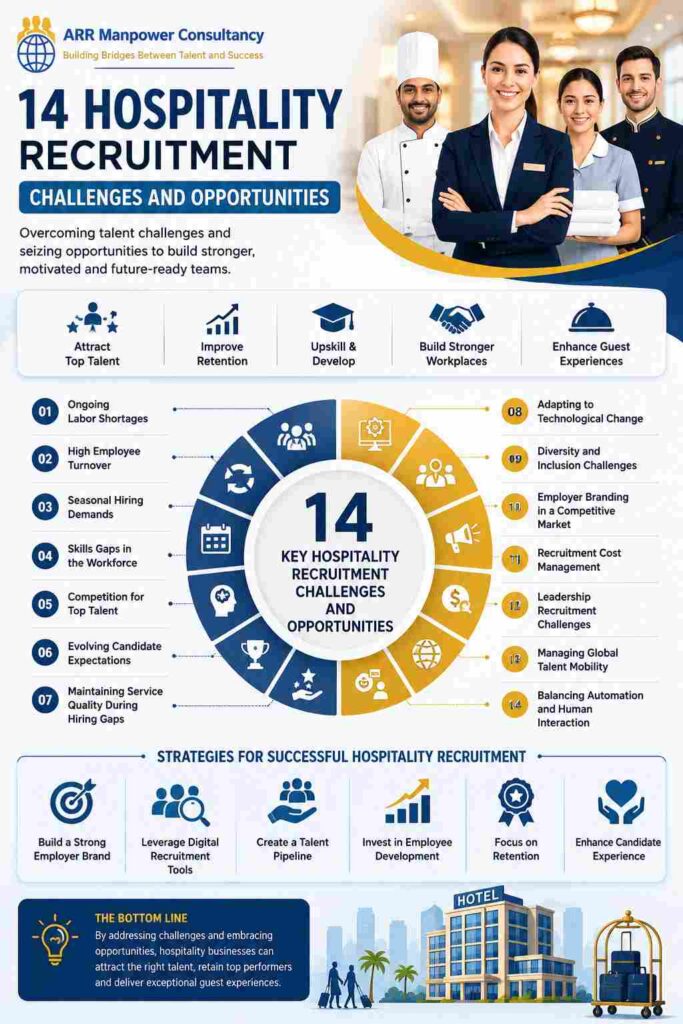
1. Ongoing Labor Shortages
One of the most significant challenges facing hospitality employers is the shortage of qualified workers. Many businesses struggle to fill positions across departments, including front office operations, housekeeping, food and beverage services, culinary roles, and management positions.
Several factors contribute to labor shortages, including changing career preferences, demographic shifts, and increased competition from other industries. Potential candidates often seek greater flexibility, career progression, and work-life balance than traditional hospitality roles may offer.
Opportunity
Organizations can overcome labor shortages by expanding talent pools, offering attractive benefits, and developing internal training programs. Investing in workforce development allows businesses to nurture talent rather than relying solely on experienced hires.
2. High Employee Turnover
Employee turnover remains a persistent issue throughout the hospitality industry. The fast-paced nature of hospitality work, irregular schedules, and physically demanding tasks can lead employees to seek alternative career opportunities.
Frequent staff departures increase recruitment costs and create operational disruptions. Managers must continually invest time and resources in onboarding and training new team members.
Opportunity
Companies that prioritize employee engagement, recognition programs, and career development often experience improved retention rates. Creating a positive workplace culture helps employees feel valued and encourages long-term commitment.
3. Seasonal Hiring Demands
Many hospitality businesses experience fluctuations in staffing requirements throughout the year. Hotels, resorts, and tourism-related organizations often face peak periods during holidays, festivals, and vacation seasons.
Recruiting large numbers of temporary employees within short timeframes presents logistical challenges. Businesses must ensure adequate staffing levels without compromising service quality.
Opportunity
Building a reliable network of seasonal workers and maintaining talent databases can simplify future hiring efforts. Employers who establish relationships with returning seasonal employees often reduce recruitment costs and training time.
4. Skills Gaps in the Workforce
As hospitality operations become increasingly sophisticated, employers require candidates with both technical and interpersonal skills. Unfortunately, many applicants may lack the competencies necessary for modern hospitality environments.
Skills gaps are particularly noticeable in leadership, digital technology, customer service excellence, and specialized culinary expertise.
Opportunity
Partnerships with educational institutions, hospitality schools, and vocational training centers can help bridge these gaps. Organizations can also implement continuous learning programs that enhance employee capabilities and prepare future leaders.
5. Competition for Top Talent
Hospitality employers compete not only with industry peers but also with sectors such as retail, healthcare, technology, and logistics. Skilled professionals often have multiple employment options available.
This competition makes attracting experienced managers, chefs, and service professionals increasingly difficult.
Opportunity
A strong employer brand can differentiate organizations from competitors. Highlighting career advancement opportunities, workplace culture, employee benefits, and success stories can attract high-quality candidates.
6. Evolving Candidate Expectations
Today’s workforce has different priorities compared to previous generations. Candidates increasingly value flexibility, career growth, workplace diversity, mental well-being, and meaningful work experiences.
Organizations that fail to adapt to these expectations may struggle to attract younger professionals entering the workforce.
Opportunity
Employers can enhance their appeal by offering flexible scheduling, professional development programs, wellness initiatives, and transparent communication. Demonstrating commitment to employee satisfaction strengthens recruitment efforts.
7. Maintaining Service Quality During Hiring Gaps
When critical positions remain vacant, service quality can suffer. Existing staff members may become overburdened, resulting in decreased productivity and lower guest satisfaction.
Hospitality businesses depend heavily on human interaction, making staffing shortages particularly impactful.
Opportunity
Cross-training employees allows organizations to maintain operational continuity during recruitment periods. A versatile workforce can temporarily fill gaps while permanent hiring solutions are implemented.
8. Adapting to Technological Change
Technology is transforming every aspect of hospitality operations, from online reservations and digital check-ins to customer relationship management and workforce scheduling systems.
Recruiters increasingly seek candidates who are comfortable using hospitality technology platforms. However, not all applicants possess these digital skills.
Opportunity
Technology can also streamline recruitment processes. Applicant tracking systems, AI-powered screening tools, and virtual interviews help employers identify suitable candidates more efficiently while reducing hiring timelines.
9. Diversity and Inclusion Challenges
Building diverse and inclusive teams remains an important objective across the hospitality sector. Diverse workforces contribute to innovation, improved customer experiences, and stronger organizational performance.
However, unconscious bias, limited outreach efforts, and insufficient representation can hinder progress.
Opportunity
Employers can strengthen recruitment outcomes by implementing inclusive hiring practices, expanding sourcing channels, and fostering equitable workplace environments. Diverse teams often better reflect the global customer base served by hospitality businesses.
10. Employer Branding in a Competitive Market
A company’s reputation significantly influences candidate interest. Job seekers increasingly research organizations before applying, examining online reviews, employee testimonials, and social media presence.
Negative perceptions can discourage qualified candidates from pursuing opportunities.
Opportunity
Investing in employer branding helps organizations attract talent more effectively. Sharing employee success stories, highlighting workplace achievements, and showcasing organizational values create a compelling employment proposition.
11. Recruitment Cost Management
Hiring expenses can quickly accumulate through advertising, agency fees, screening processes, onboarding activities, and training programs. High turnover further increases these costs.
Many hospitality businesses operate within tight budgets, making recruitment efficiency a priority.
Opportunity
Data-driven recruitment strategies can reduce unnecessary spending. Leveraging employee referral programs, talent communities, and digital recruitment channels often provides cost-effective hiring solutions while improving candidate quality.
12. Leadership Recruitment Challenges
Strong leadership is essential for maintaining service standards and achieving business objectives. However, finding experienced hospitality leaders with operational expertise and people management skills can be difficult.
Leadership vacancies often have a significant impact on organizational performance.
Opportunity
Succession planning allows businesses to identify and develop future leaders from within their workforce. Internal promotion pathways not only reduce recruitment challenges but also improve employee morale and retention.
13. Managing Global Talent Mobility
The hospitality industry frequently relies on international talent to fill specialized roles and address labor shortages. However, visa regulations, compliance requirements, and relocation logistics can complicate the hiring process.
Organizations must navigate complex legal and administrative procedures when recruiting globally.
Opportunity
Global talent mobility also provides access to diverse skill sets and international perspectives. Employers that establish effective immigration support processes can benefit from broader talent pools and enhanced cultural diversity.
14. Balancing Automation and Human Interaction
Automation continues to expand throughout hospitality operations. Self-service kiosks, mobile applications, automated booking systems, and artificial intelligence tools improve efficiency and reduce administrative workloads.
However, hospitality remains fundamentally centered on human interaction and personalized service.
Opportunity
Rather than replacing employees, automation can enable staff to focus on higher-value guest interactions. Recruiters can prioritize candidates who combine technological adaptability with strong interpersonal skills, creating a balanced workforce prepared for future industry demands.
Strategies for Successful Hospitality Recruitment
To address these challenges and capitalize on emerging opportunities, hospitality organizations should adopt a comprehensive recruitment strategy that includes:
Develop a Strong Employer Value Proposition
Clearly communicate what makes the organization an attractive place to work. Highlight career progression, training opportunities, workplace culture, and employee benefits.
Invest in Employee Development
Continuous learning programs improve employee satisfaction and create a pipeline of future leaders. Professional development opportunities also strengthen retention.
Utilize Digital Recruitment Tools
Modern recruitment technology helps streamline sourcing, screening, and candidate communication. Digital platforms improve efficiency and enhance the overall hiring experience.
Build Talent Communities
Maintaining relationships with former employees, seasonal workers, and prospective candidates creates a valuable talent pipeline for future vacancies.
Focus on Candidate Experience
A positive recruitment experience strengthens employer reputation and increases the likelihood of attracting top talent. Prompt communication and transparent hiring processes are essential.
Strengthen Retention Initiatives
Reducing turnover should be a key objective. Competitive compensation, recognition programs, career growth opportunities, and supportive management contribute to higher retention rates.
The Future of Hospitality Recruitment
The future of talent acquisition in hospitality will be shaped by technology, workforce expectations, and changing business models. Organizations that embrace innovation while maintaining a people-centered approach will be best positioned for success.
Artificial intelligence, predictive analytics, and digital hiring platforms will continue to improve recruitment efficiency. At the same time, human qualities such as empathy, communication, adaptability, and service excellence will remain critical differentiators.
Employers must balance operational efficiency with employee well-being, creating workplaces where individuals can thrive and contribute meaningfully. Companies that successfully achieve this balance will gain a significant competitive advantage in attracting and retaining top talent.
Conclusion
Hospitality recruitment presents a unique combination of challenges and opportunities. Labor shortages, turnover, skills gaps, seasonal demands, and evolving workforce expectations require organizations to adopt innovative hiring strategies. At the same time, advancements in technology, diversity initiatives, employer branding, and workforce development create exciting possibilities for growth.
Businesses that invest in their people, embrace modern recruitment practices, and cultivate positive workplace cultures will be better equipped to meet future talent demands. By understanding and addressing these fourteen key challenges and opportunities, hospitality organizations can build resilient teams, enhance guest experiences, and achieve long-term success in an increasingly competitive marketplace.