Introduction
Graduating from college is one of life’s most exciting milestones. After years of studying, completing assignments, and preparing for exams, fresh graduates finally enter the professional world. While earning a degree is a significant achievement, building a successful career requires continuous learning, adaptability, and strategic planning.
The transition from campus life to the workplace can feel overwhelming. Many graduates face challenges such as finding the right job, preparing for interviews, developing professional skills, and adapting to workplace expectations. The good news is that with the right mindset and approach, new professionals can overcome these challenges and create a rewarding career path.
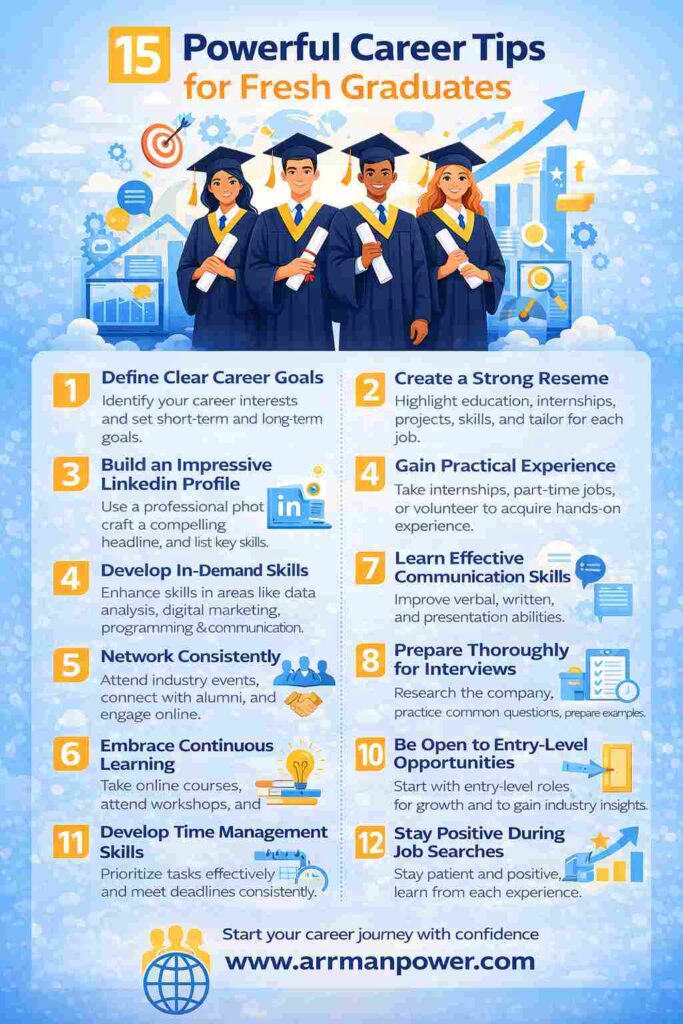
This guide shares 15 powerful career tips for fresh graduates to help them navigate the job market, strengthen their professional profile, and build long-term success.
https://arrmanpowerconsultancy.com/
1. Define Clear Career Goals
One of the first steps toward professional success is understanding what you want to achieve. Without clear goals, it becomes difficult to make informed decisions about jobs, skills, and opportunities.
Ask yourself:
- What industries interest you?
- What roles match your strengths?
- Where do you see yourself in five years?
Setting short-term and long-term goals provides direction and helps you stay focused on opportunities that align with your aspirations.
2. Create a Strong Resume
Your resume is often the first impression employers have of you. A well-crafted resume can significantly improve your chances of getting shortlisted.
Include:
- Educational qualifications
- Internships
- Academic projects
- Certifications
- Technical skills
- Achievements
Keep the format professional and concise. Tailor your resume for each application by highlighting relevant experiences and skills that match the job description.
3. Build an Impressive LinkedIn Profile
LinkedIn has become one of the most important platforms for professional networking and job searching.
To strengthen your profile:
- Use a professional photo
- Write a compelling headline
- Add detailed experience and projects
- Showcase certifications
- Request recommendations
Recruiters frequently use LinkedIn to identify potential candidates, making it an essential tool for fresh graduates.
4. Develop In-Demand Skills
The modern job market evolves rapidly. Employers seek candidates who possess both technical and soft skills.
Popular skills include:
- Data analysis
- Digital marketing
- Programming
- Project management
- Communication
- Problem-solving
Investing time in skill development increases your competitiveness and opens doors to better opportunities.
5. Gain Practical Experience
Experience is often a key requirement for many positions. While fresh graduates may not have full-time work experience, internships, freelance projects, volunteering, and part-time jobs can provide valuable exposure.
Practical experience helps you:
- Understand workplace dynamics
- Apply theoretical knowledge
- Build confidence
- Expand your professional network
Every experience contributes to your growth and enhances your employability.
6. Learn Effective Communication Skills
Strong communication skills are valuable in every profession. Whether interacting with colleagues, clients, or managers, clear communication helps build trust and collaboration.
Focus on improving:
- Verbal communication
- Written communication
- Presentation skills
- Active listening
Professionals who communicate effectively often stand out and advance faster in their careers.
7. Network Consistently
Networking is not just for experienced professionals. Fresh graduates can benefit significantly from building meaningful connections.
Ways to network include:
- Attending industry events
- Joining professional groups
- Participating in webinars
- Connecting with alumni
- Engaging on LinkedIn
Networking can lead to mentorship opportunities, job referrals, and valuable career insights.
8. Prepare Thoroughly for Interviews
Job interviews are your opportunity to demonstrate your skills, enthusiasm, and potential.
Before an interview:
- Research the company
- Understand the job role
- Practice common questions
- Prepare examples of achievements
- Dress professionally
Confidence and preparation can make a significant difference in interview performance.
9. Embrace Continuous Learning
Graduation is not the end of education. Successful professionals continuously update their knowledge and skills.
Consider:
- Online courses
- Professional certifications
- Industry workshops
- Webinars
- Training programs
Lifelong learning keeps you relevant and adaptable in a competitive job market.
10. Be Open to Entry-Level Opportunities
Many graduates aim for high-level positions immediately after college. However, entry-level roles often provide the foundation needed for future growth.
These positions help you:
- Learn industry practices
- Build professional credibility
- Gain hands-on experience
- Understand organizational culture
Approaching your first job as a learning opportunity can accelerate long-term career development.
11. Develop Time Management Skills
Managing time effectively is crucial in professional environments. Employers value individuals who can prioritize tasks and meet deadlines consistently.
Strategies include:
- Creating daily schedules
- Setting priorities
- Using productivity tools
- Avoiding procrastination
Strong time management increases productivity and reduces workplace stress.
12. Seek Feedback and Mentorship
Constructive feedback helps identify strengths and areas for improvement. Fresh graduates should actively seek guidance from experienced professionals.
Benefits of mentorship include:
- Career advice
- Industry insights
- Skill development
- Professional support
Learning from experienced mentors can help you avoid common mistakes and make informed career decisions.
13. Build a Personal Brand
Your professional reputation plays an important role in career growth. Developing a personal brand helps you stand out in a competitive market.
You can build your brand by:
- Sharing industry insights online
- Creating professional content
- Participating in discussions
- Showcasing achievements
- Maintaining professionalism
A strong personal brand enhances credibility and visibility among employers and industry peers.
14. Stay Positive During Job Searches
Finding the right opportunity can take time. Rejections are a normal part of the job search process and should not discourage you.
Maintain a positive mindset by:
- Learning from each interview
- Improving your resume
- Expanding your skills
- Continuing to network
Persistence often leads to better opportunities and long-term success.
15. Focus on Long-Term Career Growth
While securing your first job is important, long-term development should remain your priority.
Consider factors such as:
- Learning opportunities
- Career progression
- Company culture
- Skill development
- Industry growth potential
A strategic approach helps create a sustainable and rewarding professional journey.
Common Mistakes Fresh Graduates Should Avoid
As you begin your professional journey, avoid these common pitfalls:
Applying to Every Job
Submitting applications without considering job requirements often results in poor outcomes. Focus on positions that align with your qualifications and goals.
Ignoring Soft Skills
Technical expertise alone is not enough. Employers value teamwork, adaptability, communication, and leadership abilities.
Neglecting Networking
Many opportunities arise through professional connections. Building relationships can significantly enhance your career prospects.
Failing to Research Employers
Understanding a company’s mission, culture, and expectations helps you perform better during interviews and determine if the role is a good fit.
Giving Up Too Early
Career growth takes time. Patience and persistence are essential for achieving professional success.
How Fresh Graduates Can Stand Out
Competition in today’s job market can be intense. To distinguish yourself:
- Earn industry-recognized certifications
- Build a portfolio of projects
- Participate in internships
- Demonstrate leadership experience
- Maintain an active professional presence online
Employers appreciate candidates who show initiative, curiosity, and a commitment to growth.
The Importance of Adaptability
Work environments continue to evolve due to technological advancements and changing business needs. Adaptability has become one of the most valuable professional traits.
Adaptable professionals:
- Learn new technologies quickly
- Handle change effectively
- Solve problems creatively
- Thrive in dynamic environments
Being flexible and open to learning can significantly enhance career prospects.
Final Thoughts
Starting your professional journey as a fresh graduate can feel both exciting and challenging. The transition from academic life to the workplace often comes with new responsibilities, expectations, and opportunities for growth. While there is no single formula for career success, following these powerful career tips can help you build a strong foundation and navigate the early stages of your career with greater confidence.
Remember that every successful professional started as a beginner. The key is to remain committed to learning, improving your skills, and adapting to changing industry demands. Focus on developing a growth mindset, staying open to feedback, and taking initiative whenever opportunities arise. Employers value individuals who are eager to learn, demonstrate professionalism, and consistently strive to add value to their organizations.
It is also important to understand that career growth takes time. You may not land your dream job immediately, and you may face setbacks along the way. Rather than viewing challenges as failures, treat them as learning experiences that contribute to your personal and professional development. Persistence, patience, and resilience often make the difference between those who achieve long-term success and those who give up too soon.
Networking, continuous learning, and maintaining a positive attitude will continue to play a crucial role throughout your career. Building meaningful professional relationships can open doors to new opportunities, while upgrading your knowledge and skills ensures that you remain competitive in an evolving job market. At the same time, maintaining a healthy work-life balance can help you stay motivated and productive over the long term.
As you begin your career journey, take one step at a time and focus on consistent progress rather than perfection. Apply these career tips, stay determined, and keep working toward your goals. With dedication, the right mindset, and a willingness to learn, you can create a rewarding career path and achieve the professional success you aspire to reach in the years ahead.
Starting a professional journey can be both exciting and challenging. Success does not happen overnight, but consistent effort, continuous learning, and strategic planning can create remarkable opportunities.
By following these 15 powerful career tips for fresh graduates, you can build a strong foundation for long-term success. Focus on developing relevant skills, expanding your network, gaining practical experience, and maintaining a growth mindset. Every step you take today contributes to the career you will build tomorrow.
Remember that your first job is only the beginning. Stay curious, remain adaptable, and continue investing in your professional development. With determination and the right approach, fresh graduates can transform their ambitions into rewarding and successful careers.