Introduction
Hiring top talent has become more competitive than ever. Traditional recruitment methods, while still valuable, often fail to reach the large pool of skilled professionals who spend a significant portion of their time online. This shift in candidate behavior has made social platforms an essential part of modern hiring strategies.
Organizations of all sizes now use digital channels to connect with active and passive job seekers, strengthen employer branding, and accelerate the hiring process. From showcasing workplace culture to engaging directly with potential candidates, online networking platforms provide recruiters with powerful opportunities to attract the right talent.
However, simply posting job vacancies is no longer enough. Companies need targeted approaches that create meaningful engagement and encourage qualified professionals to apply. The following eight tactics can help businesses maximize results and build a stronger talent pipeline.
https://arrmanpowerconsultancy.com
1. Build a Strong Employer Brand
One of the most effective ways to attract qualified candidates is by establishing a compelling employer brand. Job seekers often research organizations before submitting applications. They want to understand company culture, values, leadership style, and growth opportunities.
A strong employer brand can be built by consistently sharing:
- Employee success stories
- Workplace achievements
- Team events and celebrations
- Learning and development initiatives
- Community involvement activities
Visual content tends to perform exceptionally well. Photos, videos, and behind-the-scenes content provide authentic insights into daily work life.
Candidates are more likely to apply when they can envision themselves thriving within the organization. Transparency and authenticity help build trust, making your company more attractive to potential hires.
Best Practices
- Showcase real employees instead of stock images.
- Share testimonials from current team members.
- Highlight diversity and inclusion efforts.
- Post regularly to maintain visibility.
A positive employer reputation can significantly improve recruitment outcomes while reducing hiring costs.
2. Create Engaging Job Posts
Many job advertisements fail because they read like lengthy lists of responsibilities and qualifications. Candidates are often overwhelmed by generic descriptions that provide little insight into the actual opportunity.
Effective job posts focus on value rather than requirements alone. They explain:
- Why the role matters
- What impact the candidate can make
- Growth opportunities available
- Benefits and perks
- Team culture
Attention-grabbing headlines can also improve engagement. Instead of using standard titles, consider adding context that highlights career advancement or exciting projects.
For example:
- Join Our Fast-Growing Marketing Team
- Lead Innovative Technology Projects
- Shape the Future of Customer Experience
Clear formatting, concise language, and a strong call-to-action encourage more applications.
Tips for Better Job Posts
- Use simple and direct language.
- Break content into short sections.
- Include salary information when possible.
- Explain career progression opportunities.
- Add visuals to increase visibility.
Engaging content helps attract candidates who align with both the role and organizational culture.
3. Leverage Employee Advocacy
Employees are among the most credible ambassadors for any organization. Their networks often include professionals with similar skills, experiences, and career interests.
Encouraging team members to share job openings can significantly expand reach. Personal recommendations carry greater trust than corporate messages, making candidates more receptive to opportunities.
Organizations can support employee advocacy by:
- Providing shareable content
- Offering referral incentives
- Recognizing successful referrals
- Simplifying the sharing process
When employees discuss their experiences, workplace culture, and career growth, they create authentic narratives that resonate with potential applicants.
Benefits of Employee Advocacy
- Increased reach
- Higher-quality referrals
- Improved employer credibility
- Faster hiring cycles
- Lower recruitment expenses
Referral-based hiring often produces stronger candidate matches and better retention rates.
4. Use Targeted Advertising
Organic reach alone may not be sufficient for competitive positions. Paid advertising allows recruiters to target specific audiences based on professional backgrounds, interests, locations, and demographics.
Advanced targeting options help ensure job advertisements reach individuals who are most likely to qualify for the role.
Targeted campaigns can focus on:
- Industry professionals
- Recent graduates
- Technical specialists
- Leadership candidates
- Geographic regions
This precision reduces wasted advertising spend while increasing application quality.
Creating Effective Recruitment Ads
Successful recruitment advertisements typically include:
- A compelling headline
- Clear role information
- Strong employer value proposition
- Attractive visual elements
- Simple application instructions
Regular performance monitoring helps recruiters optimize campaigns and improve results over time.
5. Engage Passive Candidates
Not every ideal candidate is actively searching for a new job. Many highly skilled professionals are employed and satisfied in their current roles. These individuals are often referred to as passive candidates.
Engaging passive talent requires relationship-building rather than immediate recruitment efforts.
Strategies include:
- Sharing industry insights
- Participating in professional discussions
- Commenting on relevant content
- Sending personalized messages
- Offering networking opportunities
The goal is to establish credibility and trust before discussing career opportunities.
Why Passive Candidates Matter
Passive candidates often bring:
- Strong experience
- Proven performance records
- Specialized expertise
- Industry knowledge
Building relationships with these professionals creates a valuable talent pool for future hiring needs.
6. Showcase Company Culture Through Video Content
Video has become one of the most engaging forms of digital communication. Candidates increasingly prefer visual content because it provides a more authentic view of organizations.
Companies can use video to highlight:
- Workplace environments
- Employee interviews
- Team activities
- Leadership messages
- Training programs
Short-form videos often generate higher engagement than text-based posts.
Types of Recruitment Videos
Employee Spotlights
Employees share their experiences, career journeys, and achievements within the organization.
Office Tours
Virtual tours provide insight into facilities and workspaces.
Day-in-the-Life Videos
Candidates gain a realistic understanding of daily responsibilities.
Leadership Messages
Executives can communicate organizational vision and values directly.
Authentic video content helps candidates develop emotional connections with the company before applying.
7. Build Talent Communities
Recruitment should not begin only when vacancies arise. Successful organizations continuously build relationships with potential candidates through talent communities.
A talent community consists of individuals who have expressed interest in the organization but may not be ready to apply immediately.
Recruiters can nurture these relationships through:
- Regular updates
- Industry news
- Career advice
- Event invitations
- Networking opportunities
Maintaining ongoing communication keeps the company top-of-mind when candidates consider career changes.
Advantages of Talent Communities
- Reduced time-to-hire
- Improved candidate engagement
- Stronger talent pipelines
- Better hiring preparedness
- Enhanced employer visibility
A proactive approach allows organizations to respond quickly when positions become available.
8. Analyze and Optimize Recruitment Performance
Data-driven decision-making is essential for recruitment success. Tracking key metrics helps organizations understand which strategies deliver the best results.
Important recruitment metrics include:
- Application volume
- Candidate quality
- Cost per hire
- Time to fill
- Conversion rates
- Engagement levels
Regular analysis reveals opportunities for improvement and helps allocate resources more effectively.
Questions to Evaluate Performance
- Which platforms generate the most qualified candidates?
- What content receives the highest engagement?
- Which advertisements produce the best return on investment?
- Where do candidates drop off during the application process?
By continuously measuring outcomes, recruiters can refine their strategies and achieve better hiring results.
Common Mistakes to Avoid
Even well-intentioned recruitment campaigns can underperform if certain mistakes are overlooked.
Posting Without a Strategy
Random content publishing often leads to inconsistent results. Organizations should establish clear recruitment goals and content plans.
Ignoring Employer Branding
Candidates frequently evaluate company reputation before applying. A weak online presence can discourage applications.
Overlooking Candidate Experience
Complicated application processes can drive qualified candidates away. Simplicity improves completion rates.
Using Generic Messaging
Personalized communication is far more effective than mass outreach efforts.
Failing to Measure Results
Without performance tracking, organizations cannot identify strengths or areas needing improvement.
Avoiding these common pitfalls helps maximize recruitment effectiveness.
Future Trends in Digital Recruitment
The recruitment landscape continues to evolve rapidly. Emerging trends are reshaping how organizations connect with talent.
Artificial Intelligence
AI-powered tools assist with candidate sourcing, screening, and engagement.
Short-Form Video Content
Brief, engaging videos continue to gain popularity among job seekers.
Skills-Based Hiring
Organizations increasingly focus on demonstrated capabilities rather than traditional credentials alone.
Employee-Generated Content
Authentic employee stories are becoming more influential in attracting candidates.
Community-Centered Recruitment
Long-term relationship building is replacing transactional hiring approaches.
Companies that adapt to these trends can gain a competitive advantage in talent acquisition.
Conclusion
Modern hiring requires more than simply posting vacancies and waiting for applications. Organizations must actively engage potential candidates, build strong employer brands, and create meaningful online experiences that attract top talent.
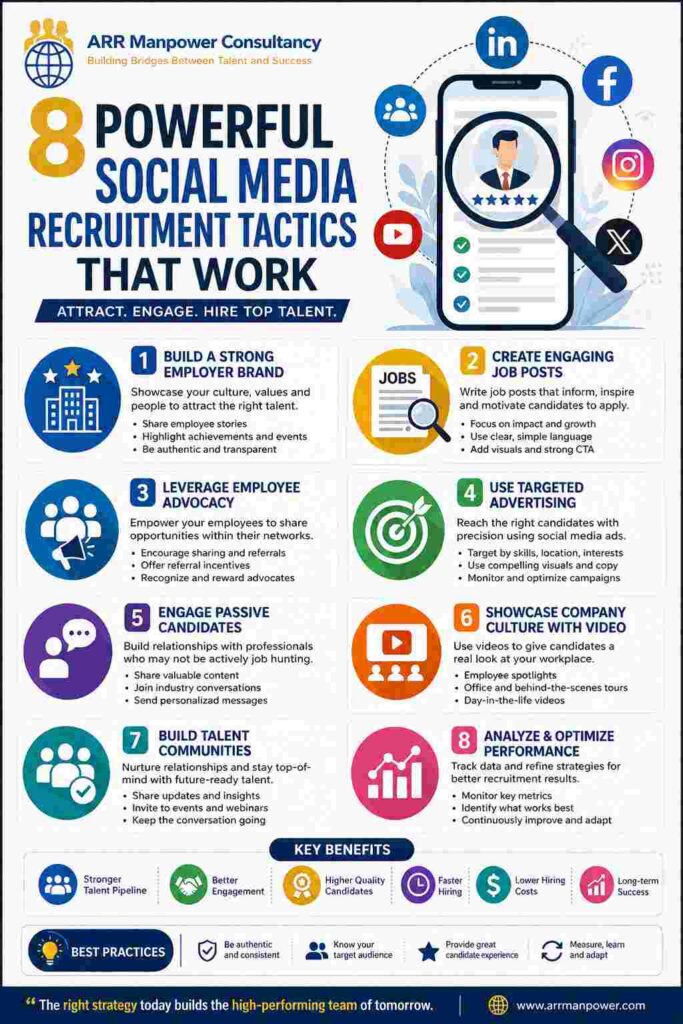
By implementing these eight tactics—strengthening employer branding, creating engaging job posts, encouraging employee advocacy, utilizing targeted advertising, connecting with passive candidates, showcasing culture through video, building talent communities, and analyzing performance—businesses can significantly improve recruitment outcomes.
Success comes from consistency, authenticity, and a willingness to adapt to changing candidate expectations. Organizations that invest in these strategies are better positioned to attract qualified professionals, reduce hiring challenges, and build high-performing teams that drive long-term growth.
Furthermore, organizations that embrace innovative hiring techniques can build stronger connections with prospective employees and create a sustainable competitive advantage. Consistent engagement across digital platforms helps nurture trust, improve candidate experiences, and increase brand visibility among skilled professionals.
As workforce expectations continue to evolve, recruiters must remain adaptable and responsive to new communication trends. Investing in long-term relationship building rather than focusing solely on immediate hiring needs can lead to a more resilient talent pipeline, improved retention rates, and greater success in attracting high-quality candidates across diverse industries and professional backgrounds.
https://blog.hubspot.com/service/customer-service-kpi