Introduction
Finding and hiring the right talent has become one of the biggest challenges for businesses across industries. Organizations are under constant pressure to attract skilled professionals, reduce hiring costs, and fill vacancies quickly while maintaining quality standards. Traditional recruitment methods often struggle to meet these demands, especially in competitive job markets.
This is where Recruitment Process Outsourcing (RPO) has emerged as a strategic solution. By partnering with specialized recruitment providers, companies can streamline hiring operations, access broader talent pools, and improve workforce planning. Rather than handling every aspect of recruitment internally, businesses can leverage external expertise to achieve better hiring outcomes.
As organizations continue to evolve in a rapidly changing employment landscape, outsourcing recruitment functions offers a practical and efficient way to stay ahead. This article explores ten powerful benefits of Recruitment Process Outsourcing and explains why it has become an increasingly popular workforce strategy.
https://arrmanpowerconsultancy.com
What Is Recruitment Process Outsourcing?
Recruitment Process Outsourcing is a business model in which an employer transfers all or part of its recruitment activities to a specialized external provider. The outsourcing partner acts as an extension of the company’s HR team and manages various hiring functions, including sourcing candidates, screening applications, conducting interviews, employer branding, onboarding support, and workforce planning.
Unlike traditional staffing agencies that focus primarily on filling positions, RPO providers develop customized recruitment strategies aligned with the organization’s goals, culture, and long-term talent needs.
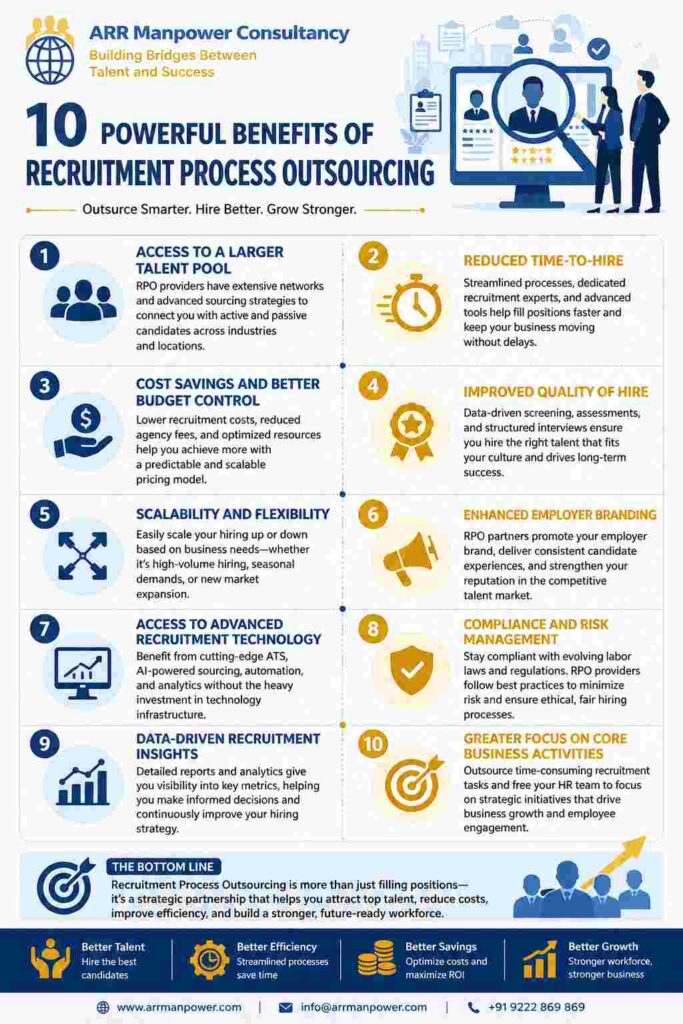
1. Access to a Larger Talent Pool
One of the most significant advantages of Recruitment Process Outsourcing is access to an extensive network of candidates. RPO providers continuously engage with active and passive job seekers across industries, locations, and experience levels.
Many highly qualified professionals are not actively searching for jobs but remain open to new opportunities. Internal HR teams may struggle to reach these candidates, while outsourcing partners often have established databases, talent communities, and sourcing channels designed to identify top talent.
This expanded reach helps organizations attract skilled professionals who might otherwise remain unavailable through conventional hiring methods.
Key Advantages:
- Access to passive candidates
- Broader geographic reach
- Industry-specific talent networks
- Improved candidate quality
2. Reduced Time-to-Hire
Lengthy recruitment processes can result in lost productivity, increased workload on existing employees, and missed business opportunities. Every vacant position represents a gap that can affect operational performance.
Outsourcing recruitment functions enables companies to significantly reduce hiring timelines. Dedicated recruitment specialists focus exclusively on sourcing, screening, and presenting qualified candidates quickly.
By leveraging advanced sourcing tools, streamlined workflows, and specialized expertise, RPO providers can accelerate every stage of the hiring process.
Benefits of Faster Hiring:
- Reduced vacancy costs
- Improved business continuity
- Better candidate experience
- Faster project execution
Organizations that shorten their hiring cycles gain a competitive advantage in securing top candidates before competitors do.
3. Cost Savings and Better Budget Control
Recruitment expenses can quickly accumulate through job advertisements, recruitment software subscriptions, agency fees, background checks, and internal HR resources.
Recruitment Process Outsourcing helps businesses manage these costs more effectively by consolidating recruitment activities under a structured service model. Instead of maintaining large internal recruitment teams, organizations can scale hiring resources according to demand.
The predictable pricing structure provided by many RPO providers allows businesses to forecast recruitment expenses more accurately.
Areas of Cost Reduction:
- Lower advertising expenses
- Reduced agency dependence
- Minimized administrative costs
- Improved recruiter productivity
- Decreased turnover-related expenses
Cost efficiency becomes particularly valuable during periods of rapid growth or high-volume hiring.
4. Improved Quality of Hire
Hiring the wrong candidate can be costly. Poor hiring decisions often lead to reduced productivity, lower morale, increased turnover, and additional recruitment expenses.
Specialized recruitment providers use proven assessment methods, structured interview processes, and data-driven evaluation techniques to identify candidates who align with both job requirements and organizational culture.
By focusing on candidate quality rather than simply filling vacancies, outsourcing partners help companies build stronger and more productive teams.
Indicators of Improved Quality:
- Better employee performance
- Higher retention rates
- Stronger cultural fit
- Increased productivity
- Greater long-term success
Quality hires contribute directly to organizational growth and stability.
5. Scalability and Flexibility
Business hiring needs rarely remain constant. Some organizations experience seasonal fluctuations, while others undergo rapid expansion, mergers, acquisitions, or restructuring.
Recruitment Process Outsourcing offers exceptional scalability, allowing companies to adjust recruitment resources according to changing workforce demands.
During periods of growth, providers can quickly increase recruitment capacity. Conversely, during slower periods, businesses avoid the fixed costs associated with maintaining large internal hiring teams.
Flexible Recruitment Support:
- High-volume hiring projects
- Seasonal workforce demands
- New market expansion
- Specialized talent acquisition
- Temporary recruitment surges
This adaptability helps organizations remain agile in dynamic business environments.
6. Enhanced Employer Branding
A strong employer brand plays a critical role in attracting and retaining top talent. Job seekers increasingly evaluate organizations based on company culture, employee experiences, career growth opportunities, and reputation.
RPO providers often assist businesses in developing and promoting a compelling employer brand throughout the recruitment process.
They ensure consistent communication, professional candidate engagement, and positive recruitment experiences that strengthen the organization’s image in the job market.
Employer Branding Benefits:
- Improved candidate perception
- Increased application rates
- Stronger market reputation
- Better candidate engagement
- Enhanced talent attraction
A positive recruitment experience can influence a candidate’s perception even if they are not ultimately hired.
7. Access to Advanced Recruitment Technology
Modern recruitment relies heavily on technology. Applicant Tracking Systems (ATS), artificial intelligence tools, data analytics platforms, and candidate relationship management systems help streamline hiring processes.
However, implementing and maintaining these technologies internally can be expensive and resource-intensive.
Recruitment Process Outsourcing providers often invest heavily in advanced recruitment technology, enabling clients to benefit from cutting-edge tools without significant upfront investment.
Technology Advantages:
- Automated candidate screening
- Enhanced sourcing capabilities
- Recruitment analytics
- Improved reporting
- Better candidate management
Technology-driven recruitment helps improve efficiency while reducing administrative burdens.
8. Compliance and Risk Management
Employment laws, labor regulations, diversity requirements, and hiring compliance standards continue to evolve across regions and industries.
Failure to comply with recruitment regulations can expose organizations to legal risks, financial penalties, and reputational damage.
Experienced RPO providers stay current with changing regulations and implement compliant recruitment practices throughout the hiring process.
Compliance Support Includes:
- Employment law adherence
- Equal opportunity hiring practices
- Documentation management
- Data privacy compliance
- Recruitment process standardization
This expertise helps reduce legal exposure while promoting fair and transparent hiring practices.
9. Data-Driven Recruitment Insights
Many organizations struggle to measure recruitment effectiveness due to limited reporting capabilities and fragmented hiring data.
Recruitment Process Outsourcing providers typically offer comprehensive analytics and reporting that provide valuable insights into hiring performance.
Businesses gain visibility into critical recruitment metrics such as:
- Time-to-fill
- Cost-per-hire
- Source effectiveness
- Candidate quality
- Offer acceptance rates
- Retention trends
These insights enable organizations to make informed decisions and continuously improve recruitment strategies.
Strategic Benefits of Recruitment Analytics
Data-driven decision-making helps identify bottlenecks, optimize sourcing channels, and allocate recruitment resources more effectively.
With better visibility into workforce trends, organizations can align hiring efforts with broader business objectives.
10. Greater Focus on Core Business Activities
Recruitment can consume a substantial amount of time and administrative effort. HR departments often juggle multiple responsibilities, including employee relations, training, performance management, compensation, and compliance.
By outsourcing recruitment activities, internal teams can focus on strategic initiatives that directly contribute to organizational growth.
Rather than spending countless hours reviewing resumes, coordinating interviews, and managing candidate communications, HR professionals can dedicate more attention to workforce development and employee engagement.
Strategic Focus Areas:
- Leadership development
- Employee retention
- Organizational culture
- Performance management
- Strategic workforce planning
This shift allows businesses to maximize the value of their internal HR resources.
Industries Benefiting from Recruitment Process Outsourcing
While Recruitment Process Outsourcing can support organizations across all sectors, some industries experience particularly strong benefits.
Information Technology
Technology companies often face intense competition for skilled professionals. Outsourcing recruitment helps accelerate hiring for specialized technical roles.
Healthcare
Healthcare organizations require continuous access to qualified medical and administrative professionals. RPO providers help maintain staffing levels while ensuring compliance.
Manufacturing
Manufacturers frequently manage large-scale hiring needs for production, engineering, and operational roles.
Financial Services
Banks, insurance firms, and financial institutions benefit from access to specialized talent and regulatory expertise.
Retail and Hospitality
High-volume hiring requirements make outsourcing particularly valuable for retail and hospitality businesses.
How to Choose the Right RPO Partner
Selecting the right recruitment partner is critical to achieving successful outcomes.
Consider the following factors when evaluating providers:
Industry Expertise
Choose a provider with experience in your sector and understanding of your talent requirements.
Technology Capabilities
Assess the recruitment technologies and reporting tools available.
Scalability
Ensure the provider can adapt to changing hiring volumes and business needs.
Performance Metrics
Review measurable success indicators and service-level agreements.
Cultural Alignment
The provider should understand and represent your organization’s values and employer brand.
A strong partnership creates a foundation for long-term recruitment success.
Conclusion
As talent acquisition becomes increasingly complex, businesses need innovative solutions to attract, hire, and retain top performers. Recruitment Process Outsourcing offers a strategic approach that improves hiring efficiency, enhances candidate quality, reduces costs, and provides access to advanced recruitment expertise.
From faster hiring and scalable workforce solutions to stronger employer branding and compliance support, the benefits extend far beyond simply filling open positions. Organizations that embrace this model gain a competitive advantage in securing the talent needed for sustainable growth.
By partnering with an experienced outsourcing provider, companies can transform recruitment from an administrative challenge into a strategic business advantage, ensuring they remain prepared for current and future workforce demands.
https://www.weforum.org/publications/the-future-of-jobs-report-2025/