Introduction
Hiring senior-level candidates is one of the most important decisions any organization can make. Unlike entry-level or mid-level employees, senior leaders influence business strategy, company culture, team performance, and long-term growth. Their decisions can shape the future of an organization, making it critical to identify candidates who possess the right blend of leadership qualities, experience, and professional judgment.
While technical expertise and industry knowledge remain important, successful executives and senior managers bring much more to the table. They must be capable of guiding teams through challenges, making sound decisions under pressure, and aligning operational activities with business objectives.
The recruitment process for leadership positions requires careful evaluation of both hard and soft skills. Understanding the key traits that distinguish exceptional senior professionals can help employers make informed hiring decisions and reduce the risk of costly recruitment mistakes.
Below are twelve essential characteristics organizations should evaluate when assessing senior-level talent.
https://arrmanpowerconsultancy.com
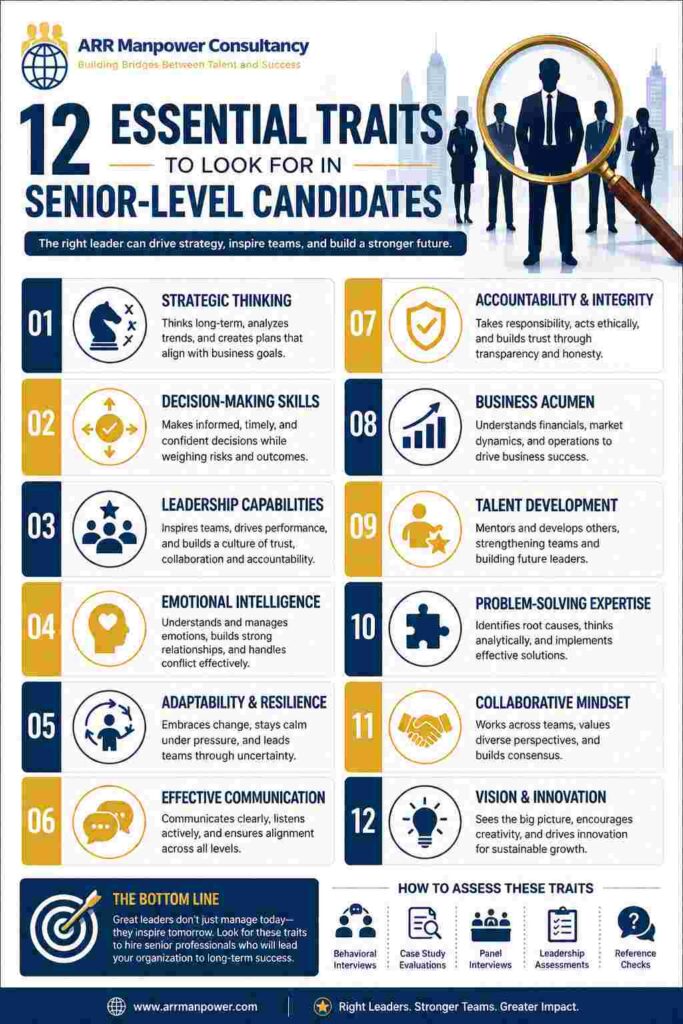
1. Strategic Thinking Ability
One of the most valuable qualities in senior professionals is the ability to think strategically. Leaders at this level must look beyond daily operations and focus on long-term organizational goals.
Strategic thinkers analyze market trends, identify opportunities, anticipate risks, and create plans that support sustainable growth. They understand how different departments contribute to overall business success and can align resources accordingly.
During interviews, employers should explore examples of how candidates have developed and executed strategic initiatives in previous roles. The ability to demonstrate measurable results from long-term planning often indicates strong leadership potential.
2. Strong Decision-Making Skills
Senior leaders face complex situations that require confident and timely decisions. Delayed or poor choices can significantly impact revenue, employee morale, and business performance.
Effective decision-makers gather relevant information, evaluate alternatives, assess risks, and take responsibility for outcomes. They are capable of balancing data-driven analysis with practical business judgment.
Employers should seek candidates who can provide examples of difficult decisions they have made, including the reasoning behind those choices and the results achieved. This helps reveal their approach to problem-solving and accountability.
3. Exceptional Leadership Capabilities
Leadership goes beyond managing teams or assigning tasks. True leaders inspire employees, create a shared vision, and encourage high performance.
Senior professionals must motivate diverse teams, manage organizational change, and foster a positive work environment. Their leadership style should encourage collaboration, trust, and continuous improvement.
Candidates who demonstrate a history of building successful teams and developing future leaders often bring significant value to an organization. Strong leadership creates stability and helps companies navigate periods of growth and transformation.
4. Emotional Intelligence
Emotional intelligence plays a critical role in leadership effectiveness. Senior-level employees regularly interact with stakeholders, employees, customers, and board members, making interpersonal skills essential.
Individuals with high emotional intelligence can understand and manage their own emotions while recognizing and responding appropriately to the emotions of others. They communicate effectively, handle conflict constructively, and build strong professional relationships.
Organizations that prioritize emotional intelligence during hiring often benefit from stronger workplace cultures and improved employee engagement.
5. Adaptability and Resilience
Business environments constantly evolve due to technological advancements, economic shifts, regulatory changes, and competitive pressures. Senior professionals must be adaptable enough to navigate uncertainty and resilient enough to overcome setbacks.
Adaptable leaders embrace change rather than resist it. They remain focused during challenging situations and help their teams adjust to new circumstances.
Candidates who have successfully managed organizational restructuring, market disruptions, or major business transitions often demonstrate the resilience needed for senior positions.
6. Effective Communication Skills
Communication is a fundamental requirement for leadership success. Senior-level professionals must communicate clearly with employees, clients, investors, and executive teams.
Strong communicators can present ideas persuasively, explain complex concepts in simple terms, and ensure alignment across departments. They also possess excellent listening skills, allowing them to gather valuable insights from others.
Interviewers should evaluate both verbal and written communication abilities, as these skills directly influence leadership effectiveness and organizational cohesion.
7. Accountability and Integrity
Integrity is one of the most important qualities organizations should seek when hiring senior leaders. Employees look to leadership for guidance, and ethical behavior sets the standard for the entire company.
Accountable leaders accept responsibility for their actions and decisions. They do not shift blame when challenges arise and are committed to maintaining transparency.
Candidates who consistently demonstrate honesty, professionalism, and ethical decision-making help build trust among employees, customers, and business partners.
8. Business Acumen
Senior professionals must understand how businesses operate beyond their specific area of expertise. Business acumen involves knowledge of financial management, market dynamics, operational efficiency, and organizational performance.
Leaders with strong business understanding can evaluate opportunities, allocate resources effectively, and contribute to company growth. They recognize how decisions affect profitability, customer satisfaction, and competitive positioning.
Employers should assess a candidate’s ability to connect departmental objectives with broader business goals and financial outcomes.
9. Talent Development Skills
A successful senior leader is not only focused on personal performance but also committed to developing others. Organizations achieve sustainable growth when leaders invest in employee development and succession planning.
Strong mentors identify potential, provide constructive feedback, and create opportunities for professional growth. They help build future leadership pipelines and strengthen organizational capabilities.
When evaluating candidates, employers should explore examples of coaching, mentoring, or developing high-performing teams. Leaders who actively support employee growth often create stronger and more productive workplaces.
10. Problem-Solving Expertise
Complex challenges are inevitable in any business environment. Senior professionals must possess advanced problem-solving abilities to address operational issues, strategic obstacles, and organizational concerns.
Effective problem-solvers approach situations systematically. They identify root causes, analyze available information, and implement practical solutions.
Employers should seek candidates who can demonstrate how they have resolved significant business challenges and delivered measurable improvements. This provides valuable insight into their analytical thinking and leadership effectiveness.
11. Collaborative Mindset
While leadership often involves decision-making authority, success at the senior level also depends on collaboration. Modern organizations require leaders who can work across departments, build consensus, and encourage teamwork.
Collaborative leaders value diverse perspectives and understand the importance of stakeholder engagement. They create environments where employees feel heard and respected.
Organizations benefit when senior professionals foster cooperation rather than competition among teams. This approach often leads to improved innovation, stronger relationships, and better business outcomes.
12. Vision and Innovation
Forward-thinking organizations need leaders who can identify future opportunities and drive innovation. Senior professionals should possess a clear vision for growth and a willingness to challenge traditional approaches when necessary.
Innovative leaders encourage creativity, explore emerging technologies, and remain informed about industry developments. They help organizations stay competitive in rapidly changing markets.
During the hiring process, employers should assess a candidate’s ability to introduce new ideas, improve processes, and contribute to long-term business success. Leaders who combine vision with practical execution can create significant value for their organizations.
How to Assess These Traits During Recruitment
Identifying these qualities requires a structured and comprehensive evaluation process. Traditional interviews alone may not provide enough insight into a candidate’s capabilities.
Organizations can improve hiring outcomes by incorporating:
- Behavioral interviews
- Leadership assessments
- Case study evaluations
- Executive-level reference checks
- Situational judgment exercises
- Panel interviews
- Strategic presentation tasks
These methods provide a deeper understanding of how candidates think, communicate, and lead in real-world scenarios.
Employers should also focus on past achievements rather than relying solely on titles or years of experience. A candidate’s track record often provides the clearest indication of future performance.
Common Hiring Mistakes to Avoid
When recruiting for leadership positions, organizations sometimes focus too heavily on technical expertise while overlooking essential leadership qualities.
Some common mistakes include:
- Prioritizing experience over adaptability
- Ignoring cultural alignment
- Underestimating emotional intelligence
- Conducting insufficient reference checks
- Rushing the selection process
- Failing to evaluate leadership style
Avoiding these pitfalls can significantly improve the likelihood of selecting the right individual for a senior role.
The Long-Term Impact of Hiring the Right Leader
The influence of a senior professional extends far beyond their immediate responsibilities. Effective leaders improve employee engagement, enhance operational efficiency, strengthen organizational culture, and contribute to business growth.
Conversely, a poor leadership hire can result in reduced productivity, increased turnover, strategic misalignment, and financial losses.
By focusing on the traits outlined above, organizations can identify individuals who possess the skills, character, and vision necessary to lead effectively in today’s competitive business environment.
Conclusion
Recruiting senior-level candidates requires a thoughtful and strategic approach. Organizations must look beyond resumes and technical qualifications to evaluate leadership capabilities, emotional intelligence, adaptability, business understanding, and long-term vision.
The most successful leaders combine strategic thinking with strong communication, accountability, collaboration, and a commitment to developing others. These qualities enable them to guide teams, overcome challenges, and drive sustainable organizational success.
By assessing these twelve essential traits during the hiring process, employers can make more informed decisions and build leadership teams capable of delivering meaningful results in an increasingly dynamic business landscape.
Furthermore, organizations that consistently prioritize leadership quality during recruitment gain a significant competitive advantage. Investing time in evaluating these critical attributes helps reduce hiring risks, improve retention, and strengthen overall business performance. The right senior professional can influence growth, innovation, employee engagement, and long-term organizational success.