Introduction
Hiring the right employees is one of the most important factors that determine whether a business grows or struggles. While many organizations invest heavily in marketing, technology, and operations, recruitment decisions often receive less strategic attention than they deserve. The consequences can be significant. A poor hiring decision can lead to reduced productivity, lower employee morale, increased turnover, and substantial financial losses.
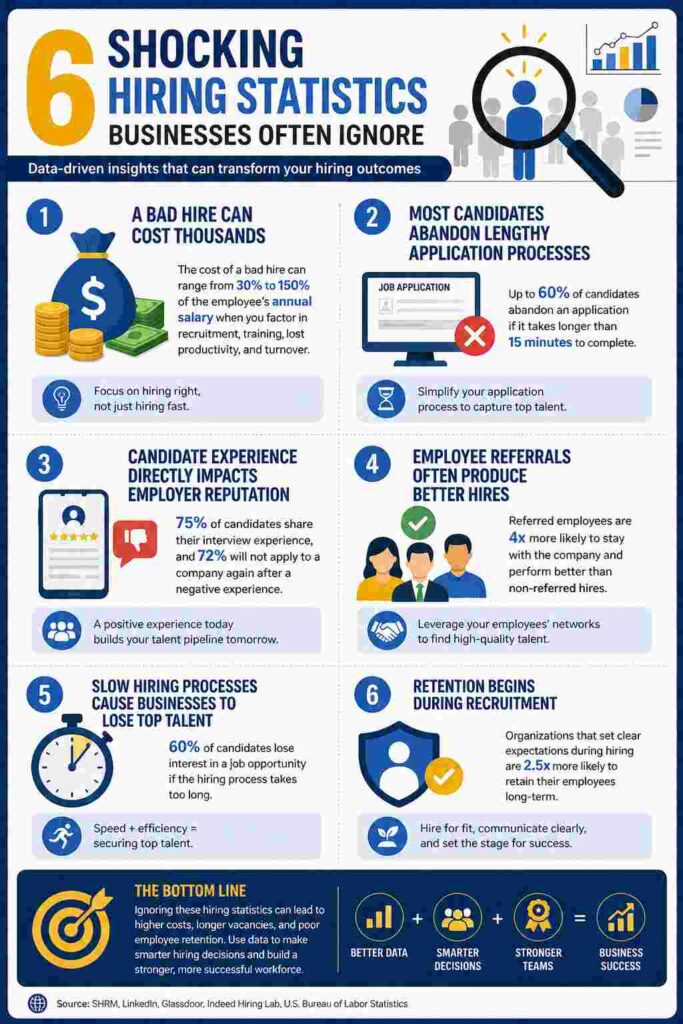
Modern recruitment is no longer based solely on intuition or resumes. Companies now have access to valuable data that can help them make informed decisions. Yet many employers continue to overlook critical hiring statistics that reveal the true state of their recruitment processes.
Understanding these numbers can help organizations improve candidate experiences, reduce hiring costs, shorten recruitment timelines, and build stronger teams. In this article, we explore six surprising hiring statistics that businesses frequently ignore and explain why these insights matter for long-term success.
https://arrmanpowerconsultancy.com
1. A Bad Hire Can Cost Thousands of Dollars
One of the most overlooked realities in recruitment is the financial impact of a poor hiring decision. Many employers focus primarily on filling vacancies quickly, without considering the long-term consequences of selecting the wrong candidate.
The cost of a bad hire extends far beyond salary expenses. It includes:
- Recruitment and advertising costs
- Interviewing and onboarding expenses
- Training investments
- Reduced productivity
- Team disruption
- Potential customer dissatisfaction
- Replacement hiring costs
When a new employee leaves within a few months or fails to meet performance expectations, organizations often have to restart the entire recruitment process. This cycle consumes valuable time and resources that could be allocated elsewhere.
Businesses that track recruitment metrics are better positioned to identify weaknesses in their hiring process. Investing more effort in candidate screening, skills assessments, and cultural fit evaluations can significantly reduce the likelihood of costly hiring mistakes.
The lesson is clear: rushing recruitment decisions often creates larger expenses than taking the time to hire correctly.
2. Most Candidates Abandon Lengthy Application Processes
Many employers assume that talented candidates will complete any application process if they are genuinely interested in the role. However, recruitment data tells a different story.
Lengthy and complicated application procedures cause a significant percentage of applicants to abandon their applications before completion. Modern job seekers value efficiency and convenience. When candidates encounter excessive forms, repetitive questions, or complicated systems, many simply move on to competing opportunities.
This trend is especially noticeable among highly skilled professionals who often have multiple employment options available.
Common reasons candidates abandon applications include:
- Excessive application length
- Poor mobile compatibility
- Technical difficulties
- Duplicate information requests
- Lack of transparency about the hiring process
Organizations that simplify their application procedures often experience higher completion rates and stronger candidate pools.
A streamlined process not only attracts more applicants but also creates a positive first impression of the company. In competitive talent markets, even small improvements in user experience can significantly impact recruitment outcomes.
3. Candidate Experience Directly Impacts Employer Reputation
Many businesses underestimate how strongly candidate experience influences their employer brand. Every interaction during recruitment shapes perceptions of the organization.
Candidates who experience poor communication, delayed responses, or disorganized interviews often share their experiences with others. Negative reviews can spread quickly through professional networks, social media platforms, and employer review websites.
Even candidates who are not selected can become advocates for a company if they are treated respectfully throughout the process.
Positive candidate experiences typically involve:
- Clear communication
- Timely feedback
- Transparent expectations
- Respectful interviews
- Efficient scheduling
When businesses ignore candidate experience, they risk damaging their reputation among future applicants.
A strong employer brand helps attract top talent, reduces recruitment costs, and increases application quality. Conversely, a poor reputation can make hiring significantly more challenging.
Recruitment should be viewed as both a talent acquisition function and a brand-building opportunity.
4. Employee Referrals Often Produce Better Hires
Many organizations invest substantial budgets in job boards, recruitment advertising, and external hiring agencies. While these channels remain valuable, employee referrals consistently rank among the most effective sources of quality hires.
Referred candidates frequently demonstrate:
- Faster onboarding
- Better cultural alignment
- Higher retention rates
- Improved performance outcomes
- Greater engagement levels
Employees typically recommend individuals they trust and believe will succeed within the organization. This informal pre-screening process can improve hiring accuracy.
Despite these advantages, many businesses fail to actively promote referral programs or offer meaningful incentives for employee recommendations.
An effective referral strategy can reduce recruitment expenses while increasing hiring quality. Encouraging employees to participate in talent acquisition efforts creates a broader recruitment network and often leads to stronger candidate matches.
Companies that overlook referral hiring opportunities may miss access to highly qualified candidates who are not actively searching through traditional recruitment channels.
5. Slow Hiring Processes Cause Businesses to Lose Top Talent
One of the most surprising hiring statistics involves recruitment speed. Many organizations assume that the best candidates will remain available throughout extended hiring cycles. In reality, top talent often receives multiple job offers and makes decisions quickly.
Lengthy recruitment processes create several challenges:
- Candidates lose interest
- Competitors make faster offers
- Interview fatigue develops
- Hiring managers delay decisions
- Vacancies remain unfilled longer
A slow hiring process can significantly reduce an organization’s ability to secure high-performing professionals.
Common causes of recruitment delays include:
- Excessive approval requirements
- Multiple interview rounds
- Scheduling conflicts
- Unclear decision-making responsibilities
- Delayed feedback from stakeholders
Businesses should regularly evaluate their hiring workflows to identify bottlenecks and eliminate unnecessary delays.
Speed does not mean sacrificing quality. Instead, it means creating a structured and efficient process that allows organizations to make informed decisions without unnecessary waiting periods.
Employers that move decisively often gain a competitive advantage in attracting sought-after candidates.
6. Retention Begins During Recruitment
Many businesses view recruitment and retention as separate functions. However, hiring statistics consistently demonstrate a strong connection between the two.
Employee retention often begins before a candidate accepts a job offer. Recruitment practices influence expectations, engagement, and long-term satisfaction.
When job descriptions accurately reflect responsibilities and workplace realities, new hires are more likely to remain with the organization. Conversely, misleading information can lead to disappointment and early turnover.
Factors that improve retention through recruitment include:
- Realistic job previews
- Transparent communication
- Clear performance expectations
- Strong cultural alignment
- Effective onboarding preparation
Organizations that focus exclusively on filling vacancies may overlook these critical retention factors.
A successful recruitment strategy should aim not only to attract candidates but also to identify individuals who are likely to thrive and remain with the company over time.
Reducing turnover creates significant financial benefits while supporting workforce stability and organizational growth.
Why Businesses Continue to Ignore These Numbers
Despite widespread access to recruitment data, many organizations still fail to leverage hiring insights effectively. Several factors contribute to this problem.
Lack of Data Tracking
Some businesses do not systematically measure recruitment performance. Without reliable metrics, it becomes difficult to identify trends or areas for improvement.
Overreliance on Intuition
Hiring managers often rely heavily on personal judgment rather than objective evidence. While experience remains valuable, data-driven decision-making generally produces more consistent outcomes.
Resource Constraints
Smaller organizations may lack dedicated recruitment teams or advanced hiring technology. As a result, they often focus on immediate hiring needs rather than long-term optimization.
Resistance to Change
Established hiring practices can become deeply embedded within organizational culture. Even when statistics reveal opportunities for improvement, companies may hesitate to modify existing processes.
Recognizing these challenges is the first step toward building a more effective recruitment strategy.
How Businesses Can Use Hiring Data More Effectively
Organizations that want to improve recruitment outcomes should focus on collecting and analyzing meaningful data.
Important recruitment metrics include:
Time-to-Hire
Measures the number of days required to fill a position. Monitoring this metric helps identify inefficiencies in the hiring process.
Cost-per-Hire
Tracks recruitment expenses and supports budget optimization efforts.
Quality of Hire
Evaluates employee performance, retention, and contribution after recruitment.
Candidate Satisfaction
Provides insight into the overall recruitment experience from the applicant perspective.
Source Effectiveness
Identifies which recruitment channels generate the strongest candidates.
Regularly reviewing these metrics enables organizations to make evidence-based decisions and continuously improve hiring outcomes.
Building a Data-Driven Recruitment Culture
Creating a data-driven recruitment environment requires commitment from leadership, hiring managers, and HR professionals.
Successful organizations often:
- Establish clear hiring goals
- Track key recruitment metrics
- Invest in applicant tracking systems
- Train managers on data interpretation
- Continuously refine recruitment processes
Data should support—not replace—human judgment. The most effective hiring strategies combine analytical insights with professional expertise.
By understanding recruitment trends and acting on reliable information, businesses can reduce hiring risks and improve workforce quality.
Conclusion
Recruitment decisions have a direct impact on organizational performance, profitability, and long-term growth. Yet many businesses continue to overlook valuable hiring statistics that reveal opportunities for improvement.
The six statistics discussed in this article highlight important realities: bad hires are expensive, lengthy applications discourage candidates, candidate experience influences reputation, employee referrals deliver strong results, slow hiring loses top talent, and retention begins during recruitment.
Organizations that pay attention to these insights can strengthen their hiring strategies, improve candidate quality, and reduce recruitment costs. In an increasingly competitive labor market, relying on assumptions is no longer enough.
Businesses that embrace data-driven hiring practices gain a significant advantage in attracting, selecting, and retaining the talent needed for sustainable success. The numbers tell a compelling story—those who listen are often the ones who build stronger teams and achieve better business outcomes.