Introduction
In today’s highly competitive job market, attracting top talent requires much more than posting vacancies and offering competitive salaries. Job seekers are increasingly selective about where they choose to work, and their opinions about organizations often form long before they submit an application. Understanding candidate perceptions of employers has become a critical component of successful recruitment strategies.
Candidates evaluate organizations based on multiple factors, including company reputation, workplace culture, employee reviews, communication practices, and career growth opportunities. These perceptions significantly influence whether talented professionals decide to apply, accept job offers, or recommend a company to others.
Many employers assume that compensation alone drives hiring decisions. However, recent trends reveal that candidates often prioritize transparency, culture, leadership quality, and employer branding just as much as salary packages. Failing to understand these evolving expectations can result in missed opportunities, prolonged hiring cycles, and increased recruitment costs.
This article explores six surprising facts about candidate perceptions of employers and explains why businesses must pay closer attention to how they are viewed in the talent marketplace.
https://arrmanpowerconsultancy.com
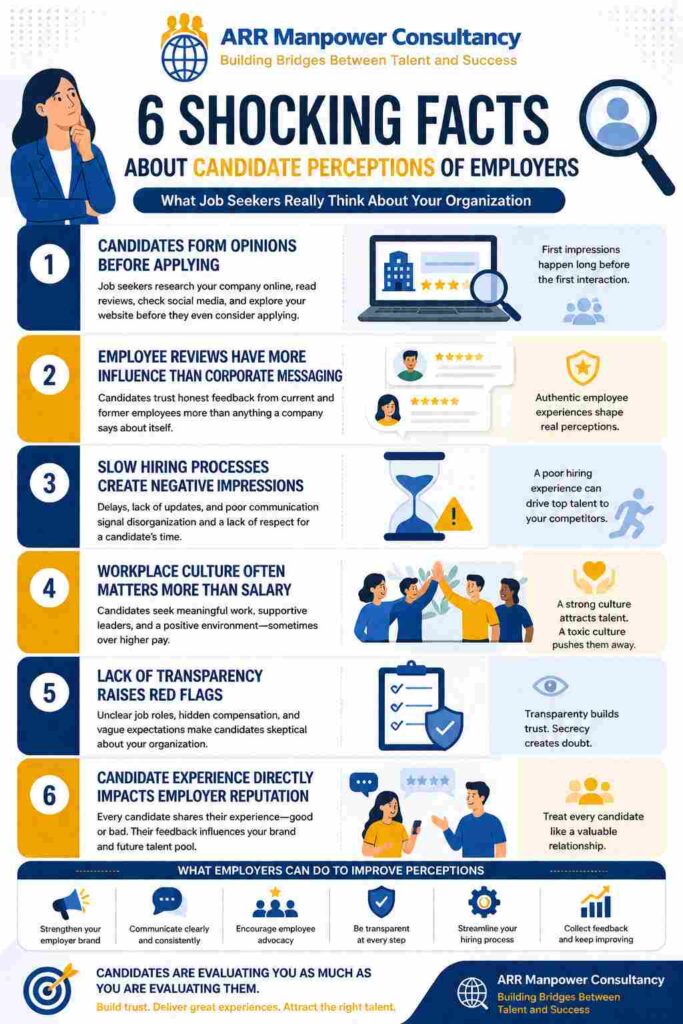
1. Candidates Form Opinions Before Applying
One of the most surprising realities in recruitment is that many candidates have already developed opinions about an organization before visiting its careers page.
Modern job seekers conduct extensive research using company websites, social media channels, employee review platforms, industry news articles, and professional networking sites. This information helps them determine whether a company aligns with their professional goals and personal values.
A strong employer brand creates positive first impressions and encourages applications from qualified professionals. On the other hand, negative reviews, poor online visibility, or inconsistent messaging can discourage talented candidates from engaging with a company.
Organizations that actively manage their employer reputation gain a significant advantage in attracting skilled professionals. Consistent communication about workplace culture, employee achievements, and organizational values helps build trust among potential applicants.
Companies should remember that every public interaction contributes to candidate perceptions of employers. From social media posts to employee testimonials, each touchpoint shapes how job seekers view the organization.
2. Employee Reviews Have More Influence Than Corporate Messaging
Many employers invest substantial resources in marketing campaigns that highlight workplace benefits and company achievements. While these efforts are valuable, candidates often place greater trust in feedback from current and former employees.
Job seekers frequently visit review platforms to understand what working at a company is actually like. They look for honest insights about management styles, work-life balance, compensation practices, career development opportunities, and organizational culture.
Authentic employee experiences carry significant weight because they are perceived as unbiased. Even organizations with strong branding campaigns can struggle if employee reviews consistently highlight workplace challenges.
Interestingly, candidates do not necessarily expect perfect reviews. Many understand that every workplace has strengths and weaknesses. What matters most is whether employers respond professionally to feedback and demonstrate a commitment to improvement.
Companies that encourage open communication and address employee concerns effectively often develop stronger reputations among prospective hires. Positive workplace experiences naturally translate into favorable reviews, which enhance candidate perceptions of employers.
Recruiters should regularly monitor online feedback and identify recurring themes. Addressing common concerns can improve both employee satisfaction and recruitment outcomes.
3. Slow Hiring Processes Create Negative Impressions
Another shocking fact is how quickly candidates lose interest when recruitment processes become unnecessarily lengthy.
Top professionals are often exploring multiple opportunities simultaneously. Long delays between application stages can create uncertainty and frustration, leading candidates to pursue alternative offers.
Candidates frequently interpret slow communication as a reflection of broader organizational issues. They may assume that inefficient hiring processes indicate poor internal coordination, inadequate leadership, or a lack of respect for applicants’ time.
Timely communication plays a crucial role in maintaining positive candidate perceptions of employers. Even when hiring decisions require additional time, regular updates help candidates remain engaged and informed.
Organizations can improve recruitment experiences by:
- Establishing clear hiring timelines.
- Providing status updates after interviews.
- Offering prompt feedback whenever possible.
- Streamlining approval processes.
- Using technology to improve communication.
Candidates appreciate transparency and responsiveness. A well-organized hiring process demonstrates professionalism and strengthens employer credibility.
Employers should view recruitment as a two-way evaluation process. Just as companies assess candidates, applicants are evaluating the organization at every stage of the journey.
4. Workplace Culture Often Matters More Than Salary
While compensation remains an important consideration, many candidates are increasingly prioritizing workplace culture when evaluating job opportunities.
Professionals want environments where they feel respected, supported, and empowered to succeed. Factors such as collaboration, leadership quality, flexibility, diversity, inclusion, and employee well-being significantly influence employment decisions.
A candidate may decline a higher-paying offer if another organization provides a healthier and more engaging work environment. This trend is particularly noticeable among younger professionals who place strong emphasis on purpose-driven work and personal fulfillment.
Positive workplace cultures generate numerous benefits, including:
- Higher employee engagement.
- Improved retention rates.
- Enhanced productivity.
- Stronger team collaboration.
- Better recruitment outcomes.
Organizations that clearly communicate their culture during recruitment efforts are more likely to attract candidates whose values align with the company’s mission.
Authenticity is essential. Candidates can quickly identify discrepancies between promotional messaging and actual workplace experiences. Genuine cultural initiatives create stronger trust and improve candidate perceptions of employers.
Employers should ensure that cultural values are consistently demonstrated through leadership actions, employee programs, and day-to-day operations.
5. Lack of Transparency Raises Red Flags
Transparency has become one of the most influential factors affecting candidate perceptions of employers.
Job seekers increasingly expect clear information about compensation, responsibilities, career progression, company expectations, and workplace policies. When organizations withhold critical information, candidates often become skeptical.
Unclear job descriptions can create confusion and discourage qualified professionals from applying. Similarly, vague discussions about compensation may lead candidates to question an employer’s intentions.
Transparency throughout the hiring process helps establish trust. Candidates appreciate employers who openly discuss:
- Job responsibilities.
- Performance expectations.
- Compensation structures.
- Growth opportunities.
- Organizational challenges.
- Company goals and vision.
Organizations that embrace transparency often experience stronger engagement throughout recruitment campaigns. Candidates are more likely to feel respected when employers provide honest and accurate information.
Transparency also reduces the risk of mismatched expectations after hiring. Employees who clearly understand their roles and opportunities tend to experience greater job satisfaction and longer tenure.
By fostering open communication, businesses can strengthen candidate perceptions of employers and build lasting professional relationships.
6. Candidate Experience Directly Impacts Employer Reputation
Perhaps the most surprising fact is that every applicant contributes to an organization’s reputation, regardless of whether they are hired.
Candidates frequently share recruitment experiences with colleagues, friends, and professional networks. Positive experiences can enhance employer reputation, while negative interactions may discourage future applicants.
A candidate who receives respectful communication, timely updates, and professional treatment is more likely to speak positively about the organization. Conversely, applicants who feel ignored or disrespected may share unfavorable feedback online or through word-of-mouth recommendations.
Candidate experience encompasses every stage of the recruitment journey, including:
- Application processes.
- Initial communication.
- Interview scheduling.
- Interview interactions.
- Feedback delivery.
- Final hiring decisions.
Organizations that prioritize candidate experience often gain competitive advantages in talent acquisition. Positive experiences create goodwill even among unsuccessful applicants.
Recruitment teams should regularly evaluate their processes from a candidate’s perspective. Small improvements in communication, responsiveness, and professionalism can significantly influence candidate perceptions of employers.
Investing in candidate experience is not simply a recruitment strategy; it is a long-term reputation management initiative that benefits the entire organization.
How Employers Can Improve Candidate Perceptions
Understanding the factors that shape candidate perceptions of employers is only the first step. Organizations must also take proactive measures to strengthen their reputation among potential hires.
Effective strategies include:
Strengthen Employer Branding
Share authentic stories about employees, workplace culture, achievements, and company values. Consistent branding helps candidates understand what makes the organization unique.
Improve Communication
Maintain regular contact throughout the hiring process. Clear and timely updates demonstrate professionalism and respect.
Encourage Employee Advocacy
Satisfied employees often become powerful ambassadors. Positive employee experiences contribute significantly to employer reputation.
Enhance Transparency
Provide accurate information about roles, compensation, benefits, and growth opportunities. Transparency builds trust and reduces uncertainty.
Streamline Recruitment Processes
Eliminate unnecessary delays and simplify hiring procedures. Efficient recruitment experiences create stronger candidate engagement.
Gather Candidate Feedback
Collect insights from applicants to identify strengths and improvement areas within the recruitment process.
Conclusion
The modern hiring landscape has transformed the way professionals evaluate potential employers. Candidate perceptions of employers are influenced by far more than salary offerings or job titles. Employer reputation, employee reviews, workplace culture, transparency, communication quality, and overall candidate experience all play critical roles in shaping recruitment outcomes.
The six facts discussed in this article reveal how quickly candidates form opinions and how those perceptions influence their decisions. Organizations that fail to recognize these realities risk losing top talent to competitors with stronger employer brands and more candidate-focused recruitment practices.
By investing in transparency, improving communication, fostering positive workplace cultures, and delivering exceptional candidate experiences, employers can strengthen their reputation and attract highly qualified professionals. In a market where talented candidates have more choices than ever, understanding and improving candidate perceptions of employers is no longer optional—it is a strategic necessity for long-term recruitment success.