Introduction
Seasonal demand is a recurring challenge for businesses across industries such as retail, hospitality, healthcare, manufacturing, logistics, agriculture, and e-commerce. During peak seasons, customer expectations rise while operational pressure increases significantly. Organizations that fail to prepare often experience delayed deliveries, reduced customer satisfaction, employee burnout, and revenue loss. On the other hand, companies that implement well-planned staffing strategies can maintain productivity, improve service quality, and maximize profitability.
Managing seasonal demand requires more than simply hiring additional workers. It involves forecasting workforce requirements, optimizing schedules, leveraging technology, and creating an environment where temporary and permanent employees work efficiently together. Effective planning helps businesses avoid overstaffing, which increases labor costs, as well as understaffing, which negatively affects customer experience.
This article explores 15 effective staffing strategies that help organizations manage seasonal demand while maintaining operational efficiency and employee satisfaction.
https://arrmanpowerconsultancy.com
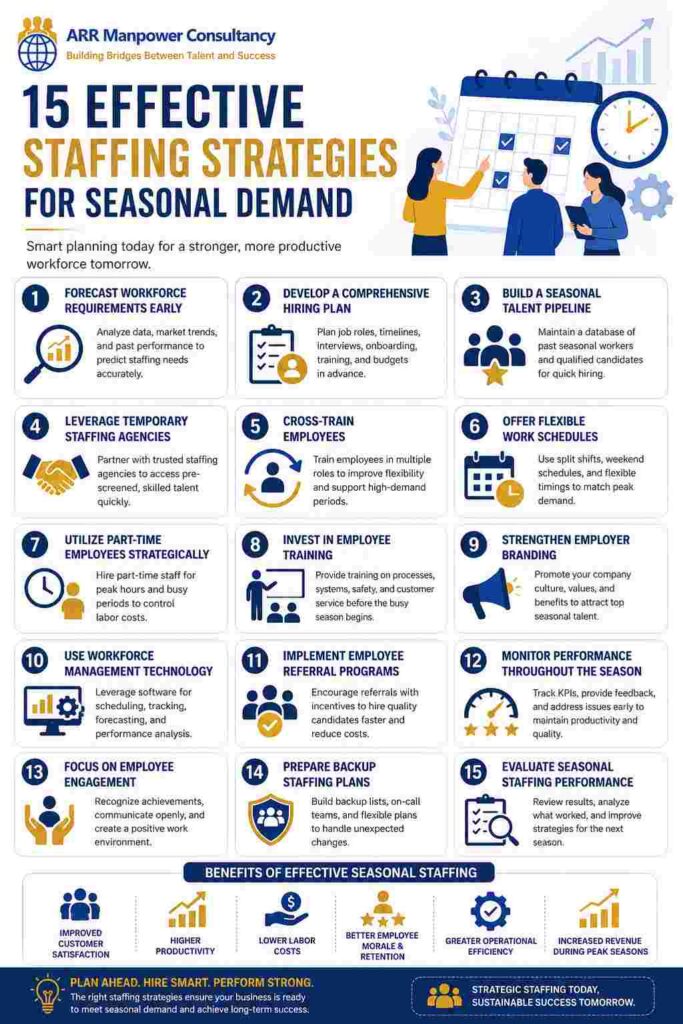
1. Forecast Seasonal Demand & Workforce Requirements Early
Accurate forecasting forms the foundation of successful seasonal staffing. Businesses should analyze previous years’ sales data, customer traffic, production volumes, and market trends to estimate future workforce needs.
Historical data helps determine:
- Expected hiring numbers
- Required skill sets
- Peak business periods
- Shift requirements
- Department-specific demand
Early forecasting gives recruiters sufficient time to attract qualified candidates before competitors begin hiring.
2. Develop a Comprehensive Hiring Plan
A structured hiring plan reduces recruitment delays and ensures every department receives adequate staffing support.
An effective hiring plan should include:
- Job descriptions
- Hiring timelines
- Interview schedules
- Onboarding processes
- Training plans
- Budget allocation
When recruitment follows a standardized process, organizations can fill positions quickly without compromising candidate quality.
3. Build a Seasonal Talent Pipeline
Instead of beginning recruitment from scratch each season, companies should maintain a database of previous seasonal employees and qualified applicants.
A talent pipeline offers several advantages:
- Faster hiring
- Lower recruitment costs
- Reduced onboarding time
- Higher employee reliability
- Better workforce planning
Keeping in touch with former seasonal workers increases the likelihood of rehiring experienced personnel.
4. Leverage Temporary Staffing Agencies
Staffing agencies simplify seasonal recruitment by providing pre-screened candidates who are ready to begin work immediately.
Partnering with experienced staffing firms helps organizations:
- Reduce hiring time
- Access specialized talent
- Handle sudden workforce shortages
- Minimize administrative workload
- Improve hiring flexibility
This strategy is particularly valuable when seasonal demand rises unexpectedly.
5. Cross-Train Existing Employees
Cross-training enables employees to perform multiple roles within the organization.
During busy periods, cross-trained employees can move between departments based on operational priorities.
Benefits include:
- Improved workforce flexibility
- Reduced operational disruptions
- Better employee development
- Lower overtime expenses
- Enhanced team collaboration
Cross-training also minimizes dependency on a single employee for critical tasks.
6. Offer Flexible Work Schedules
Flexible scheduling helps businesses align workforce availability with customer demand.
Organizations can introduce:
- Split shifts
- Weekend schedules
- Rotating shifts
- Part-time employment
- Flexible start times
Flexible work arrangements often attract students, retirees, freelancers, and professionals seeking temporary employment.
Employees also appreciate schedules that accommodate personal commitments, leading to better attendance and productivity.
7. Utilize Part-Time Employees Strategically
Hiring part-time employees provides workforce flexibility while controlling labor expenses.
Part-time workers are particularly useful during:
- Holiday shopping seasons
- Festival periods
- Tourist seasons
- Weekend demand
- Promotional events
Businesses can schedule part-time staff during peak operating hours instead of maintaining excess full-time employees throughout the season.
8. Invest in Employee Training Before Peak Season
Well-trained employees perform tasks more confidently and require less supervision.
Training programs should cover:
- Company policies
- Customer service standards
- Safety procedures
- Technology systems
- Communication practices
- Product knowledge
Providing structured onboarding before peak operations begin reduces mistakes and improves customer satisfaction.
Continuous learning also enables seasonal employees to contribute more quickly.
9. Strengthen Employer Branding
Seasonal workers prefer organizations known for positive work environments and fair employment practices.
Companies can strengthen employer branding by:
- Showcasing employee success stories
- Promoting workplace culture
- Offering competitive compensation
- Maintaining transparent communication
- Recognizing employee achievements
A strong reputation attracts higher-quality candidates and increases employee retention during seasonal hiring campaigns.
10. Use Workforce Management Technology
Modern workforce management software improves scheduling, attendance tracking, and workforce planning.
Technology enables managers to:
- Predict staffing needs
- Monitor attendance
- Allocate shifts efficiently
- Track productivity
- Manage overtime
- Generate workforce reports
Automation reduces administrative tasks, allowing HR teams to focus on recruitment and employee engagement.
11. Implement Employee Referral Programs
Current employees often know qualified individuals seeking temporary employment.
Referral programs provide several advantages:
- Faster recruitment
- Better candidate quality
- Lower hiring costs
- Improved employee retention
- Stronger workplace culture
Offering referral incentives encourages employees to recommend reliable candidates who fit the organization.
12. Monitor Performance Throughout the Season
Performance monitoring allows managers to identify challenges before they affect operations.
Key performance indicators may include:
- Attendance
- Productivity
- Customer satisfaction
- Error rates
- Shift completion
- Sales performance
Regular feedback sessions help seasonal employees improve while maintaining service quality during busy periods.
Managers can also recognize high-performing workers for future employment opportunities.
13. Focus on Employee Engagement
Seasonal employees perform better when they feel valued and included.
Simple engagement initiatives include:
- Daily team meetings
- Recognition programs
- Performance rewards
- Open communication
- Team-building activities
Engaged employees demonstrate greater commitment, provide better customer service, and remain motivated throughout demanding seasons.
Positive workplace experiences also encourage seasonal workers to return in future hiring cycles.
14. Prepare Backup Staffing Plans
Unexpected absences, resignations, or sudden demand spikes can disrupt operations.
Businesses should prepare contingency plans that include:
- Backup candidate lists
- On-call employees
- Agency partnerships
- Cross-trained staff
- Emergency scheduling procedures
Having alternative staffing solutions ensures business continuity even during unforeseen situations.
Prepared organizations respond more effectively to operational challenges without affecting customer service.
15. Evaluate Seasonal Staffing Performance
After the busy season ends, organizations should review staffing outcomes to improve future planning.
Evaluation areas include:
- Recruitment success
- Employee retention
- Productivity levels
- Customer feedback
- Labor costs
- Training effectiveness
- Scheduling efficiency
Conducting post-season reviews helps identify strengths, weaknesses, and opportunities for continuous improvement.
Lessons learned can significantly enhance future seasonal workforce planning.
Common Challenges During Seasonal Hiring
Although seasonal recruitment offers flexibility, organizations often encounter several obstacles.
Some of the most common challenges include:
- Talent shortages
- High employee turnover
- Limited training time
- Scheduling conflicts
- Increased labor costs
- Employee burnout
- Declining service quality
Addressing these challenges through proactive planning helps businesses maintain consistent performance throughout peak demand periods.
Best Practices for Seasonal Workforce Success
Successful organizations follow several proven practices when preparing for seasonal demand.
These include:
- Starting recruitment early
- Communicating expectations clearly
- Providing structured onboarding
- Using workforce analytics
- Maintaining compliance with labor regulations
- Encouraging employee feedback
- Rewarding strong performance
- Building long-term relationships with seasonal employees
Consistent execution of these practices creates a reliable and adaptable workforce capable of handling fluctuating business demands.
Benefits of Effective Seasonal Staffing
Organizations that invest in strategic workforce planning experience measurable business benefits.
These advantages include:
- Improved customer satisfaction
- Higher operational efficiency
- Better employee morale
- Lower recruitment costs
- Increased productivity
- Reduced overtime expenses
- Stronger workforce flexibility
- Higher revenue during peak seasons
An organized staffing strategy also supports long-term business growth by creating repeat hiring opportunities and strengthening employer reputation.
Conclusion
Managing seasonal demand requires careful planning, timely recruitment, effective training, and continuous workforce optimization. Businesses that rely solely on last-minute hiring often face operational disruptions, higher costs, and inconsistent customer experiences. By implementing these 15 effective staffing strategies, organizations can build a flexible workforce capable of responding to changing business needs without compromising productivity or service quality.
From forecasting workforce requirements and developing talent pipelines to leveraging staffing agencies, cross-training employees, and using workforce management technology, each strategy contributes to stronger operational resilience. Equally important are employee engagement, performance evaluation, and contingency planning, which help organizations maintain stability throughout peak periods.
Companies that view seasonal staffing as a long-term workforce strategy rather than a short-term hiring exercise are better positioned to adapt to market fluctuations, retain valuable talent, and deliver exceptional customer experiences year after year. Thoughtful planning today lays the foundation for sustainable success during every seasonal peak.
Beyond meeting immediate workforce requirements, businesses should also focus on building a sustainable staffing framework that can be refined over time. Every seasonal hiring cycle presents an opportunity to gather valuable insights into recruitment efficiency, employee performance, training effectiveness, and customer satisfaction. By analyzing these outcomes, organizations can make data-driven improvements that enhance future staffing efforts and reduce recurring challenges. Maintaining strong relationships with high-performing seasonal employees also creates a dependable talent pool that can be re-engaged during future peak periods, significantly reducing hiring time and onboarding costs.
Furthermore, successful seasonal staffing is closely tied to organizational culture. Employees who feel supported, respected, and adequately trained are more likely to deliver exceptional service and remain productive during demanding periods. Investing in employee well-being through clear communication, fair scheduling, recognition programs, and ongoing support not only improves retention but also strengthens the company’s reputation as an employer of choice. In competitive labor markets, a positive employer brand can make a substantial difference in attracting qualified candidates.
Ultimately, seasonal demand should be viewed as an opportunity rather than a challenge. Organizations that combine strategic workforce planning with modern recruitment practices, technology-driven workforce management, and continuous employee development can respond confidently to fluctuating business needs. As industries continue to evolve and customer expectations rise, businesses that remain agile and proactive in their staffing approach will gain a competitive advantage, improve operational performance, and achieve long-term growth while consistently delivering high-quality products and services.