Introduction
Finding the right talent has become one of the biggest challenges for organizations across industries. In today’s competitive job market, candidates evaluate employers just as carefully as employers assess candidates. A strong employer brand helps businesses stand out, attract qualified professionals, and retain top performers. Companies with a positive workplace reputation often receive more applications, reduce hiring costs, and improve employee loyalty.
Employer branding is more than a recruitment trend. It is the perception that current employees, job seekers, and the public have about your organization as a workplace. A compelling employer brand communicates your company values, culture, career opportunities, and employee experience consistently across every touchpoint.
Businesses that invest in employer branding strategies gain a competitive advantage because talented professionals prefer organizations that align with their career aspirations and personal values. This article explores twelve proven strategies that can strengthen your employer brand and support long-term recruitment success.
https://arrmanpowerconsultancy.com
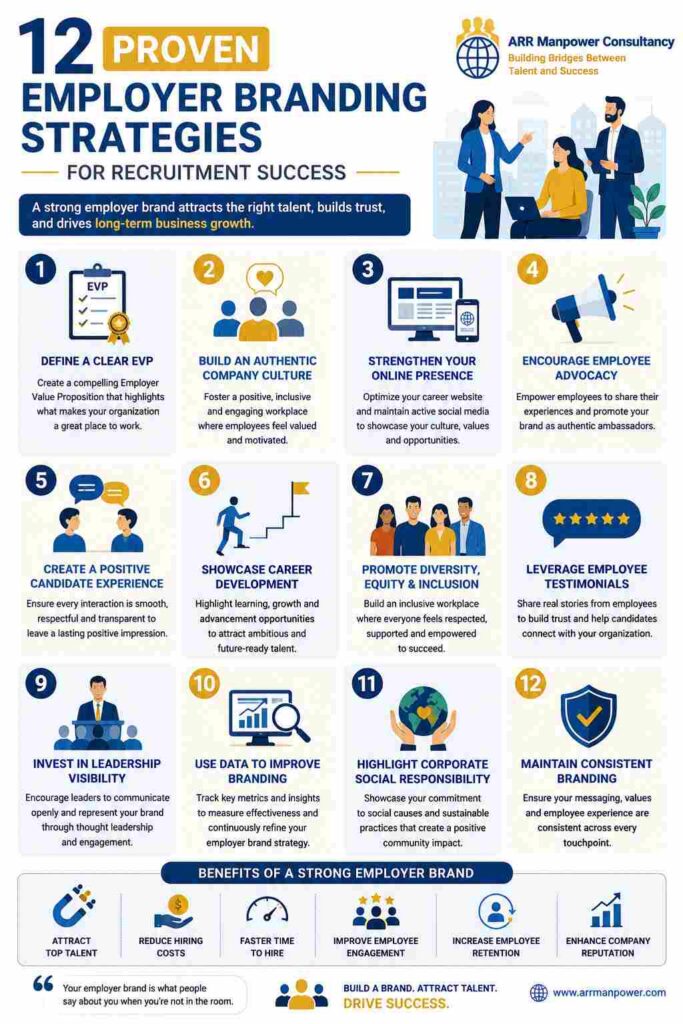
1. Define a Clear Employer Value Proposition (EVP)
An Employer Value Proposition serves as the foundation of your employer brand. It explains why talented professionals should choose your company over competitors.
A strong EVP highlights the unique benefits employees receive, including career growth, learning opportunities, compensation, workplace flexibility, recognition, and organizational culture.
To build an effective EVP:
- Identify what employees value most.
- Gather feedback through surveys.
- Highlight authentic workplace benefits.
- Ensure leadership supports the message.
- Communicate consistently across recruitment channels.
A clear EVP creates trust and helps attract candidates who genuinely fit your organization.
2. Build an Authentic Company Culture
Candidates increasingly prioritize workplace culture when selecting employers. A healthy work environment encourages collaboration, innovation, respect, and continuous learning.
Rather than creating an idealized image, showcase your real workplace culture through employee stories, team activities, leadership involvement, and professional development initiatives.
Organizations with authentic cultures often experience:
- Higher employee engagement
- Lower turnover
- Better teamwork
- Improved productivity
- Stronger recruitment outcomes
Authenticity is one of the strongest pillars of successful employer branding.
3. Strengthen Your Online Presence for Recruitment Success
Today’s candidates research employers before applying. Your digital presence significantly influences their perception of your organization.
Ensure your career website includes:
- Company mission
- Employee testimonials
- Workplace photos
- Career growth opportunities
- Diversity initiatives
- Learning programs
- Current job openings
Maintain active social media profiles that showcase company achievements, community involvement, employee events, and workplace celebrations.
Consistent messaging across digital platforms reinforces credibility and attracts quality candidates.
4. Encourage Employee Advocacy
Employees are among the most trusted voices representing an organization. Their experiences provide authentic insights that job seekers value.
Encourage employees to share:
- Career achievements
- Team experiences
- Learning opportunities
- Company events
- Workplace culture
- Volunteer activities
Employee-generated content creates transparency and increases confidence among prospective candidates.
Recognition programs, internal engagement, and supportive leadership naturally encourage employees to become enthusiastic brand ambassadors.
5. Create a Positive Candidate Experience
Every interaction during recruitment shapes your employer reputation.
Candidates appreciate organizations that communicate clearly, provide timely updates, and conduct respectful interviews.
Improve the recruitment journey by:
- Writing transparent job descriptions
- Simplifying applications
- Scheduling interviews efficiently
- Providing interview feedback
- Maintaining regular communication
- Respecting candidates’ time
Even applicants who are not selected can become future advocates when treated professionally.
A positive candidate experience strengthens employer credibility and encourages referrals.
6. Showcase Career Development Opportunities
Professionals seek employers that invest in long-term career growth.
Highlight opportunities such as:
- Leadership training
- Certification programs
- Internal promotions
- Skill development
- Mentorship initiatives
- Cross-functional learning
Demonstrating commitment to employee development attracts ambitious candidates seeking meaningful careers rather than temporary jobs.
Organizations that prioritize learning often enjoy stronger retention and higher employee satisfaction.
7. Promote Diversity, Equity, and Inclusion
Inclusive workplaces attract broader talent pools and encourage innovation through diverse perspectives.
Employer branding should clearly communicate commitment to:
- Equal opportunities
- Inclusive hiring
- Fair promotion practices
- Employee resource groups
- Accessibility
- Cultural awareness
Avoid making unsupported claims. Instead, demonstrate inclusion through policies, leadership representation, employee stories, and measurable initiatives.
Authentic diversity efforts build trust with both employees and candidates.
8. Leverage Employee Testimonials
Real employee experiences carry far greater credibility than corporate marketing messages.
Feature testimonials across:
- Career pages
- Recruitment campaigns
- Social media
- Company blogs
- Recruitment videos
Employees can discuss:
- Career progression
- Team collaboration
- Leadership support
- Learning experiences
- Workplace flexibility
Authentic testimonials help candidates visualize themselves working within your organization.
9. Invest in Leadership Visibility
Leadership plays an important role in shaping employer perception.
Executives and managers should actively communicate organizational vision, employee appreciation, and business achievements.
Visible leaders can contribute through:
- Industry events
- Webinars
- LinkedIn articles
- Employee town halls
- Recruitment videos
- Company announcements
Approachable leadership strengthens organizational transparency and builds confidence among prospective employees.
Candidates often evaluate leadership quality before accepting employment offers.
10. Use Data to Improve Recruitment Branding
Successful employer branding requires continuous measurement.
Monitor important recruitment metrics including:
- Application volume
- Offer acceptance rates
- Employee referrals
- Career page traffic
- Social engagement
- Candidate satisfaction
- Time-to-hire
- Employee retention
Regular analysis identifies strengths and improvement opportunities.
Data-driven decisions help recruitment teams optimize branding efforts and allocate resources effectively.
Continuous evaluation ensures long-term success.
11. Highlight Corporate Social Responsibility
Many professionals prefer employers that contribute positively to society.
Showcase initiatives involving:
- Environmental sustainability
- Community volunteering
- Educational partnerships
- Charitable programs
- Employee wellness
- Ethical business practices
Corporate responsibility demonstrates organizational values beyond financial performance.
When employees actively participate in social initiatives, workplace pride and engagement often increase.
Candidates increasingly consider organizational purpose when choosing employers.
12. Maintain Consistent Employer Branding
Consistency builds recognition and trust.
Every communication should reinforce the same employer identity across:
- Career websites
- Social media
- Recruitment advertising
- Job descriptions
- Employee communications
- Interviews
- Onboarding materials
Ensure messaging aligns with the actual employee experience.
Inconsistent communication creates confusion and may damage recruitment credibility.
Organizations with consistent employer branding establish stronger reputations and attract candidates who share their values.
Common Employer Branding Mistakes to Avoid
Even organizations with strong recruitment teams can weaken their employer reputation through avoidable mistakes.
Some common issues include:
- Overpromising workplace benefits
- Ignoring employee feedback
- Inconsistent communication
- Slow recruitment processes
- Poor interview experiences
- Lack of leadership involvement
- Outdated career websites
- Limited employee engagement
Addressing these challenges helps strengthen long-term recruitment performance.
Benefits of Strong Employer Branding
An effective employer branding strategy delivers measurable business benefits beyond recruitment.
Organizations often experience:
- Higher quality job applications
- Reduced recruitment costs
- Faster hiring processes
- Improved employee retention
- Greater workforce engagement
- Increased employee referrals
- Enhanced company reputation
- Stronger organizational culture
These advantages create sustainable talent acquisition while supporting overall business growth.
Measuring Employer Branding Success
To understand the effectiveness of your employer branding efforts, monitor key performance indicators regularly.
Useful metrics include:
- Career page conversion rates
- Application completion rates
- Quality of applicants
- Employee referral percentage
- Candidate satisfaction scores
- Social media engagement
- Employee retention rates
- Employer review ratings
- Offer acceptance rates
Combining quantitative data with employee feedback provides a complete picture of employer brand performance.
Conclusion
Recruitment success depends on much more than competitive salaries or attractive job descriptions. Organizations must build trust, demonstrate authenticity, and create positive experiences throughout the employee journey. From defining a compelling Employer Value Proposition to showcasing employee growth, promoting diversity, investing in leadership visibility, and maintaining consistent communication, every initiative contributes to a stronger workplace reputation.
Companies that continuously improve their culture, listen to employees, and measure recruitment outcomes position themselves as employers of choice. A well-developed employer brand attracts qualified candidates, strengthens employee loyalty, reduces hiring costs, and supports long-term organizational success. By implementing these twelve proven strategies, businesses can build a sustainable talent pipeline and remain competitive in an evolving employment market.
Employer branding is not a one-time campaign but an ongoing commitment that evolves alongside employee expectations and business objectives. As workplace trends continue to change, organizations that remain adaptable and responsive are better positioned to attract skilled professionals and retain experienced employees. Investing in transparent communication, meaningful employee engagement, and continuous professional development helps reinforce trust and strengthens the organization’s reputation over time.
Moreover, every employee interaction contributes to your employer brand, from the hiring process and onboarding experience to career advancement opportunities and workplace recognition. When employees feel valued, respected, and supported, they naturally become advocates for the organization, sharing positive experiences that enhance credibility among prospective candidates. This organic promotion is often more influential than traditional recruitment marketing efforts.
Ultimately, successful employer branding creates lasting value for both employers and employees. It builds a workplace where people are motivated to contribute, innovate, and grow while helping organizations achieve sustainable recruitment success. By consistently evaluating your branding initiatives, adapting to market changes, and placing employee experience at the center of your strategy, your organization can establish a strong reputation that attracts exceptional talent and supports long-term business growth in an increasingly competitive employment landscape.
Additionally, organizations that consistently invest in strengthening their employer brand gain a competitive advantage in attracting future-ready talent. A positive workplace reputation not only improves recruitment outcomes but also enhances employee morale, customer confidence, and overall business performance. By making employer branding a strategic priority, companies can build resilient teams, foster innovation, and create a workplace that inspires long-term commitment, collaboration, and sustainable organizational success.