Introduction
In today’s competitive hiring environment, making recruitment decisions based solely on intuition is no longer enough. Organizations that consistently attract and retain top talent rely on data-driven hiring strategies to improve outcomes and reduce recruitment costs. One of the most effective ways to achieve this is by tracking recruitment metrics.
Recruitment metrics provide valuable insights into the efficiency, effectiveness, and overall health of your hiring process. They help recruiters identify bottlenecks, optimize sourcing channels, improve candidate experience, and align hiring practices with business goals.
Whether you’re a startup building your first talent acquisition strategy or an established organization looking to refine your recruitment process, understanding key recruitment metrics can significantly improve your hiring decisions.
This ARR Guide explores 13 essential recruitment metrics every recruiter and hiring manager should monitor to make smarter, faster, and more effective hiring choices.
https://arrmanpowerconsultancy.com
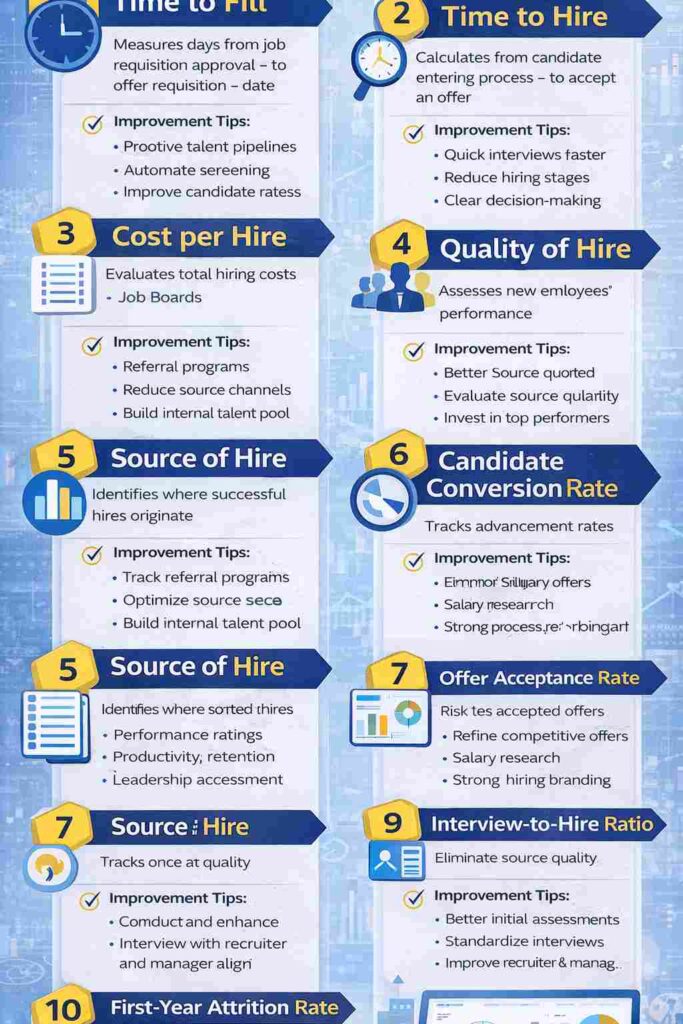
Why Recruitment Metrics Matter
Recruitment metrics transform hiring from a reactive process into a strategic function. Instead of relying on assumptions, recruiters can use measurable data to:
- Improve hiring efficiency
- Reduce recruitment costs
- Enhance candidate experience
- Increase quality of hires
- Strengthen workforce planning
- Support business growth goals
- Demonstrate recruitment ROI
Tracking the right metrics enables organizations to continuously improve their hiring outcomes while remaining competitive in attracting top talent.
1. Time to Fill
What It Measures
Time to Fill tracks the number of days between the approval of a job requisition and the candidate accepting the offer.
Formula
Time to Fill = Job Filled Date – Requisition Approval Date
Why It Matters
A lengthy hiring process can result in:
- Lost productivity
- Increased workload on existing employees
- Higher recruitment expenses
- Missed business opportunities
Monitoring this metric helps recruiters identify delays and streamline hiring workflows.
Improvement Tips
- Build talent pipelines proactively.
- Automate candidate screening.
- Improve communication between recruiters and hiring managers.
- Utilize applicant tracking systems effectively.
2. Time to Hire
What It Measures
Time to Hire calculates the number of days between a candidate entering the recruitment pipeline and accepting an offer.
Formula
Time to Hire = Offer Acceptance Date – Candidate Application Date
Why It Matters
This metric reflects the efficiency of your recruitment process from the candidate’s perspective.
A shorter time to hire often results in:
- Better candidate engagement
- Reduced offer declines
- Improved employer branding
Improvement Tips
- Schedule interviews faster.
- Reduce unnecessary hiring stages.
- Create clear decision-making processes.
3. Cost per Hire
What It Measures
Cost per Hire evaluates the total recruitment expenditure required to fill a position.
Formula
Cost per Hire = Total Recruitment Costs ÷ Number of Hires
Costs Typically Included
- Job advertising
- Recruitment software
- Agency fees
- Recruiter salaries
- Candidate assessment tools
- Background verification expenses
Why It Matters
Understanding hiring expenses helps organizations allocate budgets more effectively and identify cost-saving opportunities.
Improvement Tips
- Invest in employee referral programs.
- Optimize sourcing channels.
- Build internal talent pools.
4. Quality of Hire
What It Measures
Quality of Hire assesses the value new employees bring to the organization after being hired.
Common Indicators
- Performance ratings
- Productivity levels
- Manager satisfaction
- Retention rates
- Goal achievement
Why It Matters
Hiring quickly means little if employees fail to perform effectively.
Quality of Hire connects recruitment efforts directly to business outcomes and long-term organizational success.
Improvement Tips
- Enhance candidate assessments.
- Improve interview structures.
- Align job descriptions with role expectations.
5. Source of Hire
What It Measures
Source of Hire identifies where successful candidates originated.
Common Sources
- Job boards
- Employee referrals
- Company career pages
- Recruitment agencies
- Social media platforms
- Campus recruitment
Why It Matters
Knowing which channels produce the best candidates helps recruiters allocate resources more strategically.
Improvement Tips
- Track every applicant source.
- Evaluate source quality regularly.
- Increase investment in top-performing channels.
6. Candidate Conversion Rate
What It Measures
This metric tracks how effectively candidates move through each recruitment stage.
Formula
Conversion Rate = (Candidates Advancing ÷ Candidates Entering Stage) × 100
Why It Matters
Low conversion rates may indicate:
- Poor sourcing quality
- Ineffective screening processes
- Unclear job requirements
Improvement Tips
- Refine job advertisements.
- Improve qualification criteria.
- Enhance candidate engagement.
7. Offer Acceptance Rate
What It Measures
Offer Acceptance Rate calculates the percentage of candidates who accept job offers.
Formula
Offer Acceptance Rate = (Accepted Offers ÷ Total Offers Extended) × 100
Why It Matters
A low acceptance rate may suggest:
- Compensation concerns
- Slow hiring processes
- Weak employer branding
- Better competitor offers
Improvement Tips
- Conduct market salary research.
- Improve communication throughout recruitment.
- Present compelling employer value propositions.
8. Candidate Satisfaction Score
What It Measures
This metric evaluates candidates’ experiences during the hiring process.
Measurement Methods
- Post-interview surveys
- Candidate feedback forms
- Net Promoter Score (NPS)
Why It Matters
Positive candidate experiences improve:
- Employer reputation
- Candidate referrals
- Future application rates
Even rejected candidates can become brand advocates when treated professionally.
Improvement Tips
- Provide timely updates.
- Offer constructive feedback.
- Simplify application processes.
9. Interview-to-Hire Ratio
What It Measures
This metric shows how many interviews are conducted before making a successful hire.
Formula
Interview-to-Hire Ratio = Total Interviews ÷ Number of Hires
Why It Matters
An unusually high ratio may indicate:
- Poor candidate screening
- Unclear hiring criteria
- Inefficient interview processes
Improvement Tips
- Strengthen initial assessments.
- Standardize interview questions.
- Improve recruiter and manager alignment.
10. Recruitment Funnel Effectiveness
What It Measures
This metric evaluates candidate movement across every stage of the hiring funnel.
Typical Funnel Stages
- Application
- Screening
- Interview
- Assessment
- Final Interview
- Offer
- Hire
Why It Matters
Analyzing funnel performance helps identify stages where candidates are dropping out.
Improvement Tips
- Monitor stage-by-stage conversion rates.
- Reduce unnecessary hiring steps.
- Improve communication during transitions.
11. First-Year Attrition Rate
What It Measures
First-Year Attrition Rate tracks how many employees leave within their first year.
Formula
First-Year Attrition Rate = (Employees Leaving Within One Year ÷ Total New Hires) × 100
Why It Matters
Early employee departures often indicate:
- Poor hiring decisions
- Weak onboarding
- Misaligned expectations
High turnover significantly increases hiring costs.
Improvement Tips
- Improve candidate-job matching.
- Strengthen onboarding programs.
- Set realistic role expectations.
12. Hiring Manager Satisfaction
What It Measures
This metric assesses hiring managers’ satisfaction with recruitment outcomes.
Evaluation Areas
- Candidate quality
- Recruitment speed
- Communication effectiveness
- Overall hiring experience
Why It Matters
Hiring managers are primary stakeholders in recruitment success.
Their feedback helps recruiters identify improvement opportunities and strengthen partnerships.
Improvement Tips
- Conduct regular satisfaction surveys.
- Hold post-hiring review meetings.
- Align expectations from the start.
13. Diversity Hiring Metrics
What It Measures
Diversity metrics track representation across various demographic groups throughout the recruitment process.
Areas Commonly Measured
- Applicant diversity
- Interview diversity
- Hiring diversity
- Leadership diversity
Why It Matters
Diverse teams contribute to:
- Better innovation
- Improved problem-solving
- Enhanced organizational performance
- Stronger employer reputation
Improvement Tips
- Expand sourcing channels.
- Use inclusive job descriptions.
- Implement structured interviews.
- Reduce unconscious bias in hiring decisions.
How to Build a Recruitment Metrics Dashboard
Tracking metrics individually is useful, but combining them into a centralized dashboard provides greater visibility.
An effective recruitment dashboard should include:
- Time to Fill
- Time to Hire
- Cost per Hire
- Quality of Hire
- Offer Acceptance Rate
- Source Performance
- Candidate Satisfaction
- Diversity Indicators
Modern recruitment software can automate reporting and provide real-time analytics, helping recruiters make faster and more informed decisions.
Common Mistakes When Tracking Recruitment Metrics
Many organizations collect data but fail to generate meaningful insights.
Avoid these common mistakes:
Measuring Too Many Metrics
Focus on metrics directly aligned with business goals.
Ignoring Data Quality
Inaccurate data leads to poor decision-making.
Focusing Only on Speed
Fast hiring should not come at the expense of candidate quality.
Not Taking Action
Metrics should drive continuous improvement rather than simply filling reports.
Failing to Benchmark
Compare results against industry standards and historical performance.
The Future of Recruitment Analytics
Recruitment analytics continues to evolve as technology advances.
Emerging trends include:
- Predictive hiring analytics
- AI-powered recruitment insights
- Real-time talent market intelligence
- Automated workforce planning
- Skills-based hiring measurements
Organizations that embrace data-driven recruitment strategies will gain a significant competitive advantage in attracting and retaining top talent.
Conclusion
By consistently tracking these recruitment metrics, organizations can move beyond guesswork and make smarter, data-driven hiring decisions. Key indicators such as time-to-hire, cost-per-hire, quality-of-hire, and employee retention provide valuable insights into recruitment effectiveness. Regular monitoring helps identify bottlenecks, improve candidate experiences, and optimize hiring budgets.
More importantly, these metrics enable better workforce planning and stronger business alignment. Companies that measure and refine their recruitment performance continuously are better positioned to attract top talent and achieve sustainable growth.
Successful recruitment is no longer measured solely by the number of positions filled. Modern organizations need deeper insights into hiring effectiveness, candidate quality, recruitment costs, and long-term employee success.
By monitoring these 13 essential recruitment metrics, recruiters can identify inefficiencies, improve candidate experiences, reduce hiring expenses, and make more strategic talent acquisition decisions.
The most successful hiring teams combine data, technology, and human expertise to create recruitment processes that consistently deliver high-performing employees. Start tracking these metrics today and transform your recruitment strategy from reactive hiring to proactive talent acquisition.
At ARR, we believe that informed decisions drive better hiring outcomes. By leveraging the right recruitment metrics, organizations can build stronger teams, improve retention, and achieve sustainable business growth.