Introduction
The workplace has evolved dramatically over the past few years. Hybrid work models, artificial intelligence, employee well-being initiatives, and data-driven decision-making have transformed how organizations manage their teams. As businesses compete for talent and strive to improve productivity, effective workforce planning has become more important than ever.
Organizations that succeed in 2026 understand that managing employees is no longer just about scheduling shifts or tracking attendance. It involves creating an environment where people can perform at their best while supporting business goals. Companies must balance operational efficiency with employee satisfaction, flexibility, and long-term development.
This guide explores 15 essential workforce management strategies that help organizations improve performance, retain top talent, and build a future-ready workforce.
https://arrmanpowerconsultancy.com
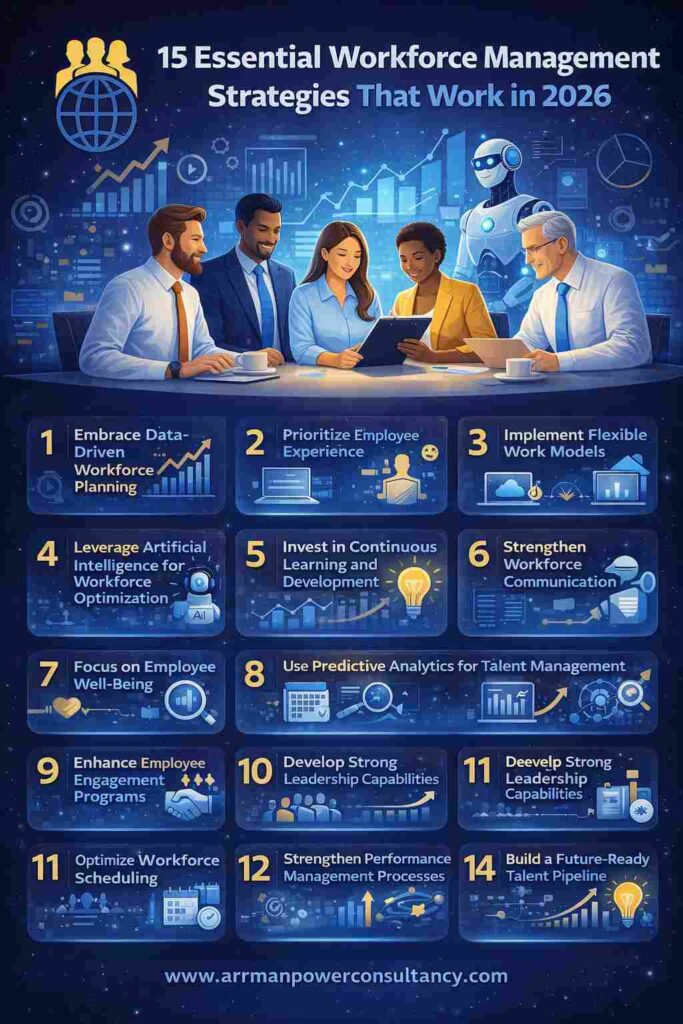
1. Embrace Data-Driven Workforce Planning
Modern organizations rely on data to make informed decisions. Workforce planning should be based on accurate insights rather than assumptions.
By analyzing historical performance, staffing patterns, absenteeism rates, and productivity metrics, leaders can predict future workforce needs more effectively. Data-driven planning helps organizations allocate resources efficiently and avoid overstaffing or understaffing situations.
Using workforce analytics tools allows managers to identify trends and make proactive decisions that support business growth.
2. Prioritize Employee Experience
Employee experience has become a key factor in organizational success. Workers expect more than competitive salaries; they want meaningful work, flexibility, recognition, and opportunities for growth.
Businesses that focus on creating positive employee experiences often see improved engagement and retention rates. Regular feedback sessions, transparent communication, and supportive leadership contribute to a healthier workplace culture.
When employees feel valued, they are more likely to remain committed to organizational objectives.
3. Implement Flexible Work Models
Flexibility remains one of the most sought-after workplace benefits in 2026. Many professionals prefer hybrid or remote work arrangements that allow them to maintain a better work-life balance.
Organizations should evaluate which roles can accommodate flexible schedules without affecting productivity. Offering options such as remote work, compressed workweeks, or flexible start and end times can increase employee satisfaction.
Companies that embrace flexibility often attract a broader talent pool and improve workforce stability.
4. Leverage Artificial Intelligence for Workforce Optimization
Artificial intelligence is revolutionizing workforce management across industries. AI-powered tools can assist with scheduling, forecasting labor demand, performance tracking, and talent acquisition.
These technologies reduce administrative workloads and enable managers to focus on strategic initiatives. AI can also identify workforce trends, helping organizations respond quickly to changing business conditions.
However, successful implementation requires balancing automation with human oversight to maintain fairness and transparency.
5. Invest in Continuous Learning and Development
Skills requirements continue to evolve as technology advances. Organizations must ensure employees have access to ongoing training opportunities.
Continuous learning programs help workers adapt to new tools, processes, and industry developments. Upskilling and reskilling initiatives not only enhance productivity but also increase employee loyalty.
Providing access to online courses, certifications, mentorship programs, and leadership development opportunities creates a workforce that is prepared for future challenges.
6. Strengthen Workforce Communication
Effective communication remains a cornerstone of successful workforce management. Employees need clear information about expectations, goals, and organizational changes.
Organizations should establish multiple communication channels, including team meetings, digital collaboration platforms, and regular updates from leadership.
Transparent communication builds trust and minimizes misunderstandings. It also helps employees feel connected to the organization’s mission and objectives.
7. Focus on Employee Well-Being
Employee well-being directly impacts productivity, engagement, and retention. Organizations increasingly recognize the importance of supporting both physical and mental health.
Wellness programs, mental health resources, flexible schedules, and employee assistance programs contribute to a healthier workforce. Encouraging regular breaks and promoting work-life balance can also reduce burnout.
A strong commitment to employee well-being demonstrates that the organization values its people beyond their job performance.
8. Use Predictive Analytics for Talent Management
Predictive analytics enables organizations to anticipate workforce trends before they become challenges.
By analyzing employee behavior, performance data, and turnover patterns, businesses can identify individuals who may be at risk of leaving. This allows managers to implement retention strategies proactively.
Predictive insights also help organizations plan recruitment efforts, succession planning, and workforce development initiatives more effectively.
9. Enhance Employee Engagement Programs
Engaged employees are more productive, innovative, and committed to organizational success. Creating engagement programs should be a priority for modern businesses.
Recognition initiatives, career development opportunities, team-building activities, and meaningful feedback contribute to higher engagement levels.
Organizations should regularly measure engagement through surveys and discussions to understand employee concerns and identify improvement opportunities.
10. Develop Strong Leadership Capabilities
Leadership quality has a significant impact on workforce performance. Effective leaders inspire teams, foster collaboration, and drive organizational success.
Businesses should invest in leadership development programs that enhance communication, emotional intelligence, conflict resolution, and decision-making skills.
Strong leaders create supportive environments where employees feel motivated to contribute their best work.
11. Optimize Workforce Scheduling
Scheduling remains a critical component of workforce management. Poor scheduling can lead to employee dissatisfaction, increased labor costs, and operational inefficiencies.
Advanced scheduling tools help organizations align staffing levels with business demand. Automated systems can account for employee preferences, availability, and workload requirements.
Optimized scheduling ensures adequate coverage while promoting fairness and flexibility for employees.
12. Promote Diversity, Equity, and Inclusion
A diverse workforce brings different perspectives, experiences, and ideas that contribute to innovation and business growth.
Organizations should implement hiring practices that support diversity and create inclusive workplace environments where all employees feel respected and valued.
Diversity, equity, and inclusion initiatives improve collaboration, strengthen employer branding, and help attract top talent from various backgrounds.
13. Strengthen Performance Management Processes
Traditional annual performance reviews are being replaced by continuous performance management systems.
Regular check-ins, goal tracking, and ongoing feedback help employees stay aligned with organizational objectives. Managers can address challenges quickly and provide timely support.
Modern performance management focuses on development rather than evaluation alone, creating opportunities for employees to improve and grow.
14. Build a Future-Ready Talent Pipeline
Organizations must prepare for future workforce requirements by developing a strong talent pipeline.
Succession planning, internship programs, graduate recruitment initiatives, and strategic partnerships with educational institutions help businesses identify future talent.
A proactive approach to talent acquisition reduces recruitment risks and ensures business continuity during periods of growth or workforce transition.
15. Foster a Culture of Innovation
Innovation is essential for maintaining competitiveness in rapidly changing markets. Organizations should encourage employees to share ideas, experiment with new approaches, and contribute to process improvements.
Creating a culture that supports innovation requires psychological safety, open communication, and recognition for creative contributions.
When employees feel empowered to innovate, organizations become more agile and adaptable to emerging challenges and opportunities.
The Role of Technology in Modern Workforce Management
Technology continues to shape workforce management practices in 2026. Cloud-based platforms, collaboration tools, artificial intelligence, and workforce analytics solutions provide organizations with unprecedented visibility into workforce operations.
These technologies enable real-time monitoring of productivity, attendance, engagement, and performance metrics. Managers can make faster, more informed decisions while reducing administrative burdens.
Organizations should carefully evaluate technology investments to ensure they align with business objectives and workforce needs.
Common Workforce Management Challenges
Despite advancements in technology and management practices, organizations still face several workforce-related challenges.
Some of the most common challenges include:
- Talent shortages in competitive industries
- Employee burnout and disengagement
- Managing hybrid and remote teams
- Rapid changes in skill requirements
- Workforce diversity and inclusion concerns
- Retention of high-performing employees
- Balancing operational efficiency with employee satisfaction
Addressing these challenges requires a strategic approach that combines technology, leadership, and employee-focused initiatives.
Measuring Success
Implementing workforce management initiatives is only effective when organizations measure results consistently.
Key performance indicators may include:
- Employee retention rates
- Productivity metrics
- Employee engagement scores
- Training completion rates
- Absenteeism levels
- Time-to-hire metrics
- Customer satisfaction scores
Regular measurement helps organizations identify strengths, address weaknesses, and continuously improve workforce performance.
Conclusion
As workforce expectations continue to evolve, organizations that invest in modern workforce management practices will be better positioned to attract, retain, and develop top talent. The most successful companies in 2026 are those that balance technology, employee well-being, operational efficiency, and strategic planning.
By implementing these workforce management strategies, businesses can improve productivity, reduce turnover, enhance employee engagement, and maintain a competitive advantage in a rapidly changing market. Workforce management is no longer just an HR function—it is a critical business strategy that drives sustainable growth, strengthens organizational resilience, and supports long-term success.
As workplace dynamics continue to evolve, organizations must adopt modern approaches to workforce management. Success in 2026 depends on creating flexible, data-driven, and employee-focused environments that support both business objectives and workforce well-being.
The strategies outlined in this guide provide a practical framework for building stronger teams, improving productivity, and enhancing employee satisfaction. From leveraging artificial intelligence and predictive analytics to prioritizing engagement and continuous learning, these practices help organizations stay competitive in an increasingly complex business landscape.
Companies that invest in effective workforce management today will be better positioned to attract top talent, adapt to change, and achieve sustainable growth in the years ahead.