Introduction
Recruitment has evolved dramatically over the past decade. From traditional newspaper advertisements to AI-powered talent acquisition platforms, businesses are continuously adapting to changing workforce expectations and technological innovations. As industries become more competitive, organizations are seeking smarter, faster, and more efficient ways to attract top talent.
The future of hiring is not merely about filling vacancies. It is about creating meaningful candidate experiences, leveraging technology, embracing diversity, and building resilient workforces. Companies that understand these shifts will gain a significant advantage in attracting and retaining skilled professionals.
ARR Manpower Consultancy has closely observed these transformations and helped businesses navigate the changing talent landscape. By understanding emerging trends and adapting recruitment strategies accordingly, organizations can position themselves for long-term success.
This article explores 20 powerful insights that are shaping the future recruitment landscape and highlights how businesses can prepare for the opportunities ahead.
https://arrmanpowerconsultancy.com
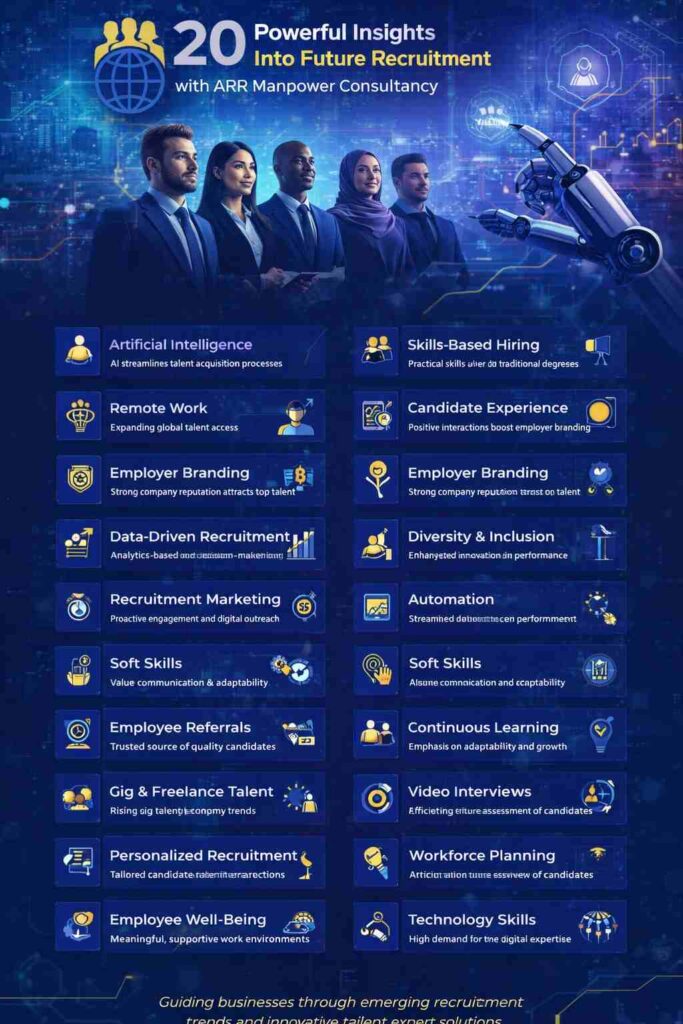
1. Artificial Intelligence Will Transform Talent Acquisition
Artificial intelligence is revolutionizing recruitment processes across industries. AI-powered tools can screen resumes, identify qualified candidates, schedule interviews, and analyze hiring patterns with remarkable efficiency.
Rather than replacing recruiters, AI enhances their capabilities by reducing administrative tasks and enabling them to focus on relationship building and strategic hiring decisions.
Organizations adopting AI-driven solutions can significantly reduce time-to-hire while improving candidate quality.
2. Skills-Based Hiring Will Become the New Standard
Traditional hiring practices often prioritize degrees and certifications. However, employers are increasingly recognizing that practical skills and real-world experience can be more valuable than academic credentials.
Skills-based hiring enables organizations to access a broader talent pool and identify candidates who can deliver immediate results.
Companies that focus on competencies rather than qualifications alone are likely to gain a competitive edge in the future recruitment environment.
3. Remote Work Will Expand Talent Opportunities
Remote and hybrid work models have permanently changed workforce expectations. Geographic limitations no longer restrict access to skilled professionals.
Businesses can now recruit candidates from different cities, states, or even countries, significantly expanding their talent pool.
This flexibility allows organizations to find specialized expertise while offering employees greater work-life balance.
4. Candidate Experience Will Drive Hiring Success
Job seekers today evaluate employers as carefully as employers assess candidates. A poor application process, delayed communication, or confusing interviews can discourage qualified individuals.
Providing a positive candidate experience helps build trust, strengthen employer branding, and increase offer acceptance rates.
Recruiters who prioritize transparency and communication will attract stronger talent in the years ahead.
5. Employer Branding Will Influence Recruitment Outcomes
An organization’s reputation plays a crucial role in attracting candidates. Prospective employees often research company culture, employee reviews, leadership values, and workplace policies before applying.
Strong employer branding creates a positive perception and encourages talented professionals to consider available opportunities.
Companies that actively communicate their mission and workplace culture will stand out in competitive hiring markets.
6. Data-Driven Recruitment Will Improve Decision-Making
Recruitment decisions increasingly rely on analytics rather than intuition alone. Data can reveal hiring trends, candidate behavior, sourcing effectiveness, and retention patterns.
By analyzing recruitment metrics, organizations can identify bottlenecks and continuously improve hiring strategies.
Data-driven insights enable recruiters to make informed decisions and achieve better outcomes.
7. Diversity and Inclusion Will Become Essential
Workplace diversity is no longer a secondary consideration. Organizations recognize that diverse teams contribute to innovation, creativity, and improved business performance.
Inclusive hiring practices help companies attract individuals from varied backgrounds and perspectives.
Businesses that prioritize diversity will be better positioned to meet evolving workforce expectations and customer needs.
8. Recruitment Marketing Will Gain Importance
Modern recruitment requires proactive engagement rather than waiting for candidates to apply. Recruitment marketing combines employer branding, digital outreach, and targeted communication to attract potential talent.
Organizations are increasingly using content marketing, social media campaigns, and employee testimonials to connect with candidates.
A strong recruitment marketing strategy can significantly enhance visibility and candidate engagement.
9. Automation Will Streamline Hiring Processes
Automation tools simplify repetitive recruitment tasks such as interview scheduling, application tracking, and follow-up communications.
By reducing manual workload, recruiters can focus more on strategic talent acquisition activities.
Automation also improves efficiency, consistency, and candidate satisfaction throughout the hiring process.
10. Soft Skills Will Become More Valuable
Technical expertise remains important, but employers are placing greater emphasis on soft skills such as communication, adaptability, teamwork, and problem-solving.
As workplaces become more collaborative and dynamic, individuals who can effectively navigate changing environments will be highly sought after.
Evaluating soft skills during recruitment will become increasingly important for long-term organizational success.
11. Employee Referrals Will Continue to Thrive
Employee referral programs remain one of the most effective sources of quality candidates.
Current employees often understand organizational culture and can recommend individuals who are likely to succeed within the company.
Businesses that invest in structured referral programs can improve hiring quality while reducing recruitment costs.
12. Continuous Learning Will Shape Workforce Development
The rapid pace of technological advancement requires employees to continuously update their skills.
Organizations increasingly seek candidates who demonstrate a commitment to learning and professional growth.
Recruiters will place greater value on adaptability and lifelong learning when evaluating potential hires.
13. Gig and Freelance Talent Will Increase
The rise of the gig economy is transforming workforce structures. Many professionals now prefer project-based work, flexible schedules, and independent career paths.
Companies can benefit from accessing specialized expertise without committing to permanent employment arrangements.
This shift creates new opportunities for workforce planning and talent acquisition.
14. Video Interviews Will Remain Popular
Video interviewing became widely adopted during the global shift toward remote work and continues to offer significant advantages.
It reduces travel requirements, accelerates hiring timelines, and enables organizations to evaluate candidates from diverse locations.
Video technology is expected to remain a core component of modern recruitment strategies.
15. Personalized Recruitment Will Enhance Engagement
Candidates appreciate personalized interactions throughout the hiring journey.
Tailored communications, customized interview experiences, and role-specific information create stronger connections between employers and applicants.
Personalization helps organizations differentiate themselves in competitive labor markets.
16. Workforce Planning Will Become More Strategic
Successful recruitment begins long before a vacancy arises. Strategic workforce planning helps organizations anticipate future talent requirements and address potential skill gaps.
Businesses that align recruitment efforts with long-term objectives can respond more effectively to changing market demands.
Proactive planning reduces hiring disruptions and supports sustainable growth.
17. Employee Well-Being Will Influence Hiring Decisions
Candidates increasingly prioritize organizations that support employee well-being and mental health.
Flexible work arrangements, wellness initiatives, and supportive workplace cultures contribute to stronger employer appeal.
Recruiters who highlight these benefits can attract highly qualified professionals seeking meaningful employment experiences.
18. Technology Skills Will Remain in High Demand
Digital transformation continues across industries, creating strong demand for technology-related skills.
Professionals with expertise in data analytics, cybersecurity, cloud computing, software development, and artificial intelligence are expected to remain highly sought after.
Organizations must develop effective strategies to attract and retain these valuable specialists.
19. Recruitment Partnerships Will Add Greater Value
Many organizations are partnering with professional recruitment consultancies to address talent challenges efficiently.
Specialized recruitment firms provide market insights, candidate networks, and industry expertise that support successful hiring outcomes.
ARR Manpower Consultancy helps businesses streamline recruitment processes and connect with qualified professionals across various sectors.
20. Agility Will Define Recruitment Success
The future recruitment landscape will continue to evolve as technology advances and workforce expectations change.
Organizations that remain flexible and responsive will be better equipped to adapt to emerging trends.
Agility enables businesses to seize opportunities, overcome hiring challenges, and maintain a strong competitive position in dynamic markets.
The Role of ARR Manpower Consultancy in Future Recruitment
As recruitment becomes increasingly complex, organizations need trusted partners who understand both current trends and future workforce demands.
ARR Manpower Consultancy combines industry expertise, innovative hiring strategies, and personalized service to support businesses in achieving their talent acquisition goals.
From sourcing skilled professionals to developing customized recruitment solutions, ARR helps organizations build high-performing teams that contribute to long-term success.
The consultancy’s commitment to quality, efficiency, and client satisfaction ensures businesses remain prepared for evolving recruitment challenges.
Conclusion
The future of recruitment is being shaped by technological innovation, changing workforce expectations, and evolving business priorities. Organizations that embrace these changes can gain a significant advantage in attracting and retaining top talent.
The insights discussed in this article demonstrate how recruitment is moving beyond traditional hiring practices toward more strategic, data-driven, and candidate-focused approaches. From artificial intelligence and automation to diversity initiatives and workforce planning, each trend plays a critical role in shaping modern talent acquisition.
Businesses that invest in forward-thinking recruitment strategies today will be better positioned for success tomorrow. With expert guidance from ARR Manpower Consultancy, organizations can confidently navigate these changes and build resilient workforces capable of thriving in an increasingly competitive environment.
By understanding and implementing these powerful insights, companies can create stronger hiring processes, enhance employee experiences, and secure the talent needed for sustained growth in the years ahead.