Introduction
Recruitment is one of the most significant investments organizations make to build a productive workforce. While hiring top talent is essential for business growth, rising recruitment expenses can place pressure on budgets, especially in competitive industries. Many employers assume that lowering hiring costs automatically leads to lower candidate quality. However, with the right strategies, companies can streamline their recruitment process, optimize resources, and attract qualified professionals without compromising standards.
Reducing recruitment costs is not about cutting corners. Instead, it involves improving efficiency, leveraging technology, strengthening employer branding, and focusing on methods that deliver better hiring outcomes. Organizations that adopt cost-effective hiring practices often experience shorter hiring cycles, improved candidate quality, and higher retention rates.
This article explores ten powerful ways to reduce recruitment costs while maintaining a high standard of talent acquisition.
https://arrmanpowerconsultancy.com
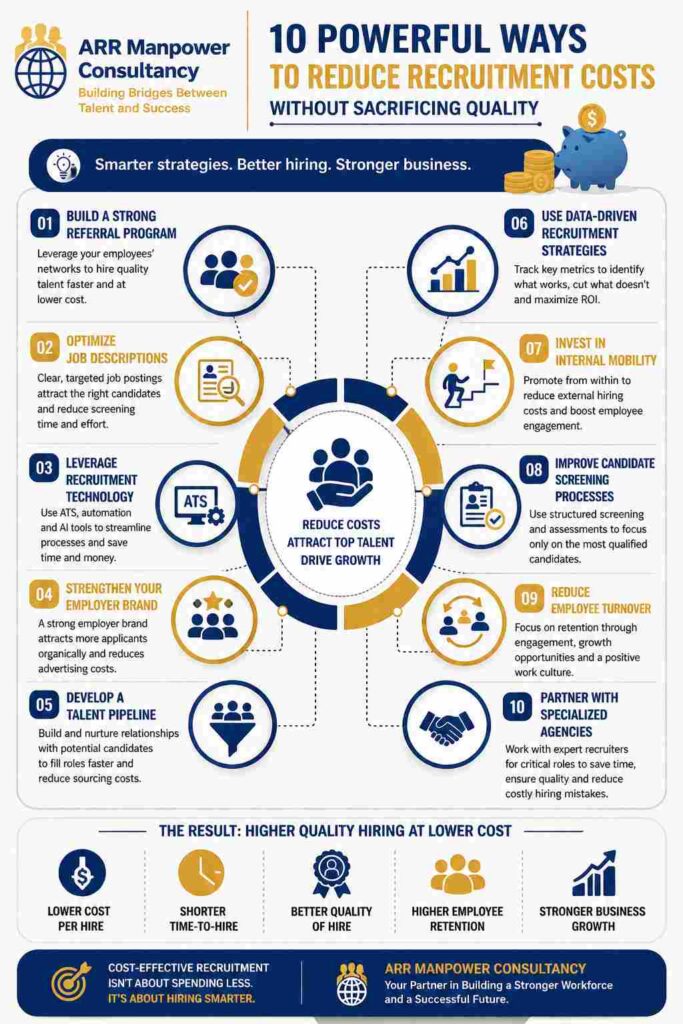
1. Build a Strong Employee Referral Program
Employee referral programs remain one of the most cost-effective hiring methods available. Existing employees often understand company culture and job requirements better than external recruiters, making them valuable sources for identifying qualified candidates.
A well-structured referral program encourages employees to recommend professionals from their networks. Since referred candidates typically come with a level of trust and pre-screening, organizations often experience faster hiring decisions and improved retention rates.
Benefits of employee referrals include:
- Lower advertising expenses
- Reduced time-to-hire
- Better cultural fit
- Higher employee retention
- Improved candidate quality
Offering reasonable incentives can motivate employees to participate actively in the referral process while helping the organization minimize external recruitment spending.
2. Optimize Job Descriptions
Many organizations unintentionally increase recruitment costs by publishing vague or overly complicated job descriptions. Poorly written job postings attract unqualified applicants, leading to longer screening times and additional administrative work.
Effective job descriptions should clearly define:
- Key responsibilities
- Required qualifications
- Preferred skills
- Performance expectations
- Company benefits
When job requirements are communicated accurately, employers receive more relevant applications, reducing screening efforts and improving hiring efficiency.
Additionally, using targeted keywords helps job postings appear in relevant searches, increasing visibility among suitable candidates without requiring additional advertising expenditure.
3. Leverage Recruitment Technology
Modern recruitment technology can significantly reduce manual work and hiring expenses. Applicant Tracking Systems (ATS), recruitment automation tools, and AI-powered screening platforms help streamline the entire hiring process.
Technology can assist with:
- Resume screening
- Candidate communication
- Interview scheduling
- Database management
- Recruitment analytics
Automation reduces repetitive administrative tasks, allowing hiring teams to focus on evaluating candidates rather than managing paperwork.
Organizations that implement recruitment technology often experience faster hiring cycles and lower operational costs while maintaining a consistent candidate experience.
4. Strengthen Your Employer Brand
A strong employer brand naturally attracts high-quality candidates and reduces the need for expensive recruitment campaigns.
Candidates increasingly research organizations before applying for positions. Companies known for positive work environments, career development opportunities, and employee satisfaction tend to receive more applications from qualified professionals.
Ways to strengthen employer branding include:
- Sharing employee success stories
- Highlighting workplace culture
- Showcasing professional development programs
- Maintaining active social media presence
- Encouraging employee advocacy
When candidates actively seek employment opportunities with your organization, recruitment teams spend less on sourcing efforts and external advertising.
5. Develop a Talent Pipeline
Many companies begin searching for candidates only when a vacancy arises. This reactive approach often leads to rushed hiring decisions and increased recruitment costs.
Building a talent pipeline allows organizations to maintain relationships with potential candidates before positions become available.
A talent pipeline may include:
- Previous applicants
- Former employees
- Internship candidates
- Industry professionals
- Passive job seekers
By nurturing these relationships, employers can quickly access qualified talent when vacancies occur, reducing sourcing expenses and shortening hiring timelines.
Talent pipelines also improve workforce planning and help organizations respond more effectively to changing staffing requirements.
6. Use Data-Driven Recruitment Strategies
Recruitment decisions based on assumptions often result in wasted resources. Data-driven hiring enables organizations to identify which recruitment channels generate the best candidates and highest return on investment.
Important recruitment metrics include:
- Cost-per-hire
- Time-to-fill
- Source of hire
- Quality of hire
- Candidate conversion rates
- Retention rates
Analyzing these metrics helps employers allocate resources more effectively and eliminate underperforming recruitment channels.
For example, if employee referrals consistently produce stronger candidates than paid job boards, organizations can shift investment toward referral initiatives and reduce unnecessary advertising expenses.
Data-driven recruitment supports continuous improvement while ensuring hiring quality remains a priority.
7. Invest in Internal Mobility
Hiring externally is often more expensive than promoting existing employees. Internal mobility programs help organizations fill positions using current talent while reducing recruitment expenditures.
Employees already understand company processes, culture, and expectations, which significantly reduces onboarding and training costs.
Advantages of internal hiring include:
- Faster onboarding
- Lower recruitment expenses
- Increased employee engagement
- Better retention rates
- Stronger succession planning
Creating clear career advancement pathways encourages employees to remain with the organization and pursue growth opportunities internally.
Internal mobility not only reduces hiring costs but also strengthens workforce stability and employee satisfaction.
8. Improve Candidate Screening Processes
Inefficient screening procedures can dramatically increase recruitment costs. When hiring teams spend excessive time reviewing unqualified applications, productivity declines and vacancies remain open longer.
Implementing structured screening methods helps identify suitable candidates early in the recruitment process.
Effective screening strategies include:
- Pre-employment assessments
- Structured questionnaires
- Skill-based evaluations
- Automated resume filtering
- Initial video interviews
These approaches help recruiters focus their attention on candidates who meet essential requirements, reducing the time and resources spent on unsuitable applicants.
A streamlined screening process improves hiring efficiency while maintaining rigorous quality standards.
9. Reduce Employee Turnover
One of the most overlooked ways to reduce recruitment costs is minimizing employee turnover. Every employee departure creates additional recruitment, onboarding, and training expenses.
Retaining existing employees is often significantly more cost-effective than replacing them.
Organizations can improve retention by:
- Offering competitive compensation
- Providing career development opportunities
- Recognizing employee achievements
- Supporting work-life balance
- Encouraging effective leadership
When turnover rates decline, recruitment teams spend less time filling recurring vacancies and can focus on strategic hiring initiatives.
Retention strategies contribute directly to long-term cost savings while preserving organizational knowledge and productivity.
10. Partner with Specialized Recruitment Agencies When Necessary
Although some employers avoid agency partnerships due to perceived costs, specialized recruitment firms can actually reduce overall hiring expenses when used strategically.
Recruitment agencies provide:
- Access to qualified talent pools
- Industry expertise
- Faster candidate sourcing
- Reduced administrative burden
- Improved hiring accuracy
The key is selecting agencies with expertise in your industry and specific hiring requirements.
A specialized recruitment partner can help organizations fill critical roles more efficiently, reducing the financial impact of prolonged vacancies and unsuccessful hires.
Rather than using agencies for every position, businesses should focus agency support on hard-to-fill roles where expertise and speed create measurable value.
Best Practices for Long-Term Recruitment Cost Reduction
Reducing recruitment expenses requires a long-term commitment to process improvement. Organizations that consistently evaluate and refine their hiring strategies achieve better results over time.
Key best practices include:
Standardize Hiring Processes
Consistent recruitment procedures improve efficiency and reduce errors. Standardized workflows help hiring teams evaluate candidates fairly while minimizing unnecessary delays.
Focus on Candidate Experience
A positive candidate experience strengthens employer reputation and encourages future applications. Candidates who have positive interactions with an organization are more likely to recommend it to others, expanding the talent pool organically.
Invest in Recruiter Training
Recruiters who understand modern sourcing techniques, interviewing methods, and recruitment technology can identify quality candidates more efficiently. Ongoing training improves hiring outcomes and reduces costly mistakes.
Monitor Recruitment Performance
Regularly reviewing recruitment metrics helps organizations identify opportunities for improvement and optimize spending. Continuous monitoring ensures resources are allocated to the most effective hiring channels.
Align Recruitment with Business Goals
Strategic workforce planning helps organizations anticipate future hiring needs and avoid costly last-minute recruitment efforts. Aligning hiring activities with organizational objectives improves efficiency and supports sustainable growth.
Common Mistakes That Increase Recruitment Costs
Even organizations with strong hiring practices can unintentionally increase recruitment expenses through avoidable mistakes.
Common issues include:
- Delayed hiring decisions
- Poor workforce planning
- Overreliance on paid job boards
- Ineffective employer branding
- Inadequate candidate screening
- High employee turnover
- Lack of recruitment analytics
Addressing these challenges can significantly improve recruitment efficiency and reduce overall hiring expenditure.
Conclusion
Organizations do not have to choose between controlling expenses and attracting top talent. By implementing strategic hiring practices, businesses can reduce recruitment costs while maintaining high standards of candidate quality.
Building strong employee referral programs, leveraging recruitment technology, developing talent pipelines, improving screening processes, investing in internal mobility, and strengthening employer branding all contribute to more efficient hiring outcomes. Additionally, focusing on employee retention and using data-driven decision-making helps organizations maximize recruitment return on investment.
The most successful employers view recruitment as a strategic function rather than a transactional process. By continuously refining hiring practices and prioritizing efficiency, businesses can secure exceptional talent, support organizational growth, and achieve sustainable cost savings over the long term.
Furthermore, organizations that continuously evaluate their recruitment strategies are better positioned to adapt to changing market conditions and workforce demands. A proactive approach to talent acquisition not only lowers hiring expenses but also strengthens competitiveness, enhances productivity, and creates a foundation for long-term business success and sustainable growth.
https://www.shrm.org/in/topics-tools/topics/artificial-intelligence-in-the-workplace
https://executiveeducation.wharton.upenn.edu/