Introduction
Factory recruitment has become increasingly challenging in today’s competitive labor market. Manufacturing facilities require dependable workers, specialized operators, technicians, supervisors, and support staff to maintain productivity and meet production goals. However, finding qualified candidates while managing workforce fluctuations can be difficult for many organizations.
As industries continue to expand, businesses need practical staffing solutions that help attract, hire, and retain skilled employees. A structured recruitment approach not only reduces hiring delays but also improves workforce quality, operational efficiency, and employee satisfaction.
This article explores nine effective staffing solutions that can help manufacturers overcome hiring challenges and build a reliable workforce for long-term success.
https://arrmanpowerconsultancy.com
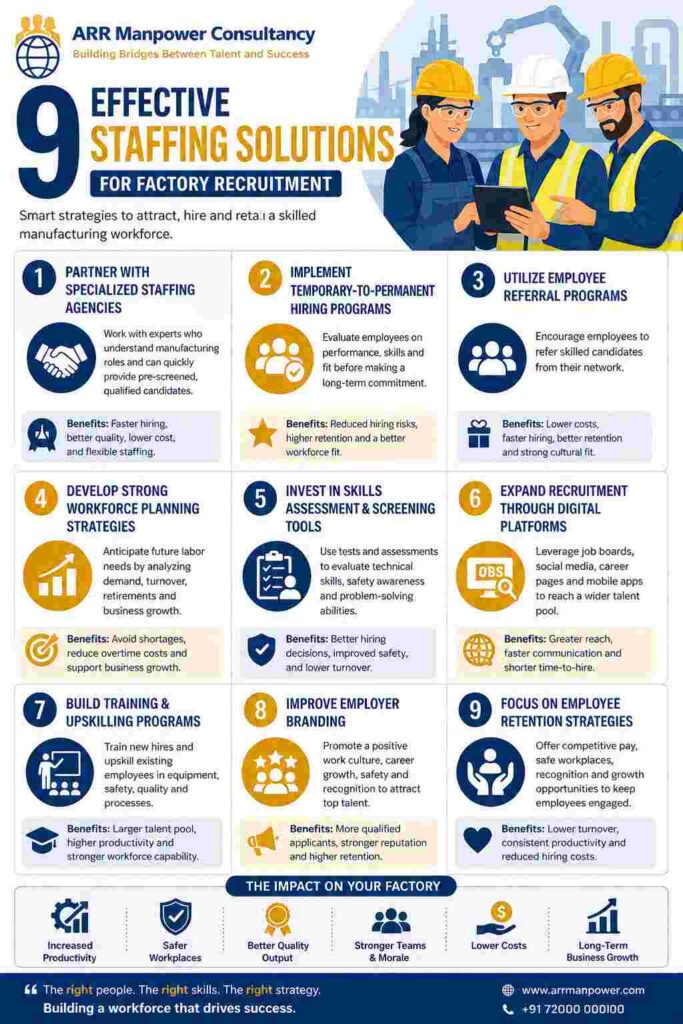
1. Partner with Specialized Staffing Agencies
One of the most effective ways to improve factory hiring is by working with staffing agencies that focus on industrial and manufacturing recruitment. These agencies maintain extensive candidate databases and understand the unique requirements of factory environments.
Specialized recruiters can identify workers with relevant experience in machine operation, assembly, packaging, warehousing, quality control, and maintenance. They also conduct preliminary screening, reducing the workload for internal hiring teams.
Benefits include:
- Faster hiring processes
- Access to pre-screened candidates
- Reduced recruitment costs
- Improved workforce quality
- Better hiring flexibility during peak seasons
By leveraging industry expertise, companies can fill vacancies quickly without compromising on candidate quality.
2. Implement Temporary-to-Permanent Hiring Programs
Many manufacturers struggle with employee turnover after hiring. Temporary-to-permanent employment programs provide an effective solution by allowing employers to evaluate workers before offering full-time positions.
This approach enables businesses to assess:
- Job performance
- Attendance records
- Workplace behavior
- Technical skills
- Team compatibility
Employees also benefit because they gain firsthand experience of the work environment before making a long-term commitment.
Temporary-to-permanent hiring reduces recruitment risks and increases the likelihood of successful employment relationships.
3. Utilize Employee Referral Programs
Existing employees can be valuable sources of qualified candidates. Workers often recommend friends, family members, or former colleagues who possess the skills and work ethic needed for manufacturing roles.
A well-designed referral program can significantly improve recruitment outcomes.
Advantages include:
- Lower sourcing costs
- Faster candidate acquisition
- Improved retention rates
- Better cultural alignment
- Higher employee engagement
Offering incentives such as bonuses, gift cards, or recognition programs encourages participation and helps create a continuous pipeline of potential candidates.
Referral hiring often produces workers who adapt quickly because they already have realistic expectations about the workplace.
4. Develop Strong Workforce Planning Strategies
Reactive hiring can lead to workforce shortages, production delays, and increased overtime costs. Effective workforce planning helps organizations anticipate future labor requirements and prepare accordingly.
Manufacturers should regularly analyze:
- Production forecasts
- Seasonal demand patterns
- Retirement projections
- Employee turnover rates
- Expansion plans
By understanding future staffing needs, companies can begin recruitment activities well before critical shortages occur.
Workforce planning also allows businesses to allocate budgets effectively and reduce last-minute hiring pressures.
5. Invest in Skills Assessment and Screening Tools
Hiring candidates without proper evaluation can result in poor performance and increased turnover. Modern screening tools help employers identify individuals who possess the required technical and behavioral competencies.
Common assessment methods include:
- Mechanical aptitude testing
- Equipment operation evaluations
- Safety awareness assessments
- Problem-solving exercises
- Communication skill evaluations
These tools provide objective data that supports better hiring decisions.
Organizations that implement structured screening processes often experience improved productivity, reduced training costs, and enhanced workplace safety.
6. Expand Recruitment Through Digital Platforms
Traditional hiring methods alone may not attract enough candidates in today’s labor market. Digital recruitment platforms provide access to larger talent pools and help employers reach job seekers more efficiently.
Effective online recruitment channels include:
- Job boards
- Professional networking platforms
- Company career pages
- Social media channels
- Mobile recruitment applications
Digital tools allow employers to promote opportunities to a wider audience while streamlining application management.
Additionally, online recruitment supports faster communication with candidates, helping organizations reduce time-to-hire and maintain candidate engagement throughout the process.
7. Build Training and Upskilling Programs
Many manufacturers face skill shortages because qualified candidates are not always readily available. Instead of limiting recruitment efforts to fully experienced workers, companies can develop training programs that prepare new hires for specific roles.
Training initiatives may cover:
- Equipment operation
- Safety procedures
- Quality standards
- Production techniques
- Maintenance basics
Upskilling programs allow businesses to expand their candidate pool while developing a workforce that aligns with organizational needs.
Employees also appreciate opportunities for professional development, which can contribute to higher job satisfaction and improved retention.
A culture of continuous learning strengthens workforce capabilities and supports long-term business growth.
8. Improve Employer Branding
Job seekers often evaluate potential employers before submitting applications. A strong employer brand can significantly influence recruitment success by making a company more attractive to prospective workers.
Manufacturers can strengthen their reputation by highlighting:
- Safe working conditions
- Career advancement opportunities
- Competitive compensation
- Employee recognition programs
- Positive workplace culture
Sharing employee success stories and workplace achievements through digital channels can help build trust among job seekers.
A positive employer image not only attracts candidates but also encourages current employees to remain with the organization.
Strong branding creates a competitive advantage in labor markets where skilled workers have multiple employment options.
9. Focus on Employee Retention Strategies
Recruitment success is not measured solely by hiring numbers. Retaining employees is equally important because frequent turnover increases operational costs and disrupts productivity.
Organizations should implement retention initiatives that address employee needs and workplace expectations.
Effective retention strategies include:
Competitive Compensation
Offering fair wages and performance-based incentives helps attract and retain valuable workers.
Safe Working Environments
Employees are more likely to stay with organizations that prioritize workplace safety and well-being.
Career Development Opportunities
Providing clear advancement pathways encourages workers to invest in long-term employment.
Recognition Programs
Acknowledging employee contributions can improve morale and strengthen workplace commitment.
Open Communication
Regular feedback and transparent communication foster trust between management and employees.
By focusing on retention, manufacturers reduce recruitment expenses while maintaining a stable and experienced workforce.
Common Challenges in Factory Recruitment
Despite implementing effective hiring strategies, manufacturers may still encounter several recruitment challenges.
Labor Shortages
Many regions experience shortages of skilled industrial workers, making competition for talent increasingly intense.
High Turnover Rates
Factory positions often face higher turnover compared to other industries due to physically demanding work environments.
Seasonal Workforce Fluctuations
Production demands can vary throughout the year, creating temporary staffing requirements.
Skill Gaps
Rapid technological advancements require workers to possess new technical competencies.
Geographic Limitations
Facilities located in remote areas may struggle to attract qualified candidates from surrounding communities.
Understanding these challenges enables employers to develop proactive recruitment solutions that support workforce stability.
How Staffing Solutions Improve Manufacturing Operations
Effective workforce management delivers benefits beyond recruitment.
When manufacturers implement strategic hiring solutions, they often experience:
- Increased production efficiency
- Reduced overtime expenses
- Lower turnover rates
- Enhanced workplace safety
- Improved product quality
- Better employee morale
- Greater operational flexibility
A well-planned recruitment strategy contributes directly to organizational performance and long-term competitiveness.
Rather than treating hiring as a standalone activity, successful manufacturers integrate workforce planning into broader business objectives.
Future Trends in Factory Recruitment
The manufacturing sector continues to evolve, and recruitment strategies must adapt accordingly.
Emerging trends include:
Automation-Supported Hiring
Artificial intelligence and automation tools are streamlining candidate sourcing, screening, and communication processes.
Data-Driven Recruitment
Analytics help employers identify successful hiring patterns and improve workforce planning.
Flexible Workforce Models
Many organizations are adopting blended workforce structures that combine permanent, temporary, and contract employees.
Mobile Recruitment
Job seekers increasingly use mobile devices to search and apply for positions, making mobile-friendly recruitment essential.
Skills-Based Hiring
Employers are placing greater emphasis on demonstrated capabilities rather than solely focusing on educational qualifications.
Businesses that embrace these trends will be better positioned to attract and retain qualified workers in competitive labor markets.
Conclusion
Factory recruitment requires a strategic approach that balances workforce demand, candidate quality, operational efficiency, and employee retention. Organizations that rely solely on traditional hiring methods may struggle to meet evolving labor market challenges.
By implementing specialized staffing partnerships, workforce planning, referral programs, digital recruitment tools, skills assessments, training initiatives, employer branding efforts, and retention strategies, manufacturers can create a stronger and more reliable workforce.
These nine staffing solutions provide practical ways to improve hiring outcomes while supporting long-term business growth. As manufacturing continues to evolve, companies that invest in effective workforce strategies will be better equipped to maintain productivity, reduce turnover, and achieve sustainable success.
Furthermore, a proactive recruitment strategy helps manufacturing companies remain resilient during market fluctuations and changing production demands. By continuously evaluating workforce requirements and refining hiring processes, organizations can reduce talent shortages and maintain operational continuity.
Investing in workforce development, employee engagement, and modern recruitment technologies creates a strong foundation for future growth. Companies that prioritize effective hiring practices are better positioned to attract skilled professionals, improve productivity, and enhance overall business performance.
In an increasingly competitive manufacturing landscape, the ability to secure and retain qualified workers can become a significant competitive advantage. Adopting these staffing solutions not only supports immediate hiring needs but also contributes to a sustainable workforce capable of driving long-term organizational success and helping businesses achieve their strategic objectives with confidence and efficiency.