Introduction
The rise of remote work has transformed the hiring landscape across industries. Businesses are no longer restricted to recruiting candidates within a specific geographic location. Instead, organizations can access a global talent pool and hire professionals with specialized skills regardless of where they live. While this creates exciting opportunities, it also introduces new challenges for recruiters and hiring managers.
Finding qualified remote employees requires a strategic approach. Traditional hiring methods may not be sufficient when evaluating candidates who will work independently, collaborate virtually, and maintain productivity outside a conventional office environment. Companies must adapt their recruitment strategies to identify professionals who possess the right technical abilities, communication skills, and self-management capabilities.
This article explores nine effective ways to recruit remote talent and build a distributed workforce capable of driving business success.
https://arrmanpowerconsultancy.com
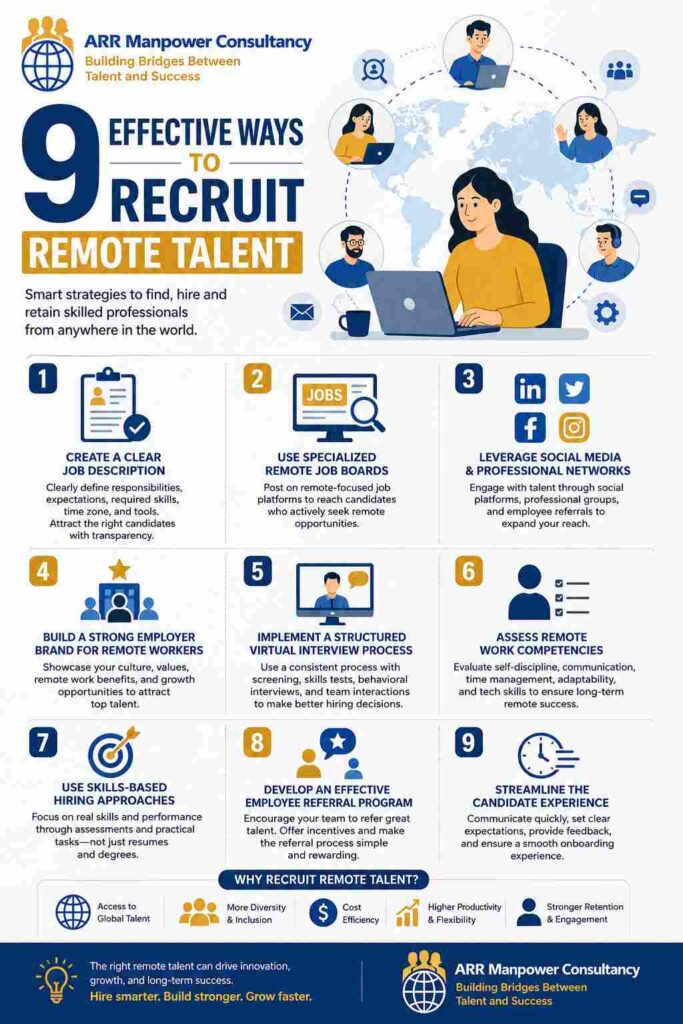
1. Create a Clear and Detailed Remote Job Description
The recruitment process begins with a well-crafted job description. Many organizations make the mistake of using generic job postings that fail to address the unique expectations of remote positions.
A strong remote job description should clearly outline:
- Job responsibilities
- Required qualifications
- Expected work hours
- Time zone requirements
- Communication expectations
- Technology and software proficiency
- Performance metrics
Candidates should understand exactly what is expected before applying. Transparency helps attract individuals who are genuinely suited for remote work while discouraging those who may struggle in a virtual environment.
Including information about company culture, remote work policies, and opportunities for professional growth can further improve the quality of applicants.
2. Use Specialized Remote Job Boards
Posting vacancies on general job platforms may generate a large number of applications, but many candidates may not have experience working remotely. Specialized remote job boards help organizations connect with professionals who actively seek virtual opportunities.
Remote-focused platforms often attract candidates who:
- Understand virtual collaboration
- Have experience managing their own schedules
- Possess strong digital communication skills
- Are familiar with remote productivity tools
By targeting niche job boards, employers can reduce screening time and increase the likelihood of finding qualified candidates.
Diversifying job advertising channels also expands visibility and helps organizations reach talent that may not be actively searching on traditional recruitment websites.
3. Leverage Social Media and Professional Networks
Social media has become one of the most effective recruitment tools available today. Professional networking platforms allow recruiters to engage directly with potential candidates and showcase their organization’s culture.
Effective strategies include:
- Sharing job openings regularly
- Participating in industry discussions
- Joining professional groups
- Publishing employee success stories
- Highlighting remote work benefits
A strong employer brand on social media helps attract professionals who align with company values and work styles.
Employee advocacy can also play a significant role. Encouraging team members to share vacancies within their networks often leads to high-quality referrals and increased engagement from potential applicants.
4. Build a Strong Employer Brand for Remote Workers
Top candidates often evaluate employers as carefully as employers evaluate candidates. Organizations that promote a supportive and flexible work environment are more likely to attract talented professionals.
A compelling employer brand should communicate:
- Company mission and vision
- Employee development opportunities
- Work-life balance initiatives
- Diversity and inclusion efforts
- Remote collaboration practices
- Recognition and reward programs
Candidates want assurance that they will remain connected, supported, and valued while working remotely.
Publishing testimonials, case studies, and behind-the-scenes content can help demonstrate how the company successfully manages a distributed workforce. This transparency builds trust and encourages applications from highly qualified professionals.
5. Implement a Structured Virtual Interview Process
Interviewing remote candidates requires more than simply conducting video calls. A structured evaluation process helps recruiters assess both technical expertise and remote work readiness.
A comprehensive interview process may include:
Initial Screening
This stage evaluates basic qualifications, communication skills, and cultural alignment.
Technical Assessment
Candidates complete tasks that demonstrate job-specific competencies.
Behavioral Interview
Recruiters explore previous remote work experiences and problem-solving abilities.
Team Interaction
Potential hires meet future colleagues to assess collaboration and compatibility.
Consistent interview questions and evaluation criteria improve decision-making and reduce hiring bias.
Additionally, observing how candidates communicate virtually can provide valuable insights into their ability to work effectively in a remote environment.
6. Assess Remote Work Competencies
Technical qualifications alone do not guarantee success in a remote role. Employees working outside a traditional office must possess additional competencies that support independent performance.
Key attributes to evaluate include:
Self-Discipline
Remote professionals must manage their workload without direct supervision.
Communication Skills
Clear written and verbal communication is essential for virtual collaboration.
Time Management
Employees should be able to prioritize tasks and meet deadlines consistently.
Adaptability
Remote environments often require flexibility and problem-solving skills.
Technology Proficiency
Candidates should be comfortable using collaboration platforms, project management tools, and communication software.
Behavioral interview questions and practical assessments can help identify these competencies before extending an offer.
7. Use Skills-Based Hiring Approaches
Many organizations are shifting away from hiring decisions based solely on education or previous job titles. Skills-based hiring focuses on demonstrated capabilities and practical performance.
This approach offers several advantages:
- Expands access to diverse talent
- Reduces unconscious bias
- Improves hiring accuracy
- Identifies high-performing candidates
- Encourages innovation and fresh perspectives
Practical assignments, simulations, and portfolio reviews allow employers to evaluate real-world abilities rather than relying exclusively on resumes.
For example, a marketing candidate might create a campaign proposal, while a software developer could complete a coding challenge. These exercises provide a more accurate picture of future job performance.
8. Develop an Effective Employee Referral Program
Employee referrals remain one of the most reliable recruitment methods. Current team members often have professional connections who possess relevant experience and align with organizational culture.
A successful referral program should:
- Offer clear guidelines
- Provide meaningful incentives
- Simplify the referral process
- Recognize employee contributions
- Communicate open positions regularly
Remote employees frequently maintain extensive digital networks across industries and regions. Leveraging these connections can help organizations identify qualified candidates who may not be actively searching for new opportunities.
Referral hires often adapt more quickly, remain with the organization longer, and contribute positively to team dynamics.
9. Streamline the Candidate Experience
A positive candidate experience can significantly influence hiring outcomes. Skilled professionals often evaluate multiple opportunities simultaneously, making the recruitment process a critical factor in their decision.
Organizations should focus on:
Fast Communication
Respond promptly to applications and interview inquiries.
Clear Expectations
Keep candidates informed about timelines and next steps.
Efficient Scheduling
Use digital scheduling tools to reduce delays.
Transparent Feedback
Provide constructive updates whenever possible.
Smooth Onboarding
Prepare new hires for success from day one.
An organized recruitment process reflects professionalism and respect for candidates’ time. It also strengthens the employer’s reputation within the job market.
A seamless onboarding experience is particularly important for remote employees because they do not benefit from in-person interactions during their first days. Structured training, mentorship, and regular check-ins can help new team members integrate successfully.
Common Challenges in Recruiting Remote Talent
While remote hiring offers significant advantages, organizations may encounter several challenges:
Increased Competition
Companies worldwide are competing for the same skilled professionals.
Cultural Alignment
Assessing organizational fit can be more difficult in virtual environments.
Time Zone Differences
Global hiring may create scheduling and collaboration challenges.
Verification of Skills
Recruiters must ensure candidates possess the capabilities claimed on their resumes.
Employee Engagement
Maintaining strong connections with remote employees requires deliberate effort.
Recognizing these challenges early allows organizations to develop proactive solutions and improve hiring outcomes.
Benefits of Hiring Remote Professionals
Organizations that successfully recruit remote employees can gain several competitive advantages.
Access to Global Talent
Employers can hire the best candidates regardless of location.
Reduced Hiring Constraints
Geographic limitations no longer restrict recruitment efforts.
Increased Workforce Diversity
Remote hiring enables organizations to build more diverse teams.
Enhanced Employee Satisfaction
Flexible work arrangements often contribute to improved morale.
Potential Cost Savings
Businesses may reduce expenses related to office space and infrastructure.
These benefits make remote recruitment an important strategy for companies seeking long-term growth and adaptability.
Conclusion
Recruiting remote talent requires a thoughtful and strategic approach. Organizations must move beyond traditional hiring methods and focus on identifying professionals who can thrive in virtual work environments. By creating detailed job descriptions, utilizing specialized job boards, strengthening employer branding, implementing structured interviews, assessing remote work competencies, embracing skills-based hiring, encouraging employee referrals, and delivering an exceptional candidate experience, companies can significantly improve hiring success.
As remote work continues to evolve, businesses that refine their recruitment strategies will gain access to a broader pool of skilled professionals and position themselves for sustained growth. Investing in effective remote hiring practices today can help organizations build resilient, productive, and high-performing teams for the future.
Furthermore, organizations that embrace modern recruitment technologies and data-driven hiring practices can gain a significant advantage in attracting top professionals. Regularly reviewing hiring processes, gathering candidate feedback, and adapting to changing workforce expectations can further enhance recruitment outcomes.
Remote work is no longer a temporary trend but a long-term business strategy. Companies that prioritize effective hiring, strong communication, and employee support will be better positioned to build agile teams, improve retention, and achieve sustainable success in an increasingly competitive global marketplace.