Introduction
Campus recruitment has become one of the most effective ways for organizations to build a strong talent pipeline. As industries continue to evolve and competition for skilled professionals increases, employers are turning to colleges and universities to identify promising candidates early in their careers.
Fresh graduates bring enthusiasm, adaptability, innovative thinking, and a willingness to learn. However, attracting top students requires more than simply attending career fairs or posting job openings. Employers need a well-structured approach that resonates with students and aligns with changing workforce expectations.
This article explores ten powerful campus recruitment strategies that can help employers attract, engage, and hire high-potential graduates while strengthening their employer brand on campus.
https://arrmanpowerconsultancy.com
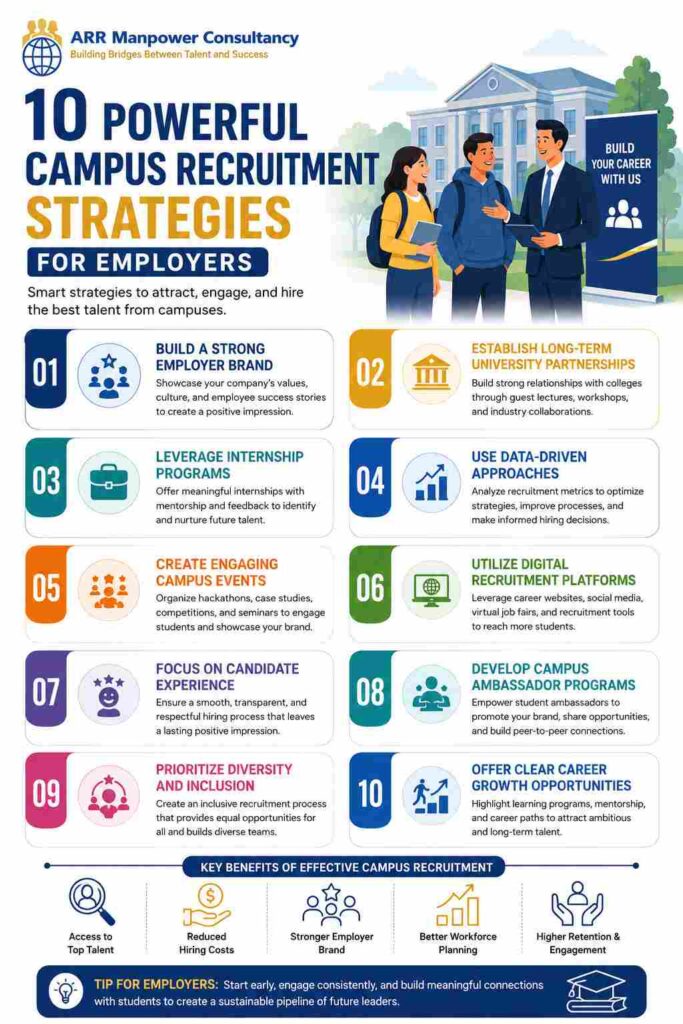
1. Build a Strong Employer Brand on Campus
Students often research organizations extensively before applying for internships or entry-level positions. A strong employer brand helps create a positive perception and encourages talented candidates to consider your company.
Organizations can strengthen their visibility by:
- Participating in campus events
- Sponsoring student activities
- Sharing employee success stories
- Highlighting workplace culture
- Demonstrating commitment to employee growth
Students are more likely to apply when they understand the organization’s mission, values, and career opportunities.
Creating consistent messaging across websites, social media channels, and university partnerships helps establish credibility and trust among students.
2. Establish Long-Term Relationships with Educational Institutions
Successful hiring initiatives are built on strong relationships with colleges and universities. Rather than engaging only during hiring seasons, employers should maintain year-round partnerships with educational institutions.
Ways to build these relationships include:
- Collaborating with placement cells
- Offering guest lectures
- Conducting workshops
- Supporting academic projects
- Participating in industry panels
These activities increase organizational visibility while helping students gain practical knowledge.
Long-term engagement also enables employers to understand curriculum trends and identify students with relevant skills before competitors do.
3. Leverage Internship Programs Effectively
Internships provide employers with an opportunity to evaluate potential hires in real-world work environments. They also allow students to gain valuable professional experience.
An effective internship program should include:
- Meaningful project assignments
- Mentorship opportunities
- Regular feedback sessions
- Skill development initiatives
- Performance evaluations
Students who have positive internship experiences are more likely to accept full-time job offers after graduation.
Additionally, converting successful interns into permanent employees reduces hiring costs and minimizes onboarding challenges.
4. Use Data-Driven Recruitment Approaches
Modern hiring processes generate significant amounts of data. Employers can use analytics to improve decision-making and optimize recruitment outcomes.
Key metrics may include:
- Application volume
- Interview-to-offer ratio
- Offer acceptance rate
- Time-to-hire
- Source effectiveness
Analyzing these metrics helps employers identify successful channels and improve future recruitment campaigns.
Data-driven strategies also enable organizations to forecast hiring needs, allocate resources efficiently, and enhance candidate experiences throughout the hiring process.
5. Create Engaging Campus Events
Interactive events can significantly improve student engagement and brand recognition.
Instead of relying solely on traditional presentations, employers can organize:
- Hackathons
- Business case competitions
- Innovation challenges
- Industry seminars
- Networking sessions
These activities allow students to showcase their skills while learning more about the organization.
Engaging events create memorable experiences that differentiate employers from competitors and increase interest among top-performing students.
Furthermore, such initiatives help recruiters identify candidates who demonstrate leadership, teamwork, and problem-solving abilities.
6. Utilize Digital Recruitment Platforms
Today’s students spend considerable time online, making digital channels essential for reaching potential candidates.
Employers should establish a strong presence through:
- Career websites
- Professional networking platforms
- Virtual job fairs
- Recruitment apps
- Social media channels
Digital platforms allow organizations to communicate directly with students and provide real-time updates about opportunities.
Virtual engagement also expands access to talent beyond geographical limitations, enabling employers to connect with students from multiple institutions simultaneously.
A user-friendly application process can further improve participation and reduce candidate drop-off rates.
7. Focus on Candidate Experience
The candidate experience plays a critical role in attracting and retaining top talent.
Students often share their hiring experiences with peers, influencing future applicant perceptions. A positive recruitment journey can significantly strengthen an employer’s reputation.
Employers can enhance candidate experiences by:
- Communicating clearly throughout the process
- Providing timely updates
- Simplifying application procedures
- Offering constructive feedback
- Maintaining professional interactions
Even candidates who are not selected can become future applicants, customers, or brand advocates if they have a positive experience.
Respectful and transparent communication demonstrates professionalism and leaves a lasting impression.
8. Develop Campus Ambassador Programs
Campus ambassadors serve as representatives of an organization within educational institutions. These students help promote opportunities and increase awareness among their peers.
An effective ambassador program can:
- Improve campus visibility
- Enhance student engagement
- Support event promotion
- Generate referrals
- Strengthen employer branding
Ambassadors understand student interests and can communicate organizational benefits in a relatable manner.
Providing training, mentorship, and incentives helps ambassadors effectively represent the company and maintain enthusiasm throughout the academic year.
These programs also create authentic connections between employers and students.
9. Prioritize Diversity and Inclusion
Organizations increasingly recognize the value of diverse teams. Campus hiring provides an excellent opportunity to build a workforce with varied perspectives and experiences.
Employers can promote inclusivity by:
- Expanding outreach efforts
- Partnering with diverse student groups
- Eliminating bias in hiring processes
- Using structured interviews
- Offering equal opportunities for all candidates
A commitment to diversity strengthens innovation, collaboration, and organizational performance.
Students are often attracted to employers that demonstrate genuine efforts to create inclusive workplaces where individuals from different backgrounds can thrive.
Transparent policies and measurable goals further reinforce credibility and trust.
10. Offer Clear Career Growth Opportunities
Students are not only looking for jobs; they are looking for careers. Organizations that clearly communicate growth opportunities are more likely to attract ambitious graduates.
Employers should highlight:
- Training programs
- Leadership development initiatives
- Career progression paths
- Mentorship opportunities
- Learning and development resources
Candidates want to understand how they can grow within the organization over time.
Providing examples of employees who advanced from entry-level positions to leadership roles can effectively demonstrate long-term career potential.
Organizations that invest in employee development often experience higher retention rates and stronger workforce engagement.
Common Challenges in Campus Recruitment
While hiring graduates offers many advantages, employers may encounter several challenges.
High Competition
Many organizations target the same institutions and student populations, making it difficult to secure top talent.
Skill Gaps
Academic knowledge does not always translate directly into workplace readiness, requiring additional training and development.
Changing Expectations
Students increasingly prioritize flexibility, work-life balance, meaningful work, and professional growth.
Limited Hiring Timelines
University placement schedules often require employers to make decisions within strict timeframes.
Addressing these challenges requires careful planning, strong partnerships, and continuous process improvement.
Benefits of Effective Campus Recruitment
Organizations that invest in well-structured hiring programs can achieve several long-term benefits.
Access to Emerging Talent
Students bring fresh ideas, technological proficiency, and innovative thinking.
Reduced Hiring Costs
Early identification of talent can lower recruitment expenses and decrease reliance on external hiring channels.
Stronger Workforce Planning
Graduate hiring programs help organizations develop future leaders and maintain a consistent talent pipeline.
Enhanced Employer Reputation
Positive campus engagement strengthens brand awareness and attracts high-quality applicants.
Improved Retention
Candidates who begin their careers with structured development opportunities often demonstrate greater loyalty and engagement.
Best Practices for Sustainable Success
To maximize recruitment outcomes, employers should adopt a continuous improvement mindset.
Key best practices include:
- Reviewing hiring metrics regularly
- Gathering candidate feedback
- Strengthening university partnerships
- Investing in recruiter training
- Updating recruitment technology
- Aligning hiring goals with business objectives
Organizations that consistently evaluate and refine their strategies are better positioned to attract exceptional talent year after year.
Conclusion
Campus recruitment remains one of the most effective methods for building a future-ready workforce. By combining strong employer branding, meaningful university partnerships, engaging student experiences, and data-driven decision-making, employers can significantly improve hiring outcomes.
The most successful organizations view campus hiring as a long-term investment rather than a seasonal activity. Building relationships with students early, providing valuable learning opportunities, and communicating clear career pathways can help attract top graduates and create a sustainable talent pipeline.
Implementing these ten powerful campus recruitment strategies enables employers to strengthen their competitive advantage, secure high-potential talent, and support long-term organizational growth in an increasingly dynamic business environment.
As the employment landscape continues to evolve, organizations must adapt their hiring approaches to meet the expectations of the next generation of professionals. A well-planned campus recruitment program not only helps employers fill immediate vacancies but also creates a reliable source of future talent for long-term business success.
Companies that actively engage with students throughout their academic journey are often better positioned to attract motivated candidates who align with organizational values and goals.
Technology, changing workforce preferences, and increasing competition for skilled graduates make it essential for employers to continuously refine their recruitment strategies. By combining digital engagement, personalized candidate experiences, internship opportunities, and strong institutional partnerships, organizations can build a sustainable hiring framework that delivers measurable results.
Furthermore, investing in young talent contributes to innovation, workforce diversity, and leadership development. Graduates who receive proper training and career guidance can quickly become valuable contributors to organizational growth.
Employers that prioritize transparency, learning opportunities, and employee development are more likely to earn the trust of students and establish themselves as preferred employers. Ultimately, a strategic and proactive approach to campus recruitment can create lasting advantages for both organizations and emerging professionals.