Introduction
The workplace has undergone a dramatic transformation over the past few years. Organizations worldwide have embraced flexible work arrangements that combine remote and in-office work, giving rise to hybrid workforce models. This approach allows employees to split their time between working from home and collaborating in physical office spaces.
Businesses of all sizes are discovering that flexibility is no longer just a perk—it has become a strategic advantage. Companies that successfully implement hybrid strategies often experience improvements in productivity, employee satisfaction, talent acquisition, and operational efficiency.
As organizations continue adapting to changing workforce expectations, understanding the benefits of hybrid workforce models is essential for maintaining competitiveness and fostering long-term growth. This article explores 15 proven advantages that make this approach increasingly popular among modern employers.
https://arrmanpowerconsultancy.com
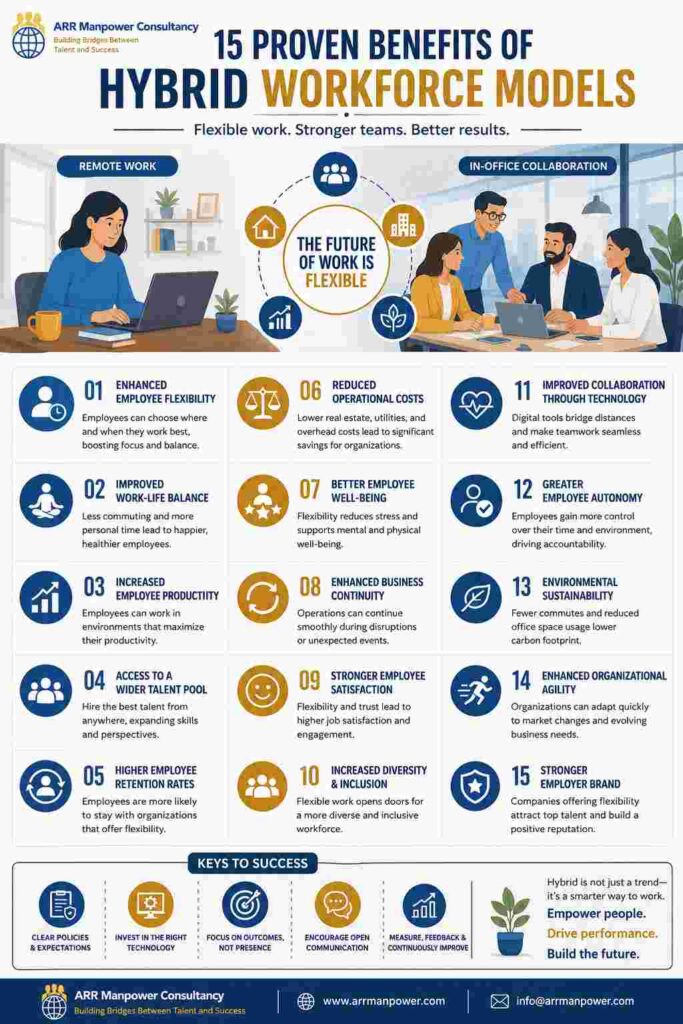
1. Enhanced Employee Flexibility
One of the most significant advantages of hybrid workforce models is the flexibility they offer employees. Workers can choose environments that best suit their tasks, whether they need quiet focus at home or collaborative interaction in the office.
Flexible schedules help employees manage personal responsibilities more effectively. This adaptability reduces stress and allows individuals to maintain a healthier balance between professional and personal commitments.
When employees feel trusted to manage their time and work environment, they often become more engaged and motivated, leading to improved performance across the organization.
2. Improved Work-Life Balance
Achieving a healthy work-life balance has become a top priority for many professionals. Hybrid arrangements help employees spend less time commuting and more time focusing on family, hobbies, health, and personal development.
Reducing daily travel can free up several hours each week. Employees can use this extra time productively or dedicate it to activities that improve their overall well-being.
Organizations that support better work-life integration often experience stronger employee loyalty and reduced workplace burnout.
3. Increased Employee Productivity
Contrary to early concerns, many organizations have reported higher productivity levels after implementing flexible work structures. Employees often perform better when they have greater control over their work environment.
Remote work allows individuals to minimize office distractions and focus on tasks requiring deep concentration. At the same time, office days can be reserved for collaboration, brainstorming, and team meetings.
This balanced approach enables employees to maximize efficiency while maintaining strong communication with colleagues.
4. Access to a Wider Talent Pool
Traditional hiring often limits organizations to candidates within commuting distance of the office. Hybrid workforce models remove many geographical barriers, allowing employers to recruit talent from broader regions.
This expanded access helps companies find highly qualified candidates with specialized skills that may not be available locally.
A wider talent pool also increases workforce diversity, bringing different perspectives and experiences that contribute to innovation and better decision-making.
5. Higher Employee Retention Rates
Employee retention remains a critical challenge for organizations. Flexible work options have become one of the most valued benefits among modern professionals.
Employees who enjoy greater autonomy and flexibility are often less likely to seek opportunities elsewhere. They appreciate employers who recognize changing workplace expectations and support their individual needs.
Reducing turnover helps organizations save money on recruitment, onboarding, and training while preserving valuable institutional knowledge.
6. Reduced Operational Costs
Maintaining large office spaces can be expensive. Businesses adopting hybrid workforce models often require less physical space, resulting in significant cost savings.
Organizations may reduce expenses related to rent, utilities, office supplies, maintenance, and facility management. Some companies redesign office layouts to accommodate shared workstations rather than assigning permanent desks.
These savings can be reinvested into technology, employee development programs, or strategic growth initiatives.
7. Better Employee Well-Being
Employee well-being plays a crucial role in workplace performance and satisfaction. Flexible work arrangements can positively impact both mental and physical health.
Reduced commuting stress, greater schedule control, and improved work-life balance contribute to lower anxiety levels. Employees can also allocate more time to exercise, healthy meal preparation, and self-care.
Organizations that prioritize employee well-being often see higher engagement levels and stronger overall workplace morale.
8. Enhanced Business Continuity
Unexpected disruptions can significantly impact business operations. Hybrid workforce models help organizations maintain continuity during emergencies, weather events, transportation disruptions, or other unforeseen circumstances.
Because employees are already equipped to work remotely when necessary, companies can adapt quickly without major interruptions.
This operational resilience strengthens an organization’s ability to maintain productivity and serve customers effectively under varying conditions.
9. Stronger Employee Satisfaction
Workplace satisfaction directly influences employee performance and commitment. Flexible working arrangements demonstrate that organizations value employee preferences and trust their workforce.
When employees feel empowered to choose how and where they work, they often experience greater job satisfaction.
Satisfied employees are more likely to contribute positively to workplace culture, collaborate effectively, and advocate for their employer.
10. Increased Workforce Diversity and Inclusion
Geographic flexibility enables companies to attract candidates from different regions, backgrounds, and life circumstances.
Individuals who may face commuting challenges, caregiving responsibilities, or mobility limitations can participate more easily in a flexible work environment.
A diverse workforce brings varied perspectives that foster creativity, innovation, and better problem-solving across teams.
11. Improved Collaboration Through Technology
Successful hybrid environments rely on modern digital tools that facilitate communication and teamwork.
Organizations often invest in collaboration platforms, cloud-based systems, project management software, and virtual meeting technologies. These tools improve information sharing and streamline workflows.
As employees become more proficient with digital collaboration, teams can work together effectively regardless of physical location.
12. Greater Employee Autonomy
Autonomy is a powerful driver of motivation and engagement. Hybrid workforce models allow employees to manage their schedules and work environments with greater independence.
This sense of ownership encourages accountability and personal responsibility. Employees often develop stronger time-management skills and become more proactive in achieving goals.
Empowered workers are generally more innovative and committed to delivering high-quality results.
13. Environmental Sustainability Benefits
Flexible work arrangements can contribute to environmental sustainability efforts. Fewer commuting trips reduce fuel consumption and greenhouse gas emissions.
Organizations may also lower energy usage by operating smaller office spaces or reducing daily occupancy levels.
These environmental benefits support corporate sustainability goals while demonstrating social responsibility to customers, investors, and stakeholders.
14. Enhanced Organizational Agility
Modern business environments require organizations to adapt quickly to changing market conditions. Flexible workforce structures enable companies to respond more effectively to evolving demands.
Teams can scale operations, implement new processes, and accommodate workforce changes with greater ease.
This adaptability allows businesses to remain competitive while navigating uncertainty and emerging opportunities.
15. Stronger Employer Brand
A company’s reputation significantly impacts its ability to attract and retain top talent. Organizations offering flexible work arrangements are often viewed as progressive and employee-focused.
Job seekers increasingly prioritize flexibility when evaluating potential employers. Companies that embrace modern workplace practices can differentiate themselves in competitive hiring markets.
A strong employer brand not only attracts skilled professionals but also strengthens employee pride and organizational loyalty.
Best Practices for Implementing Hybrid Workforce Models
To maximize the benefits of hybrid workforce models, organizations should establish clear policies and expectations. Employees need guidance regarding schedules, communication protocols, performance standards, and collaboration practices.
Investing in reliable technology infrastructure is equally important. Secure systems, collaboration platforms, and remote access tools help employees remain productive regardless of location.
Managers should also focus on outcomes rather than physical presence. Performance evaluations based on measurable results encourage accountability while supporting workplace flexibility.
Regular feedback, employee surveys, and ongoing training initiatives can help organizations continuously improve their hybrid strategies and address emerging challenges.
Challenges to Consider
While hybrid arrangements offer numerous advantages, organizations must address potential challenges. Maintaining company culture, ensuring equal opportunities for remote and office-based employees, and preventing communication gaps require careful planning.
Leaders should promote inclusive collaboration practices and provide consistent access to resources and development opportunities.
With thoughtful implementation and ongoing support, these challenges can be effectively managed while preserving the benefits of workplace flexibility.
Conclusion
Hybrid workforce models have become a defining feature of the modern workplace. By combining the advantages of remote and in-office work, organizations can create environments that support employee well-being, productivity, and business growth.
From improved work-life balance and higher retention rates to cost savings and expanded access to talent, the benefits are substantial and measurable. Companies that embrace flexibility are better positioned to attract skilled professionals, adapt to changing market conditions, and build resilient organizations.
As workforce expectations continue to evolve, adopting a well-structured hybrid approach can provide a lasting competitive advantage. Organizations that invest in effective policies, technology, and employee support systems will be better equipped to thrive in the future of work while fostering a more engaged, productive, and satisfied workforce.
Furthermore, organizations that embrace flexible workplace strategies are more likely to foster innovation, collaboration, and long-term employee engagement. As technology continues to advance, businesses can refine their hybrid approaches to meet evolving workforce needs while maintaining operational excellence.
By prioritizing flexibility and employee experience, companies can strengthen their organizational culture and improve overall performance. The continued adoption of hybrid workforce models will play a vital role in shaping resilient, future-ready workplaces capable of sustained success and growth.