Introduction
Building a strong talent pipeline is a priority for organizations that want to stay competitive in today’s dynamic business environment. One of the most effective ways to identify future employees is through a well-structured internship program. Internships allow companies to assess potential candidates, develop young talent, and strengthen employer branding among students and recent graduates.
However, attracting qualified interns requires more than simply posting opportunities online. Organizations need a strategic approach that aligns with candidate expectations, academic schedules, and industry demands. Effective internship recruitment strategies help businesses connect with top talent while creating meaningful experiences that encourage long-term engagement.
This article explores 11 proven methods that can improve intern hiring outcomes and help organizations build successful internship programs.
https://arrmanpowerconsultancy.com
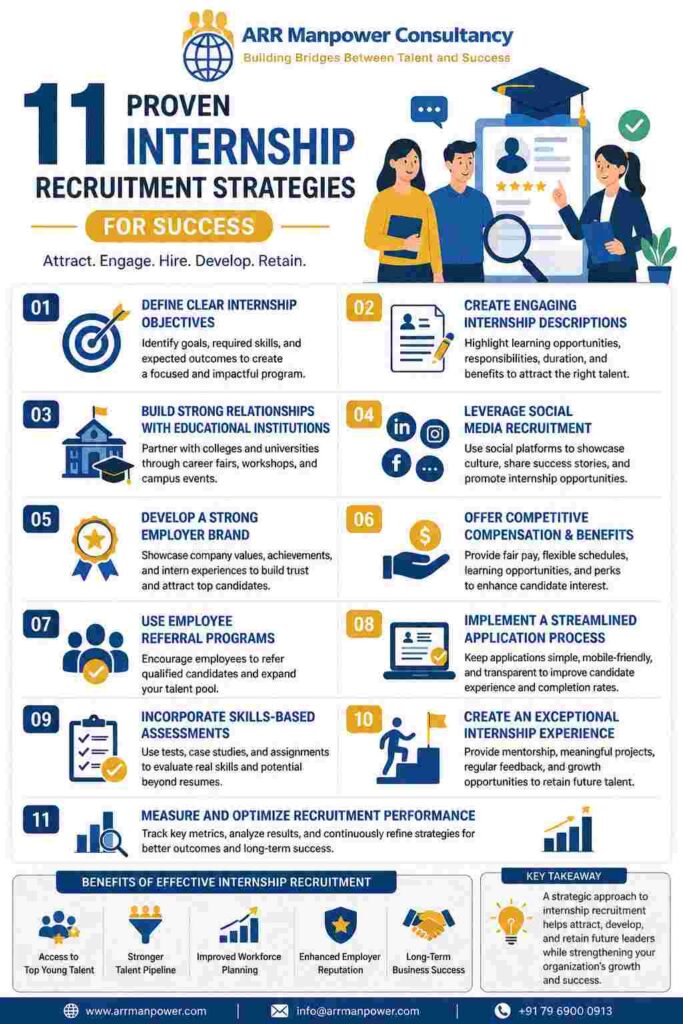
1. Define Clear Internship Objectives
Before launching a recruitment campaign, organizations should establish clear goals for their internship program. Defining objectives helps determine the skills, qualifications, and responsibilities required for each role.
Questions to consider include:
- What projects will interns support?
- Which departments need additional assistance?
- What skills should participants develop?
- Is the internship intended as a pathway to full-time employment?
Clear objectives make it easier to create accurate job descriptions and attract suitable candidates. They also ensure that both employers and interns benefit from the experience.
2. Create Detailed and Engaging Internship Descriptions
A well-written internship description serves as the foundation of successful hiring efforts. Many students evaluate opportunities based on the information provided in job postings.
An effective description should include:
- Role responsibilities
- Learning opportunities
- Required qualifications
- Internship duration
- Work location
- Compensation details
- Potential career growth
Rather than focusing solely on tasks, highlight the skills interns will gain. Students are often motivated by professional development opportunities, mentorship, and practical experience.
Transparent and engaging descriptions can significantly improve application quality and increase candidate interest.
3. Build Strong Relationships with Educational Institutions
Partnering with colleges, universities, and training institutes remains one of the most effective recruitment methods. Educational institutions provide direct access to students actively seeking internship opportunities.
Organizations can strengthen relationships through:
- Campus presentations
- Career fairs
- Faculty partnerships
- Student workshops
- Industry seminars
Maintaining consistent communication with career services departments helps companies stay visible among students. These partnerships can also improve employer reputation within academic communities.
Long-term collaboration often results in a steady flow of qualified applicants across multiple recruitment cycles.
4. Leverage Social Media Recruitment
Social media platforms have become powerful tools for attracting young professionals. Students frequently use digital channels to explore career opportunities and research employers.
Organizations can promote internships through:
- Company updates
- Employee testimonials
- Workplace culture content
- Internship success stories
- Recruitment campaigns
Platforms such as professional networking sites, video-sharing channels, and student-focused communities can help increase visibility among potential candidates.
Authentic content often performs better than traditional advertising because students want insight into workplace culture and career development opportunities.
5. Develop a Strong Employer Brand
Employer branding plays a critical role in attracting talented interns. Students are more likely to apply to organizations known for learning opportunities, supportive environments, and career advancement.
To strengthen employer branding:
- Showcase employee achievements
- Highlight company values
- Share intern success stories
- Promote diversity initiatives
- Demonstrate professional growth opportunities
A positive employer reputation creates trust and encourages candidates to consider internship positions seriously.
Organizations that consistently invest in their employer brand often experience higher application rates and improved candidate quality.
6. Offer Competitive Compensation and Benefits
While some students seek experience above all else, compensation remains an important factor when evaluating opportunities. Paid internships generally attract a broader and more qualified talent pool.
Benefits may include:
- Stipends
- Travel allowances
- Flexible work schedules
- Professional training
- Networking opportunities
- Mentorship programs
Competitive offerings demonstrate that the organization values intern contributions. This approach can improve engagement, productivity, and overall satisfaction.
Companies that provide meaningful benefits often gain a competitive advantage in attracting high-performing candidates.
7. Use Employee Referral Programs
Employee referrals can be a valuable source of internship candidates. Current employees often have connections with students, graduates, or academic networks that align with organizational needs.
Referral programs offer several advantages:
- Faster hiring processes
- Higher-quality applicants
- Improved cultural fit
- Reduced recruitment costs
Encouraging employees to recommend suitable candidates can expand the talent pool while increasing confidence in candidate quality.
A structured referral system with clear guidelines can support consistent recruitment outcomes throughout the year.
8. Implement a Streamlined Application Process
A complicated application process can discourage talented candidates from completing submissions. Students often apply to multiple opportunities simultaneously and may abandon lengthy applications.
To improve candidate experience:
- Simplify application forms
- Minimize unnecessary requirements
- Provide mobile-friendly access
- Communicate timelines clearly
- Offer prompt responses
An efficient process demonstrates professionalism and respect for applicants’ time.
Organizations that prioritize candidate experience often see higher completion rates and stronger engagement during recruitment campaigns.
9. Incorporate Skills-Based Assessments
Traditional resumes do not always provide a complete picture of a candidate’s capabilities. Skills-based assessments allow employers to evaluate practical abilities relevant to internship roles.
Examples include:
- Case studies
- Project assignments
- Technical evaluations
- Problem-solving exercises
- Presentation tasks
Assessments help identify candidates with strong potential, even when they have limited work experience.
By focusing on demonstrated abilities rather than solely academic achievements, employers can make more informed hiring decisions.
10. Create an Exceptional Internship Experience
Recruitment success extends beyond hiring. The quality of the internship experience directly influences future talent acquisition efforts.
A successful internship program should include:
- Structured onboarding
- Defined learning goals
- Regular feedback sessions
- Professional mentorship
- Real-world project involvement
Positive experiences encourage interns to become ambassadors for the organization. They may share recommendations with peers, strengthening future recruitment efforts.
Additionally, satisfied interns are more likely to accept future employment opportunities within the company.
11. Measure and Optimize Recruitment Performance
Continuous improvement is essential for long-term success. Organizations should regularly evaluate recruitment performance to identify strengths and areas for enhancement.
Key metrics may include:
- Application volume
- Candidate quality
- Interview-to-offer ratio
- Offer acceptance rate
- Internship completion rate
- Conversion to full-time employment
Analyzing data helps recruitment teams refine strategies and allocate resources more effectively.
Regular performance reviews also enable organizations to adapt to changing market conditions and student expectations.
Common Challenges in Internship Recruitment
Despite careful planning, organizations often encounter challenges during intern hiring initiatives.
Limited Candidate Awareness
Many students are unaware of available opportunities. Strong marketing efforts and campus partnerships can improve visibility.
High Competition
Popular industries often compete for the same talent pool. Differentiating the internship experience helps attract stronger candidates.
Skills Gaps
Some applicants may lack practical experience. Structured training and mentorship can address this challenge.
Scheduling Constraints
Academic calendars vary across institutions. Flexible recruitment timelines help organizations engage candidates effectively.
Recognizing these challenges allows employers to develop proactive solutions that improve recruitment outcomes.
Benefits of Effective Internship Recruitment
A strategic approach to internship hiring provides advantages for both organizations and candidates.
For Employers
- Access to emerging talent
- Reduced future hiring costs
- Improved workforce planning
- Enhanced employer reputation
- Stronger talent pipelines
For Interns
- Practical industry experience
- Professional networking opportunities
- Skill development
- Career exploration
- Increased employability
When both parties benefit, internship programs become valuable long-term investments.
Future Trends in Internship Recruitment
The internship landscape continues to evolve as technology and workforce expectations change.
Emerging trends include:
- Virtual internship programs
- Hybrid work opportunities
- Artificial intelligence screening tools
- Skills-first hiring approaches
- Increased focus on diversity and inclusion
- Enhanced learning and development programs
Organizations that adapt to these trends will be better positioned to attract and retain talented interns.
Staying informed about evolving recruitment practices helps employers maintain a competitive advantage in talent acquisition.
Conclusion
Successful internship recruitment requires thoughtful planning, consistent engagement, and a strong commitment to candidate development. Organizations that define clear objectives, build academic partnerships, strengthen employer branding, and deliver meaningful internship experiences are more likely to attract exceptional talent.
By implementing these 11 proven internship recruitment strategies, employers can create a sustainable pipeline of future professionals while enhancing organizational growth. Effective internship programs not only fill immediate workforce needs but also contribute to long-term talent acquisition success, making them a critical component of modern recruitment planning.
Furthermore, organizations that invest in continuous improvement of their internship initiatives are better equipped to meet future workforce demands. A well-executed internship program serves as a bridge between academic learning and professional employment, allowing businesses to identify high-potential candidates before they enter the broader job market.
This early engagement helps reduce hiring risks, improve workforce quality, and strengthen succession planning efforts. Companies that consistently nurture intern talent often build a reliable pool of future employees who already understand organizational values, processes, and expectations. In addition, positive internship experiences contribute to stronger employer advocacy, as former interns frequently share their experiences with peers and professional networks.
As competition for skilled talent continues to increase, organizations must view internship recruitment as a strategic investment rather than a short-term staffing solution. By embracing innovation, maintaining strong relationships with educational institutions, and prioritizing candidate development, employers can maximize the value of their internship programs. Ultimately, a thoughtful and results-driven approach to internship recruitment creates lasting benefits for businesses, interns, and the overall workforce ecosystem.