Introduction
Hiring the right talent is one of the most critical factors influencing business growth. Organizations invest significant time, money, and effort in attracting, evaluating, and onboarding employees. However, without measurable data, it becomes difficult to understand whether hiring strategies are delivering the desired outcomes.
This is where recruitment Key Performance Indicators (KPIs) become essential. These metrics help organizations assess the effectiveness of their hiring process, identify bottlenecks, improve candidate experiences, and make data-driven decisions. Business leaders who regularly monitor recruitment performance can optimize workforce planning, reduce hiring costs, and secure top talent faster than competitors.
This article explores fourteen important recruitment KPIs that every business leader should monitor to build a stronger and more efficient workforce.
https://arrmanpowerconsultancy.com
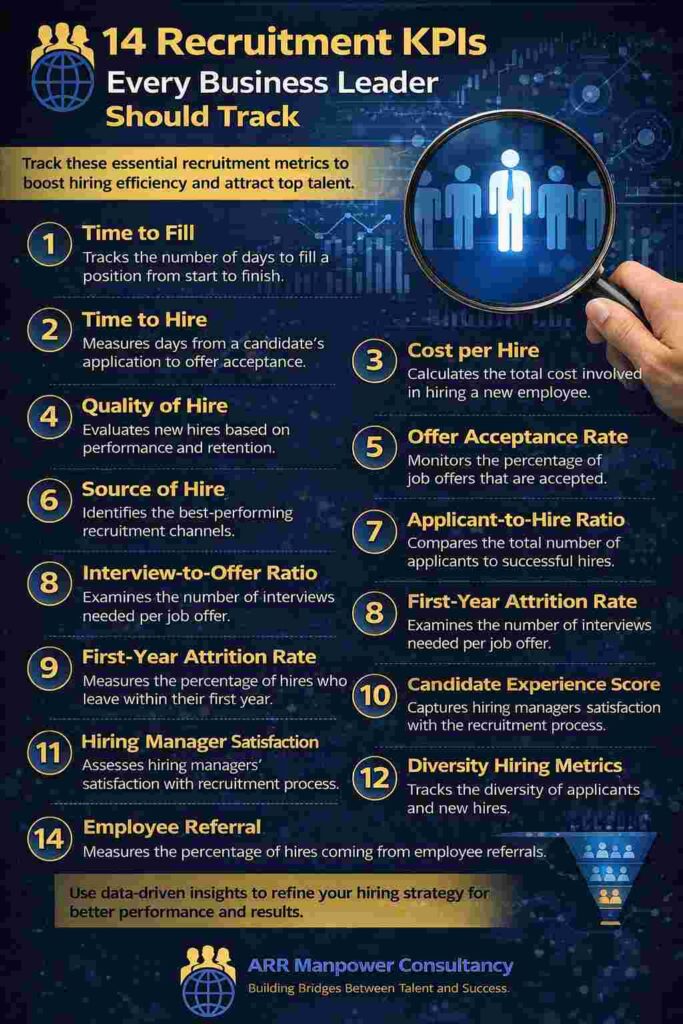
1. Time to Fill
Time to Fill measures the number of days between opening a position and having a candidate accept the offer.
Why It Matters
A lengthy hiring cycle can delay projects, increase workload for existing employees, and impact overall productivity. Monitoring this metric helps organizations understand how quickly they can respond to staffing needs.
Formula
Time to Fill = Date Position Filled − Date Position Opened
How to Improve
- Build a talent pipeline in advance.
- Streamline approval processes.
- Use applicant tracking systems.
- Maintain clear job descriptions.
Reducing hiring delays allows organizations to remain agile in competitive markets.
2. Time to Hire
While often confused with Time to Fill, Time to Hire measures how long it takes from the moment a candidate enters the hiring process until they accept the offer.
Why It Matters
This metric highlights the efficiency of candidate evaluation and decision-making procedures.
Formula
Time to Hire = Offer Acceptance Date − Candidate Application Date
Benefits of Tracking
- Improves candidate experience.
- Reduces the risk of losing top applicants.
- Reveals bottlenecks in interviews and approvals.
Organizations with shorter hiring cycles often gain access to stronger talent pools.
3. Cost per Hire
Cost per Hire evaluates the total expense associated with filling a vacancy.
Why It Matters
Understanding recruitment spending helps leaders allocate budgets more effectively and identify cost-saving opportunities.
Formula
Cost per Hire = Total Recruitment Costs ÷ Number of Hires
Costs Included
- Job advertisements
- Recruitment agency fees
- Technology expenses
- Background checks
- Interview costs
- Recruiter salaries
Tracking this KPI ensures resources are utilized efficiently.
4. Quality of Hire
Quality of Hire measures the value a new employee brings to the organization after joining.
Why It Matters
Hiring quickly means little if employees fail to perform or stay with the company. This KPI focuses on long-term success.
Common Evaluation Factors
- Performance ratings
- Productivity levels
- Cultural alignment
- Retention rates
- Manager satisfaction
High-quality hires contribute significantly to organizational growth and profitability.
5. Offer Acceptance Rate
Offer Acceptance Rate measures how many candidates accept employment offers compared to the total offers extended.
Formula
Offer Acceptance Rate = (Accepted Offers ÷ Total Offers Made) × 100
Why It Matters
A low acceptance rate may indicate issues with compensation, employer branding, communication, or candidate experience.
Improvement Strategies
- Offer competitive compensation packages.
- Maintain transparent communication.
- Highlight growth opportunities.
- Strengthen employer reputation.
This metric provides valuable insights into how candidates perceive the organization.
6. Source of Hire
Source of Hire identifies where successful candidates originate.
Common Sources
- Job boards
- Employee referrals
- Recruitment agencies
- Social media platforms
- Career fairs
- Company websites
Why It Matters
Understanding which channels produce the best hires allows organizations to invest resources more strategically.
Benefits
- Optimizes recruitment budgets.
- Improves sourcing effectiveness.
- Enhances workforce planning.
Knowing where top performers come from helps organizations focus on high-performing talent channels.
7. Applicant-to-Interview Ratio
This KPI measures the number of applicants required to generate one interview.
Formula
Applicant-to-Interview Ratio = Total Applications ÷ Number of Interviews
Why It Matters
A high ratio may indicate poor job targeting, unclear requirements, or ineffective sourcing strategies.
Insights Gained
- Job description effectiveness
- Candidate quality
- Recruitment marketing performance
Organizations can refine hiring campaigns based on these findings.
8. Interview-to-Hire Ratio
Interview-to-Hire Ratio tracks how many interviews are conducted before a successful hire is made.
Formula
Interview-to-Hire Ratio = Total Interviews ÷ Total Hires
Why It Matters
This metric reveals whether candidate screening processes are effective.
Benefits
- Reduces wasted interview time.
- Improves recruiter efficiency.
- Enhances candidate selection accuracy.
Lower ratios often indicate stronger pre-screening practices.
9. Candidate Experience Score
Candidate Experience Score measures how applicants perceive the hiring process.
Why It Matters
Every applicant interacts with your brand. A negative experience can impact reputation and discourage future applications.
Measurement Methods
- Post-interview surveys
- Candidate feedback forms
- Net Promoter Score (NPS)
Areas to Evaluate
- Communication quality
- Interview professionalism
- Process transparency
- Response times
Positive experiences strengthen employer branding and improve talent attraction.
10. Recruitment Funnel Conversion Rate
This KPI tracks how candidates progress through different stages of the hiring funnel.
Typical Stages
- Application
- Screening
- Interview
- Assessment
- Offer
- Hire
Why It Matters
Monitoring conversion rates helps identify stages where candidates drop out.
Benefits
- Reveals process inefficiencies.
- Supports data-driven improvements.
- Enhances hiring effectiveness.
Organizations can make targeted adjustments to improve overall recruitment outcomes.
11. Employee Referral Rate
Employee Referral Rate measures the percentage of hires generated through internal referrals.
Formula
Employee Referral Rate = (Referral Hires ÷ Total Hires) × 100
Why It Matters
Referred candidates often demonstrate stronger cultural alignment and longer retention.
Advantages
- Faster hiring process
- Lower recruitment costs
- Improved employee engagement
Many organizations consider referrals one of their most reliable hiring sources.
12. New Hire Retention Rate
New Hire Retention Rate measures how many employees remain with the company after a specified period, such as six months or one year.
Formula
Retention Rate = (Employees Remaining ÷ Total New Hires) × 100
Why It Matters
High turnover among recent hires often signals issues in candidate selection, onboarding, or workplace culture.
Improvement Strategies
- Enhance onboarding programs.
- Set clear expectations.
- Strengthen manager support.
- Foster employee engagement.
Retaining quality employees significantly reduces future hiring costs.
13. Diversity Hiring Metrics
Diversity Hiring Metrics track the representation of various demographic groups throughout the recruitment process.
Why It Matters
Diverse teams contribute broader perspectives, innovation, and improved decision-making.
Areas to Monitor
- Applicant diversity
- Interview diversity
- Hiring diversity
- Promotion diversity
Business Benefits
- Increased innovation
- Stronger employer reputation
- Better employee engagement
- Expanded talent pools
Monitoring diversity metrics helps organizations build more inclusive workplaces.
14. Hiring Manager Satisfaction
Hiring Manager Satisfaction measures how satisfied managers are with recruitment outcomes and new hires.
Why It Matters
Managers directly experience the impact of hiring decisions. Their feedback provides valuable insight into recruitment effectiveness.
Measurement Methods
- Satisfaction surveys
- Performance reviews
- Structured feedback sessions
Key Evaluation Areas
- Candidate quality
- Hiring speed
- Communication effectiveness
- Overall process satisfaction
High satisfaction levels often indicate alignment between recruitment teams and business objectives.
How Recruitment KPIs Support Strategic Business Growth
Recruitment metrics are not simply operational measurements. They directly influence broader business outcomes.
When organizations consistently track hiring performance, they can:
- Reduce workforce shortages.
- Improve productivity.
- Lower recruitment expenses.
- Increase employee retention.
- Enhance workforce quality.
- Strengthen employer branding.
- Support long-term growth strategies.
Data-driven hiring allows leadership teams to make informed decisions rather than relying on assumptions.
Building an Effective Recruitment Dashboard
Tracking multiple metrics becomes easier with a centralized dashboard.
Essential Dashboard Components
- Hiring speed metrics
- Cost analysis
- Source effectiveness
- Candidate experience indicators
- Retention data
- Diversity statistics
Best Practices
- Review metrics monthly.
- Compare performance against benchmarks.
- Set measurable hiring goals.
- Share insights with stakeholders.
- Continuously refine processes.
A well-designed dashboard transforms recruitment data into actionable business intelligence.
Common Mistakes When Measuring Recruitment Performance
Many organizations collect hiring data but fail to use it effectively.
Mistake 1: Focusing Only on Speed
Fast hiring does not always result in strong employees. Quality should remain a priority.
Mistake 2: Ignoring Candidate Feedback
Applicant perceptions directly affect employer reputation and future talent attraction.
Mistake 3: Tracking Too Many Metrics
Focus on indicators that align with organizational goals rather than measuring everything.
Mistake 4: Failing to Act on Insights
Data becomes valuable only when organizations use it to improve hiring practices.
Avoiding these mistakes ensures recruitment KPIs drive meaningful improvements.
Conclusion
Successful hiring requires more than filling vacancies. Organizations must continuously evaluate how effectively their recruitment processes attract, assess, and retain talent. By tracking key metrics such as Time to Fill, Cost per Hire, Quality of Hire, Offer Acceptance Rate, Candidate Experience Score, and New Hire Retention Rate, business leaders gain valuable insights into workforce performance.
The fourteen recruitment KPIs discussed in this article provide a comprehensive framework for measuring hiring success. When monitored consistently, these indicators help organizations improve efficiency, reduce costs, enhance candidate experiences, and secure high-performing employees who contribute to long-term business growth.
In an increasingly competitive talent market, organizations that rely on data-driven hiring strategies are better positioned to attract exceptional talent and achieve sustainable success.
Beyond measuring performance, recruitment KPIs help organizations build a sustainable talent strategy that supports future business objectives. Consistently analyzing hiring data enables leaders to anticipate workforce needs, improve planning accuracy, and respond quickly to changing market conditions.
These metrics also create greater accountability across recruitment teams and hiring managers. As competition for skilled professionals continues to grow, businesses that leverage recruitment insights effectively will be better positioned to attract top talent, strengthen employee engagement, and maintain a long-term competitive advantage in their industry.