Introduction
In today’s highly competitive professional landscape, skills and experience alone are no longer enough to stand out. Whether you are a corporate executive, entrepreneur, consultant, freelancer, or job seeker, how people perceive you can significantly impact your career opportunities. This is where personal branding becomes essential.
A strong professional reputation helps individuals build credibility, attract opportunities, and establish authority within their industries. It allows professionals to communicate their unique value, showcase expertise, and create meaningful connections with peers, clients, and employers.
Many successful leaders are recognized not only for what they do but also for how they present themselves to the world. Their reputation, expertise, and consistent messaging create a memorable identity that differentiates them from others.
This article explores nine effective strategies that can help professionals strengthen their visibility, build trust, and create a lasting impression in their respective fields.
https://arrmanpowerconsultancy.com/
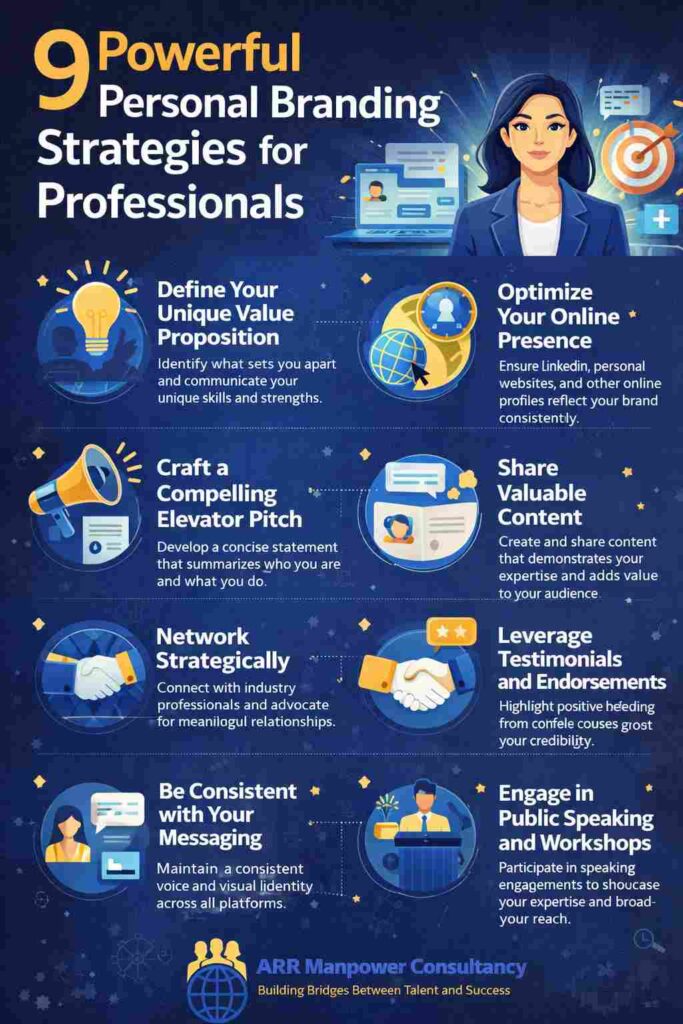
1. Define Your Unique Professional Identity
The foundation of any successful professional image begins with self-awareness. Before promoting yourself, you must understand what makes you different from others in your field.
Start by identifying:
- Your key strengths
- Professional achievements
- Industry expertise
- Personal values
- Career goals
- Areas of specialization
Ask yourself what people usually seek your advice for and what unique skills you bring to the table. The answers can help shape your professional identity.
For example, two marketing professionals may have similar qualifications, but one may specialize in digital growth strategies while the other excels in brand storytelling. Highlighting these distinctions creates a clearer and more memorable professional image.
When your identity is well-defined, it becomes easier to communicate your value consistently across various platforms and interactions.
2. Develop a Consistent Online Presence
The internet is often the first place people go when researching professionals. Potential employers, clients, recruiters, and business partners frequently review online profiles before making decisions.
Consistency across digital channels helps create trust and credibility. Ensure that your:
- Professional photo is current and appropriate
- Biography reflects your expertise
- Job titles are accurate
- Contact information is updated
- Professional achievements are highlighted
Your messaging should remain aligned across platforms such as LinkedIn, company websites, professional portfolios, and industry communities.
A consistent online presence reinforces your expertise and makes it easier for people to recognize and remember you.
Professionals who actively manage their digital footprint are often viewed as more reliable and engaged within their industries.
3. Create Valuable Content Regularly
Content creation is one of the most effective ways to demonstrate expertise and build authority.
Sharing insights allows professionals to showcase their knowledge while helping others solve problems or learn new concepts.
Consider creating:
- Blog articles
- Industry commentary
- LinkedIn posts
- Case studies
- Whitepapers
- Videos
- Podcasts
- Webinars
Focus on providing genuine value rather than constant self-promotion. Educational and insightful content tends to attract more engagement and establish trust.
For example, a financial consultant might share investment trends, while a software engineer could discuss emerging technologies and best practices.
Over time, consistent content creation positions you as a knowledgeable resource within your field.
4. Build a Strong Professional Network
Relationships play a crucial role in career advancement. A strong network can open doors to new opportunities, partnerships, referrals, and industry insights.
Networking should be viewed as a long-term investment rather than a transactional activity.
Effective networking practices include:
- Attending industry events
- Participating in conferences
- Joining professional associations
- Engaging in online communities
- Supporting colleagues and peers
- Following up after introductions
Building meaningful relationships requires authenticity. Instead of focusing solely on what others can do for you, seek ways to contribute and provide value.
People are more likely to remember professionals who offer support, share useful information, and demonstrate genuine interest in others.
Strong networks often become valuable sources of recommendations and career opportunities.
5. Establish Thought Leadership
Thought leadership involves becoming a trusted voice within your industry.
Professionals who consistently share informed perspectives on trends, challenges, and innovations often gain recognition as experts.
To establish authority:
- Share original insights
- Analyze industry developments
- Publish research findings
- Speak at events
- Participate in panel discussions
- Contribute to industry publications
Thought leadership is not about claiming to know everything. Instead, it involves contributing meaningful perspectives that help others better understand important topics.
When professionals consistently provide valuable insights, they become go-to resources within their networks and industries.
This increased visibility can lead to speaking invitations, consulting opportunities, media interviews, and leadership roles.
6. Showcase Achievements Strategically
Many professionals work hard but fail to communicate their accomplishments effectively.
Sharing achievements is not about boasting; it is about demonstrating credibility and competence.
Examples of accomplishments worth highlighting include:
- Successful projects
- Awards and recognitions
- Certifications
- Published work
- Revenue growth contributions
- Process improvements
- Leadership initiatives
- Client success stories
Whenever possible, use measurable results.
For example:
- Increased sales by 30%
- Reduced operational costs by 20%
- Led a team of 50 employees
- Improved customer retention rates
Specific outcomes provide evidence of your capabilities and make your achievements more compelling.
Professionals who communicate results effectively often gain greater trust and recognition.
7. Invest in Continuous Learning
Industries evolve rapidly, making continuous learning essential for long-term success.
Professionals who remain committed to development demonstrate adaptability and forward-thinking leadership.
Ways to continue learning include:
- Taking certification courses
- Attending workshops
- Reading industry publications
- Participating in training programs
- Following industry experts
- Pursuing advanced education
Learning not only enhances expertise but also provides new insights that can be shared with your audience.
Displaying a commitment to growth sends a powerful message about professionalism and dedication.
Employers and clients are more likely to trust individuals who stay informed about current trends and emerging technologies.
Continuous development strengthens credibility and helps maintain relevance in a changing marketplace.
8. Build Trust Through Authenticity
Authenticity is one of the most valuable qualities professionals can cultivate.
People are increasingly drawn to individuals who are genuine, transparent, and relatable.
Rather than creating an unrealistic image, focus on presenting an honest representation of your expertise, experiences, and values.
Authenticity can be demonstrated through:
- Honest communication
- Consistent behavior
- Ethical decision-making
- Genuine interactions
- Transparent storytelling
Sharing lessons learned from challenges can be just as powerful as discussing successes.
When professionals openly discuss their journeys, they often create stronger connections with audiences and colleagues.
Trust develops when actions consistently align with words. Over time, this trust becomes a major competitive advantage.
Authenticity fosters stronger relationships and encourages long-term professional loyalty.
9. Monitor and Strengthen Your Reputation
Your reputation is one of your most valuable professional assets.
Actively monitoring how others perceive you allows you to identify opportunities for improvement and maintain a positive image.
Consider regularly reviewing:
- Social media profiles
- Search engine results
- Online mentions
- Professional recommendations
- Client feedback
- Peer endorsements
Encourage satisfied clients, colleagues, and supervisors to provide testimonials or recommendations when appropriate.
Constructive feedback can also provide valuable insights into areas that may require attention.
A proactive approach to reputation management helps ensure that your professional image accurately reflects your expertise and values.
Professionals who consistently protect and strengthen their reputation often enjoy greater career stability and increased opportunities.
Common Personal Branding Mistakes to Avoid
While building a professional reputation, many individuals unintentionally make mistakes that limit their effectiveness.
Some common pitfalls include:
Inconsistent Messaging
Using different professional descriptions across platforms can create confusion and weaken credibility.
Over-Promotion
Constant self-promotion may discourage engagement. Balance personal achievements with valuable content and meaningful interactions.
Neglecting Online Profiles
Outdated information can create a poor impression and reduce trust.
Lack of Engagement
Building visibility requires participation. Simply creating profiles is not enough.
Ignoring Feedback
Constructive feedback can reveal opportunities for growth and improvement.
Avoiding these mistakes can significantly enhance long-term professional success.
The Long-Term Benefits of a Strong Personal Brand
Investing in your professional reputation offers numerous advantages, including:
- Increased career opportunities
- Greater professional credibility
- Enhanced industry recognition
- Improved networking potential
- Stronger client trust
- Higher leadership visibility
- Better business development opportunities
- Increased confidence and influence
Over time, these benefits compound and contribute to sustainable career growth.
Professionals with a strong reputation often experience greater resilience during industry changes because they have established trust and recognition within their networks.
Conclusion
Building a successful professional identity is not an overnight process. It requires clarity, consistency, authenticity, and ongoing effort. By defining your unique strengths, maintaining a strong online presence, creating valuable content, expanding your network, and continuously developing your skills, you can establish yourself as a respected authority in your field.
The most effective professionals understand that reputation is built through repeated actions and meaningful contributions. Every interaction, piece of content, and professional achievement contributes to how others perceive you.
By implementing these nine powerful strategies, professionals can strengthen their visibility, earn trust, and create lasting career opportunities. In an increasingly competitive world, investing in your professional reputation is one of the smartest decisions you can make for long-term success.
Building a successful professional identity is not an overnight process. It requires clarity, consistency, authenticity, and ongoing effort. By defining your unique strengths, maintaining a strong online presence, creating valuable content, expanding your network, and continuously developing your skills, you can establish yourself as a respected authority in your field.