Introduction
Employee retention has become one of the biggest challenges for organizations across industries. While companies invest significant resources in recruiting top talent, many overlook the importance of creating a strong onboarding experience. The first few weeks and months of a new hire’s journey often determine whether they become a long-term contributor or start looking for opportunities elsewhere.
A well-structured onboarding process helps employees feel welcomed, supported, and confident in their new roles. It accelerates productivity, improves engagement, and strengthens the connection between employees and the organization. More importantly, effective onboarding reduces turnover by ensuring that new hires understand expectations, company culture, and growth opportunities from the beginning.
Organizations that prioritize onboarding often experience higher employee satisfaction, stronger team collaboration, and improved overall performance. In this article, we’ll explore eight proven onboarding strategies that can significantly improve retention and help businesses build a more committed workforce.
https://arrmanpowerconsultancy.com
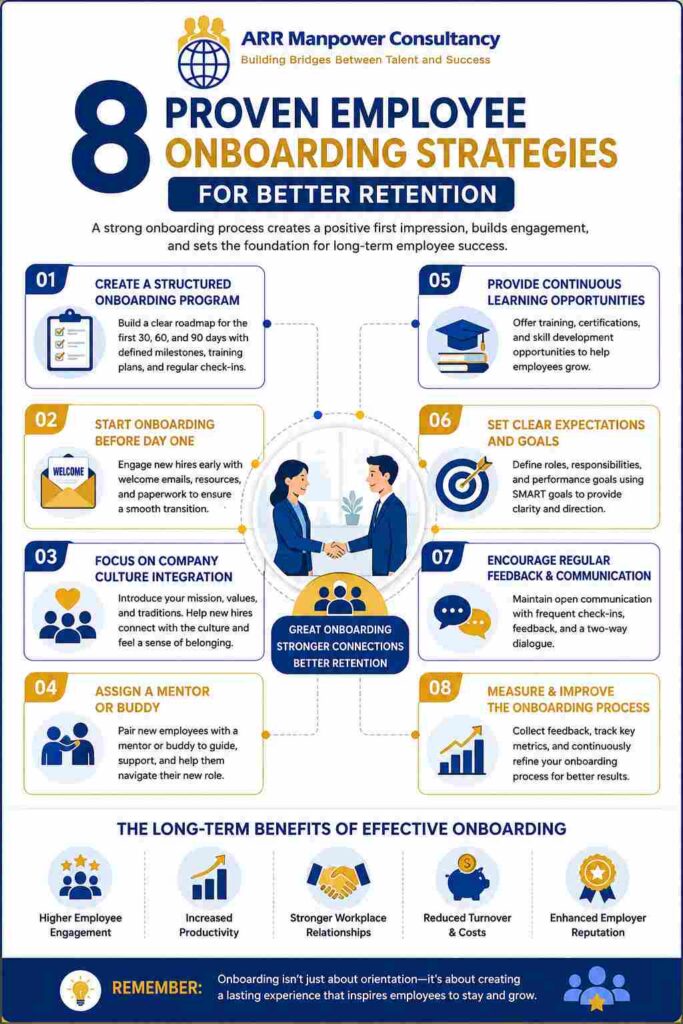
1. Create a Structured Onboarding Program
One of the most effective ways to improve retention is by implementing a structured onboarding program. Many organizations make the mistake of treating onboarding as a one-day orientation session. However, successful onboarding extends beyond paperwork and introductions.
A structured program provides new employees with a clear roadmap for their first 30, 60, and 90 days. It outlines responsibilities, goals, training schedules, and performance expectations.
Benefits of a Structured Program
- Reduces uncertainty and confusion
- Helps employees adapt more quickly
- Improves confidence in job responsibilities
- Creates consistency across departments
Best Practices
- Develop a formal onboarding timeline
- Assign learning milestones
- Schedule regular check-ins
- Provide access to training resources
When employees know what to expect and understand how their success will be measured, they are more likely to remain engaged and committed.
2. Start Onboarding Before Day One
The onboarding process should begin before the employee officially starts work. This phase, often referred to as preboarding, can significantly impact a new hire’s first impression of the company.
Preboarding helps employees feel connected and prepared before their arrival. It reduces anxiety and creates excitement about joining the organization.
Effective Preboarding Activities
- Send welcome emails
- Share company information and resources
- Provide organizational charts
- Complete paperwork digitally
- Introduce team members virtually
Companies can also send welcome kits that include company merchandise, employee handbooks, and personalized messages from leadership.
Why It Matters
New hires often experience uncertainty between accepting an offer and their first day. Consistent communication during this period reassures employees that they made the right decision.
A positive preboarding experience sets the foundation for long-term engagement and loyalty.
3. Focus on Company Culture Integration
Understanding company culture is just as important as learning job responsibilities. Employees who align with organizational values are more likely to feel connected and stay with the company longer.
Culture integration should be an intentional part of the onboarding process rather than something employees are expected to discover on their own.
Ways to Introduce Company Culture
- Share the organization’s mission and vision
- Explain core values and behaviors
- Highlight company traditions and events
- Encourage participation in team activities
- Showcase success stories from existing employees
The Role of Leadership
Leaders play a critical role in communicating culture. When executives actively engage with new hires, employees gain a deeper understanding of the organization’s purpose and direction.
A strong cultural connection helps employees feel like they belong, which is a major factor in retention.
4. Assign a Mentor or Buddy
Starting a new job can be overwhelming. Assigning a mentor or onboarding buddy provides employees with a trusted resource who can answer questions and offer guidance.
A mentor helps bridge the gap between formal training and day-to-day workplace experiences.
Responsibilities of a Mentor
- Introduce workplace processes
- Answer informal questions
- Provide career guidance
- Offer encouragement and support
- Help build workplace relationships
Benefits for New Employees
Employees with mentors often adapt faster because they have someone to turn to when challenges arise. This support system reduces feelings of isolation and increases confidence.
Research consistently shows that employees who develop strong workplace relationships are more likely to remain with an organization.
5. Provide Continuous Learning Opportunities
Learning should not end after orientation. Continuous development is essential for keeping employees engaged and motivated.
Many employees leave organizations because they feel stagnant or lack opportunities for growth. Providing ongoing training demonstrates that the company is invested in their success.
Types of Learning Opportunities
- Technical skills training
- Leadership development programs
- Industry certifications
- Online learning platforms
- Cross-functional projects
Building a Learning Culture
Encourage employees to set professional development goals and provide resources to achieve them. Managers should regularly discuss learning opportunities during one-on-one meetings.
When employees see a clear path for growth, they are more likely to envision a future with the organization.
6. Set Clear Expectations and Goals
One of the primary reasons employees become disengaged is a lack of clarity regarding their roles and responsibilities.
New hires need to understand what success looks like and how their work contributes to organizational objectives.
Establishing Clear Expectations
Managers should communicate:
- Job responsibilities
- Performance standards
- Key performance indicators
- Team objectives
- Reporting structures
Implement SMART Goals
Goals should be:
- Specific
- Measurable
- Achievable
- Relevant
- Time-bound
Clear expectations eliminate confusion and provide employees with a sense of direction.
Impact on Retention
Employees who understand their responsibilities and performance expectations are less likely to experience frustration. This clarity promotes confidence, engagement, and long-term commitment.
7. Encourage Regular Feedback and Communication
Open communication is essential during the onboarding process. Employees need opportunities to ask questions, share concerns, and receive constructive feedback.
Regular feedback helps identify issues before they become major problems.
Effective Feedback Practices
- Weekly check-ins during the first month
- Bi-weekly meetings during the following months
- Anonymous surveys
- Open-door communication policies
- Performance discussions
Creating a Two-Way Conversation
Feedback should not be limited to managers evaluating employees. New hires should also be encouraged to share their experiences and suggestions.
Questions might include:
- What challenges are you facing?
- What additional support do you need?
- How can we improve the onboarding experience?
Benefits of Ongoing Communication
Employees who feel heard and valued are more likely to remain engaged. Consistent communication strengthens trust and helps employees build positive relationships with leadership.
8. Measure and Improve the Onboarding Process
An onboarding program should evolve based on employee feedback and organizational needs.
Companies that regularly evaluate their onboarding efforts can identify weaknesses and make improvements that enhance retention outcomes.
Metrics to Track
Consider monitoring:
- Employee retention rates
- Time-to-productivity
- New hire satisfaction scores
- Training completion rates
- Employee engagement levels
Gathering Feedback
Collect feedback through:
- Surveys
- Interviews
- Focus groups
- Manager assessments
Continuous Improvement
Analyze data regularly to identify trends and opportunities for enhancement. Even small adjustments can have a significant impact on employee experiences.
Organizations that treat onboarding as an ongoing process rather than a one-time event are more likely to achieve long-term retention success.
Common Onboarding Mistakes to Avoid
While implementing effective onboarding strategies is important, organizations should also be aware of common mistakes that negatively affect retention.
Information Overload
Providing too much information at once can overwhelm new employees. Break training into manageable segments and prioritize essential knowledge.
Lack of Personalization
Every employee has unique skills, experiences, and learning preferences. Tailoring onboarding experiences can improve engagement and effectiveness.
Insufficient Manager Involvement
Managers who fail to actively participate in onboarding may unintentionally create a disconnect. Regular interaction helps employees feel supported.
Ignoring Feedback
Employee feedback is a valuable source of insight. Organizations that ignore concerns risk losing talented individuals early in their tenure.
Ending Onboarding Too Soon
Effective onboarding often extends for several months. Ongoing support ensures employees continue to develop and integrate successfully.
The Long-Term Impact of Effective Onboarding
A successful onboarding strategy influences far more than an employee’s first few weeks. It shapes their entire experience within the organization.
Improved Employee Engagement
Employees who receive proper onboarding are more likely to feel connected to their work and motivated to contribute.
Increased Productivity
Well-trained employees reach full productivity faster, benefiting both the individual and the organization.
Stronger Workplace Relationships
Onboarding creates opportunities for collaboration and relationship-building, which contribute to a positive work environment.
Reduced Recruitment Costs
Retaining employees longer reduces the need for frequent hiring, lowering recruitment and training expenses.
Enhanced Employer Reputation
Organizations known for exceptional onboarding experiences often attract higher-quality candidates and strengthen their employer brand.
Conclusion
Employee retention begins long before performance reviews and career advancement discussions. It starts during onboarding. A thoughtful and well-executed onboarding process helps employees feel welcomed, prepared, and connected from the very beginning.
By creating a structured program, starting engagement before day one, integrating company culture, assigning mentors, supporting continuous learning, setting clear expectations, encouraging regular feedback, and continuously improving onboarding efforts, organizations can significantly increase retention rates.
Businesses that invest in these proven strategies not only reduce turnover but also create a more engaged, productive, and loyal workforce. In today’s competitive talent market, effective onboarding is no longer optional—it is a critical component of long-term organizational success.
Companies that prioritize the employee experience from the start are better positioned to retain top talent, foster growth, and build a strong foundation for future success.