Introduction
In today’s competitive employment market, qualifications and experience alone are often not enough to secure the ideal position. Many opportunities are never publicly advertised and are instead filled through professional connections and referrals. This reality makes networking one of the most valuable tools available to job seekers.
Building meaningful professional relationships can help individuals access hidden job opportunities, gain industry insights, receive mentorship, and establish a strong personal brand. Effective networking is not about collecting business cards or sending countless connection requests. It is about creating authentic relationships that provide mutual value over time.
Whether you are a recent graduate, an experienced professional seeking career growth, or someone transitioning into a new industry, developing strong networking habits can significantly improve your chances of success. This guide explores 13 powerful strategies that can help job seekers expand their professional circles and uncover valuable career opportunities.
https://arrmanpowerconsultancy.com
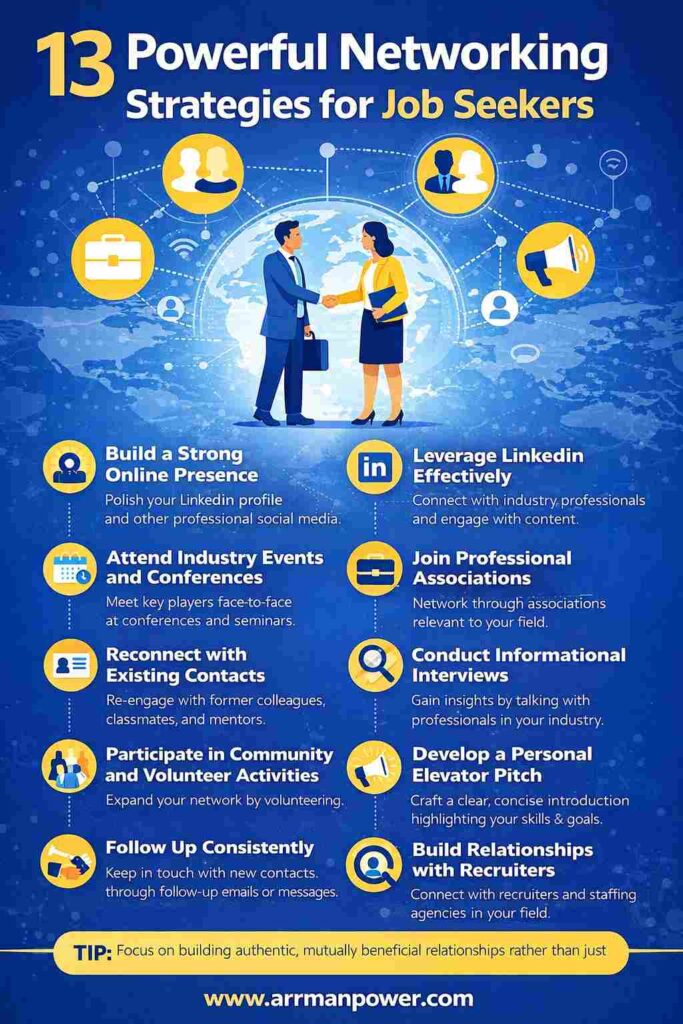
1. Build a Strong Professional Online Presence
Before reaching out to industry professionals, ensure your online presence reflects your skills, experience, and career goals.
Professional networking often begins online. Recruiters, hiring managers, and industry leaders frequently review social media profiles and professional platforms before engaging with potential candidates.
Key steps include:
- Creating a complete and updated LinkedIn profile
- Using a professional profile photo
- Writing a compelling headline and summary
- Showcasing achievements and certifications
- Requesting recommendations from colleagues and supervisors
A polished online presence establishes credibility and makes it easier for others to understand your expertise.
2. Leverage LinkedIn Effectively
LinkedIn remains one of the most powerful platforms for professional networking and career development.
Many job seekers create a profile but fail to engage actively. To maximize results:
- Connect with professionals in your target industry
- Follow companies you admire
- Join relevant professional groups
- Comment thoughtfully on industry discussions
- Share articles and insights related to your field
Regular engagement increases visibility and helps establish you as an active participant in your professional community.
3. Attend Industry Events and Conferences
Industry events provide excellent opportunities to meet professionals who share similar interests and career goals.
Whether attending in-person conferences, seminars, workshops, or virtual events, these gatherings offer direct access to decision-makers and industry experts.
To make the most of such events:
- Research attendees and speakers beforehand
- Prepare thoughtful questions
- Introduce yourself confidently
- Exchange contact information
- Follow up after the event
Consistent attendance can help build a strong professional reputation within your industry.
4. Join Professional Associations
Professional associations bring together individuals working within specific industries or occupations.
Membership often provides access to:
- Networking events
- Educational resources
- Job boards
- Industry publications
- Mentorship opportunities
Joining relevant organizations demonstrates commitment to your profession and helps you stay informed about industry trends while expanding your network.
5. Reconnect with Existing Contacts
Many job seekers focus entirely on meeting new people while overlooking the value of existing relationships.
Former colleagues, classmates, professors, managers, and clients can become valuable sources of information and referrals.
Reach out periodically to:
- Share career updates
- Ask about industry developments
- Offer congratulations on achievements
- Schedule virtual coffee chats
Maintaining existing relationships often produces stronger opportunities than constantly pursuing new connections.
6. Conduct Informational Interviews
Informational interviews allow job seekers to learn directly from experienced professionals without asking for a job.
These conversations provide valuable insights into:
- Industry trends
- Career paths
- Required skills
- Organizational culture
- Professional challenges
When requesting an informational interview:
- Be respectful of the person’s time
- Prepare thoughtful questions
- Focus on learning rather than job requests
- Express gratitude afterward
These interactions can lead to valuable connections and future opportunities.
7. Participate in Community and Volunteer Activities
Volunteering can be a powerful way to meet professionals while contributing to meaningful causes.
Community involvement demonstrates qualities employers value, including:
- Leadership
- Teamwork
- Initiative
- Communication skills
- Commitment to service
Volunteer activities frequently introduce job seekers to professionals from various industries, creating opportunities for genuine relationship-building outside traditional networking settings.
8. Develop a Personal Elevator Pitch
An elevator pitch is a concise introduction that communicates who you are, what you do, and what you are seeking professionally.
A strong pitch should include:
- Your professional background
- Key skills and strengths
- Career interests
- The value you bring
For example:
“I am a marketing professional with five years of experience in digital campaigns and content strategy. I specialize in helping brands increase online engagement and am currently exploring opportunities in growth marketing.”
Practicing your introduction helps you communicate confidently during networking interactions.
9. Engage in Online Professional Communities
Industry-specific online communities offer valuable opportunities to connect with professionals worldwide.
Popular options include:
- LinkedIn groups
- Professional forums
- Industry discussion boards
- Slack communities
- Virtual networking groups
Meaningful participation can help establish your expertise and create relationships with professionals who share similar interests.
Focus on contributing valuable insights rather than promoting yourself excessively.
10. Follow Up Consistently
One of the most overlooked aspects of networking is follow-up.
Meeting someone once rarely leads to meaningful professional opportunities. Strong relationships develop through ongoing communication.
Effective follow-up practices include:
- Sending thank-you messages
- Sharing useful resources
- Congratulating contacts on achievements
- Checking in periodically
- Maintaining genuine interest in their work
Consistency helps transform initial introductions into long-term professional relationships.
11. Offer Value Before Asking for Help
Successful networking is based on mutual benefit rather than one-sided requests.
Before asking for assistance, consider how you can provide value to others.
Ways to contribute include:
- Sharing relevant articles
- Making introductions
- Offering technical expertise
- Providing feedback
- Supporting professional initiatives
People are generally more willing to assist individuals who have demonstrated generosity and genuine interest in helping others succeed.
12. Build Relationships with Recruiters
Recruiters can play a significant role in connecting candidates with suitable opportunities.
Establishing positive relationships with recruiters involves:
- Maintaining an updated resume
- Communicating career goals clearly
- Responding promptly to inquiries
- Demonstrating professionalism
- Staying engaged even when not actively job searching
A recruiter who understands your strengths and aspirations may think of you when relevant opportunities arise.
13. Create a Long-Term Networking Plan
Networking should not begin only when a job search starts.
Professionals who maintain strong networks throughout their careers are often better positioned to access opportunities when they arise.
A sustainable networking plan may include:
- Connecting with new professionals monthly
- Attending industry events regularly
- Participating in professional groups
- Scheduling informational conversations
- Sharing industry insights online
Treat networking as an ongoing professional development activity rather than a short-term job search tactic.
Common Networking Mistakes to Avoid
While networking offers significant benefits, certain mistakes can limit effectiveness.
Avoid the following:
Being Transactional
Approaching people only when you need something can damage relationships. Focus on building genuine connections.
Neglecting Follow-Up
Failing to maintain contact often causes promising connections to fade quickly.
Talking More Than Listening
Strong networking involves understanding others’ experiences and perspectives.
Sending Generic Messages
Personalized communication demonstrates professionalism and sincerity.
Ignoring Existing Connections
Your current network may already contain valuable contacts who can assist your career growth.
Measuring Networking Success
Networking success should not be measured solely by job offers.
Other indicators include:
- Growth in professional contacts
- Increased industry knowledge
- Invitations to events
- Mentorship opportunities
- Referrals and recommendations
- Improved professional visibility
These outcomes often contribute to career advancement over time.
The Role of Networking in the Hidden Job Market
A significant percentage of job openings are filled through referrals and internal recommendations before being publicly advertised.
Networking helps job seekers access this hidden market by:
- Learning about opportunities early
- Receiving referrals from trusted contacts
- Building credibility with hiring managers
- Demonstrating industry involvement
Professionals who consistently cultivate relationships often gain access to opportunities unavailable through traditional job boards.
Conclusion
Networking remains one of the most effective career development tools available to job seekers. By building authentic relationships, participating in professional communities, attending industry events, and maintaining consistent communication, individuals can significantly expand their career opportunities.
The most successful professionals understand that networking is not about asking for favors. It is about creating meaningful connections based on trust, mutual respect, and shared value. Whether you are entering the workforce, changing careers, or seeking advancement, investing time in professional relationship-building can produce lasting benefits throughout your career journey.
Start with small, consistent actions. Reach out to former colleagues, engage with industry professionals, attend relevant events, and contribute value wherever possible. Over time, these efforts can lead to stronger professional relationships, greater visibility, and access to opportunities that may otherwise remain out of reach.
Furthermore, networking is not limited to finding immediate employment opportunities. It also plays a crucial role in long-term career development, professional learning, and personal growth. Every conversation, event, and connection has the potential to open new doors, provide valuable insights, or introduce you to influential professionals within your industry. By consistently nurturing relationships and staying engaged with your professional community, you can create a strong support system that benefits your career for years to come.
Remember that successful networking is built on authenticity, patience, and mutual respect. Focus on establishing meaningful relationships rather than seeking quick results. As your network grows, so will your access to industry knowledge, mentorship opportunities, referrals, and career advancement prospects. In an increasingly connected professional world, those who invest in genuine relationships often gain a significant advantage, making networking an essential component of every successful job search strategy.