Introduction
Every successful organization is powered by people. While technology, infrastructure, and business strategies play important roles, the true strength of any company lies in its employees. Organizations that consistently achieve strong results understand that creating a high-performing workforce is not a matter of luck. It requires strategic planning, continuous development, and a culture that encourages excellence.
A high-performing workforce consists of employees who are skilled, motivated, productive, and aligned with organizational goals. These individuals contribute to innovation, collaborate effectively, and help businesses adapt to changing market conditions. Companies that invest in workforce development often experience improved productivity, higher employee engagement, lower turnover rates, and stronger customer satisfaction.
Building such a team requires a combination of effective leadership, talent management, employee development, and workplace culture. In this article, we will explore ten proven ways organizations can develop and maintain a workforce that consistently delivers outstanding results.
https://arrmanpowerconsultancy.com
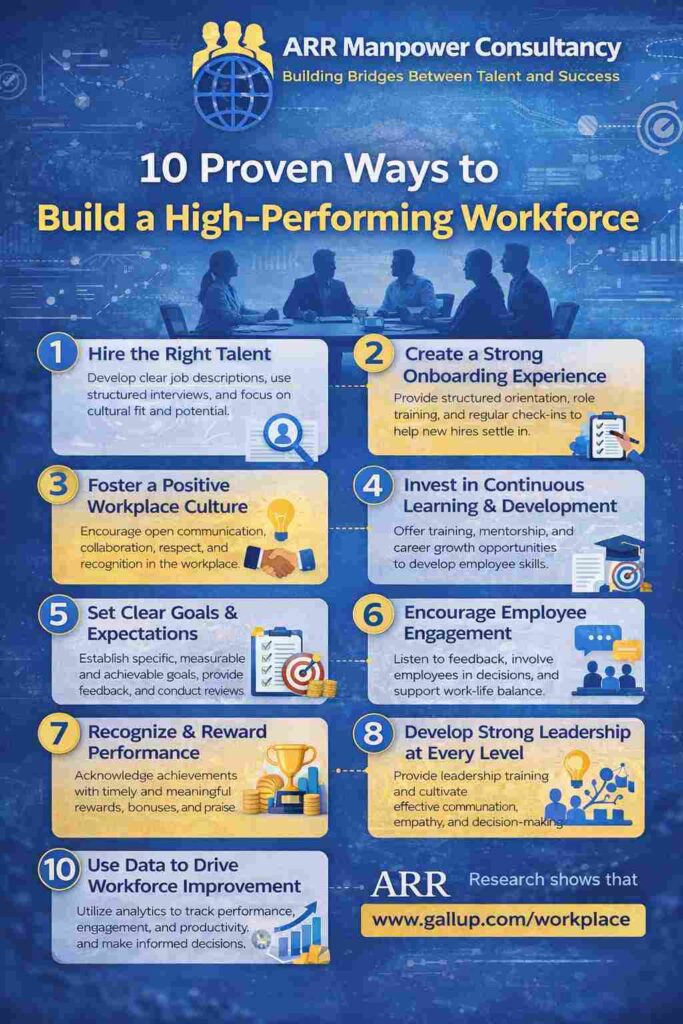
1. Hire the Right Talent from the Beginning
Building a strong workforce starts with hiring the right people. Recruitment is more than filling vacancies; it is about identifying candidates whose skills, experience, values, and attitudes align with organizational objectives.
Employers should develop clear job descriptions, define required competencies, and use structured interview processes to assess candidates effectively. Behavioral interviews, skills assessments, and cultural fit evaluations can help organizations make informed hiring decisions.
Additionally, organizations should focus on long-term potential rather than solely evaluating current capabilities. Candidates who demonstrate adaptability, learning agility, and a growth mindset often become valuable contributors over time.
When businesses prioritize quality hiring practices, they create a solid foundation for future success.
2. Create a Strong Onboarding Experience
The first few weeks of employment significantly influence an employee’s perception of the organization. A well-designed onboarding program helps new hires understand their responsibilities, company culture, and performance expectations.
Effective onboarding should include:
- Clear role orientation
- Introduction to team members
- Training on systems and processes
- Access to necessary resources
- Regular check-ins with managers
Employees who receive structured onboarding are more likely to become productive quickly and remain engaged with the organization. They feel supported, valued, and confident in their ability to contribute.
Organizations that invest in onboarding often see improved retention rates and stronger employee performance.
3. Foster a Positive Workplace Culture
Workplace culture influences employee behavior, motivation, and productivity. A positive culture encourages collaboration, respect, accountability, and continuous improvement.
Leaders play a critical role in shaping organizational culture. They must consistently demonstrate company values and create an environment where employees feel safe sharing ideas and concerns.
Key elements of a strong culture include:
- Open communication
- Mutual respect
- Diversity and inclusion
- Recognition of achievements
- Team collaboration
Employees are more likely to perform at their best when they feel connected to their workplace and believe their contributions matter.
A healthy culture also helps organizations attract top talent and maintain employee loyalty.
4. Invest in Continuous Learning and Development
Skills requirements continue to evolve across industries. Organizations that prioritize learning and development equip employees with the knowledge needed to remain competitive and productive.
Professional development opportunities may include:
- Training programs
- Workshops and seminars
- Online courses
- Leadership development initiatives
- Mentorship programs
Learning opportunities help employees improve existing skills while acquiring new capabilities that support organizational growth.
When employees see that their employer invests in their development, they are more engaged and motivated to contribute to business success. Continuous learning also helps organizations prepare future leaders from within.
5. Set Clear Goals and Expectations
Employees perform better when they understand what is expected of them. Clear goals provide direction, accountability, and purpose.
Organizations should establish measurable objectives that align individual responsibilities with broader business priorities. Managers should communicate expectations clearly and ensure employees understand how their work contributes to organizational success.
Effective goal-setting often includes:
- Specific objectives
- Measurable outcomes
- Realistic timelines
- Regular performance reviews
- Ongoing feedback
When employees have clarity regarding priorities and expectations, they can focus their efforts more effectively and achieve stronger results.
6. Encourage Employee Engagement
Employee engagement is one of the most important drivers of performance. Engaged employees are emotionally committed to their work and motivated to contribute beyond minimum requirements.
Organizations can improve engagement by:
- Listening to employee feedback
- Involving employees in decision-making
- Recognizing contributions
- Providing growth opportunities
- Supporting work-life balance
Managers should regularly communicate with team members to understand challenges, address concerns, and identify opportunities for improvement.
Highly engaged employees are more productive, innovative, and likely to remain with the organization. They also contribute positively to workplace morale and team performance.
7. Recognize and Reward Performance
Recognition is a powerful motivator. Employees who feel appreciated are more likely to remain committed and continue performing at a high level.
Recognition does not always require financial incentives. Simple acknowledgments, public appreciation, and career advancement opportunities can have a significant impact.
Effective recognition programs should be:
- Timely
- Consistent
- Fair
- Meaningful
- Aligned with company values
Organizations may also implement reward systems such as bonuses, incentive programs, employee awards, and performance-based promotions.
Recognizing achievements reinforces positive behaviors and encourages employees to maintain high standards of performance.
8. Develop Strong Leadership at Every Level
Leadership has a direct impact on employee performance and organizational success. Strong leaders inspire confidence, provide guidance, and help teams overcome challenges.
Organizations should focus on developing leadership capabilities throughout the business, not only among senior executives. Supervisors, team leaders, and department managers all influence employee experiences.
Effective leaders demonstrate:
- Clear communication
- Accountability
- Empathy
- Decision-making skills
- Strategic thinking
Leadership development programs can help individuals strengthen these competencies and prepare for greater responsibilities.
When employees trust their leaders, they are more likely to remain engaged, motivated, and committed to organizational goals.
9. Promote Collaboration and Teamwork
Modern business challenges often require cross-functional cooperation. Organizations that encourage collaboration benefit from diverse perspectives, improved problem-solving, and greater innovation.
Creating a collaborative environment involves:
- Encouraging knowledge sharing
- Breaking down departmental silos
- Supporting team projects
- Leveraging collaborative technologies
- Promoting mutual respect
Managers should create opportunities for employees to work together on initiatives that require different expertise and viewpoints.
Strong teamwork improves efficiency, strengthens relationships, and helps organizations achieve complex objectives more effectively.
Employees who collaborate successfully often develop stronger communication skills and a greater sense of shared purpose.
10. Use Data to Drive Workforce Improvement
Organizations can make better workforce decisions when they rely on data rather than assumptions. Workforce analytics provide valuable insights into performance, engagement, retention, productivity, and development needs.
Useful metrics may include:
- Employee turnover rates
- Training effectiveness
- Productivity indicators
- Engagement survey results
- Performance evaluation outcomes
By analyzing these metrics, organizations can identify trends, address challenges, and implement targeted improvement strategies.
Data-driven decision-making enables leaders to allocate resources more effectively and create initiatives that support long-term workforce success.
Businesses that continuously monitor workforce performance can adapt quickly to changing circumstances and maintain a competitive advantage.
Common Challenges in Building a High-Performing Workforce
Although organizations understand the importance of workforce excellence, several obstacles can hinder progress.
Common challenges include:
Skill Gaps
Rapid technological advancements often create gaps between current employee capabilities and business requirements. Organizations must proactively invest in training and upskilling initiatives.
Employee Burnout
Excessive workloads and prolonged stress can negatively impact productivity and morale. Employers should promote wellness programs and encourage healthy work practices.
Resistance to Change
Employees may hesitate to adopt new processes or technologies. Effective communication and change management strategies can help reduce resistance.
Talent Retention
Retaining skilled employees remains a major concern for many organizations. Competitive compensation, career growth opportunities, and positive workplace experiences contribute to retention.
Addressing these challenges requires consistent leadership commitment and strategic workforce planning.
The Long-Term Benefits of a High-Performing Workforce
Organizations that successfully develop strong teams enjoy numerous advantages.
Some key benefits include:
- Increased productivity
- Higher employee satisfaction
- Improved customer experiences
- Enhanced innovation
- Stronger business performance
- Reduced turnover costs
- Better organizational agility
These benefits create a positive cycle where engaged employees contribute to business success, which in turn supports further employee development and growth.
Over time, organizations with strong teams often establish a reputation as employers of choice, making it easier to attract and retain exceptional talent.
Conclusion
Building a high-performing workforce is an ongoing process that requires dedication, strategic planning, and continuous improvement. Organizations cannot rely solely on recruitment to achieve success. They must create an environment where employees can grow, collaborate, and contribute at their highest potential.
By hiring the right talent, providing effective onboarding, fostering a positive culture, investing in development, setting clear expectations, encouraging engagement, recognizing achievements, strengthening leadership, promoting teamwork, and leveraging data-driven insights, businesses can create teams that consistently deliver exceptional results.
Organizations that prioritize these proven strategies position themselves for sustainable growth, stronger competitiveness, and long-term success. As industries continue to evolve, companies with motivated and capable employees will be best equipped to navigate challenges and seize new opportunities.
Furthermore, organizations that consistently evaluate workforce strategies and adapt to changing business demands create a foundation for lasting success. By prioritizing employee well-being, innovation, and professional growth, companies can strengthen organizational resilience, improve overall performance, and cultivate a workforce capable of driving sustainable results in an increasingly competitive marketplace.