Introduction
Hiring skilled blue-collar workers has become one of the biggest challenges for employers across industries. From manufacturing and construction to logistics, warehousing, maintenance, and production, organizations depend heavily on a reliable workforce to maintain operational efficiency. However, increasing competition, skill shortages, changing workforce expectations, and evolving industry requirements have made recruitment more complex than ever.
Employers who continue to rely on traditional hiring methods often struggle to attract qualified candidates. To succeed in today’s competitive labor market, businesses need modern recruitment strategies that focus on sourcing, engagement, skill assessment, and retention.
This article explores 12 amazing ways to hire skilled blue-collar workers effectively. These proven approaches can help organizations identify qualified talent, reduce hiring time, improve workforce quality, and build a stronger employer brand.
https://arrmanpowerconsultancy.com
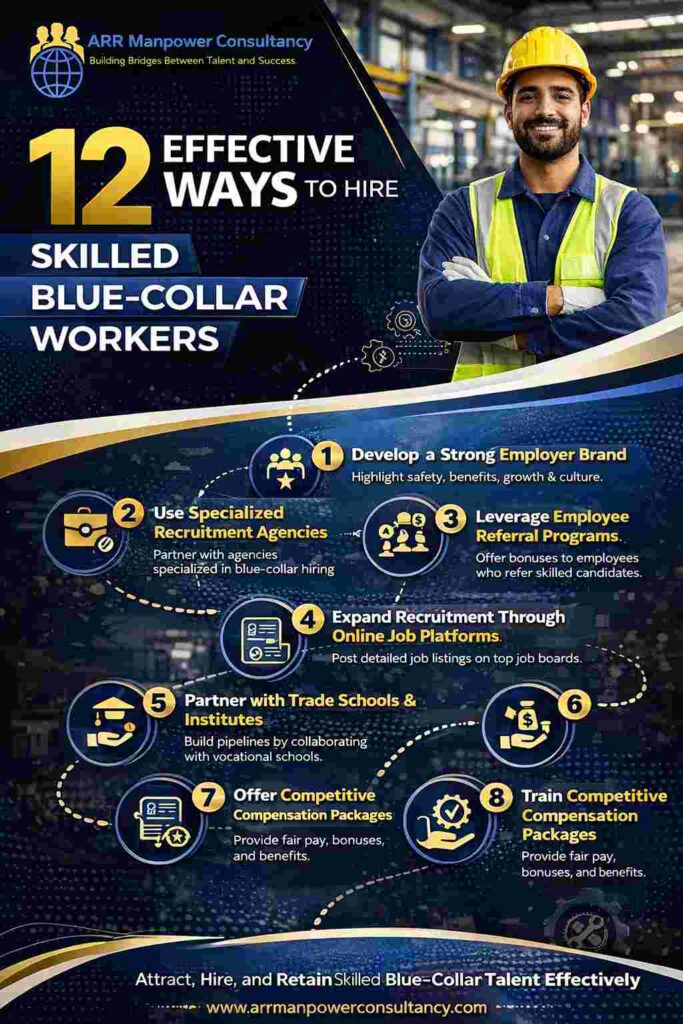
1. Develop a Strong Employer Brand for Blue-Collar Workers
A company’s reputation plays a crucial role in attracting workers. Skilled candidates often research employers before applying for jobs. Organizations with a positive image tend to receive more applications and experience lower turnover rates.
Employers should highlight:
- Safe working conditions
- Competitive salaries
- Career growth opportunities
- Employee benefits
- Positive workplace culture
- Training and development programs
Sharing employee success stories, workplace achievements, and company values through digital channels can significantly improve recruitment outcomes.
When candidates perceive an organization as trustworthy and employee-focused, they are more likely to consider available opportunities.
2. Use Specialized Recruitment Agencies
Partnering with experienced staffing and recruitment agencies can simplify the hiring process. Recruitment specialists maintain extensive databases of qualified workers and understand industry-specific hiring requirements.
Benefits of working with recruitment agencies include:
- Faster candidate sourcing
- Pre-screened applicants
- Reduced hiring costs
- Access to passive candidates
- Industry expertise
Recruitment professionals can identify suitable candidates quickly, allowing employers to focus on business operations rather than spending excessive time on recruitment activities.
3. Leverage Employee Referral Programs
Current employees often know skilled professionals within their networks. Employee referral programs can become a powerful recruitment channel for finding reliable workers.
Advantages include:
- Higher-quality candidates
- Faster hiring process
- Improved retention rates
- Lower recruitment expenses
Organizations can encourage participation by offering referral bonuses, recognition programs, or incentives for successful hires.
Workers referred by existing employees usually adapt more quickly to workplace expectations because they already understand the company culture through their connections.
4. Expand Recruitment Through Online Job Platforms
Digital recruitment platforms have transformed hiring practices across industries. Posting vacancies on job portals increases visibility and helps employers reach a broader audience.
Effective job advertisements should include:
- Clear job descriptions
- Required qualifications
- Salary information
- Benefits offered
- Work location details
- Growth opportunities
A well-crafted job listing attracts serious applicants while reducing the number of unqualified candidates.
Employers should regularly update job postings and respond promptly to applications to maintain candidate interest.
5. Build Relationships with Trade Schools and Vocational Institutes
Trade schools and vocational training centers are excellent sources of skilled talent. Many students graduate with hands-on experience and industry-relevant knowledge.
Companies can establish partnerships by:
- Participating in career fairs
- Offering internships
- Conducting workshops
- Providing apprenticeship opportunities
- Sponsoring training programs
These relationships create a steady pipeline of qualified candidates who are prepared to enter the workforce immediately after completing their education.
Early engagement with students also allows employers to identify promising talent before competitors do.
6. Offer Competitive Compensation Packages
Compensation remains one of the most important factors influencing employment decisions. Skilled workers often compare multiple opportunities before accepting a job offer.
A competitive package may include:
- Attractive wages
- Overtime opportunities
- Performance bonuses
- Health benefits
- Transportation allowances
- Retirement plans
- Attendance incentives
Employers should regularly review market salary trends to ensure their compensation remains competitive.
Providing fair pay demonstrates respect for workers’ skills and contributions while improving recruitment success.
7. Implement Apprenticeship Programs
Apprenticeship programs allow organizations to develop talent internally. Instead of waiting for fully qualified candidates to become available, employers can train individuals according to company-specific requirements.
Benefits of apprenticeships include:
- Reduced skill shortages
- Customized workforce development
- Increased employee loyalty
- Improved productivity
Structured training programs help workers gain practical experience while earning income. Over time, organizations develop a reliable talent pool that aligns with operational needs.
Apprenticeship initiatives also support long-term workforce sustainability.
8. Utilize Social Media Recruitment
Social media platforms have become valuable recruitment tools for reaching potential candidates. Many workers actively use social networks to search for employment opportunities and industry updates.
Effective social media recruitment strategies include:
- Sharing job openings regularly
- Posting workplace photos and videos
- Highlighting employee achievements
- Promoting company culture
- Engaging with local communities
Visual content showcasing real work environments often attracts more attention than traditional job advertisements.
Organizations that maintain an active social presence can improve candidate engagement and strengthen brand awareness.
9. Streamline the Hiring Process
A lengthy hiring process can result in losing qualified candidates to competitors. Skilled workers often receive multiple job offers and may accept another position if recruitment takes too long.
Employers should focus on:
- Quick application procedures
- Efficient screening methods
- Fast interview scheduling
- Prompt communication
- Timely job offers
Reducing unnecessary steps improves the candidate experience and increases offer acceptance rates.
A streamlined process demonstrates professionalism and respect for applicants’ time.
10. Conduct Practical Skill Assessments
Resumes and interviews alone may not accurately reflect a candidate’s capabilities. Practical assessments provide direct insight into technical competence and job readiness.
Examples include:
- Equipment operation tests
- Welding demonstrations
- Maintenance exercises
- Production simulations
- Safety procedure evaluations
Practical testing helps employers verify skills before making hiring decisions.
This approach reduces the risk of unsuitable hires and ensures candidates possess the abilities required for the role.
11. Focus on Workforce Retention
Successful recruitment does not end when a candidate accepts a job offer. Retaining skilled workers is equally important for maintaining productivity and reducing hiring costs.
Retention strategies may include:
- Recognition programs
- Career advancement opportunities
- Ongoing training
- Workplace safety improvements
- Open communication channels
- Employee wellness initiatives
Satisfied employees are more likely to remain with the organization and recommend it to others.
Strong retention practices create a stable workforce and support future recruitment efforts.
12. Recruit from Diverse Talent Pools
Expanding recruitment efforts beyond traditional sources can uncover valuable talent. Employers should consider candidates from various backgrounds, experiences, and geographic locations.
Potential talent pools include:
- Returning workforce participants
- Military veterans
- Career changers
- Migrant workers
- Underrepresented communities
- Semi-skilled workers seeking advancement
A diverse workforce brings unique perspectives, improves problem-solving capabilities, and expands recruitment opportunities.
Inclusive hiring practices also enhance organizational reputation and support long-term growth.
Common Mistakes to Avoid When Hiring Skilled Workers
Even organizations with strong recruitment strategies can make mistakes that limit hiring success. Common errors include:
Unclear Job Descriptions
Vague job postings often attract unsuitable applicants and discourage qualified candidates.
Delayed Communication
Slow responses can cause candidates to lose interest or accept competing offers.
Ignoring Employer Branding
A weak reputation makes recruitment significantly more difficult.
Overlooking Candidate Experience
Poor interview processes can damage the company’s image.
Failing to Verify Skills
Hiring without practical assessments increases the risk of poor performance.
Avoiding these mistakes can improve recruitment outcomes and strengthen workforce quality.
The Future of Blue-Collar Recruitment
Technology continues to reshape workforce recruitment. Employers are increasingly adopting digital tools to improve hiring efficiency and candidate engagement.
Emerging trends include:
- Mobile-first job applications
- AI-powered screening tools
- Digital onboarding systems
- Virtual interviews
- Skills-based hiring models
- Workforce analytics
Organizations that embrace innovation can gain a competitive advantage in attracting and retaining skilled talent.
The future will reward employers who combine technology with a people-focused recruitment approach.
Conclusion
Finding and retaining skilled blue-collar workers requires a strategic and proactive approach. Companies that invest in employer branding, recruitment partnerships, vocational relationships, competitive compensation, employee referrals, and workforce development programs are better positioned to secure qualified talent.
By implementing these 12 amazing hiring strategies, organizations can reduce recruitment challenges, improve workforce quality, and achieve long-term operational success. As labor markets continue to evolve, businesses that prioritize effective recruitment practices will remain ahead of the competition and build stronger, more productive teams.
Ultimately, successful hiring is not just about filling vacancies. It is about creating a workforce that supports growth, drives performance, and contributes to organizational success for years to come.
In today’s competitive employment landscape, organizations must recognize that skilled blue-collar professionals are valuable assets who play a critical role in maintaining productivity, quality, and customer satisfaction. Employers that invest in building meaningful relationships with workers, offering continuous training opportunities, and creating a positive workplace culture are more likely to attract and retain top talent. A people-first approach not only improves employee engagement but also enhances overall business performance.
Furthermore, businesses should regularly evaluate their recruitment strategies to ensure they remain aligned with industry trends and workforce expectations. Leveraging technology, data-driven hiring practices, and targeted outreach efforts can significantly improve recruitment outcomes. Companies that adapt quickly to changing market conditions will be better prepared to address skill shortages and workforce demands.
As industries continue to grow and evolve, the demand for qualified workers will remain strong. Organizations that prioritize workforce planning, employee development, and effective recruitment practices today will build a sustainable talent pipeline for the future. By taking a long-term view of hiring and retention, businesses can create resilient teams, improve operational efficiency, and establish a strong foundation for continued success in an increasingly competitive market.