Introduction
The logistics industry serves as the backbone of global trade and supply chain operations. As businesses expand their distribution networks, transportation capabilities, and warehouse operations, the demand for skilled logistics professionals continues to rise. However, finding qualified candidates remains a significant challenge for many organizations. Competition for talent, evolving job requirements, and changing workforce expectations have made recruitment more complex than ever.
Growing businesses must adopt effective logistics recruitment strategies to attract, engage, and retain top talent. A strong workforce helps ensure smooth operations, improved efficiency, customer satisfaction, and long-term business growth. Companies that invest in strategic hiring practices are better positioned to overcome labor shortages and build resilient supply chain teams.
This article explores 11 effective logistics recruitment strategies that can help growing businesses secure qualified professionals and strengthen their workforce.
https://arrmanpowerconsultancy.com/
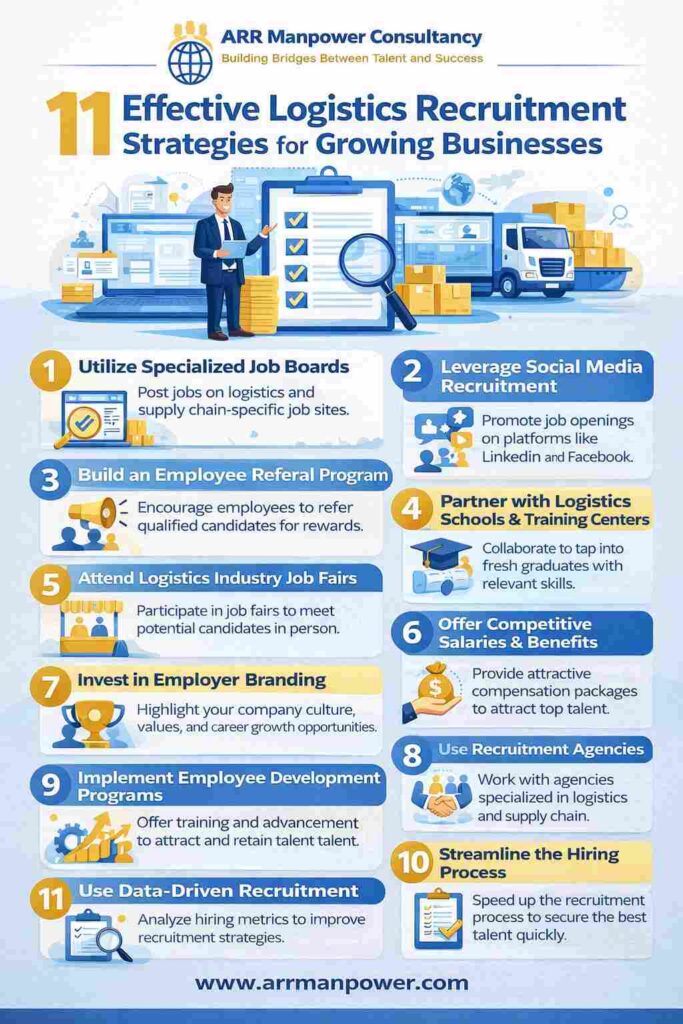
1. Develop a Strong Employer Brand
Employer branding plays a crucial role in attracting logistics professionals. Candidates often research organizations before applying for positions. A company with a positive reputation is more likely to attract skilled applicants.
Businesses should highlight their workplace culture, employee benefits, career advancement opportunities, and commitment to employee development. Sharing employee success stories, workplace achievements, and company values on digital platforms can improve visibility and credibility.
A strong employer brand helps businesses stand out in a competitive hiring market and encourages candidates to view the organization as an attractive place to work.
2. Create Detailed and Accurate Job Descriptions
Job descriptions are often the first interaction potential candidates have with an organization. Clear and accurate job postings help attract qualified applicants while reducing unsuitable applications.
Effective logistics job descriptions should include:
- Key responsibilities
- Required qualifications
- Necessary certifications
- Expected work schedules
- Growth opportunities
- Compensation and benefits
Using straightforward language helps candidates understand expectations and determine whether they are a good fit for the role. Detailed job descriptions also improve recruitment efficiency by reducing confusion during the hiring process.
3. Utilize Multiple Recruitment Channels
Relying on a single hiring platform may limit access to potential candidates. Businesses should diversify their recruitment efforts by using multiple channels.
Popular recruitment sources include:
- Online job boards
- Company career pages
- Professional networking platforms
- Employee referrals
- Industry associations
- Recruitment agencies
- Local community networks
A multi-channel approach increases visibility and expands access to a broader talent pool. Different candidates use different platforms, making diversified recruitment essential for successful hiring.
4. Implement Employee Referral Programs
Employee referrals remain one of the most effective recruitment methods in the logistics sector. Existing employees often understand the company culture and job requirements, making them valuable sources of candidate recommendations.
Referral programs can offer incentives such as:
- Monetary rewards
- Recognition programs
- Additional paid leave
- Performance bonuses
Referred candidates frequently demonstrate higher retention rates and faster onboarding success. Employee referral initiatives can significantly reduce recruitment costs while improving hiring quality.
5. Partner with Educational Institutions
Building relationships with educational institutions helps create a steady pipeline of future logistics professionals. Colleges, universities, vocational schools, and technical training centers often have students seeking internships and entry-level opportunities.
Partnership opportunities include:
- Internship programs
- Campus recruitment events
- Career fairs
- Guest lectures
- Apprenticeship initiatives
These partnerships allow businesses to identify promising talent early and develop future employees who understand industry requirements before entering the workforce.
6. Leverage Technology in Recruitment
Modern recruitment technology can streamline hiring processes and improve candidate experiences. Technology-driven recruitment solutions help businesses manage large volumes of applications efficiently.
Useful recruitment technologies include:
- Applicant tracking systems
- Resume screening software
- Video interviewing platforms
- Recruitment analytics tools
- Artificial intelligence-assisted sourcing tools
Automation reduces administrative workload and enables recruiters to focus on evaluating candidate suitability. Technology can also improve communication and shorten hiring timelines.
7. Offer Competitive Compensation and Benefits
Compensation remains a major factor influencing candidate decisions. Growing businesses must regularly assess market trends to ensure their salary packages remain competitive.
In addition to wages, businesses should consider offering:
- Health insurance
- Retirement plans
- Performance incentives
- Paid time off
- Flexible scheduling
- Professional development support
Comprehensive compensation packages help attract skilled logistics professionals and improve employee retention. Candidates increasingly evaluate total rewards rather than salary alone when considering employment opportunities.
8. Focus on Candidate Experience
The recruitment process reflects the organization’s professionalism and culture. A positive candidate experience can strengthen employer reputation, even among applicants who are not selected.
Businesses can improve candidate experience by:
- Responding promptly to applications
- Providing clear communication
- Offering transparent hiring timelines
- Simplifying application procedures
- Delivering constructive feedback when possible
Candidates who experience a smooth recruitment process are more likely to accept job offers and recommend the organization to others. Positive interactions contribute to stronger talent acquisition outcomes.
9. Invest in Workforce Development Opportunities
Many logistics candidates seek employers that offer opportunities for career growth. Businesses that invest in employee development often attract ambitious professionals looking for long-term careers.
Development initiatives may include:
- Skills training programs
- Leadership development courses
- Certification support
- Mentorship opportunities
- Cross-functional learning experiences
Promoting professional growth demonstrates commitment to employee success and enhances recruitment efforts. Candidates are more likely to join organizations where they can build sustainable careers.
10. Build a Talent Pipeline
Successful recruitment requires proactive planning rather than reactive hiring. Building a talent pipeline helps businesses maintain access to qualified candidates when vacancies arise.
Strategies for developing talent pipelines include:
- Maintaining candidate databases
- Engaging previous applicants
- Networking with industry professionals
- Participating in industry events
- Creating internship programs
A strong talent pipeline reduces hiring delays and allows organizations to respond quickly to workforce demands. Proactive talent management supports long-term business growth and operational continuity.
11. Prioritize Diversity and Inclusion
Diversity and inclusion initiatives strengthen recruitment efforts by expanding access to a wider range of candidates. Diverse teams often bring different perspectives, experiences, and problem-solving approaches that contribute to innovation and operational success.
Businesses can promote inclusive hiring by:
- Reviewing job requirements for bias
- Expanding recruitment outreach
- Implementing structured interviews
- Providing diversity training
- Supporting inclusive workplace practices
An inclusive workplace culture enhances employee engagement and broadens the organization’s talent pool. Diversity-focused recruitment strategies also strengthen employer reputation and competitiveness.
Common Challenges in Logistics Recruitment
While implementing recruitment strategies, businesses may encounter several challenges, including:
Labor Shortages
Many regions continue to experience shortages of qualified logistics professionals, particularly drivers, warehouse specialists, and supply chain managers.
High Employee Turnover
Demanding schedules, physically intensive roles, and competitive labor markets can contribute to higher turnover rates.
Skills Gaps
Technological advancements have increased the need for specialized skills in warehouse automation, inventory management, transportation planning, and supply chain analytics.
Seasonal Hiring Demands
Many logistics operations experience fluctuations in workforce requirements during peak seasons, requiring flexible recruitment approaches.
Understanding these challenges helps businesses develop targeted hiring solutions that address workforce needs effectively.
Best Practices for Long-Term Recruitment Success
Growing businesses should view recruitment as an ongoing strategic function rather than a periodic activity. Long-term success often depends on consistent effort and continuous improvement.
Key best practices include:
- Monitoring recruitment metrics
- Evaluating hiring effectiveness
- Gathering candidate feedback
- Updating recruitment processes regularly
- Strengthening employer branding initiatives
- Investing in employee retention programs
Organizations that continuously refine their recruitment strategies are better equipped to adapt to changing labor market conditions and evolving business needs.
Conclusion
Recruiting qualified logistics professionals is essential for businesses seeking sustainable growth and operational excellence. As competition for talent increases, organizations must adopt strategic approaches that attract, engage, and retain skilled employees.
Developing a strong employer brand, leveraging technology, offering competitive compensation, building educational partnerships, enhancing candidate experience, and maintaining talent pipelines are among the most effective logistics recruitment strategies available today. Additionally, investing in workforce development and promoting diversity can strengthen long-term hiring outcomes.
By implementing these 11 effective logistics recruitment strategies, growing businesses can build high-performing teams, improve operational efficiency, and position themselves for future success in an increasingly competitive logistics environment.
In today’s rapidly evolving supply chain environment, attracting and retaining qualified logistics professionals has become a critical business priority. Organizations that rely on traditional hiring methods alone may struggle to compete for talent in a market where skilled candidates have numerous employment options. By adopting modern recruitment approaches and continuously refining hiring processes, businesses can strengthen their workforce and improve overall operational performance.
The most successful companies recognize that recruitment is not simply about filling vacant positions. It is about identifying individuals who can contribute to long-term organizational goals, adapt to changing industry demands, and support continuous improvement initiatives. From warehouse operations and transportation management to inventory control and supply chain coordination, every logistics role plays an important part in maintaining efficiency and customer satisfaction.
Furthermore, investing in employee development after hiring is equally important. Recruitment and retention work together to create a stable and productive workforce. Businesses that provide training opportunities, career advancement pathways, competitive compensation, and a positive workplace culture are more likely to retain skilled employees and reduce turnover-related costs. This not only improves productivity but also enhances organizational knowledge and operational consistency.
As technology continues to transform logistics operations, employers should remain flexible and proactive in their talent acquisition efforts. Monitoring industry trends, embracing digital recruitment tools, and building relationships with future talent sources can help organizations stay ahead of workforce challenges. A forward-thinking recruitment strategy enables businesses to respond quickly to growth opportunities while maintaining service quality and operational excellence.
Ultimately, implementing these logistics recruitment strategies can help growing businesses build stronger teams, improve workforce stability, and gain a competitive advantage. Companies that prioritize strategic hiring today will be better positioned to navigate future industry changes, meet customer expectations, and achieve sustainable growth in an increasingly demanding logistics landscape.