Introduction
Hiring the right employees is one of the most important factors in building a successful organization. Every business, regardless of size or industry, depends on skilled and motivated people to achieve its goals. However, finding the right talent has become increasingly challenging in today’s competitive job market. Organizations often struggle with talent shortages, high turnover rates, lengthy recruitment cycles, and rising hiring costs.
To overcome these challenges, companies need a structured and effective recruitment approach. ARR Manpower Consultancy has worked with businesses across multiple industries and understands what it takes to identify, attract, and retain top talent. Through years of experience in recruitment and workforce solutions, ARR has developed proven strategies that help employers make better hiring decisions and build stronger teams.
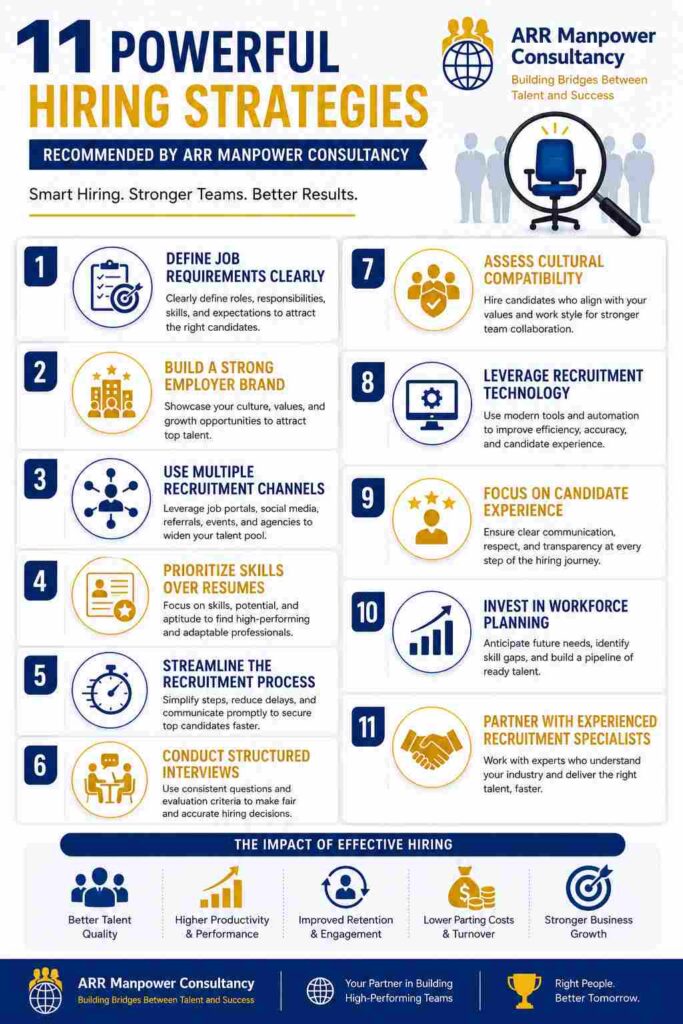
This article explores eleven powerful hiring strategies that can significantly improve recruitment outcomes and support long-term business growth.
https://arrmanpowerconsultancy.com/
1. Define Job Requirements Clearly
One of the biggest mistakes organizations make is starting the recruitment process without a clear understanding of the position they want to fill. A vague job description often attracts unsuitable applicants and increases the time needed to identify qualified candidates.
Before advertising a vacancy, employers should clearly define:
- Key responsibilities
- Required qualifications
- Technical skills
- Soft skills
- Experience level
- Performance expectations
A detailed job description helps candidates understand the role and enables recruiters to identify suitable applicants more efficiently. Clear expectations also reduce misunderstandings after hiring and contribute to better employee satisfaction.
2. Hiring Strategies Build a Strong Employer Brand
Talented professionals are often selective about where they work. They seek employers that offer career growth, positive work environments, competitive benefits, and strong organizational values.
A strong employer brand helps companies attract high-quality candidates and stand out from competitors. Businesses can strengthen their reputation by:
- Showcasing company culture
- Sharing employee success stories
- Highlighting training opportunities
- Demonstrating commitment to employee well-being
- Maintaining a professional online presence
Candidates who understand and appreciate a company’s values are more likely to become engaged and loyal employees.
3. Use Multiple Recruitment Channels
Relying on a single hiring platform limits access to potential candidates. Successful recruitment requires a diversified sourcing strategy.
Organizations should utilize:
- Job portals
- Professional networking platforms
- Company websites
- Employee referrals
- Recruitment agencies
- Industry events
- Campus recruitment programs
Using multiple channels expands the talent pool and increases the chances of finding candidates with the right qualifications and experience.
A broader search strategy also improves workforce diversity by reaching professionals from different backgrounds and locations.
4. Prioritize Skills Over Resumes
Traditional recruitment often places excessive emphasis on educational qualifications and previous job titles. While these factors are important, they do not always predict future performance.
Many highly capable professionals possess valuable skills that may not be fully reflected in their resumes. Employers should focus on assessing:
- Problem-solving abilities
- Communication skills
- Leadership potential
- Technical competencies
- Adaptability
- Team collaboration
Skill-based hiring enables organizations to identify candidates who can deliver results and grow within the company.
Practical assessments, simulations, and real-world tasks can provide valuable insights into a candidate’s capabilities.
5. Streamline the Recruitment Process
Lengthy hiring procedures often cause companies to lose strong candidates. Top talent is usually in high demand and may receive multiple job offers.
An efficient recruitment process should include:
- Quick application reviews
- Prompt communication
- Structured interviews
- Timely decision-making
- Clear feedback
Reducing unnecessary delays improves the candidate experience and increases the likelihood of securing preferred applicants.
Organizations that move quickly demonstrate professionalism and respect for candidates’ time.
6. Conduct Structured Interviews
Interviews remain one of the most important stages of recruitment. However, unstructured conversations can lead to inconsistent evaluations and biased decisions.
A structured interview process ensures fairness and objectivity by asking all applicants similar questions related to the role.
Effective interview areas include:
- Professional experience
- Technical expertise
- Workplace scenarios
- Behavioral competencies
- Career goals
Using standardized evaluation criteria allows hiring teams to compare candidates accurately and make informed decisions.
Structured interviews also help reduce unconscious bias and improve hiring quality.
7. Assess Cultural Compatibility
Technical skills are important, but cultural alignment plays a significant role in long-term success.
Employees who share the organization’s values and work style are more likely to:
- Collaborate effectively
- Adapt quickly
- Remain engaged
- Contribute positively to workplace culture
During the recruitment process, employers should evaluate whether candidates align with the company’s mission, expectations, and operating environment.
This does not mean hiring people who are all the same. Instead, it involves identifying individuals who can thrive within the organization while contributing diverse perspectives and ideas.
A strong cultural fit often results in higher retention and improved team performance.
8. Leverage Recruitment Technology
Modern recruitment technology has transformed the way organizations identify and evaluate talent.
Advanced tools can help automate routine tasks such as:
- Resume screening
- Candidate tracking
- Interview scheduling
- Communication management
- Data analysis
Technology improves efficiency and enables recruiters to focus on strategic decision-making rather than administrative work.
Applicant tracking systems, recruitment software, and artificial intelligence solutions can significantly reduce hiring timelines and improve candidate management.
However, technology should support human judgment rather than replace it. The best results come from combining automation with professional expertise.
9. Focus on Candidate Experience
Every interaction during recruitment shapes a candidate’s perception of the organization.
A positive experience can strengthen the company’s reputation even among applicants who are not ultimately selected.
Key elements of a positive candidate experience include:
- Clear communication
- Transparent expectations
- Professional interviews
- Respectful treatment
- Timely updates
Candidates appreciate honesty and responsiveness throughout the process.
Organizations that prioritize candidate experience often receive more referrals, stronger applications, and better acceptance rates.
A respectful recruitment journey also enhances the employer brand and creates lasting positive impressions.
10. Invest in Workforce Planning
Successful hiring begins long before a vacancy arises. Workforce planning enables organizations to anticipate future staffing requirements and prepare accordingly.
Strategic workforce planning involves:
- Identifying future skill needs
- Forecasting workforce demand
- Evaluating talent gaps
- Developing succession plans
- Monitoring industry trends
Organizations that proactively plan their workforce needs can respond quickly to business changes and growth opportunities.
Rather than reacting to urgent staffing shortages, they maintain a steady pipeline of qualified candidates.
This approach reduces recruitment costs and minimizes operational disruptions.
11. Partner with Experienced Recruitment Specialists
Many organizations struggle to allocate sufficient time and resources to recruitment. Partnering with a professional manpower consultancy can provide access to expertise, industry knowledge, and extensive talent networks.
Experienced recruitment specialists offer several advantages:
- Access to qualified candidates
- Faster hiring processes
- Market insights
- Candidate screening expertise
- Reduced recruitment workload
Recruitment partners understand industry-specific requirements and can identify suitable professionals more efficiently than traditional methods.
By outsourcing part or all of the recruitment process, businesses can focus on their core operations while ensuring staffing needs are met effectively.
ARR Manpower Consultancy supports organizations by delivering tailored workforce solutions that align with business objectives and long-term growth strategies.
Common Hiring Mistakes to Avoid
While implementing effective recruitment strategies, employers should also avoid common mistakes that can negatively impact hiring outcomes.
These include:
Hiring Too Quickly
Rushing decisions without proper evaluation can lead to poor employee performance and higher turnover.
Focusing Only on Experience
Years of experience do not always guarantee competence or adaptability.
Poor Communication
Lack of communication can damage employer reputation and discourage qualified candidates.
Ignoring Cultural Alignment
Employees who do not align with organizational values may struggle to integrate into teams.
Neglecting Onboarding
Recruitment does not end after selection. Effective onboarding helps new employees become productive more quickly.
Avoiding these mistakes contributes to stronger hiring decisions and improved workforce stability.
The Future of Recruitment
The recruitment landscape continues to evolve as organizations adapt to changing workforce expectations and technological advancements.
Several trends are shaping the future of hiring:
- Increased use of artificial intelligence
- Greater emphasis on skills-based recruitment
- Remote and hybrid work opportunities
- Enhanced candidate experience initiatives
- Data-driven hiring decisions
- Diversity and inclusion programs
Organizations that embrace these trends will be better positioned to attract and retain top talent in the years ahead.
Successful recruitment will increasingly depend on flexibility, innovation, and strategic workforce planning.
Conclusion
Building a strong workforce requires more than simply filling vacancies. It demands a thoughtful, structured approach that aligns recruitment efforts with organizational goals.
The eleven hiring strategies recommended by ARR Manpower Consultancy provide a practical framework for improving recruitment outcomes, reducing hiring challenges, and strengthening workforce performance.
By clearly defining job requirements, enhancing employer branding, utilizing multiple sourcing channels, assessing skills effectively, streamlining processes, conducting structured interviews, evaluating cultural compatibility, leveraging technology, prioritizing candidate experience, planning workforce needs, and partnering with experienced recruitment professionals, organizations can significantly improve their ability to attract and retain exceptional talent.
In today’s competitive business environment, effective recruitment is not just a human resources function—it is a strategic investment in long-term success. Companies that implement these proven hiring strategies will be better equipped to build resilient teams, support business growth, and achieve sustainable competitive advantage.
These strategies help organizations remain competitive, attract exceptional professionals, and achieve sustainable workforce success in an evolving global job market.