Introduction
Hiring the right talent is one of the most critical responsibilities for any organization. A strong workforce drives innovation, productivity, customer satisfaction, and business growth. Yet many companies continue to struggle with unsuccessful hiring campaigns, prolonged vacancies, and poor candidate experiences. Despite investing significant time and resources, recruitment efforts often fail to deliver the desired results.
The modern hiring landscape has become increasingly competitive. Skilled professionals have more opportunities than ever before, and organizations must work harder to attract and retain top talent. When recruitment strategies are ineffective, businesses face increased costs, reduced productivity, and missed growth opportunities.
Understanding why hiring initiatives fall short is the first step toward building a more effective talent acquisition strategy. Below are ten surprising reasons that frequently contribute to recruitment challenges and prevent organizations from securing the best candidates.
https://arrmanpowerconsultancy.com
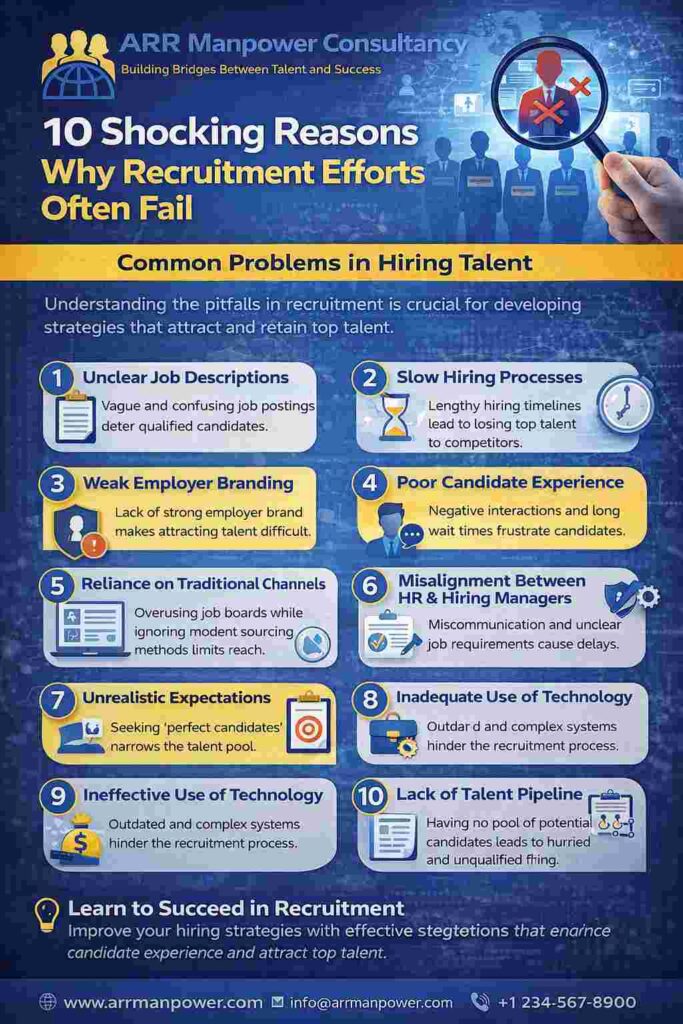
1. Unclear Job Descriptions Drive Away Qualified Candidates
One of the most common recruitment mistakes begins before the hiring process even starts. Many organizations publish job descriptions that are vague, overly complicated, or unrealistic.
Candidates want clarity regarding responsibilities, expectations, required qualifications, and growth opportunities. When job postings contain excessive jargon or conflicting requirements, applicants become confused and lose interest.
For example, a company may seek an entry-level employee while simultaneously demanding five years of experience and advanced technical skills. Such contradictions discourage qualified individuals from applying.
Clear job descriptions should:
- Define responsibilities accurately
- Specify essential qualifications
- Highlight company culture
- Explain career advancement opportunities
- Include realistic expectations
Well-crafted job postings attract candidates who genuinely fit the role and reduce the number of unsuitable applications.
2. Slow Hiring Processes Cause Talent Loss
Today’s job market moves quickly. Top candidates often receive multiple offers within a short period.
Organizations that take weeks or months to complete interviews, approvals, and decision-making processes frequently lose strong candidates to competitors. Delays create frustration and leave applicants wondering whether the company is genuinely interested.
Common causes of hiring delays include:
- Multiple approval layers
- Poor interview scheduling
- Lack of communication between departments
- Excessive interview rounds
Candidates interpret prolonged silence as a lack of professionalism. As a result, they may accept alternative opportunities before receiving an offer.
A streamlined hiring process improves candidate experience and increases the likelihood of securing highly qualified professionals.
3. Weak Employer Branding Limits Attraction
Many organizations focus heavily on marketing products and services while neglecting their employer brand.
Employer branding represents how current employees, candidates, and the public perceive a company as a workplace. If potential applicants cannot identify compelling reasons to join an organization, attracting quality talent becomes significantly harder.
Modern candidates research employers extensively before applying. They review company websites, employee testimonials, social media profiles, and online reviews.
Weak employer branding may result from:
- Limited online presence
- Negative employee reviews
- Lack of transparency
- Poor workplace reputation
Companies that showcase positive work environments, employee success stories, and organizational values tend to attract stronger applicant pools.
4. Ignoring Candidate Experience Damages Recruitment Success
Candidate experience has become a major factor influencing hiring outcomes.
Every interaction during the recruitment journey shapes a candidate’s perception of an organization. Poor communication, delayed responses, confusing application processes, and unprofessional interviews can create negative impressions.
Even candidates who are not selected may share their experiences with colleagues, friends, or online communities. Negative feedback can significantly impact future hiring efforts.
Positive candidate experiences include:
- Timely communication
- Transparent expectations
- Respectful interviews
- Constructive feedback
- Efficient application processes
Organizations that prioritize candidate experience often develop stronger reputations and attract more qualified applicants over time.
5. Overreliance on Traditional Recruitment Channels
Many companies continue to depend exclusively on conventional hiring methods such as job boards and newspaper advertisements.
While these channels still have value, relying solely on them can limit access to diverse talent pools.
Today’s candidates engage through multiple platforms, including:
- Professional networking sites
- Industry communities
- Social media channels
- Employee referrals
- Virtual events
Passive candidates, who are not actively seeking employment, often represent some of the most qualified professionals available. Traditional methods may fail to reach these individuals.
A diversified sourcing strategy increases visibility and expands access to highly skilled candidates.
6. Lack of Alignment Between HR and Hiring Managers
Recruitment success depends heavily on collaboration between human resources teams and hiring managers.
Unfortunately, many organizations experience communication gaps that create confusion and inefficiencies.
For example, HR professionals may receive incomplete information regarding job requirements, while hiring managers may have unrealistic expectations about candidate availability.
Common alignment issues include:
- Unclear hiring priorities
- Frequent requirement changes
- Poor communication
- Inconsistent evaluation criteria
When both parties fail to work together effectively, recruitment efforts become disorganized and less productive.
Regular meetings, clear expectations, and shared goals help create a more efficient hiring process.
7. Unrealistic Expectations Reduce Candidate Availability
Some organizations create idealized candidate profiles that are nearly impossible to find.
Hiring managers may seek individuals who possess extensive experience, advanced certifications, specialized technical skills, leadership abilities, and cultural compatibility—all within limited salary budgets.
Such expectations dramatically narrow the candidate pool.
The reality is that many exceptional employees develop certain skills after joining an organization. Focusing exclusively on perfect matches can result in prolonged vacancies and missed opportunities.
Employers should distinguish between:
- Essential requirements
- Preferred qualifications
- Trainable skills
A balanced approach allows organizations to identify high-potential candidates who can grow into the role successfully.
8. Inadequate Compensation and Benefits Packages
Compensation remains one of the strongest factors influencing employment decisions.
Organizations often underestimate the importance of competitive salary structures and comprehensive benefits packages. When compensation falls below market expectations, attracting qualified candidates becomes significantly more difficult.
Today’s professionals evaluate multiple aspects of an offer, including:
- Base salary
- Performance bonuses
- Health benefits
- Retirement plans
- Flexible work arrangements
- Professional development opportunities
Even organizations with strong cultures may struggle to recruit effectively if compensation packages fail to meet industry standards.
Regular market analysis helps ensure that offers remain competitive and attractive.
9. Poor Use of Recruitment Technology
Technology has transformed talent acquisition, but many organizations fail to utilize available tools effectively.
Outdated systems can slow hiring processes, create administrative burdens, and reduce recruitment efficiency.
Common technology-related challenges include:
- Complicated application systems
- Poor candidate tracking
- Limited automation
- Inadequate reporting capabilities
Candidates expect convenient digital experiences. Lengthy applications and technical difficulties often lead to abandoned submissions.
Modern recruitment technology can help organizations:
- Automate repetitive tasks
- Improve candidate communication
- Track hiring metrics
- Enhance sourcing capabilities
- Streamline workflows
Investing in the right tools can significantly improve recruitment outcomes.
10. Failure to Build a Long-Term Talent Pipeline
Many organizations adopt a reactive approach to hiring. They begin searching for candidates only after a vacancy occurs.
This strategy often creates urgency, increases hiring costs, and reduces access to top talent.
Successful organizations continuously build relationships with potential candidates, even when no immediate openings exist.
Talent pipeline development may involve:
- Networking events
- Industry conferences
- University partnerships
- Employee referral programs
- Talent communities
By maintaining ongoing engagement with prospective candidates, organizations can respond more quickly when hiring needs arise.
A proactive recruitment strategy reduces time-to-hire and improves workforce planning.
The Hidden Costs of Recruitment Failure
Failed hiring efforts impact more than just vacant positions. The consequences often extend throughout the organization.
Some common costs include:
Increased Operational Pressure
Existing employees frequently absorb additional responsibilities when positions remain unfilled. This can lead to burnout, reduced morale, and declining productivity.
Higher Recruitment Expenses
Extended hiring campaigns require additional advertising, screening, interviewing, and administrative resources.
Lost Revenue Opportunities
Critical vacancies can delay projects, affect customer service, and limit business growth.
Reduced Employee Engagement
Repeated hiring failures may create uncertainty among current staff and weaken confidence in organizational leadership.
Recognizing these costs helps organizations prioritize improvements in their hiring processes.
How Organizations Can Improve Recruitment Outcomes
To overcome common hiring challenges, companies should focus on continuous improvement and strategic planning.
Key recommendations include:
Strengthen Employer Branding
Showcase company culture, employee achievements, and workplace benefits across multiple channels.
Simplify Hiring Processes
Reduce unnecessary interview rounds and accelerate decision-making timelines.
Improve Communication
Maintain consistent communication with candidates throughout every stage of the hiring journey.
Expand Sourcing Strategies
Leverage social media, referrals, networking events, and industry partnerships to reach broader talent pools.
Use Data-Driven Decision Making
Track recruitment metrics such as time-to-hire, cost-per-hire, and candidate conversion rates.
Invest in Technology
Adopt recruitment tools that enhance efficiency and improve candidate experiences.
Build Talent Communities
Engage with prospective candidates continuously rather than only when vacancies arise.
These strategies help organizations create sustainable recruitment systems that deliver better long-term results.
Conclusion
Recruitment failures rarely occur because of a single issue. Instead, they often result from multiple interconnected factors such as unclear job descriptions, slow hiring processes, weak employer branding, poor candidate experiences, unrealistic expectations, and inadequate workforce planning.
Organizations that recognize these challenges can take proactive steps to improve their hiring strategies. By focusing on transparency, efficiency, candidate engagement, competitive compensation, and long-term talent development, companies can significantly increase their ability to attract and retain high-quality professionals.
In an increasingly competitive labor market, successful recruitment requires more than simply posting job openings. It demands a thoughtful, strategic, and candidate-focused approach that aligns business goals with workforce needs. Companies that embrace these principles position themselves for stronger hiring outcomes and sustained organizational success.