Introduction
LinkedIn has become one of the most powerful professional networking platforms in the world. Recruiters, hiring managers, and industry leaders actively use it to discover talent, verify professional backgrounds, and connect with potential candidates. For job seekers, a strong LinkedIn presence can open doors to new opportunities, interviews, and career growth.
However, many professionals unknowingly make mistakes that weaken their visibility and reduce their chances of getting noticed. While they spend time applying for jobs, their LinkedIn profile may be sending the wrong message to recruiters. Even highly qualified candidates can miss valuable opportunities because of avoidable errors.
Understanding the most common LinkedIn mistakes can help professionals create a stronger personal brand and improve their job search results. This article explores seven costly errors job seekers frequently make and provides practical solutions to fix them.
https://arrmanpowerconsultancy.com
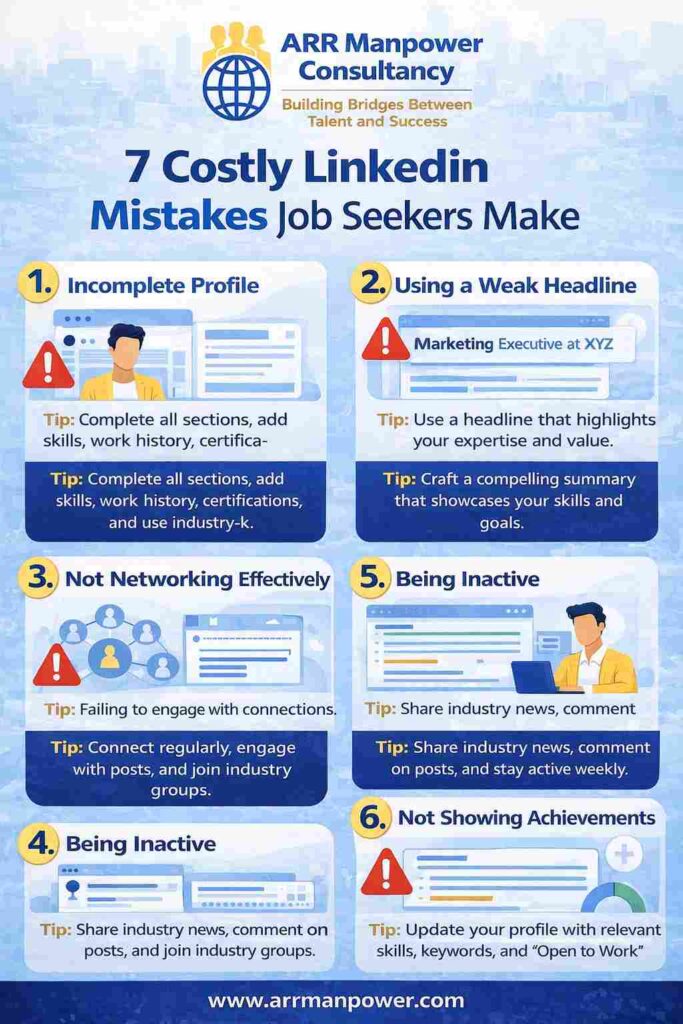
1. Having an Incomplete Profile
One of the biggest mistakes professionals make is leaving their profile unfinished. Recruiters often use LinkedIn’s search tools to find candidates based on skills, experience, education, and industry keywords. An incomplete profile limits visibility and reduces the likelihood of appearing in search results.
Common Signs of an Incomplete Profile
- Missing profile photo
- No professional headline
- Empty About section
- Incomplete work history
- Limited skills listed
- No recommendations or endorsements
Many job seekers assume uploading a resume is enough. However, LinkedIn profiles provide much more context than resumes and are often reviewed before interview invitations are extended.
How to Fix It
Complete every relevant section of your profile. Add detailed work experience, certifications, projects, and accomplishments. Use industry-specific keywords naturally throughout the profile to improve discoverability.
A complete profile not only increases visibility but also demonstrates professionalism and attention to detail.
2. Using a Weak Professional Headline
The headline is one of the first things recruiters notice. Unfortunately, many job seekers simply use their current job title or leave the default headline unchanged.
For example:
“Marketing Executive at XYZ Company”
While technically correct, it does little to communicate value or expertise.
Why This Matters
Your headline appears in search results, connection requests, comments, and profile visits. It acts as a mini personal branding statement.
A weak headline fails to showcase skills, achievements, or career focus.
Better Approach
Instead of only listing a title, highlight expertise and value.
Examples:
- Digital Marketing Specialist | SEO & Content Strategy Expert
- Software Engineer | Full-Stack Development | Cloud Solutions
- HR Professional | Talent Acquisition & Employee Engagement
An effective headline clearly tells visitors who you are and what you bring to an organization.
3. Ignoring the About Section
The About section is an opportunity to tell your professional story. Yet many professionals either leave it blank or write a generic summary that lacks personality and impact.
Why Recruiters Read It
Recruiters want to understand:
- Career goals
- Key strengths
- Industry expertise
- Professional achievements
- Communication skills
A compelling summary can make a strong first impression and encourage recruiters to explore the rest of the profile.
What Makes a Strong About Section
A good summary should:
- Start with a clear professional introduction
- Highlight relevant experience
- Showcase achievements
- Mention key skills
- End with career aspirations or networking interests
Example Structure
Start by introducing yourself professionally. Follow with a brief overview of experience and notable accomplishments. Conclude by explaining what opportunities you are interested in pursuing.
Avoid lengthy paragraphs and focus on value-driven content.
4. Failing to Build and Nurture a Network
Many job seekers create a profile and then wait for recruiters to contact them. This passive approach limits opportunities significantly.
LinkedIn is a networking platform, not merely an online resume database.
The Importance of Networking
Research consistently shows that referrals play a major role in hiring decisions. A strong professional network can:
- Increase profile visibility
- Generate referrals
- Provide job leads
- Offer career advice
- Create industry connections
Common Networking Mistakes
- Sending connection requests without messages
- Connecting only when job searching
- Ignoring industry professionals
- Failing to engage with contacts
How to Build Meaningful Connections
Personalize connection requests whenever possible. Mention shared interests, mutual connections, events, or professional goals.
Engage regularly by:
- Commenting on industry posts
- Sharing relevant insights
- Congratulating connections on achievements
- Participating in professional discussions
Building relationships before needing assistance creates stronger networking outcomes.
5. Being Inactive on the Platform
Many professionals update their profiles only when they begin searching for a new role. Long periods of inactivity can reduce visibility and limit engagement opportunities.
Why Activity Matters
LinkedIn’s algorithm tends to reward active users. Regular engagement helps maintain visibility among recruiters and professional connections.
Activity demonstrates:
- Industry awareness
- Professional involvement
- Thought leadership
- Communication skills
Examples of Valuable Activity
- Sharing industry news
- Publishing articles
- Commenting thoughtfully on posts
- Participating in discussions
- Celebrating professional milestones
You do not need to post daily. Consistent weekly engagement can make a significant difference.
Quality Over Quantity
Avoid posting content simply for the sake of being active. Focus on sharing information that adds value to your professional community.
Meaningful engagement helps build credibility and strengthens your professional brand.
6. Not Showcasing Achievements and Results
A common mistake is treating LinkedIn like a job description repository. Many profiles list responsibilities but fail to highlight measurable accomplishments.
Responsibilities vs. Achievements
Responsibility:
“Managed social media campaigns.”
Achievement:
“Increased social media engagement by 45% within six months through targeted content strategies.”
The second example demonstrates impact and provides measurable evidence of success.
Why Results Matter
Recruiters want proof that candidates can deliver value.
Quantifiable achievements help demonstrate:
- Performance
- Leadership
- Problem-solving abilities
- Business impact
Examples Across Industries
Sales
- Exceeded annual sales targets by 20%
- Generated $500,000 in new business revenue
Human Resources
- Reduced employee turnover by 15%
- Improved hiring efficiency by 30%
Information Technology
- Implemented automation processes that reduced operational costs
- Improved system uptime to 99.9%
Adding measurable achievements makes a profile more persuasive and memorable.
7. Applying for Jobs Without Optimizing Visibility
Many candidates submit numerous applications but overlook profile optimization. Recruiters frequently review LinkedIn profiles alongside resumes.
A poorly optimized profile may create inconsistencies or fail to support application materials.
Common Visibility Issues
- Missing relevant keywords
- Outdated job information
- Inconsistent dates
- Lack of skills alignment
- No indication of career interests
Optimize for Recruiter Searches
Recruiters often search using specific keywords related to skills, roles, certifications, and industries.
Include relevant terms naturally in:
- Headline
- About section
- Experience descriptions
- Skills section
- Certifications
Use the Open to Work Feature Strategically
The Open to Work feature helps indicate interest in new opportunities. Ensure preferences accurately reflect desired roles, industries, and locations.
Keep Information Current
Update your profile regularly to reflect:
- New skills
- Certifications
- Projects
- Promotions
- Professional achievements
A current profile increases credibility and improves recruiter confidence.
Additional Tips for LinkedIn Success
Beyond avoiding these common mistakes, professionals can further strengthen their presence through several best practices.
Use a Professional Profile Photo
Profiles with high-quality photos tend to receive more attention than those without images. Choose a professional headshot with good lighting and a clean background.
Request Recommendations
Recommendations add social proof and credibility. Ask colleagues, managers, clients, or mentors to provide authentic feedback about your work.
Customize Your LinkedIn URL
A personalized URL looks cleaner and appears more professional on resumes and business cards.
Example:
linkedin.com/in/johnsmith
instead of
linkedin.com/in/johnsmith123456789
Highlight Certifications and Learning
Continuous learning demonstrates commitment to professional growth. Add relevant certifications, training programs, and courses to your profile.
Follow Industry Leaders
Following experts and organizations helps you stay informed about trends and provides opportunities to engage with valuable content.
The Long-Term Impact of a Strong LinkedIn Presence
LinkedIn is not only useful during active job searches. A well-maintained profile can support career growth throughout your professional journey.
Benefits include:
- Greater recruiter visibility
- Expanded professional network
- Increased industry credibility
- Access to learning opportunities
- Personal brand development
- Enhanced career mobility
Professionals who consistently invest in their online presence often experience stronger networking opportunities and improved career outcomes over time.
Building a powerful LinkedIn profile should be viewed as an ongoing process rather than a one-time task.
Conclusion
Avoiding these LinkedIn mistakes strengthens your professional brand, increases recruiter visibility, builds credibility, and improves your chances of securing interviews and opportunities for long-term success.
LinkedIn has transformed the way employers discover and evaluate talent. While the platform offers tremendous opportunities, many job seekers unintentionally reduce their chances of success through common mistakes.
An incomplete profile, weak headline, neglected About section, limited networking efforts, inactivity, lack of measurable achievements, and poor optimization can all hinder visibility and career growth.
Fortunately, these issues are entirely fixable. By creating a complete profile, showcasing accomplishments, engaging consistently, and building meaningful professional relationships, job seekers can significantly improve their chances of attracting recruiters and securing new opportunities.
Success on LinkedIn is not about being the most active user on the platform. It is about presenting a clear, professional, and value-driven personal brand that demonstrates expertise and potential. Taking the time to avoid these seven costly mistakes can make a substantial difference in your job search and long-term career success.