Introduction
Across industries, businesses are facing unprecedented workforce challenges. What once appeared to be a temporary disruption has evolved into a long-term concern affecting hiring, productivity, customer satisfaction, and overall growth. Employers in manufacturing, healthcare, logistics, construction, hospitality, retail, and technology are struggling to find and retain qualified workers.
The labor market has undergone significant changes in recent years. Employee expectations have shifted, demographic trends are reshaping workforce availability, and competition for talent has intensified. Organizations that fail to adapt may find themselves facing higher operational costs, reduced efficiency, and slower business expansion.
Understanding the major workforce trends influencing today’s employment landscape is critical for business leaders. Below are six surprising developments that are dramatically impacting employers and changing the future of work.
https://arrmanpowerconsultancy.com
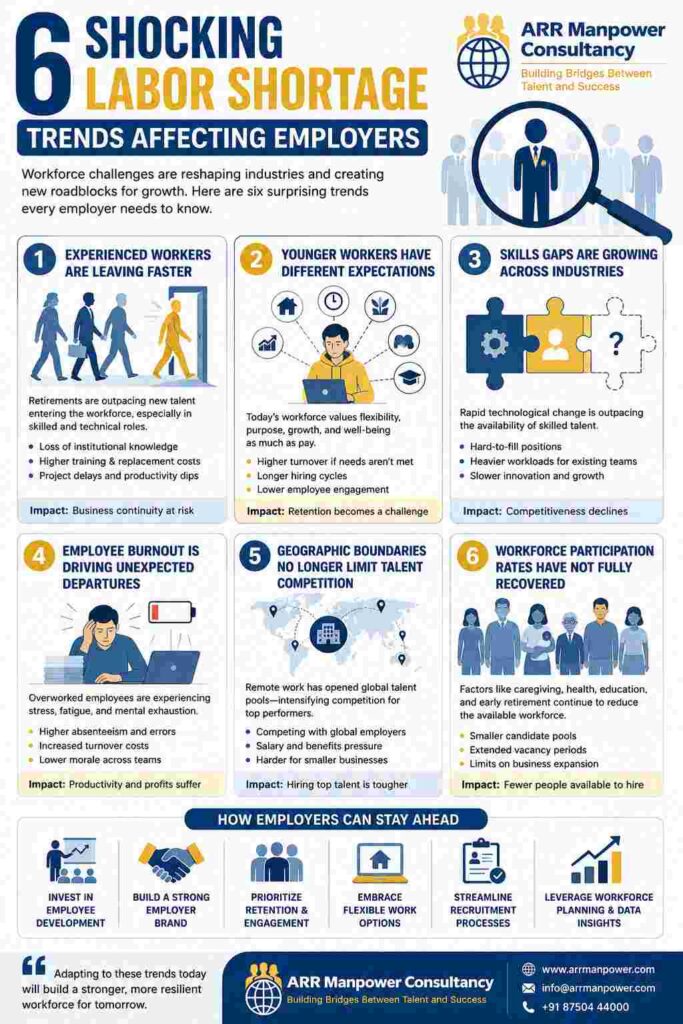
1. Experienced Workers Are Leaving Faster Than New Talent Is Entering
One of the most significant workforce challenges is the growing gap between retiring employees and new entrants into the labor market.
Many industries rely heavily on experienced professionals who possess years of technical knowledge and practical expertise. As large portions of the workforce approach retirement age, companies are losing valuable institutional knowledge at an alarming rate.
The issue becomes even more serious because younger workers are not entering these industries in sufficient numbers to replace those departing. Sectors such as manufacturing, construction, transportation, and skilled trades are particularly affected.
Why This Matters
When experienced employees leave, organizations face several problems:
- Loss of specialized skills
- Reduced productivity
- Increased training costs
- Delays in project completion
- Greater safety risks in technical environments
Businesses that fail to prepare for workforce transitions often discover that replacing years of expertise cannot happen overnight.
What Employers Can Do
Organizations should focus on succession planning, mentorship programs, and knowledge-transfer initiatives. Pairing experienced workers with newer employees can help preserve valuable insights while preparing the next generation of talent.
2. Younger Workers Have Different Career Expectations
Many employers are surprised by how dramatically workplace priorities have changed among younger generations.
Traditional incentives such as salary alone are no longer enough to attract and retain talent. Today’s workforce often values flexibility, career development, work-life balance, meaningful work, and positive workplace culture.
Many younger professionals are willing to leave positions that fail to align with their personal goals and values.
Changing Priorities
Modern employees frequently prioritize:
- Flexible schedules
- Remote or hybrid work options
- Professional development opportunities
- Mental health support
- Career advancement pathways
- Inclusive workplace cultures
Organizations that continue using outdated recruitment strategies may struggle to attract qualified candidates.
Impact on Recruitment
Companies that ignore evolving workforce expectations often experience:
- Longer hiring cycles
- Higher turnover rates
- Increased recruitment expenses
- Lower employee engagement
Successful employers are redesigning workplace policies to create environments that appeal to modern job seekers.
3. Skills Gaps Are Growing Across Multiple Industries
A major trend affecting employers is the widening gap between available skills and business needs.
Technological advancement continues to transform industries at a rapid pace. New software, automation systems, artificial intelligence tools, and digital platforms require specialized knowledge that many workers have not yet developed.
Even when candidates are available, employers often struggle to find individuals with the exact qualifications needed for specific roles.
Industries Most Affected
Several sectors are experiencing severe skills shortages:
- Information technology
- Healthcare
- Engineering
- Manufacturing
- Cybersecurity
- Logistics
- Construction
Many companies report that positions remain vacant for months because suitable candidates cannot be found.
Long-Term Consequences
Persistent skills gaps can result in:
- Reduced innovation
- Slower business growth
- Increased employee workloads
- Missed revenue opportunities
- Declining competitiveness
Strategic Solutions
Forward-thinking organizations are investing in:
- Upskilling programs
- Employee training initiatives
- Apprenticeships
- Certification programs
- Partnerships with educational institutions
Building talent internally is increasingly becoming a necessity rather than an option.
4. Employee Burnout Is Driving Unexpected Departures
Workforce shortages often create a cycle that worsens staffing challenges.
When organizations operate with fewer employees, existing workers must take on additional responsibilities. Over time, increased workloads can lead to stress, fatigue, and burnout.
Burnout has become one of the most overlooked drivers of employee turnover.
Warning Signs
Burned-out employees may exhibit:
- Reduced productivity
- Increased absenteeism
- Lower job satisfaction
- Declining engagement
- Higher error rates
- Greater likelihood of resignation
When key employees leave, remaining team members often face even heavier workloads, creating a repeating cycle of departures.
Financial Impact
Employee burnout can be extremely costly.
Organizations may experience:
- Higher turnover expenses
- Recruitment costs
- Lost productivity
- Training expenditures
- Reduced customer satisfaction
The financial burden often extends far beyond replacing individual workers.
Preventive Measures
Employers can reduce burnout by:
- Encouraging work-life balance
- Monitoring workloads
- Offering wellness resources
- Improving communication
- Providing management support
- Recognizing employee achievements
Creating a healthy workplace environment can significantly improve retention.
5. Geographic Boundaries No Longer Limit Talent Competition
Remote work has fundamentally changed hiring dynamics.
In the past, employers primarily competed with nearby businesses for talent. Today, companies often compete with organizations located hundreds or even thousands of miles away.
A highly skilled candidate may receive opportunities from multiple employers regardless of geographic location.
Increased Competition
Remote work has expanded access to talent but has also intensified competition.
Employers now compete against:
- National corporations
- International organizations
- Fully remote companies
- Startups offering flexible arrangements
- Technology firms with aggressive compensation packages
This shift has made recruitment significantly more complex.
Effects on Smaller Businesses
Small and medium-sized organizations may face particular challenges because larger companies often offer:
- Higher salaries
- Expanded benefits
- Remote flexibility
- Larger career development budgets
Without strategic differentiation, smaller employers can struggle to attract top candidates.
Competitive Advantages
Businesses can remain competitive by emphasizing:
- Strong workplace culture
- Career growth opportunities
- Flexible scheduling
- Personalized employee experiences
- Community involvement
Not every candidate prioritizes salary above all else.
6. Workforce Participation Rates Have Not Fully Recovered
Another surprising trend involves workforce participation levels.
Although employment numbers may appear strong in some regions, many employers continue reporting difficulties filling open positions. A contributing factor is that some individuals have permanently left the workforce or significantly reduced their participation.
Various factors influence this trend, including caregiving responsibilities, early retirement decisions, educational pursuits, and changing lifestyle preferences.
Factors Influencing Participation
Common reasons include:
- Family caregiving obligations
- Health considerations
- Early retirement
- Career changes
- Educational advancement
- Desire for greater flexibility
These shifts reduce the pool of available candidates in many sectors.
Business Challenges
Lower workforce participation can create:
- Extended vacancy periods
- Increased overtime expenses
- Reduced operational capacity
- Delayed business expansion
- Greater recruitment competition
Organizations must adapt to these realities rather than expecting previous labor market conditions to return.
Adapting to New Realities
Employers can broaden their talent pipelines by considering:
- Flexible schedules
- Part-time opportunities
- Return-to-work programs
- Second-career candidates
- Retiree re-engagement initiatives
- Skills-based hiring approaches
Expanding candidate criteria can unlock previously overlooked talent pools.
How Employers Can Respond Effectively
Addressing workforce challenges requires a proactive strategy rather than a reactive response.
Organizations that succeed in today’s environment often share several characteristics:
Invest in Employee Development
Continuous learning opportunities help employees build valuable skills while increasing retention and engagement.
Improve Employer Branding
Candidates increasingly research company culture, leadership, and employee experiences before applying.
A strong employer brand can attract qualified talent even in competitive markets.
Prioritize Retention
Replacing employees is often more expensive than retaining them. Businesses should focus on employee satisfaction, engagement, and career growth.
Embrace Flexibility
Flexible work arrangements can significantly expand access to talent while improving employee satisfaction.
Strengthen Recruitment Processes
Streamlined hiring procedures reduce the risk of losing candidates to competing employers.
Leverage Workforce Planning
Long-term workforce forecasting helps organizations anticipate future staffing needs before critical shortages occur.
The Future of Workforce Management
The employment landscape will continue evolving over the coming years. Demographic shifts, technological innovation, changing employee expectations, and economic developments will shape workforce availability across industries.
Employers that recognize these trends early will be better positioned to adapt and thrive. Those that continue relying on outdated hiring practices may face increasing challenges in attracting and retaining qualified talent.
Successful organizations understand that workforce strategy is no longer simply a human resources function. It has become a core business priority directly linked to productivity, profitability, and long-term growth.
Conclusion
The challenges facing employers today are more complex than many business leaders anticipated. Retirements, evolving employee expectations, expanding skills gaps, burnout, remote-work competition, and changing workforce participation rates are reshaping the employment landscape.
These six trends highlight the importance of developing modern workforce strategies that focus on flexibility, employee development, retention, and long-term planning.
Organizations that adapt proactively will gain a competitive advantage in attracting and retaining skilled professionals. By understanding these workforce realities and implementing thoughtful solutions, employers can navigate uncertainty while building stronger, more resilient teams for the future.
In addition, businesses that embrace innovation in recruitment and workforce management will be better equipped to overcome future staffing challenges. Investing in employee well-being, creating inclusive workplace cultures, and leveraging technology for talent acquisition can strengthen organizational resilience.
Employers should continuously monitor labor market trends and adjust their strategies accordingly. By taking a proactive approach rather than reacting to workforce shortages, companies can maintain operational stability, improve employee satisfaction, and position themselves for sustainable long-term success in an increasingly competitive environment.