Introduction
The recruitment landscape has undergone a dramatic transformation over the past decade. Organizations no longer rely solely on traditional hiring methods such as newspaper advertisements, job boards, and manual resume screening. Technological advancements, changing workforce expectations, and the growing need for efficiency have reshaped how companies identify, attract, and retain top talent.
Modern talent acquisition is now driven by intelligent tools, data-backed decision-making, and candidate-focused experiences. Businesses that embrace innovative recruitment strategies gain a significant competitive advantage by reducing hiring time, improving candidate quality, and enhancing employee retention.
This article explores thirteen remarkable innovations that are reshaping talent acquisition and helping organizations build stronger, future-ready workforces.
https://arrmanpowerconsultancy.com
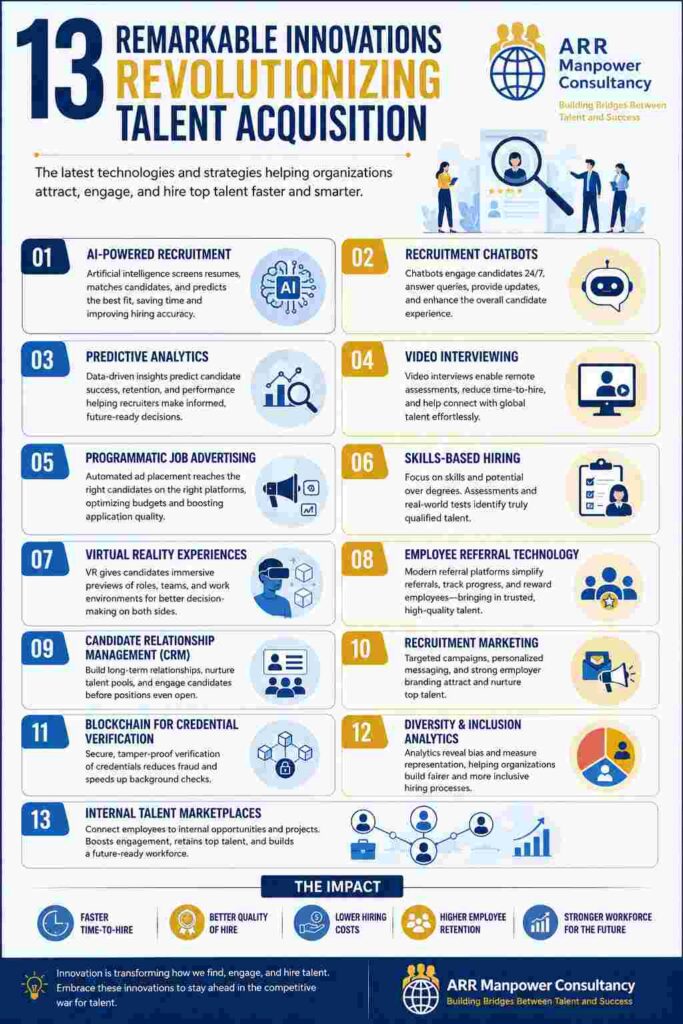
1. Artificial Intelligence-Powered Recruitment
Artificial intelligence has become one of the most influential developments in modern hiring. AI-driven systems can analyze large volumes of applications within minutes, helping recruiters identify suitable candidates faster than traditional methods.
These solutions evaluate resumes, compare qualifications with job requirements, and rank applicants based on predefined criteria. By automating repetitive tasks, recruiters can dedicate more time to relationship building and strategic decision-making.
Beyond screening, AI also assists with candidate matching, interview scheduling, and predictive hiring insights, making recruitment more efficient and accurate.
2. Recruitment Chatbots
Chatbots have transformed candidate communication by providing instant responses to common inquiries. Available around the clock, these virtual assistants improve engagement and reduce delays during the hiring process.
Applicants can receive information about job openings, application status, interview schedules, and company policies without waiting for recruiter intervention.
This innovation enhances the candidate experience while reducing administrative workloads for talent acquisition teams.
3. Predictive Analytics in Hiring Innovations
Predictive analytics allows organizations to make informed hiring decisions using historical and real-time data. Recruitment teams can identify patterns that indicate future employee success, performance, and retention.
These insights help businesses understand which candidate characteristics correlate with long-term achievement. As a result, hiring managers can focus on individuals who are more likely to thrive within the organization.
The use of predictive models reduces hiring risks and supports workforce planning initiatives.
4. Video Interviewing Platforms
Remote hiring has accelerated the adoption of video interviewing technology. Organizations can connect with applicants across different locations without the logistical challenges of in-person meetings.
Recorded and live video interviews streamline evaluation processes while reducing travel expenses and scheduling conflicts. Recruiters can review responses multiple times and collaborate more effectively with hiring managers.
Video-based assessments also help organizations expand their talent pools beyond geographical boundaries.
5. Programmatic Job Advertising
Programmatic advertising uses automation and data analysis to distribute job postings across multiple digital platforms. Rather than manually placing advertisements, recruiters leverage intelligent systems that optimize campaign performance.
These platforms identify where target candidates are most active and allocate advertising budgets accordingly. The result is improved visibility, better applicant quality, and increased recruitment efficiency.
Organizations benefit from real-time adjustments that maximize return on investment throughout the hiring campaign.
6. Skills-Based Hiring Platforms
Traditional recruitment often prioritizes educational credentials and previous job titles. Skills-based hiring shifts the focus toward demonstrated abilities and practical competencies.
Assessment platforms evaluate candidates through tests, simulations, and real-world challenges. This approach helps employers identify individuals capable of performing specific tasks regardless of their academic background.
By emphasizing skills, organizations can access broader talent pools and promote workplace diversity.
7. Virtual Reality Recruitment Experiences
Virtual reality is creating immersive recruitment experiences that provide candidates with realistic previews of workplace environments and job responsibilities.
Applicants can explore office spaces, interact with simulated work scenarios, and gain deeper insights into organizational culture. This transparency helps individuals make informed career decisions.
Employers also use virtual reality assessments to evaluate problem-solving abilities, communication skills, and situational judgment in controlled environments.
8. Employee Referral Technology
Employee referrals remain one of the most effective hiring sources. Modern referral platforms enhance this process through automation, tracking, and incentive management.
These systems make it easier for employees to share opportunities within their professional networks. Automated notifications encourage participation and keep referrers informed throughout the hiring journey.
Organizations often experience higher-quality hires and improved retention rates through structured referral programs.
9. Candidate Relationship Management Systems
Candidate Relationship Management (CRM) platforms help recruiters build long-term connections with potential applicants. Instead of engaging talent only when vacancies arise, organizations maintain ongoing communication with prospective candidates.
CRM solutions segment talent communities, automate outreach campaigns, and personalize interactions. This proactive approach ensures a strong pipeline of qualified professionals for future opportunities.
Building relationships before positions become available significantly reduces time-to-fill metrics.
10. Recruitment Marketing Automation
Recruitment marketing applies marketing principles to attract potential employees. Automation platforms enable organizations to create targeted campaigns that showcase employer branding and workplace culture.
Through personalized email sequences, social media engagement, and content distribution, companies can nurture candidate interest over time.
These efforts strengthen employer visibility and help organizations stand out in competitive hiring markets.
11. Blockchain for Credential Verification
Credential verification has traditionally been a time-consuming process. Blockchain technology offers a secure and transparent method for validating educational qualifications, certifications, and employment history.
Because records stored on blockchain networks are difficult to alter, employers can verify candidate information with greater confidence.
This innovation reduces fraud risks, accelerates background checks, and enhances trust throughout the recruitment process.
12. Diversity and Inclusion Analytics
Organizations increasingly recognize the importance of building diverse and inclusive workforces. Advanced analytics tools provide visibility into recruitment outcomes and identify areas where bias may exist.
These platforms measure representation across different stages of the hiring funnel and support evidence-based improvements.
By monitoring diversity metrics, employers can create fairer recruitment practices and strengthen organizational culture.
13. Internal Talent Marketplaces
Internal talent marketplaces enable organizations to identify opportunities for existing employees before seeking external candidates. These platforms match workforce skills with available projects, assignments, and career development opportunities.
Employees gain greater visibility into growth paths, while organizations retain valuable institutional knowledge.
Promoting internal mobility reduces recruitment costs and improves employee engagement, making it a powerful innovation in workforce management.
The Future of Talent Acquisition
As technology continues to evolve, talent acquisition will become increasingly data-driven, personalized, and candidate-centric. Organizations that embrace innovation can respond more effectively to changing workforce demands and competitive hiring challenges.
Future recruitment strategies will likely combine artificial intelligence, predictive analytics, immersive technologies, and workforce intelligence to create seamless hiring experiences. Human expertise will remain essential, but technology will handle many repetitive and administrative responsibilities.
The most successful employers will be those that balance technological efficiency with authentic human connections.
Conclusion
The transformation of talent acquisition is being driven by a combination of technological innovation and evolving workforce expectations. From artificial intelligence and predictive analytics to virtual reality and blockchain verification, modern solutions are helping organizations hire more effectively than ever before.
These thirteen innovations demonstrate how recruitment is moving beyond traditional practices toward smarter, faster, and more inclusive approaches. Companies that invest in these advancements can improve candidate experiences, strengthen hiring outcomes, and build resilient teams prepared for future challenges.
As competition for skilled professionals intensifies, embracing innovative recruitment technologies will no longer be optional. It will be a critical factor in attracting, engaging, and retaining the talent necessary for long-term organizational success.
Furthermore, the rapid pace of workplace transformation means organizations must remain adaptable and open to continuous improvement. Hiring practices that delivered strong results a few years ago may no longer meet the expectations of today’s workforce. Candidates increasingly seek transparency, flexibility, meaningful work, and opportunities for professional growth. Employers that understand these evolving priorities are better positioned to attract qualified professionals and build lasting relationships with prospective employees.
Another important consideration is the growing role of data in workforce planning. Modern recruitment technologies provide valuable insights into candidate behavior, hiring trends, sourcing effectiveness, and retention outcomes. These insights allow decision-makers to refine their strategies, allocate resources more efficiently, and create hiring processes that align with long-term business objectives. When used responsibly, data-driven approaches can improve accuracy while supporting fair and consistent evaluations.
Organizations should also recognize that innovation is not limited to technology alone. Successful hiring often depends on creating a positive experience throughout every stage of the candidate journey. Clear communication, timely feedback, streamlined application processes, and personalized interactions contribute significantly to employer reputation. Even the most advanced systems deliver greater value when combined with a thoughtful and people-centered approach.
As workforce demographics continue to change, companies that prioritize inclusivity, adaptability, and continuous learning will be better prepared for future challenges. Building strong teams requires more than filling open positions; it involves identifying individuals whose skills, values, and potential align with organizational goals. Innovative recruitment solutions help make this process more effective while reducing administrative burdens.
Ultimately, the future of hiring will be shaped by organizations that embrace progress while maintaining a strong focus on human connection. By leveraging emerging technologies, refining recruitment strategies, and fostering meaningful candidate experiences, businesses can create sustainable talent pipelines that support growth and resilience. The organizations that invest in forward-thinking approaches today will be better equipped to navigate tomorrow’s workforce demands and achieve long-term success in an increasingly competitive employment landscape.