Introduction
Business Process Outsourcing (BPO) organizations operate in one of the most dynamic and competitive hiring environments. With rapid expansion, high-volume staffing requirements, varying skill demands, and employee turnover challenges, finding the right talent can be a complex process. To remain competitive, BPO companies need effective hiring strategies that attract qualified candidates, reduce hiring time, and improve employee retention.
The success of a BPO business largely depends on the quality of its workforce. Customer service representatives, technical support agents, team leaders, quality analysts, and back-office professionals play a vital role in maintaining operational efficiency and customer satisfaction. Therefore, implementing the right recruitment techniques is essential for building a productive and motivated workforce.
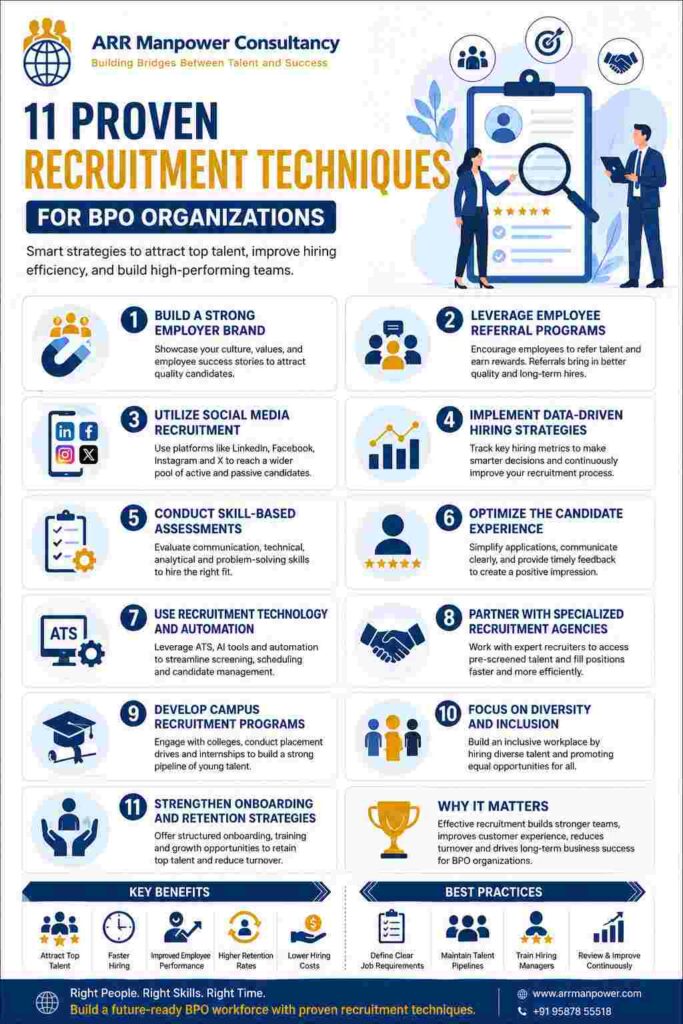
This article explores 11 proven recruitment techniques that help BPO organizations identify, attract, and retain top talent while improving overall hiring outcomes.
https://arrmanpowerconsultancy.com
1. Build a Strong Employer Brand
A strong employer brand attracts quality candidates and creates a positive perception of the organization. Job seekers often research a company’s culture, work environment, and employee experiences before applying.
BPO companies can strengthen their employer brand by:
- Showcasing workplace culture on social media
- Sharing employee success stories
- Highlighting career growth opportunities
- Promoting employee benefits and recognition programs
- Maintaining positive online reviews
A compelling employer brand makes candidates more likely to choose your organization over competitors.
2. Leverage Employee Referral Programs
Employee referrals remain one of the most effective hiring methods in the BPO sector. Existing employees understand company expectations and can recommend candidates who fit the organizational culture.
Benefits of referral programs include:
- Faster hiring cycles
- Lower recruitment costs
- Improved employee retention
- Better cultural fit
- Higher quality applicants
Offering referral incentives encourages employees to participate actively in talent acquisition efforts. Many successful BPO companies rely heavily on referrals to fill critical positions quickly.
3. Utilize Social Media Recruitment
Social media platforms have become powerful tools for sourcing candidates. BPO organizations can reach a wider audience by promoting job opportunities through various channels.
Popular platforms include:
- X (formerly Twitter)
- YouTube
Social media recruitment enables companies to:
- Engage passive candidates
- Promote company culture
- Advertise job openings
- Build employer awareness
- Interact directly with potential applicants
Consistent social media engagement helps maintain a strong talent pipeline.
4. Implement Data-Driven Hiring Strategies
Modern recruitment relies heavily on data and analytics. BPO organizations can use hiring metrics to identify what works and improve decision-making.
Key metrics include:
- Time-to-hire
- Cost-per-hire
- Source of hire
- Candidate conversion rates
- Offer acceptance rates
- Employee retention rates
Analyzing these metrics allows hiring teams to optimize processes, allocate resources effectively, and improve recruitment outcomes.
Data-driven hiring reduces guesswork and helps organizations make informed talent acquisition decisions.
5. Conduct Skill-Based Assessments
Resumes alone may not accurately reflect a candidate’s capabilities. Skill-based assessments help evaluate practical competencies before hiring decisions are made.
For BPO positions, assessments may include:
- Communication tests
- Language proficiency evaluations
- Typing speed assessments
- Customer service simulations
- Technical troubleshooting exercises
- Problem-solving tests
These evaluations provide objective insights into candidate performance and help identify individuals who can excel in the role.
Skill-based hiring often results in better job performance and reduced turnover.
6. Optimize the Candidate Experience
The recruitment process significantly influences a candidate’s perception of an organization. A lengthy or confusing process may cause talented applicants to lose interest.
To improve the candidate experience:
- Simplify application procedures
- Communicate clearly throughout the process
- Provide timely interview feedback
- Maintain transparency regarding job expectations
- Respect candidate time during interviews
Positive experiences encourage candidates to accept offers and recommend the company to others.
In competitive BPO markets, a seamless hiring journey can become a significant advantage.
7. Use Recruitment Technology and Automation
Technology has transformed hiring processes across industries. BPO organizations can use recruitment software to streamline repetitive tasks and improve efficiency.
Common tools include:
- Applicant Tracking Systems (ATS)
- Resume screening software
- Interview scheduling platforms
- AI-powered sourcing tools
- Recruitment analytics dashboards
Automation helps recruiters focus on strategic activities rather than administrative tasks.
Benefits include:
- Faster screening
- Improved candidate management
- Reduced manual workload
- Enhanced hiring accuracy
- Better reporting capabilities
Technology-driven recruitment supports scalability during high-volume hiring periods.
8. Partner with Specialized Recruitment Agencies
Recruitment agencies bring expertise, industry knowledge, and extensive candidate networks. For BPO organizations facing urgent hiring requirements, partnering with experienced staffing firms can significantly improve hiring speed.
Advantages include:
- Access to pre-screened candidates
- Reduced recruitment workload
- Faster hiring timelines
- Industry-specific expertise
- Improved candidate quality
Specialized agencies understand BPO hiring challenges and can identify candidates who match technical and cultural requirements.
This partnership allows internal HR teams to focus on employee engagement and workforce development.
9. Develop Campus Recruitment Programs
Fresh graduates represent a valuable talent pool for BPO companies. Campus recruitment initiatives help organizations engage young professionals before they enter the job market.
Effective campus hiring strategies include:
- Career fairs
- College partnerships
- Internship programs
- Placement drives
- Industry workshops
- Guest lectures
Hiring graduates offers several benefits:
- Lower hiring costs
- High learning potential
- Adaptability
- Long-term workforce development
Strong campus recruitment programs create a continuous pipeline of entry-level talent.
10. Focus on Diversity and Inclusion
Diverse workplaces foster innovation, collaboration, and improved decision-making. BPO organizations often serve global customers, making workforce diversity particularly important.
Inclusive recruitment practices include:
- Writing unbiased job descriptions
- Expanding sourcing channels
- Ensuring fair interview processes
- Training hiring managers on unconscious bias
- Promoting equal opportunities
A diverse workforce can improve customer interactions and strengthen organizational performance.
Candidates increasingly seek employers that value inclusion and respect individual differences.
11. Strengthen Onboarding and Retention Strategies
Successful hiring extends beyond recruitment. Effective onboarding plays a critical role in employee engagement and retention.
New employees should receive:
- Structured training programs
- Clear role expectations
- Ongoing mentorship
- Performance support
- Career development opportunities
Strong onboarding helps employees become productive faster and feel connected to the organization.
BPO companies that invest in retention strategies often experience lower turnover rates, reducing the need for constant rehiring.
Retention-focused recruitment ensures long-term workforce stability and improved operational efficiency.
Best Practices for BPO Recruitment Success
In addition to the techniques discussed above, organizations should follow several best practices to maximize hiring effectiveness.
Define Clear Job Requirements
Well-defined job descriptions help attract suitable candidates and reduce application mismatches. Clearly communicate:
- Responsibilities
- Required qualifications
- Skills expectations
- Work schedules
- Career opportunities
Clarity improves applicant quality and streamlines screening efforts.
Maintain Talent Pipelines
Building relationships with potential candidates before positions become available reduces future hiring delays.
Organizations can maintain talent pools through:
- Talent communities
- Networking events
- Candidate databases
- Social media engagement
A proactive approach supports continuous hiring needs.
Train Hiring Managers
Hiring managers significantly influence recruitment outcomes. Providing interview training ensures consistency and fairness throughout the selection process.
Training topics may include:
- Behavioral interviewing
- Candidate evaluation
- Diversity awareness
- Communication skills
- Structured assessment methods
Well-trained managers contribute to better hiring decisions.
Common Recruitment Challenges in BPO Organizations
Despite implementing effective techniques, BPO companies often encounter several recruitment challenges.
High Attrition Rates
Employee turnover remains one of the industry’s biggest concerns. Competitive compensation, career growth opportunities, and employee engagement initiatives can help reduce attrition.
Large Hiring Volumes
Rapid business expansion often requires hiring hundreds of employees within short timeframes. Technology, recruitment partnerships, and referral programs can support large-scale hiring efforts.
Skill Gaps
Candidates may lack essential communication, technical, or customer service skills. Structured assessments and training programs help address these gaps.
Intense Competition
Many organizations compete for the same talent pool. Strong employer branding and positive candidate experiences can improve competitiveness.
Understanding these challenges allows organizations to develop targeted recruitment solutions.
Future Trends in BPO Recruitment
The recruitment landscape continues to evolve. Several emerging trends are shaping the future of hiring in the BPO industry.
Artificial Intelligence
AI-powered tools are improving sourcing, screening, and candidate matching processes.
Remote Hiring
Virtual interviews and remote onboarding have become increasingly common, expanding access to talent across geographic locations.
Skills-Based Recruitment
Organizations are placing greater emphasis on practical abilities rather than traditional credentials.
Predictive Analytics
Advanced analytics help forecast hiring needs and identify candidates with higher success potential.
Candidate-Centric Hiring
Companies are focusing more on personalized experiences and stronger communication throughout the hiring journey.
Organizations that adapt to these trends will remain competitive in attracting top talent.
Conclusion
Recruiting the right talent is essential for the long-term success of BPO organizations. As competition for skilled professionals continues to increase, companies must adopt strategic hiring approaches that improve efficiency, candidate quality, and employee retention.
The 11 proven recruitment techniques discussed in this article—including employer branding, employee referrals, social media recruitment, data-driven hiring, skill assessments, candidate experience optimization, technology adoption, recruitment partnerships, campus hiring, diversity initiatives, and effective onboarding—provide a comprehensive framework for building a strong workforce.
Successful BPO recruitment is not simply about filling vacancies. It involves creating a sustainable talent acquisition strategy that aligns with organizational goals, supports employee growth, and enhances customer service performance. By continuously refining hiring processes and embracing innovation, BPO organizations can attract exceptional talent, reduce turnover, and achieve long-term business success.
Companies that invest in strategic recruitment today will be better positioned to meet future workforce demands and maintain a competitive advantage in an evolving business environment.