Introduction
Finding the right opportunity in today’s competitive employment market can feel challenging. Many candidates submit dozens of applications without receiving responses, while others struggle to stand out during interviews. The good news is that a smart and structured approach can significantly improve results. By following effective job search strategies, candidates can reduce delays, improve visibility, and secure employment opportunities faster.
Whether you are a fresher, experienced professional, or someone returning to the workforce, understanding modern recruitment practices is essential. Employers now use digital platforms, applicant tracking systems, social media profiles, and skill assessments to shortlist applicants. Because of this, candidates must adapt their methods and stay prepared throughout the process.
This guide explains 15 essential techniques that can help accelerate hiring success and improve career opportunities in 2026.
https://arrmanpowerconsultancy.com
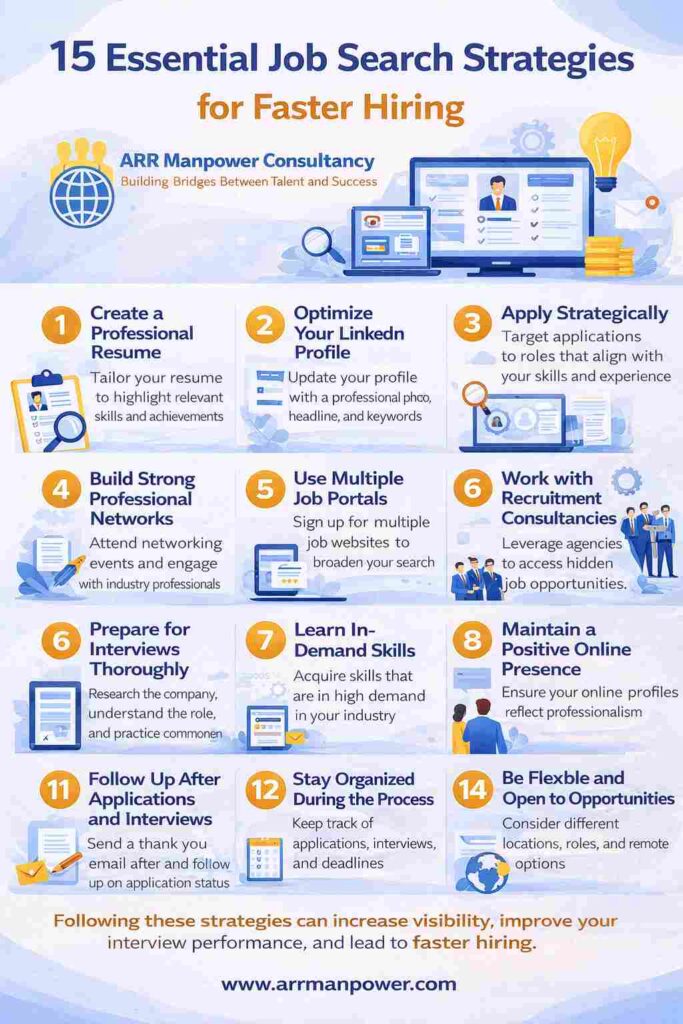
1. Create a Professional Resume
Your resume is often the first impression recruiters receive. A clear and professional document increases the chances of getting shortlisted.
Focus on:
- Using a clean format
- Including relevant skills
- Highlighting measurable achievements
- Keeping information updated
- Using industry-specific keywords
Avoid unnecessary graphics or lengthy paragraphs. Recruiters usually spend only a few seconds scanning each application, so clarity matters.
Tailoring your resume for every role can also improve results. Adjust your summary, skills, and experience according to the job description.
2. Optimize Your LinkedIn Profile
Recruiters actively search for candidates on professional networking platforms. An optimized profile increases visibility and attracts hiring managers.
Important elements include:
- Professional profile photo
- Strong headline
- Detailed work experience
- Relevant certifications
- Updated contact information
- Skill endorsements
Posting industry-related content and engaging with professional discussions can also help build credibility. Networking online has become an important part of modern recruitment.
3. Apply Strategically Instead of Randomly
Many candidates believe applying to hundreds of openings guarantees success. However, targeted applications often produce better outcomes.
Before applying:
- Read the full job description
- Match your qualifications
- Research the company
- Understand the role requirements
- Customize your application
Quality matters more than quantity. Recruiters prefer candidates who genuinely fit the position rather than those sending generic resumes everywhere.
4. Build Strong Professional Networks
Networking remains one of the fastest ways to discover opportunities. Many positions are filled through referrals before public advertisements appear online.
You can expand your network by:
- Attending industry events
- Connecting with recruiters
- Joining professional groups
- Participating in webinars
- Reaching out to alumni
Strong connections can provide valuable information about openings, hiring trends, and company culture.
5. Improve Communication Skills
Employers value candidates who communicate clearly and confidently. Communication affects interviews, teamwork, client interactions, and leadership potential.
You can improve by:
- Practicing mock interviews
- Reading regularly
- Enhancing vocabulary
- Listening actively
- Speaking confidently
Good communication creates a positive impression and increases professional credibility.
6. Prepare for Interviews Thoroughly
Interview preparation plays a major role in hiring success. Candidates who prepare well appear more confident and organized.
Preparation should include:
- Researching the company
- Understanding the job role
- Reviewing common interview questions
- Practicing answers
- Preparing questions for the interviewer
Behavioral interview questions are increasingly common. Employers often evaluate problem-solving abilities, teamwork, adaptability, and leadership qualities.
Dress professionally and arrive on time for both virtual and in-person interviews.
7. Learn In-Demand Skills
Industries continue evolving rapidly due to technology and automation. Candidates who continuously upgrade their skills remain competitive.
Popular skills in 2026 include:
- Data analysis
- Digital marketing
- Artificial intelligence tools
- Project management
- Cloud computing
- Cybersecurity
- Communication and leadership
Online learning platforms offer affordable certification programs that can strengthen your profile.
Continuous learning demonstrates commitment and adaptability to employers.
8. Use Multiple Job Portals
Depending on a single platform may limit opportunities. Using multiple sources expands your reach.
Useful platforms include:
- Company career pages
- Professional networking websites
- Recruitment agencies
- Government employment portals
- Industry-specific job boards
Set up alerts for relevant openings so you can apply quickly when new roles become available.
Early applications often receive more attention from recruiters.
9. Work with Recruitment Consultancies
Recruitment agencies can simplify the process by connecting candidates with suitable employers. Many companies rely on consultancies for talent acquisition.
Benefits include:
- Access to hidden opportunities
- Faster interview scheduling
- Resume guidance
- Career advice
- Industry insights
Professional consultants can also help candidates understand employer expectations and salary trends.
10. Maintain a Positive Online Presence
Employers frequently review online profiles before making hiring decisions. Your digital presence should reflect professionalism.
Consider the following:
- Remove inappropriate content
- Use professional language online
- Share industry-related insights
- Maintain consistency across platforms
Personal branding has become increasingly important in competitive industries. A strong online reputation can support career growth.
11. Follow Up After Applications and Interviews
Following up professionally shows enthusiasm and interest in the role.
After submitting an application or attending an interview:
- Send a polite email
- Thank the recruiter
- Reconfirm interest
- Ask about the next steps
Avoid excessive follow-ups, but a timely message can help you remain memorable among multiple candidates.
Professional etiquette often influences hiring decisions.
12. Stay Organized During the Process
Managing multiple applications can become confusing without proper organization.
Track details such as:
- Company names
- Job titles
- Application dates
- Interview schedules
- Recruiter contacts
- Follow-up status
Using spreadsheets or job tracking tools can help maintain efficiency throughout the process.
Organization reduces stress and improves productivity during your search.
13. Develop a Strong Personal Brand
Your personal brand represents your professional identity. Employers prefer candidates who demonstrate expertise, consistency, and professionalism.
You can build your brand by:
- Sharing industry knowledge
- Creating professional content
- Participating in discussions
- Showcasing achievements
- Building credibility online
A strong personal brand increases trust and attracts opportunities naturally.
Candidates with visible expertise often receive direct approaches from recruiters.
14. Be Flexible and Open to Opportunities
Sometimes candidates limit themselves by focusing only on specific titles, industries, or locations.
Flexibility can increase hiring speed by allowing consideration of:
- Remote positions
- Contract roles
- Hybrid work models
- Different industries
- Entry-to-mid level transitions
Temporary opportunities can also lead to permanent positions and valuable experience.
Being adaptable helps candidates respond effectively to changing market conditions.
15. Maintain Consistency and Patience
Finding employment can take time, especially in competitive sectors. Rejections are part of the process and should not discourage candidates.
Consistency is essential:
- Continue applying regularly
- Keep improving skills
- Update your resume frequently
- Learn from feedback
- Stay motivated
A positive mindset improves confidence during interviews and networking interactions.
Every application and interview provides valuable learning experience that can improve future success.
Common Mistakes to Avoid During a Job Search
Even qualified candidates sometimes struggle because of avoidable mistakes.
Common errors include:
Sending Generic Resumes
Using the same resume for every application reduces relevance and lowers selection chances.
Ignoring Application Instructions
Failing to follow employer instructions creates a negative impression.
Lack of Research
Candidates who know little about the company often perform poorly during interviews.
Poor Communication
Unclear or unprofessional communication can reduce credibility.
Applying Without Required Skills
Applying for completely unrelated positions may waste valuable time and effort.
Avoiding these mistakes can significantly improve hiring outcomes.
The Importance of Mental Resilience
The hiring process can sometimes become stressful. Long waiting periods and repeated rejections may affect confidence.
To stay motivated:
- Maintain a routine
- Celebrate small progress
- Practice self-improvement
- Stay connected with supportive people
- Focus on long-term goals
Mental resilience helps candidates remain confident and professional throughout their search journey.
Future Trends in Recruitment
Recruitment methods continue changing due to technology and workforce evolution.
Key trends shaping hiring in 2026 include:
Artificial Intelligence Screening
Many companies now use AI tools to filter applications before human review.
Skills-Based Hiring
Employers increasingly prioritize practical skills over formal qualifications.
Remote Recruitment
Virtual interviews and remote onboarding continue growing globally.
Freelance and Contract Opportunities
Flexible employment models are becoming more common across industries.
Employer Branding
Candidates now evaluate company culture, flexibility, and employee benefits before accepting offers.
Understanding these trends can help candidates adapt their strategies effectively.
Final Thoughts
By staying proactive, organized, and adaptable throughout your job search, you can significantly improve your chances of securing the right opportunity faster. Consistently updating your skills, tailoring applications, and leveraging professional networks helps you stand out in a competitive market. Remember that persistence and patience are just as important as strategy. Every application, interview, and connection contributes to your career growth. Apply these job search strategies consistently, and you will be better positioned for long-term professional success.
Securing employment quickly requires more than simply submitting applications. Candidates must combine preparation, networking, skill development, and professionalism to stand out in today’s competitive market.
By following these 15 essential job search strategies, applicants can improve visibility, build confidence, and increase the hiring opportunities. From creating a strong resume to improving interview performance and building professional networks, every step contributes to career success.
The modern employment landscape rewards candidates who stay adaptable, proactive, and committed to continuous learning. With the right approach, persistence, and preparation, faster hiring becomes an achievable goal.
Success comes to those who want consistent improvement in themselves while staying focused on long-term career growth.