Introduction
Job interviews are no longer judged only by resumes and technical skills. In 2026, employers are paying close attention to communication style, confidence, adaptability, and professional presence. One of the strongest factors that influences first impressions is body language. The way you sit, smile, make eye contact, or use hand gestures can silently communicate confidence and professionalism before you even answer a question.
Many candidates prepare answers for interview questions but forget to prepare their non-verbal communication. Research consistently shows that body language plays a major role in how people perceive trustworthiness, confidence, and competence. Even highly qualified applicants may lose opportunities because of nervous habits, poor posture, or lack of engagement.
Understanding how to control your physical presence can significantly improve your interview performance. Whether the interview is virtual or face-to-face, mastering body language helps you create a positive impression and build stronger connections with recruiters.
This guide explores 10 powerful interview body language tips that can help you succeed in 2026 and stand out from the competition.
https://arrmanpowerconsultancy.com
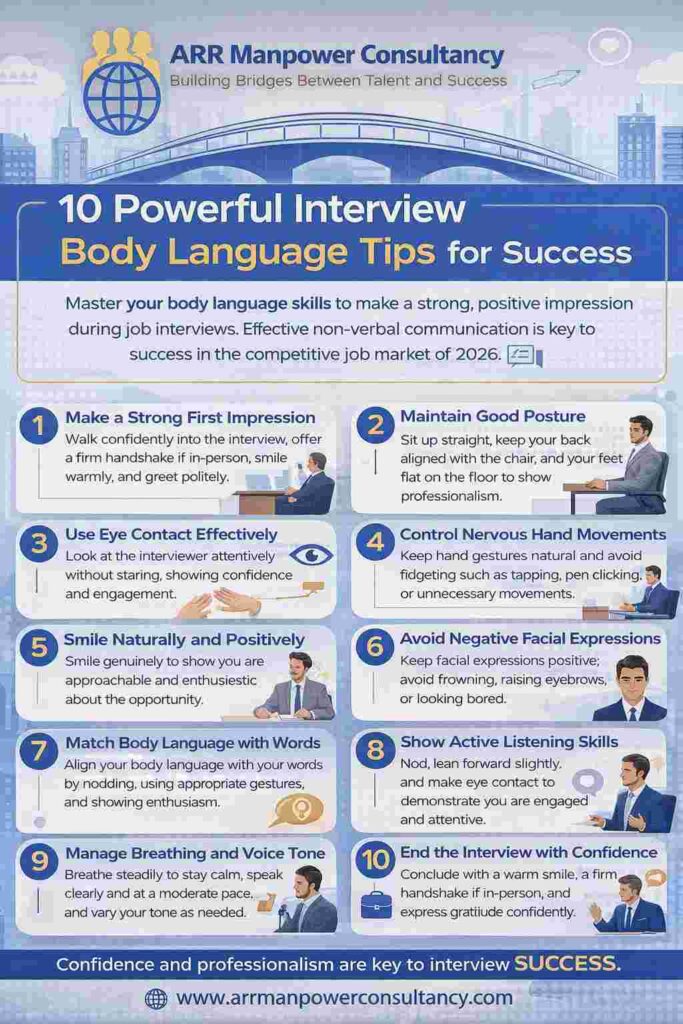
1. Make a Strong First Impression
The first few seconds of an interview are extremely important. Recruiters often form initial opinions quickly, and your body language heavily influences those judgments.
When entering the interview room or joining a video call:
- Walk confidently
- Keep your shoulders relaxed
- Maintain an upright posture
- Smile naturally
- Offer a polite greeting
A confident entrance immediately creates a positive image. Avoid walking too quickly, slouching, or looking distracted. If the interview is in person, a professional handshake can also help establish confidence and respect.
For virtual interviews, ensure your camera is positioned correctly and greet the interviewer with energy and professionalism. Looking prepared and attentive from the beginning sets the tone for the entire conversation.
2. Maintain Good Posture Throughout the Interview
Posture reflects confidence, attentiveness, and professionalism. Sitting properly during an interview demonstrates that you are engaged and serious about the opportunity.
Here are some posture tips:
- Sit upright without appearing stiff
- Keep your back straight
- Relax your shoulders
- Place both feet firmly on the floor
- Lean slightly forward to show interest
Poor posture, such as slouching or leaning too far back, may make you appear disinterested or unprepared. Crossing your arms tightly can create a defensive impression.
A balanced posture helps you look calm and confident. It also improves breathing and allows you to speak more clearly.
For online interviews, posture is equally important. Sit at a desk rather than on a couch or bed. A professional sitting position creates a better visual impression on camera.
3. Use Eye Contact Effectively
Eye contact is one of the most important elements of professional communication. It shows confidence, honesty, and attentiveness.
During an interview:
- Maintain natural eye contact while speaking
- Look at the interviewer when listening
- Avoid staring continuously
- Break eye contact occasionally to keep it comfortable
Too little eye contact may make you seem nervous or uninterested. Too much eye contact can feel intimidating. The goal is balance and natural interaction.
For panel interviews, make eye contact with everyone in the room rather than focusing on only one person.
In virtual interviews, look into the camera periodically instead of constantly watching yourself on screen. This creates the impression of direct eye contact with the interviewer.
4. Control Nervous Hand Movements
Many candidates unintentionally reveal nervousness through their hands. Fidgeting, tapping fingers, playing with pens, or touching the face repeatedly can distract interviewers.
To maintain professional hand gestures:
- Keep your hands relaxed
- Rest them naturally on your lap or desk
- Use controlled gestures while speaking
- Avoid excessive movements
Purposeful hand gestures can actually improve communication because they make you appear more expressive and confident. However, too many gestures may seem chaotic.
Practice answering interview questions in front of a mirror or camera to identify nervous habits. Awareness is the first step toward improvement.
In virtual interviews, ensure your gestures remain visible but controlled within the camera frame.
5. Smile Naturally and Positively
A genuine smile can make you appear approachable, confident, and enthusiastic. Employers appreciate candidates who create positive energy during conversations.
Smiling helps:
- Reduce tension
- Build rapport
- Show friendliness
- Create a welcoming atmosphere
However, smiling excessively or forcing expressions may appear unnatural. The key is authenticity.
Smile when:
- Greeting the interviewer
- Discussing achievements
- Expressing enthusiasm
- Closing the interview
A calm and natural expression helps you appear emotionally intelligent and professional.
For remote interviews, facial expressions become even more important because body language is partially limited on screen.
6. Avoid Negative Facial Expressions
Interviewers carefully observe facial reactions during discussions. Even small expressions can reveal stress, frustration, confusion, or lack of interest.
Common negative expressions to avoid include:
- Rolling eyes
- Frowning frequently
- Looking bored
- Tightening lips
- Raising eyebrows aggressively
Maintain a calm and attentive expression throughout the interview. Active listening should be reflected in your face through nodding and responsive reactions.
If you do not understand a question, politely ask for clarification rather than showing visible frustration.
Positive facial expressions help create a more engaging conversation and demonstrate emotional maturity.
7. Match Your Body Language with Your Words
Consistency between verbal and non-verbal communication is essential. If your words say you are confident but your body language appears nervous, interviewers may question your credibility.
For example:
- Speak clearly while maintaining steady posture
- Smile when discussing positive experiences
- Nod slightly to show engagement
- Use open gestures while explaining ideas
Avoid contradictions such as:
- Saying you are excited while appearing expressionless
- Claiming confidence while avoiding eye contact
- Discussing teamwork with crossed arms
Aligned communication makes your responses more believable and impactful.
Practicing mock interviews can help you improve coordination between speech and body language.
8. Show Active Listening Skills
Strong communication is not only about speaking well. Listening carefully is equally important.
Interviewers value candidates who demonstrate attention and respect during conversations.
You can show active listening by:
- Nodding occasionally
- Maintaining eye contact
- Leaning slightly forward
- Avoiding interruptions
- Responding thoughtfully
Avoid checking phones, glancing around the room, or appearing distracted.
Active listening improves the flow of conversation and helps you provide better answers. It also demonstrates professionalism and emotional intelligence.
For virtual interviews:
- Avoid multitasking
- Stay focused on the screen
- Use visible listening cues like nodding
Employers appreciate candidates who are genuinely engaged in discussions.
9. Manage Your Breathing and Voice Tone
Body language is closely connected to breathing and vocal delivery. Nervous breathing can affect posture, speaking speed, and confidence.
To remain calm:
- Take slow breaths before the interview
- Pause briefly before answering questions
- Speak at a steady pace
- Use a confident and clear voice
Rushed speech often signals anxiety. Speaking too softly may suggest lack of confidence.
Your tone should sound:
- Professional
- Calm
- Enthusiastic
- Respectful
Controlled breathing helps reduce nervous movements and improves overall communication quality.
Practicing breathing exercises before interviews can help you stay composed and focused.
10. End the Interview with Confidence
The closing moments of an interview are just as important as the beginning. A professional ending leaves a lasting positive impression.
At the end of the interview:
- Sit upright
- Smile warmly
- Thank the interviewer sincerely
- Maintain confident eye contact
- Offer a professional farewell
If the interview is in person, stand confidently and shake hands politely if appropriate.
For virtual interviews:
- Avoid abruptly leaving the call
- Wait for the interviewer to end the conversation naturally
- Maintain professionalism until the call fully ends
A strong conclusion reinforces your confidence and professionalism.
Why Body Language Matters More in 2026
The hiring landscape in 2026 is highly competitive. Companies are not only evaluating technical qualifications but also communication ability, emotional intelligence, adaptability, and cultural fit.
With the growth of hybrid work environments and global hiring, employers increasingly rely on non-verbal communication to assess candidates.
Effective body language helps demonstrate:
- Confidence
- Leadership potential
- Professionalism
- Communication skills
- Team compatibility
Candidates who master these skills often perform better in interviews because they create stronger emotional connections with recruiters.
Common Interview Body Language Mistakes to Avoid
Even experienced professionals sometimes make body language mistakes that hurt their chances.
Here are some common issues to avoid:
Slouching
Poor posture creates an impression of low confidence or lack of interest.
Weak Handshake
A weak handshake may appear uncertain, while an overly strong handshake can feel aggressive.
Excessive Fidgeting
Constant movement distracts interviewers and signals nervousness.
Looking at Your Phone
Checking your phone during an interview appears disrespectful and unprofessional.
Crossing Arms
This can create a defensive or closed-off impression.
Avoiding Eye Contact
Lack of eye contact may reduce trust and engagement.
Overusing Gestures
Too many hand movements can make communication appear uncontrolled.
Awareness of these habits can help you make significant improvements.
Body Language Tips for Virtual Interviews
Online interviews continue to grow in popularity. Virtual communication requires slightly different body language strategies.
Here are some important tips:
- Position the camera at eye level
- Ensure proper lighting
- Sit in a quiet environment
- Look into the camera while speaking
- Avoid distracting backgrounds
- Keep posture professional
- Minimize unnecessary movements
Virtual interviews reduce the visibility of full-body communication, making facial expressions and eye contact even more important.
Testing your setup before the interview can help you appear more polished and confident.
How to Practice Interview Body Language
Improving body language requires regular practice and self-awareness.
Here are effective ways to practice:
Record Yourself
Use your phone or computer to record mock interviews and observe your posture, gestures, and facial expressions.
Practice with Friends or Mentors
Conduct mock interviews with feedback from others.
Use a Mirror
Practicing in front of a mirror helps improve expressions and posture.
Focus on Relaxation
Stress management techniques such as breathing exercises and meditation can improve physical confidence.
Prepare Thoroughly
Preparation naturally reduces nervousness and improves body language.
The more comfortable you become with interview situations, the more natural and confident your body language will appear.
Final Thoughts
Mastering interview body language can significantly increase your chances of success in 2026. Employers notice much more than spoken answers. They evaluate confidence, professionalism, attentiveness, and emotional intelligence through non-verbal communication.
By improving posture, maintaining eye contact, controlling gestures, and showing active listening, you can create a powerful and lasting impression during interviews.
Strong body language does not require perfection. It requires awareness, preparation, and authenticity. Small improvements in how you present yourself can make a major difference in how interviewers perceive you.
As competition in the job market continues to increase, candidates who combine technical skills with confident communication will stand out more effectively. Practicing these interview body language tips can help you approach interviews with greater confidence and improve your chances of securing the right opportunity in 2026.